
Busy professionals receive dozens, sometimes hundreds, of emails every day. Most cold emails get deleted within seconds — not because the sender lacks value, but because they fail to capture attention in under five seconds. Standing out isn’t about being flashy; it’s about precision, relevance, and respect for the recipient’s time. The most effective cold emails are short, specific, and designed around one clear goal: to earn a reply.
Writing a cold email that converts requires more than good grammar. It demands empathy, research, and a strategic approach to communication. When done right, a single well-crafted message can open doors to partnerships, sales, mentorship, or career advancement. This guide breaks down exactly how to structure such an email, what to avoid, and how to increase your chances of getting a response — even from someone who rarely replies to unsolicited messages.
Understand the Psychology of a Busy Inbox
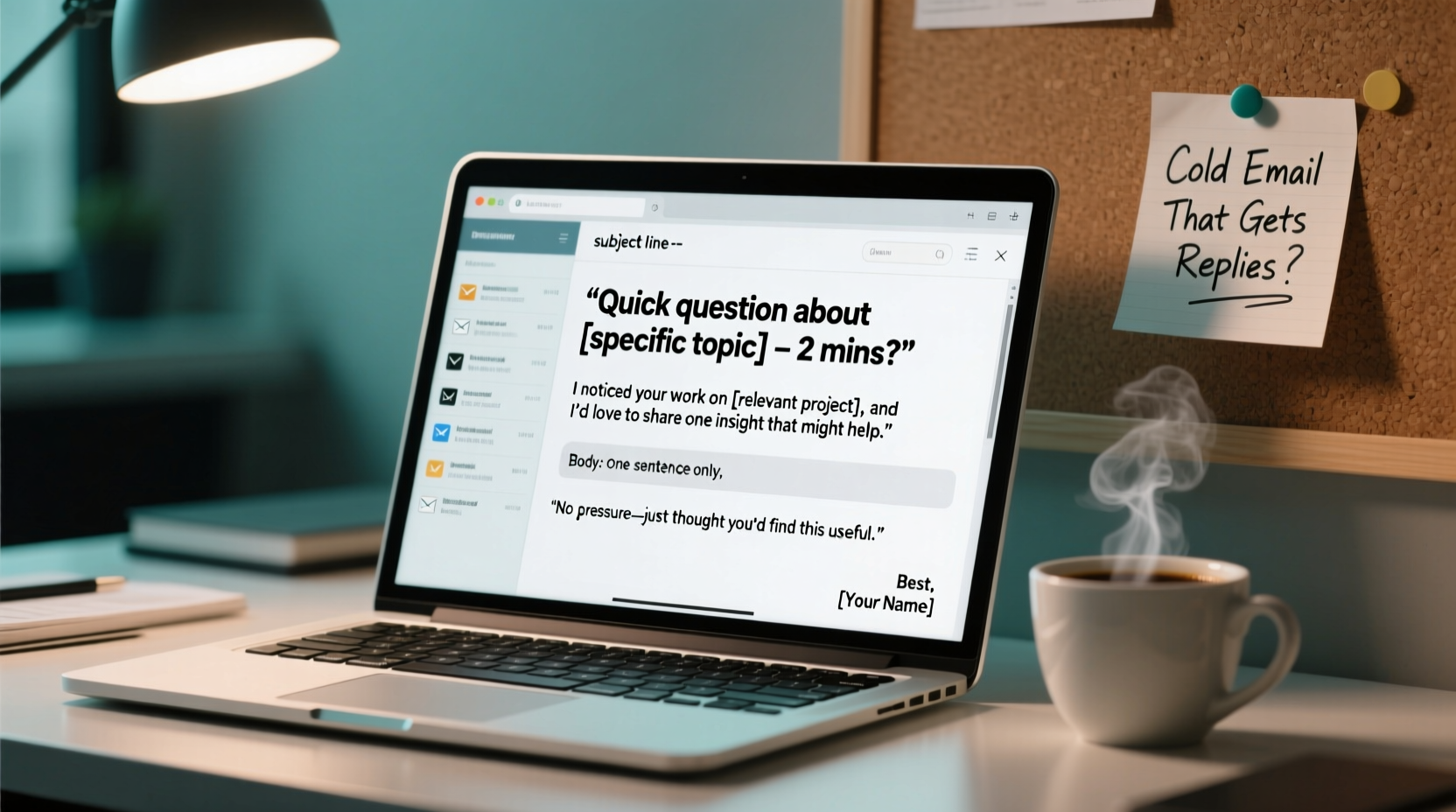
Before writing a single word, recognize this truth: no one owes you their attention. A CEO, investor, or senior executive isn’t ignoring your email out of arrogance — they’re filtering for urgency, relevance, and trust. Your job is to pass that filter immediately.
Research shows that decision-makers spend an average of 6 to 8 seconds scanning an email before deciding whether to read further, respond, or delete. That means your subject line and opening sentence must work together like a precision tool — cutting through noise and signaling value fast.
Three psychological triggers dominate successful cold outreach:
- Relevance: Does this relate directly to something I care about?
- Credibility: Can I trust this person knows what they're talking about?
- Low Effort: Is responding easier than ignoring?
If your email answers “yes” to all three, you’ve already outperformed 90% of cold messages sent daily.
The 5-Part Cold Email Framework That Works
Forget templates full of fluff. Instead, follow this lean, high-conversion structure proven across industries and roles:
- Subject Line (Curiosity + Specificity)
- Opening Hook (Personalized & Relevant)
- Value Statement (One Clear Benefit)
- Call to Action (Simple, Specific Request)
- Signature (Professional, Minimal)
1. Subject Line: Earn the Open
Your subject line is your first and often only chance to be seen. Avoid vague phrases like “Quick question” or “Opportunity for you.” These trigger spam filters and signal low effort.
Instead, use specificity and curiosity without clickbait. Examples:
- “Noticed your team hired 3 engineers last month — congrats”
- “How [Company] reduced onboarding time by 40%”
- “Following up on your post about AI hiring tools”
The best subject lines reference something real — a recent hire, article, funding round, or public statement — making them instantly relevant.
2. Opening Hook: Prove You Did Your Homework
The first sentence should show you know who they are and why you’re reaching out. Generic openings like “I hope this finds you well” waste precious seconds.
Start with observation, not flattery. For example:
“Your recent talk at SaaS Growth Summit highlighted a pain point we solved for companies like HubSpot and Gong — reducing customer churn during onboarding.”
This works because it’s specific, references public content, and transitions smoothly into value.
3. Value Statement: One Clear Insight
Busy people don’t have time for long pitches. Deliver one concrete idea, result, or insight that relates directly to their world.
Example:
“We helped a B2B fintech reduce support tickets by 60% just by redesigning their welcome email sequence — nothing else changed.”
Notice it’s not “We do amazing things.” It’s focused, measurable, and implies transferable value.
4. Call to Action: Make Responding Easy
Never end with “Let me know if you’re interested.” That puts all the cognitive load on the recipient.
Instead, offer a frictionless next step:
- “Could I send you the template we used?”
- “Would 15 minutes next Tuesday work to share how we did it?”
- “If this resonates, I’d love to hear what onboarding challenges you’re seeing.”
A yes/no question or micro-commitment increases reply odds dramatically.
5. Signature: Keep It Clean
Use a simple signature with your name, title, and LinkedIn (optional). Avoid multiple links, headshots, or banners. Clutter undermines credibility in cold outreach.
What to Avoid: Common Cold Email Mistakes
Even experienced professionals fall into traps that kill response rates. Here’s a breakdown of what not to do — and what to do instead.
| Don’t | Why It Fails | Do Instead |
|---|---|---|
| Say “I’m sure you’re busy” | States the obvious and sounds passive-aggressive | Respect time by being concise — no apology needed |
| Attach files or include links upfront | Triggers security alerts and feels pushy | Offer to send materials after engagement |
| Pitch your product in the first email | Feels transactional; no relationship built | Lead with insight, not sales |
| Use exclamation points!!! or emojis | Reduces professionalism, especially in formal industries | Stay neutral and confident in tone |
| Send long paragraphs | Overwhelms and invites skimming | One idea per sentence. Max 5 sentences total. |
“People don’t ignore emails because they’re rude — they ignore them because the value isn’t clear in the first line.” — Alex Birkett, Head of Growth at HubSpot
Real Example: How One Email Generated a $50K Contract
Jamie, a freelance UX consultant, wanted to work with a mid-sized SaaS company known for rapid product iteration. Instead of sending a portfolio or proposal, she studied their latest feature launch and noticed a usability gap in the onboarding flow.
She sent this email:
Subject: One thing users might miss in your new dashboard setup
Hi Maria,
I tried out the new project setup flow in your dashboard — really clean design.
One thing stood out: when users skip the tutorial, there’s no visual cue later showing how to re-access it. We saw a 35% drop-off in feature adoption when testing a similar pattern at Notion.
Happy to share the research or quick fix we used, if useful.
Best,
Jamie Chen
UX Consultant | Former Product Designer at Atlassian
Maria replied within two hours: “That’s been bugging our team too. Yes, please share the fix.” That led to a consultation call, then a $50K contract to audit their entire onboarding experience.
The email worked because it was:
– Specific to a real product issue
– Backed by relevant experience
– Low-pressure with a helpful offer
– Under 100 words
Step-by-Step Guide to Writing Your Next Cold Email
Follow this process the next time you need to reach a busy professional:
- Research your recipient (5–10 min): Read their LinkedIn, recent posts, interviews, or company updates.
- Identify one relevant pain point or goal: Look for signals — hiring trends, product changes, stated priorities.
- Draft a subject line referencing that insight: Be specific, not generic.
- Write the body in 5 sentences max: Hook → Value → Ask.
- Remove all filler: Cut adjectives, jargon, and self-promotion.
- End with a low-effort CTA: A question or micro-offer.
- Send between 8–10 AM local time: Highest open rates based on industry data.
After sending, wait 5–7 days before a polite follow-up. Example:
“Just circling back on this — no pressure at all. If it’s not relevant now, I completely understand.”
One follow-up is enough unless you have new information to add.
Frequently Asked Questions
How long should a cold email be?
Ideal length is 50–125 words. Focus on clarity, not completeness. You’re not selling a solution — you’re inviting a conversation.
Should I personalize every email?
Yes, but smart personalization matters more than quantity. Mentioning their recent promotion is less effective than referencing a challenge they’ve publicly discussed. Depth beats surface-level details.
What if I don’t get a reply?
No reply doesn’t mean rejection. It means the message wasn’t urgent or relevant enough. Use it as feedback: refine your hook, timing, or targeting. Some of the best responses come after silence — especially if you later add value via social media or shared connections.
Checklist: Cold Email Success Formula
- ✅ Subject line mentions something specific to them
- ✅ First sentence shows I’ve done my homework
- ✅ Body contains one clear, valuable insight (not a pitch)
- ✅ Call to action is easy and low-pressure
- ✅ Under 125 words total
- ✅ No attachments or links in first email
- ✅ Sent between 8–10 AM their local time
- ✅ Follow-up planned for 5–7 days later
Final Thoughts: Quality Over Quantity Wins
Most people think cold emailing is a numbers game. They blast hundreds of generic messages and wonder why response rates stay below 1%. The truth is, five highly targeted, thoughtful emails will outperform 500 spray-and-pray attempts.
Busy professionals respond to respect, relevance, and resonance — not volume. When you take the time to understand their world and offer something genuinely useful, you stop being noise and start being a resource.
You don’t need fancy tools or AI-generated copy. You need empathy, clarity, and the courage to hit send on something simple but meaningful.




 浙公网安备
33010002000092号
浙公网安备
33010002000092号 浙B2-20120091-4
Comments
No comments yet. Why don't you start the discussion?