
Clover is more than a symbol of luck—its leaves are found in lawns, meadows, and wild foraging zones across temperate regions worldwide. While many recognize the iconic three-leaf form, accurate identification requires understanding subtle differences in leaf shape, color, texture, and growth patterns. Misidentification can lead to confusion with toxic mimics or missed opportunities to harvest edible species. For foragers, gardeners, and naturalists, knowing how to distinguish true clovers from similar plants is essential for safety, sustainability, and culinary use. This guide provides a comprehensive breakdown of clover types, their distinguishing traits, and practical advice for confident identification.
Definition & Overview
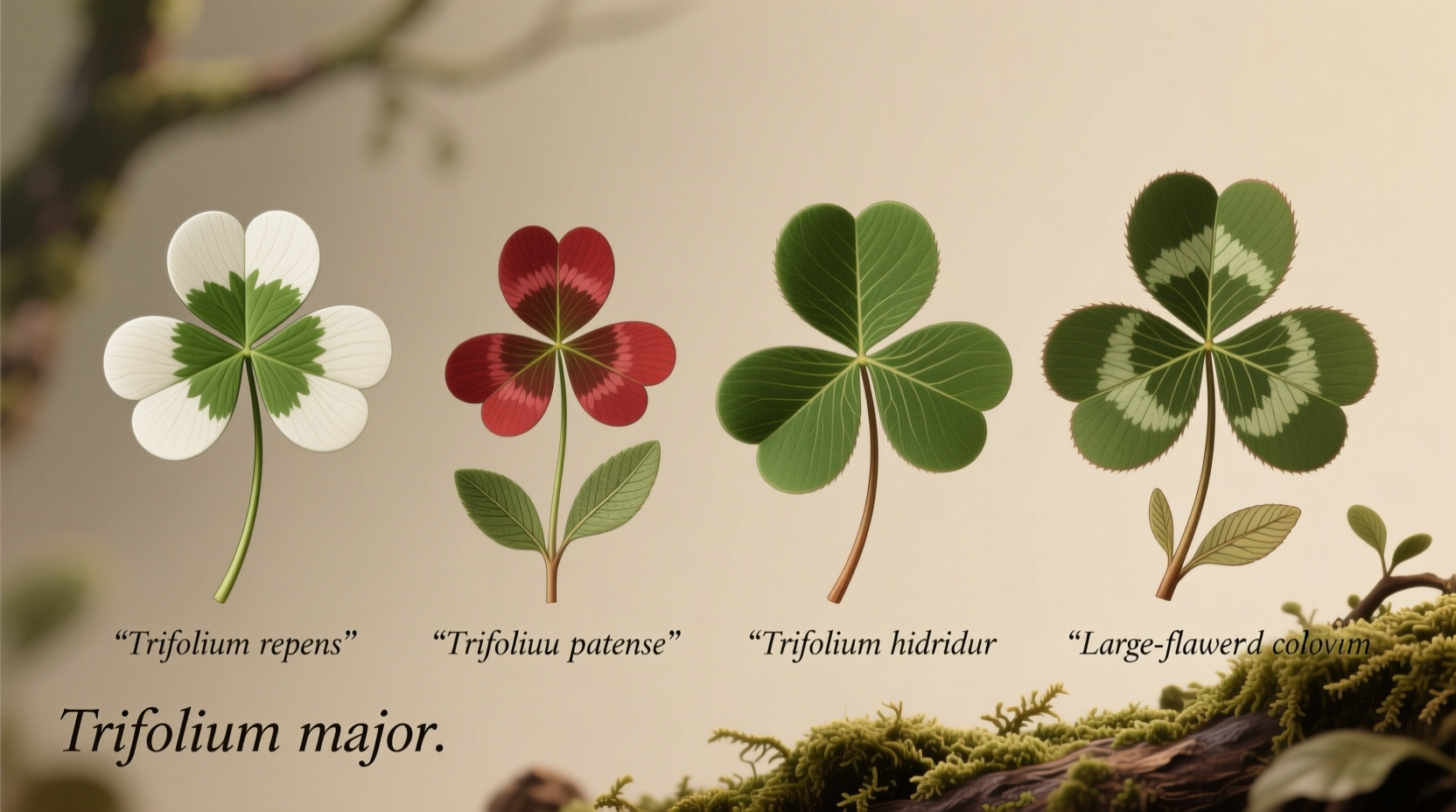
Clover refers to plants in the genus Trifolium, part of the legume family (Fabaceae), which includes over 300 species worldwide. The name “clover” derives from the Old English “clafre,” meaning “to grow on a hill,” reflecting its prevalence in open fields and grasslands. Most clovers share a trifoliate leaf structure—three leaflets per leaf—but variations exist in size, hairiness, markings, and flowering patterns.
True clovers play a vital ecological role: they fix nitrogen in soil through symbiotic bacteria in root nodules, enriching the earth for other plants. Some species are cultivated as cover crops or livestock fodder, while others thrive as wild perennials. A few varieties, such as red clover (Trifolium pratense) and white clover (Trifolium repens), have long histories of medicinal and culinary use, including teas, salads, and herbal infusions.
Despite their widespread presence, clovers are frequently confused with non-leguminous plants that mimic their leaf structure. Correctly identifying clover involves examining not just the leaves but also stem growth, flower morphology, and habitat preferences.
Key Characteristics of Clover Leaves
The following traits define most clover species and help differentiate them from lookalikes:
- Leaf Arrangement: Alternate, with each node producing a single compound leaf composed of three leaflets (trifoliate).
- Leaflet Shape: Typically oval to heart-shaped, with smooth or slightly toothed margins near the tip.
- Color: Medium to bright green; some species display a pale crescent or \"watermark\" pattern along the midrib.
- Texture: Soft, sometimes hairy (especially on stems and undersides); leaf surface may be glossy or matte.
- Size: Individual leaflets range from 5 mm (dwarf clover) to 25 mm (red clover).
- Stipules: Small, leaf-like appendages at the base of the leaf stalk; often fused to the petiole and persistent.
- Petiole (Leaf Stem): Slender and elongated, connecting the leaf to the main plant stem.
- Flower Presence: Though not part of the leaf itself, the presence and type of flower head (dense globe, spike, or loose cluster) aid in species-level identification.
TIP: When identifying clover, always check for stipules—these small, papery structures at the leaf base are diagnostic for Trifolium species and absent in many impostors like oxalis or shamrock plants.
Variants & Types of Clover
While hundreds of clover species exist, five are most commonly encountered in North America, Europe, and parts of Asia. Each has distinct leaf characteristics useful for field identification.
1. White Clover (Trifolium repens)
One of the most widespread clovers, especially in lawns and pastures. Its creeping growth habit allows it to spread via stolons (above-ground runners). Leaflets are small (8–15 mm), rounded, and usually marked with a pale crescent or chevron near the center. Hairs are sparse but visible under magnification. Flowers are white or pale pink, forming dense spherical heads.
2. Red Clover (Trifolium pratense)
A taller, upright perennial common in meadows and roadsides. Leaflets are larger (15–25 mm), broader, and often have a distinct dark spot or blotch toward the tip. Margins are finely toothed. Stems are hairy and erect. The flower head is deep pink to purple, egg-shaped, and longer than that of white clover.
3. Alsike Clover (Trifolium hybridum)
An intermediate between white and red clover. Grows in moist soils and cooler climates. Leaves resemble those of white clover but lack the pale watermark. Flowers start white and age to pink, forming a two-toned appearance. Stems are smooth and branched.
4. Crimson Clover (Trifolium incarnatum)
Often planted as a cover crop or ornamental. Known for its striking blood-red flower spikes. Leaves are trifoliate with a slight sheen; each leaflet bears a narrow, light-colored V-marking. Hairy petioles and stems distinguish it from smoother species.
5. Black Medic (Medicago lupulina) – Not a True Clover, But Often Confused
Though not in the Trifolium genus, black medic closely resembles clover. It has trifoliate leaves with yellow flowers and produces small black seed pods. Leaflets are more elongated and less rounded than typical clover. Lacks the watermark pattern. Distinguished by its coiled fruit clusters.
| Species | Leaflet Size | Watermark? | Hairiness | Flower Color | Growth Habit |
|---|---|---|---|---|---|
| Trifolium repens (White) | 8–15 mm | Yes (pale V) | Sparse | White/pale pink | Creeping (stolons) |
| Trifolium pratense (Red) | 15–25 mm | Dark spot | Densely hairy | Pink-purple | Upright |
| Trifolium hybridum (Alsike) | 10–20 mm | No | Smooth | White → pink | Upright, clumping |
| Trifolium incarnatum (Crimson) | 12–20 mm | Faint V | Very hairy | Bright red | Erect, annual |
| Medicago lupulina (Black Medic) | 5–15 mm | No | Smooth | Yellow | Prostrate to ascending |
Comparison with Similar Plants
Several non-clover plants exhibit trifoliate leaves and are easily mistaken for clover. Understanding the differences prevents misidentification and potential toxicity risks.
Oxalis (Wood Sorrel) vs. Clover
Oxalis species, often called “false shamrocks,” have nearly identical three-part leaves but belong to a different botanical family (Oxalidaceae). Key distinctions include:
- Leaf Folding: Oxalis folds its leaves downward at night or in low light; clover does not.
- Taste: Oxalis has a sharp, sour flavor due to oxalic acid; clover is mild and slightly sweet.
- Flowers: Oxalis blooms with five-petaled yellow, pink, or white flowers; clover flowers have four or more petals in dense clusters.
- Toxicity: While small amounts of oxalis are safe, large quantities can contribute to kidney stone formation due to oxalates.
Shamrock (Oxalis acetosella)
Marketed as “shamrock” during St. Patrick’s Day, this plant is actually an oxalis. It grows in shaded woodlands and has delicate, heart-shaped leaflets. Unlike clover, it lacks stipules and produces solitary pinkish-white flowers.
Mimosa Weed (Neptunia spp.) and Other Legumes
Some tropical legumes mimic clover but are not found in temperate zones. These typically have feathery, bipinnate leaves rather than simple trifoliates.
“In my 20 years of teaching wild edibles, the most common error I see is confusing oxalis with clover. Always check stipules and taste a tiny piece—oxalis will make your mouth pucker.” — Dr. Elena Torres, Ethnobotanist and Foraging Instructor
Practical Usage: How to Use Identified Clover
Once correctly identified, several clover species offer culinary and medicinal applications. Only harvest from clean, pesticide-free areas away from roadsides or contaminated soil.
Culinary Applications
- Leaves: Young clover leaves (especially white and red clover) can be eaten raw in salads or cooked like spinach. They have a mild, grassy flavor with a hint of sweetness.
- Flowers: The most prized part. Red and white clover blossoms add color and nutrition to salads, fritters, or infused vinegars. Can be dried for tea.
- Tea Preparation: Steep 1–2 tablespoons of dried clover flowers in hot water for 10–15 minutes. Strain and enjoy plain or with honey. Traditionally used to support respiratory and hormonal health.
- Flour Substitute: Dried and ground clover flowers can be mixed into grain flours for pancakes or breads, adding protein and phytonutrients.
Medicinal & Herbal Uses
Red clover contains isoflavones, plant compounds studied for their potential role in menopausal symptom relief and cardiovascular support. While not a substitute for medical treatment, it has been used traditionally in herbal formulations. Always consult a healthcare provider before using clover medicinally, especially if pregnant, nursing, or on blood thinners.
Foraging Best Practices
- Harvest in the morning after dew has dried but before midday heat.
- Choose plants with vibrant green leaves and no signs of mold or insect damage.
- Use scissors or pinch stems cleanly to avoid damaging roots.
- Limit collection to 10–20% of any patch to preserve regrowth and ecosystem balance.
- Wash thoroughly under cool running water before use.
TIP: To dry clover flowers for tea, spread them in a single layer on a mesh screen in a dark, well-ventilated area. Avoid sunlight to preserve color and active compounds. Store in an airtight glass jar for up to one year.
Practical Tips & FAQs
Q: Are all clover leaves edible?
A: Most Trifolium species are considered safe in moderation, particularly white and red clover. However, excessive consumption of raw clover may cause digestive upset due to saponins. Cooking reduces this risk. Avoid unknown or discolored specimens.
Q: Is a four-leaf clover rare? What causes it?
A: Four-leaf clovers occur in about 1 in 5,000 white clover plants. The mutation is genetic or environmentally triggered (e.g., stress, herbicide exposure). All four leaflets must originate from a single petiole to qualify. Five- or six-leaf variants exist but are far rarer.
Q: Can clover be grown at home?
A: Yes. White clover thrives in lawns and containers with full sun and well-drained soil. It tolerates mowing and poor soil. Sow seeds in spring or fall. Consider using dwarf cultivars like ‘Pirouette’ for ground cover without invasiveness.
Q: How do I store fresh clover?
A: Wrap fresh leaves or flowers in a damp paper towel and place in a sealed container in the refrigerator. Use within 3–5 days. For long-term storage, dry or freeze.
Q: Does clover attract bees?
A: Extremely. Clover is a major nectar source for honeybees and bumblebees. Harvest early in the day when bees are less active, or wear protective clothing. Never spray blooming clover with pesticides.
Q: Can clover leaves change color?
A: Yes. In cold weather, clover may develop reddish or purplish tints—a natural response to temperature stress. This does not affect edibility but may alter flavor slightly.
Q: Are there poisonous clover lookalikes?
A: While no true clovers are highly toxic, some mimics pose risks. Chamaesyce maculata (spotted spurge) has a milky sap that can irritate skin and mucous membranes. It grows in similar habitats but has smaller, opposite leaves and no stipules. Always verify identification before ingestion.
Summary & Key Takeaways
Accurate identification of clover leaves hinges on attention to detail: leaflet shape, presence of watermarks, stipules, hairiness, and associated flowers. While white and red clover are the most useful for culinary and herbal purposes, recognizing lookalikes like oxalis and black medic ensures safe foraging.
Key points to remember:
- All true clovers have trifoliate leaves with stipules at the base—this is a defining trait.
- White clover features a pale V-shaped watermark; red clover often has a dark spot.
- Oxalis tastes sour and folds its leaves at night—clover does neither.
- Only consume clover from clean, unpolluted environments.
- Harvest sustainably and confirm species before use.
Final Thought: Clover is more than folklore—it's a resilient, nutritious, and ecologically valuable plant. With careful observation and respect for nature, you can confidently incorporate this humble herb into your kitchen, garden, or wellness routine.




 浙公网安备
33010002000092号
浙公网安备
33010002000092号 浙B2-20120091-4
Comments
No comments yet. Why don't you start the discussion?