
Resin keychains have become a staple in fashion accessories, collectibles, and promotional items. From minimalist designs to intricate handmade art, their appeal lies in their glossy finish, vibrant colors, and versatility. But as demand grows, so does the market for imitation resin products—often sold at a fraction of the cost. The question remains: Is the price difference between imitation and real resin keychains justified? To answer this, we need to examine materials, craftsmanship, longevity, and overall value.
Understanding Real Resin Keychains
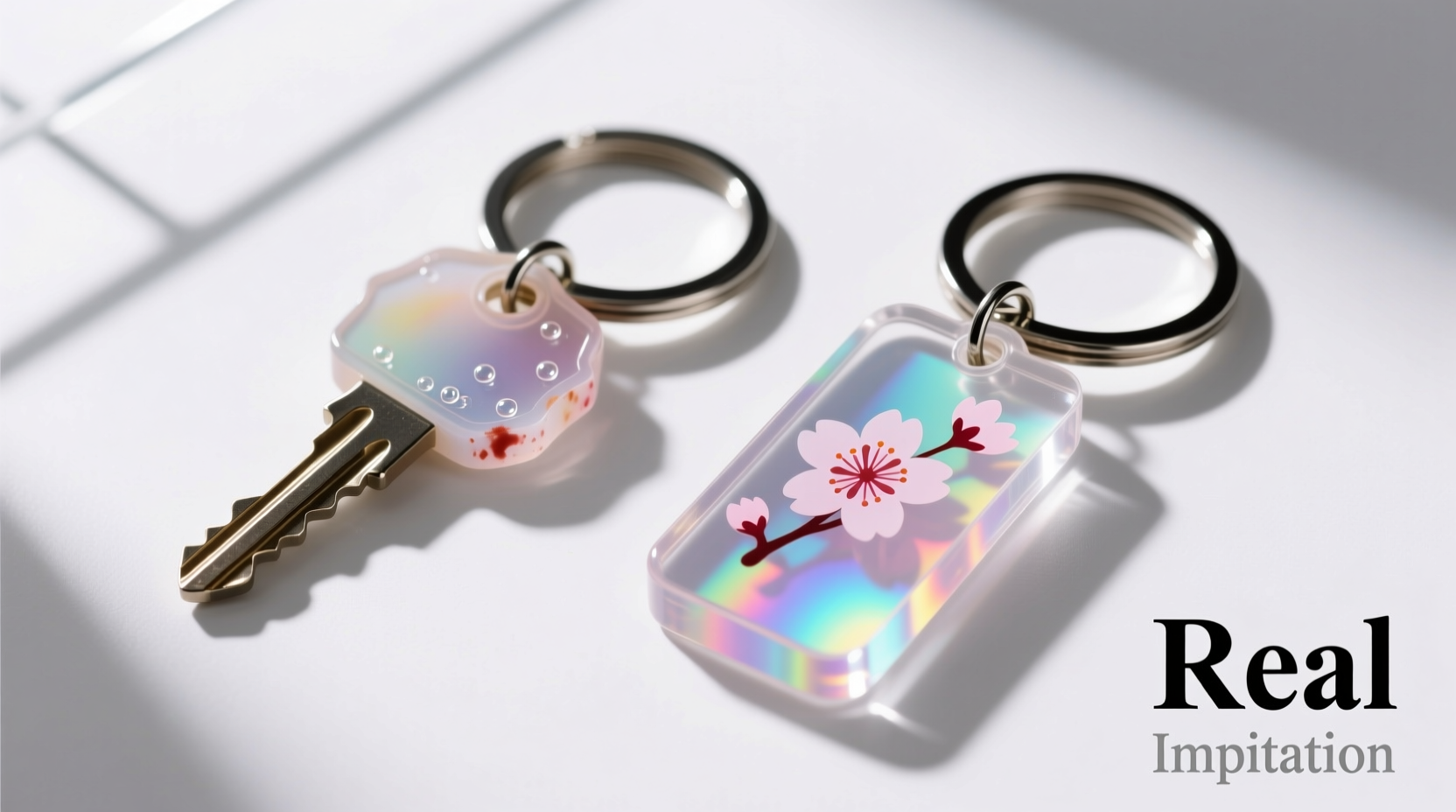
Real resin keychains are typically made from epoxy or polyester resin—a two-part liquid system that hardens into a durable, glass-like material when cured. This process allows artisans to embed pigments, glitter, dried flowers, or even photographs, creating depth and clarity that’s difficult to replicate artificially. Once polished, real resin has a high-gloss finish that resists minor scratches and maintains its luster over time.
The production of authentic resin pieces involves careful mixing, degassing (removing air bubbles), and curing under controlled conditions. This labor-intensive method ensures consistency and structural integrity. Because of these steps, genuine resin keychains often carry a higher price tag—but they also deliver superior quality.
“Real resin isn’t just about aesthetics—it’s a material engineered for stability and clarity. When done right, it can last for years without yellowing or cracking.” — Daniel Ruiz, Industrial Designer & Material Specialist
What Are Imitation Resin Keychains?
Imitation resin keychains are usually made from cheaper alternatives such as PVC, acrylic, or low-grade plastic molded to resemble resin. Some manufacturers use silicone molds filled with colored plastic or soft gel-like substances that mimic the look of liquid resin but lack its physical properties. These imitations are mass-produced using injection molding, which drastically reduces production time and cost.
While they may appear convincing at first glance, especially in online photos, imitation versions often reveal their shortcomings over time. Common issues include cloudiness, surface stickiness, warping under heat, and poor color retention. They may also feel lighter and less substantial in hand—giving away their lower quality.
Key Differences: A Side-by-Side Comparison
| Feature | Real Resin Keychains | Imitation Resin Keychains |
|---|---|---|
| Material Composition | Epoxy or polyester resin (two-part chemical cure) | PVC, acrylic, or soft gel plastics |
| Clarity & Depth | Crystal clear with dimensional depth; supports embedded objects | Often cloudy or flat; limited layering capability |
| Durability | Scratch-resistant, stable under UV exposure (if UV-stabilized) | Prone to cracking, yellowing, and warping in sunlight |
| Finish | High-gloss, smooth, professional polish | May feel sticky or overly shiny; uneven surfaces |
| Lifespan | 5+ years with proper care | 6 months to 2 years before degradation begins |
| Price Range (per unit) | $8–$30+ (handmade or custom) | $1–$5 (mass-produced) |
When the Price Difference Makes Sense
The gap in pricing isn’t arbitrary—it reflects differences in materials, labor, and expected lifespan. For casual users who want a temporary accessory or a low-cost gift, imitation resin may be perfectly adequate. However, for collectors, gift-givers seeking lasting impressions, or businesses using keychains as branded merchandise, real resin offers long-term value.
Consider a small business ordering 100 custom keychains for a product launch. Choosing imitation resin might save $500 upfront, but if the items begin to degrade within months—cracking, fading, or peeling—the brand image suffers. In contrast, real resin keychains maintain their quality, serving as enduring reminders of the brand’s attention to detail.
A Mini Case Study: The Festival Merchandise Dilemma
A music festival organizer faced a choice: source 2,000 keychains for attendees using imitation resin at $2 each or invest in real resin at $8 each. Budget constraints pushed them toward the cheaper option. Within six months, social media was flooded with complaints—keychains had turned yellow, cracked, or lost their embedded logos. Attendees felt the swag lacked value.
The following year, the organizer allocated more funds to real resin. Though the initial cost tripled, feedback improved dramatically. Fans kept the keychains as keepsakes, some even posting unboxing videos praising the “premium feel.” The investment translated into stronger brand loyalty and word-of-mouth promotion.
How to Identify Real vs. Fake Resin
Telling the difference isn’t always obvious, especially when shopping online. Here’s a practical checklist to help you make informed decisions:
- Check the weight: Real resin is denser and heavier than plastic.
- Examine the edges: Authentic pieces have smooth, polished edges; imitations often show mold lines or rough seams.
- Look for bubbles: Small, isolated bubbles can occur in real resin, but excessive or clustered bubbles suggest poor craftsmanship or fake materials.
- Test UV resistance: Leave the keychain in sunlight for a few days. If it yellows quickly, it’s likely low-quality or imitation.
- Read the description: Reputable sellers specify “epoxy resin” or “hand-poured resin.” Vague terms like “resin-style” or “resin-effect” are red flags.
Step-by-Step Guide to Evaluating Resin Keychain Quality
- Inspect Product Photos: Zoom in on images for clarity, bubble distribution, and edge finish.
- Review Seller Credentials: Look for artisan profiles, customer reviews, or portfolios showing the creation process.
- Ask Questions: Contact the seller about materials used and whether UV stabilizers were added.
- Compare Pricing: Extremely low prices relative to others may indicate imitation.
- Order a Sample: If buying in bulk, request a single unit first to assess quality firsthand.
FAQ: Common Questions About Resin Keychains
Can imitation resin keychains be fixed if they start peeling?
No effective fix exists once peeling or delamination begins. The adhesive layers in imitation products degrade chemically, making repair impossible. Prevention through better initial selection is the only solution.
Do real resin keychains yellow over time?
Lower-quality real resin can yellow, especially without UV inhibitors. However, premium epoxy resins with added UV protection resist discoloration for years, even in direct sunlight.
Are handmade resin keychains worth the extra cost?
For unique designs, sentimental value, or branding purposes, yes. Handmade pieces offer originality and craftsmanship that mass-produced items can’t match. Each piece is one-of-a-kind, increasing perceived value.
Final Thoughts: Is the Price Difference Worth It?
The decision between imitation and real resin keychains ultimately comes down to intent and expectations. If you’re buying a novelty item for a party favor or short-term use, imitation may suffice. But if you value durability, aesthetic depth, and long-term satisfaction, real resin is unquestionably worth the investment.
Think beyond the sticker price. Consider how often the keychain will be handled, exposed to elements, or associated with your personal or brand identity. A well-crafted resin piece isn’t just an accessory—it’s a small work of art that endures.
“People remember how things feel, not just how they look. A real resin keychain carries weight—literally and emotionally.” — Lila Chen, Product Designer & Craft Advocate




 浙公网安备
33010002000092号
浙公网安备
33010002000092号 浙B2-20120091-4
Comments
No comments yet. Why don't you start the discussion?