
In cloud computing, the term \"pooled resources\" isn't just technical jargon—it's a foundational principle that powers the scalability, efficiency, and resilience of modern digital services. When we say resources are pooled, we mean that computing power, storage, memory, and network bandwidth are aggregated from multiple physical devices and made available to users on-demand through virtualization. This pooling allows cloud providers to serve thousands of customers simultaneously while maximizing hardware utilization and minimizing waste.
Unlike traditional IT models where each server or storage device is dedicated to a single application or department, cloud environments operate on a shared, dynamic infrastructure. This shift enables organizations to scale up during peak demand and scale down when usage drops—without investing in excess capacity. But what makes resource pooling so effective? And how does it benefit businesses in practice?
How Resource Pooling Works in Cloud Infrastructure
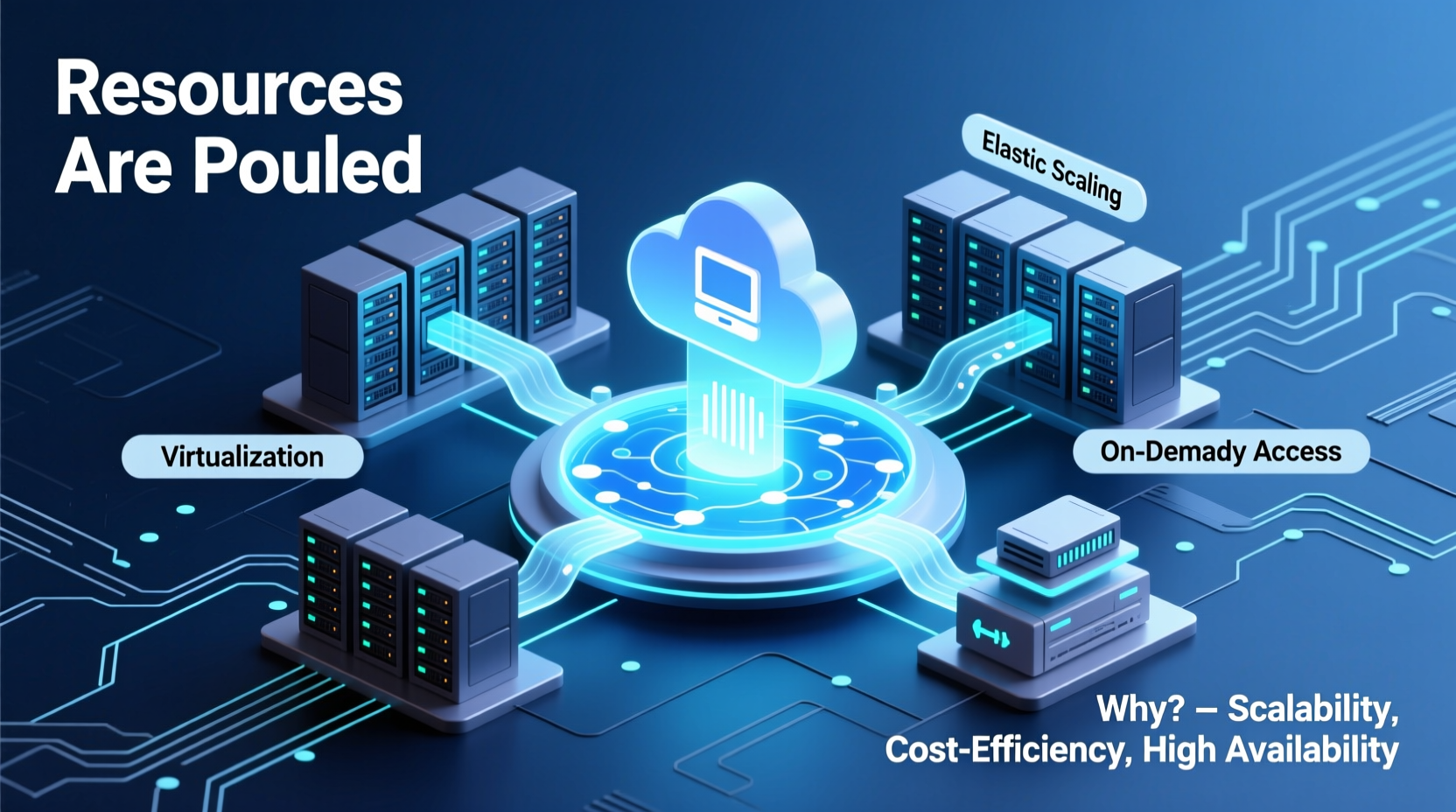
At its core, resource pooling relies on virtualization technology. Physical servers across data centers are abstracted into virtual machines (VMs) or containers, which draw from a shared pool of CPU, RAM, disk space, and networking capabilities. These resources are not tied to any single user or workload. Instead, they're dynamically allocated based on real-time demand.
For example, a cloud provider may operate thousands of servers across several geographic regions. Rather than assigning one server per customer, these systems are grouped into large clusters managed by orchestration software like Kubernetes or VMware vSphere. When a user requests a new virtual machine, the system automatically selects the most suitable host from the available pool and provisions the necessary resources.
This abstraction layer ensures that end users don’t need to know—or care—about the physical location or configuration of the underlying hardware. They simply request a service (e.g., a web server with 4GB RAM and 2 CPU cores), and the cloud platform delivers it instantly from the shared resource base.
Key Benefits of Pooled Resources
The strategic advantage of pooling lies in its ability to deliver flexibility, cost savings, and operational efficiency at scale. Here are the primary benefits:
- Elastic Scalability: Resources can be added or removed in minutes, allowing applications to handle traffic spikes without over-provisioning.
- High Utilization Rates: Idle hardware is minimized because unused capacity from one customer can be reallocated to another.
- Fault Tolerance: Workloads can be migrated between physical hosts seamlessly, improving uptime and disaster recovery readiness.
- Cost Efficiency: Customers pay only for what they use, avoiding upfront capital expenditures on underutilized equipment.
- Simplified Management: Centralized control panels allow administrators to manage vast infrastructures through a single interface.
According to a report by Gartner, organizations leveraging pooled cloud resources achieve up to 30% higher infrastructure efficiency compared to on-premises deployments. The agility this provides has become essential for businesses competing in fast-moving markets.
“Resource pooling transforms IT from a fixed-cost burden into a flexible utility, much like electricity or water.” — Dr. Anil Menon, Senior Cloud Architect at Global Systems Group
Real-World Example: E-Commerce Platform During Holiday Season
Consider an e-commerce company that experiences 5x more traffic during the holiday season than at other times of the year. In a traditional setup, they would need to purchase enough servers to handle peak load—servers that remain mostly idle for the rest of the year.
With pooled cloud resources, the same company uses auto-scaling groups on a public cloud platform. As Black Friday approaches, monitoring tools detect increased traffic and automatically spin up additional virtual servers from the provider’s resource pool. Once the rush subsides, those instances are terminated, and the resources return to the pool for others to use.
This approach eliminates the need for massive capital investment while ensuring seamless customer experience. It also reduces environmental impact by preventing energy waste on idle hardware.
Technical Components Enabling Resource Pooling
Several technologies work together to make resource pooling possible and efficient:
| Component | Function | Example Technologies |
|---|---|---|
| Virtualization | Abstracts physical hardware into multiple isolated virtual environments | VMware ESXi, KVM, Hyper-V |
| Orchestration | Automates deployment, scaling, and management of containerized workloads | Kubernetes, Docker Swarm |
| Software-Defined Networking (SDN) | Enables dynamic network configuration independent of physical layout | OpenFlow, Cisco ACI, AWS VPC |
| Distributed Storage | Aggregates storage across multiple nodes for redundancy and speed | Ceph, Amazon S3, Google Cloud Storage |
| Load Balancers | Distributes incoming traffic across available resources in the pool | NGINX, HAProxy, Azure Load Balancer |
These components ensure that pooled resources remain reliable, secure, and performant even as they’re constantly being reallocated across different tenants.
Security and Isolation in Shared Pools
A common concern about pooled resources is security: if multiple customers share the same physical hardware, can one access another’s data?
The answer lies in strong isolation mechanisms. Modern hypervisors and container runtimes enforce strict boundaries between virtual environments. Each tenant operates in a logically separate space, with encrypted storage, private networks, and role-based access controls.
Additionally, major cloud providers implement multi-tenancy safeguards such as:
- Hardware-level encryption (e.g., Intel SGX, AMD SEV)
- Network segmentation using VLANs or VXLANs
- Regular compliance audits (SOC 2, ISO 27001, HIPAA)
- Zero-trust security models with continuous monitoring
While no system is entirely immune to vulnerabilities, leading cloud platforms often exceed the security capabilities of typical on-premises data centers due to their scale and expertise.
Checklist: Optimizing Use of Pooled Cloud Resources
To get the most out of pooled infrastructure, follow these best practices:
- Monitor usage patterns to right-size instances and avoid over-provisioning
- Use auto-scaling policies to match resource allocation with demand
- Leverage spot or preemptible instances for non-critical batch jobs
- Implement tagging and cost allocation tracking for multi-department usage
- Design applications to be stateless where possible for easier migration
- Regularly review performance metrics and adjust configurations accordingly
- Choose availability zones strategically to balance latency and redundancy
Frequently Asked Questions
Does resource pooling mean my data is less secure?
No. While physical resources are shared, data remains isolated through virtualization, encryption, and access controls. Reputable cloud providers invest heavily in security and often offer better protection than on-premise solutions.
Can I control where my resources are physically located?
Yes. Most cloud platforms allow you to select specific geographic regions and availability zones when deploying resources. This helps meet compliance requirements and reduce latency for end users.
What happens if someone else in the pool uses too many resources?
Cloud providers use quality-of-service (QoS) mechanisms to prevent \"noisy neighbors\" from impacting performance. Your instance receives guaranteed minimum performance levels, even during high-utilization periods.
Conclusion: Embracing the Power of the Pool
Resource pooling is more than a technical detail—it’s a paradigm shift in how computing power is delivered and consumed. By aggregating and dynamically allocating resources, cloud computing enables unprecedented levels of efficiency, responsiveness, and innovation. Whether you're running a startup or managing enterprise systems, understanding and leveraging pooled resources can significantly enhance your agility and competitiveness.




 浙公网安备
33010002000092号
浙公网安备
33010002000092号 浙B2-20120091-4
Comments
No comments yet. Why don't you start the discussion?