
When planning an event—be it a wedding, product launch, gala, or corporate celebration—the atmosphere sets the tone. Decorations are no longer just about flowers and drapery; today’s hosts have two powerful tools at their disposal: traditional physical decor and cutting-edge indoor projection mapping. While both aim to impress, they differ dramatically in execution, impact, and memorability. The real question isn’t just which looks better—it’s which delivers a deeper emotional response from guests.
The choice between physical decorations and projection mapping often comes down to budget, venue constraints, and desired aesthetic. But beyond logistics, there's a psychological dimension: how do people *feel* when surrounded by tangible elegance versus immersive digital artistry? Understanding this helps determine not only what “wows” but what lasts in memory.
The Emotional Power of Physical Decorations
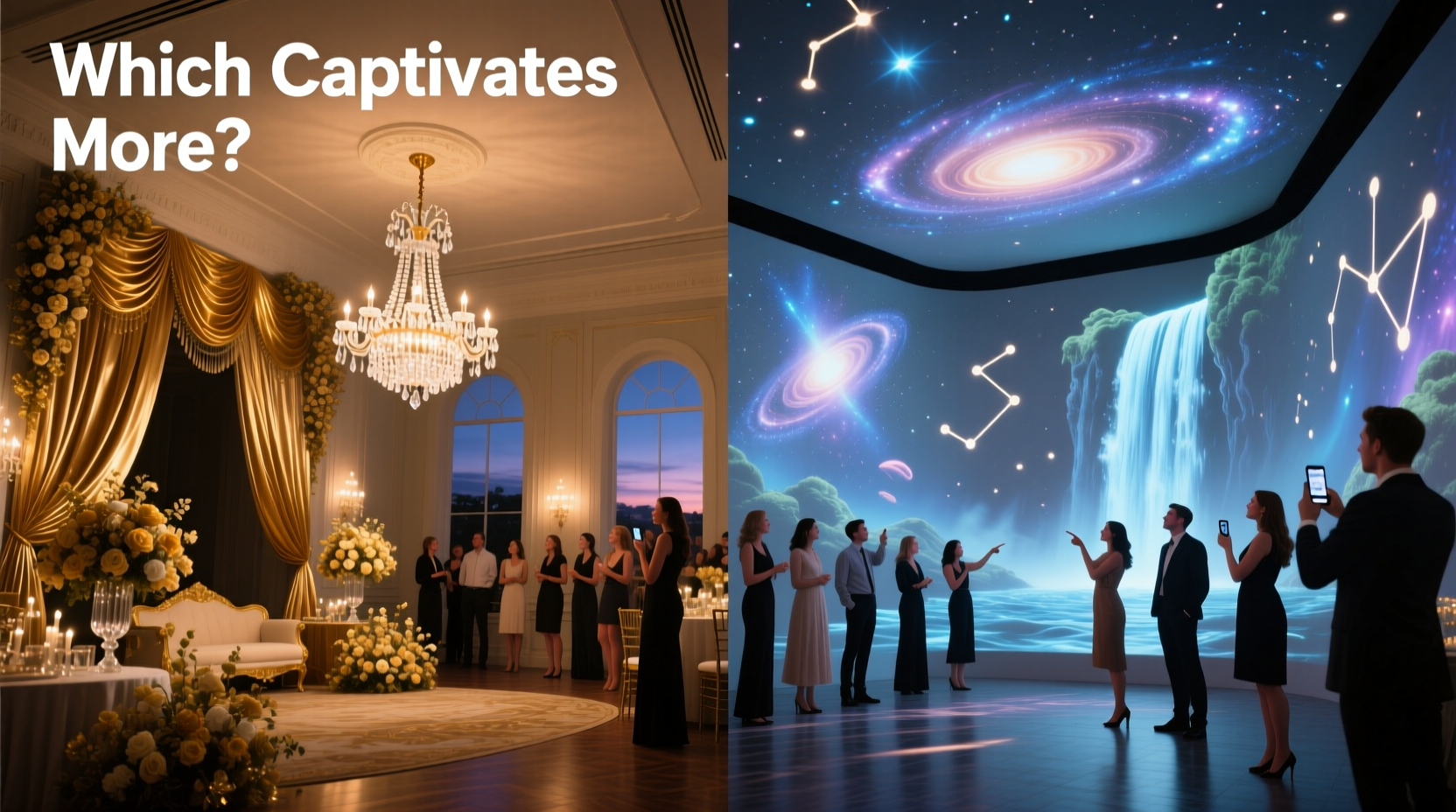
Physical decorations engage multiple senses. Guests can touch velvet linens, smell floral arrangements, hear fabric rustle, and feel textures underfoot. This multisensory immersion creates authenticity—a sense of presence that’s hard to replicate digitally. A grand floral arch, hand-crafted centerpieces, or draped chandeliers evoke timelessness and craftsmanship. These elements signal effort, care, and personal investment.
High-end physical decor communicates luxury through materiality. Think of silk table runners, crystal vases, or custom-built installations made from wood, metal, or glass. Such details carry weight—both literal and symbolic. They suggest permanence and importance, making guests feel honored to be part of something substantial.
However, physical decor has limitations. It requires storage, transportation, setup time, and labor. Changes mid-event are nearly impossible. Once installed, the design is fixed. And while beautiful, it may lack surprise or dynamism unless paired with other effects like lighting shifts or choreographed reveals.
Projection Mapping: The Art of Transformation
Indoor projection mapping turns static surfaces into dynamic canvases. Walls, ceilings, floors, furniture—even food displays—can become animated storytelling devices. Unlike standard video projection, mapping uses 3D modeling software to warp images precisely onto irregular shapes, creating illusions of movement, depth, and transformation.
Imagine a plain white room suddenly becoming a forest canopy, then a starfield, then a cascading waterfall—all within minutes. Projection mapping doesn’t just decorate; it transforms environments in real time. This fluidity allows for narrative arcs during events: a romantic buildup at a wedding, a dramatic reveal at a product launch, or evolving moods throughout an evening.
“Projection mapping doesn’t compete with physical decor—it redefines the rules of engagement. You’re not filling a space; you’re commanding attention through motion and emotion.” — Lena Torres, Immersive Experience Designer
What makes projection truly powerful is its ability to synchronize with sound, lighting, and performance. When timed perfectly, mapped visuals can pulse with music, react to speeches, or guide transitions. This level of coordination creates moments of collective awe—those breathless seconds where everyone stops talking and simply watches.
Direct Comparison: Key Factors Side-by-Side
| Factor | Physical Decorations | Projection Mapping |
|---|---|---|
| Setup Time | Hours to days; labor-intensive | Moderate (calibration-heavy) |
| Flexibility During Event | None – static after setup | High – scenes change instantly |
| Sensory Engagement | Touch, smell, visual texture | Visual spectacle, audio sync |
| Customization | Limited by materials and build time | Near-limitless; digital-only changes |
| Cost (Mid-Range Event) | $3,000–$10,000+ | $5,000–$15,000+ (equipment & talent) |
| Maintenance During Event | Floral wilting, spills, wear | Minimal if calibrated properly |
| Guest Recall Factor | Strong for tactile beauty | Exceptional for “wow” moments |
A Real-World Example: Wedding Reception Showdown
In early 2023, two couples hosted weddings on consecutive weekends at the same historic ballroom in Chicago. Both had similar budgets—around $25,000 for decor and ambiance—but chose opposite approaches.
Couple A invested heavily in physical decor: floor-to-ceiling ivory draping, hundreds of roses suspended in glass orbs, custom calligraphy place cards, and hand-laid runner tables. The result was elegant, classic, and Instagram-ready. Guests praised the sophistication and took countless photos.
Couple B opted for minimal physical structure—simple round tables with neutral linens—but allocated most of their budget to projection mapping. As dinner ended, the walls dissolved into a night sky filled with constellations matching the couple’s birth charts. Then, during the first dance, the floor became a rippling pond reflecting moving light. The final send-off showed a timeline of their relationship across the ceiling, ending with “Thank You” in glowing script.
Post-event surveys revealed a telling difference: while both groups rated the aesthetics highly, **78% of Couple B’s guests mentioned the visuals as “unforgettable,”** compared to 52% for Couple A. One guest said, “I’ve been to dozens of beautiful weddings, but I’ve never seen anything *move* like that before.”
This case illustrates a key insight: beauty impresses, but transformation astonishes.
Best Practices: How to Maximize Impact Regardless of Choice
Whether choosing projections, physical decor, or a hybrid model, certain principles elevate guest experience. Use this checklist to ensure maximum impact:
- Define a clear theme or story arc for the event
- Ensure all visual elements support that narrative
- Use lighting intentionally—not just for visibility, but mood
- Time major visual changes to coincide with key moments (speeches, dances, reveals)
- Test sightlines from multiple guest positions
- Integrate sound design with visual elements
- Limit clutter—focus on focal points rather than full-room saturation
Step-by-Step: Planning a High-Impact Visual Timeline
- Weeks Before: Finalize event flow and identify three key moments for visual impact (e.g., entrance, toast, send-off).
- 10 Days Out: Confirm surface suitability for projection (color, texture, flatness) or finalize physical builds.
- 2 Days Before: Conduct technical run-through with AV team. For physical decor, pre-assemble components offsite if possible.
- Day Of: Install base elements early. Calibrate projectors or position centerpieces with precision.
- 30 Minutes Before: Do a full sensory check—light levels, sound balance, scent (if using), and crowd visibility.
- During Event: Trigger visual highlights exactly on cue. Assign one person to manage timing.
- Post-Event: Gather feedback specifically about atmosphere and emotional highs.
Hybrid Approach: The Best of Both Worlds?
Many top-tier events now blend physical and digital elements. A sculptural centerpiece becomes a projection surface. A cake table doubles as a canvas for animated patterns. Drapes serve as backdrops for soft-mapped lighting effects.
This synergy leverages the warmth of real materials with the magic of motion. For example, a wooden altar carved with initials can later “bloom” with projected vines and flowers during a vow renewal. The object remains, but its meaning evolves visually.
The hybrid model demands careful coordination. Mapped content must align with physical geometry. Colors should complement, not clash. And above all, the technology must disappear—guests shouldn’t notice projectors or cables. When done well, the effect feels effortless, almost magical.
Frequently Asked Questions
Can projection mapping work in brightly lit rooms?
Only with high-lumen projectors (8,000 lumens or more) and controlled lighting. Most effective in dimmed environments. For daytime events, combine with blackout curtains or use projections selectively on shaded surfaces.
Is physical decor more sustainable than digital alternatives?
It depends. Fresh flowers create waste, while rental decor reduces impact. Projection has low physical waste but high energy use. Consider reusable structures, LED-efficient projectors, and local sourcing to improve sustainability in either approach.
Do guests prefer one over the other?
Preference varies by demographic. Younger audiences often favor the novelty of projection, while older guests may appreciate the craftsmanship of physical decor. However, across age groups, **shared moments of wonder**—regardless of medium—are consistently remembered most.
Conclusion: The True Measure of \"Wow\"
So, which wows more guests: indoor projection mapping or physical decorations?
The answer lies not in the tool, but in the intention behind it. A $20,000 floral installation can fall flat without emotional resonance. A simple projected message—timed perfectly—can bring tears to eyes.
That said, projection mapping holds a distinct edge in creating *collective awe*. Its ability to transform spaces in real time disrupts expectations. In an age of curated social media moments, guests don’t just want beauty—they want to witness something they can’t recreate at home.
Physical decorations excel in elegance, tradition, and sensory richness. They ground an event in reality. Projection elevates it into fantasy. The most unforgettable experiences often do both.
Instead of choosing one over the other, consider how each can serve your story. Let physical elements anchor the experience in authenticity, and let projections deliver the moments that suspend disbelief. When combined with purpose, either—or both—can leave guests saying, “I’ve never seen anything like that before.”




 浙公网安备
33010002000092号
浙公网安备
33010002000092号 浙B2-20120091-4
Comments
No comments yet. Why don't you start the discussion?