
Navigating the “What is your greatest weakness?” question in a job interview can feel like walking through a minefield. Answer too honestly, and you risk disqualifying yourself. Answer too generically, and you come across as evasive or unreflective. The key isn’t to avoid the question—it’s to reframe it. This moment isn’t about exposing flaws; it’s an opportunity to demonstrate self-awareness, growth mindset, and professionalism.
When handled correctly, this question becomes one of the most powerful tools in your interview arsenal. It allows hiring managers to assess emotional intelligence, honesty, and your ability to learn from feedback. The best answers don’t hide weaknesses—they transform them into narratives of improvement.
Why This Question Matters More Than You Think
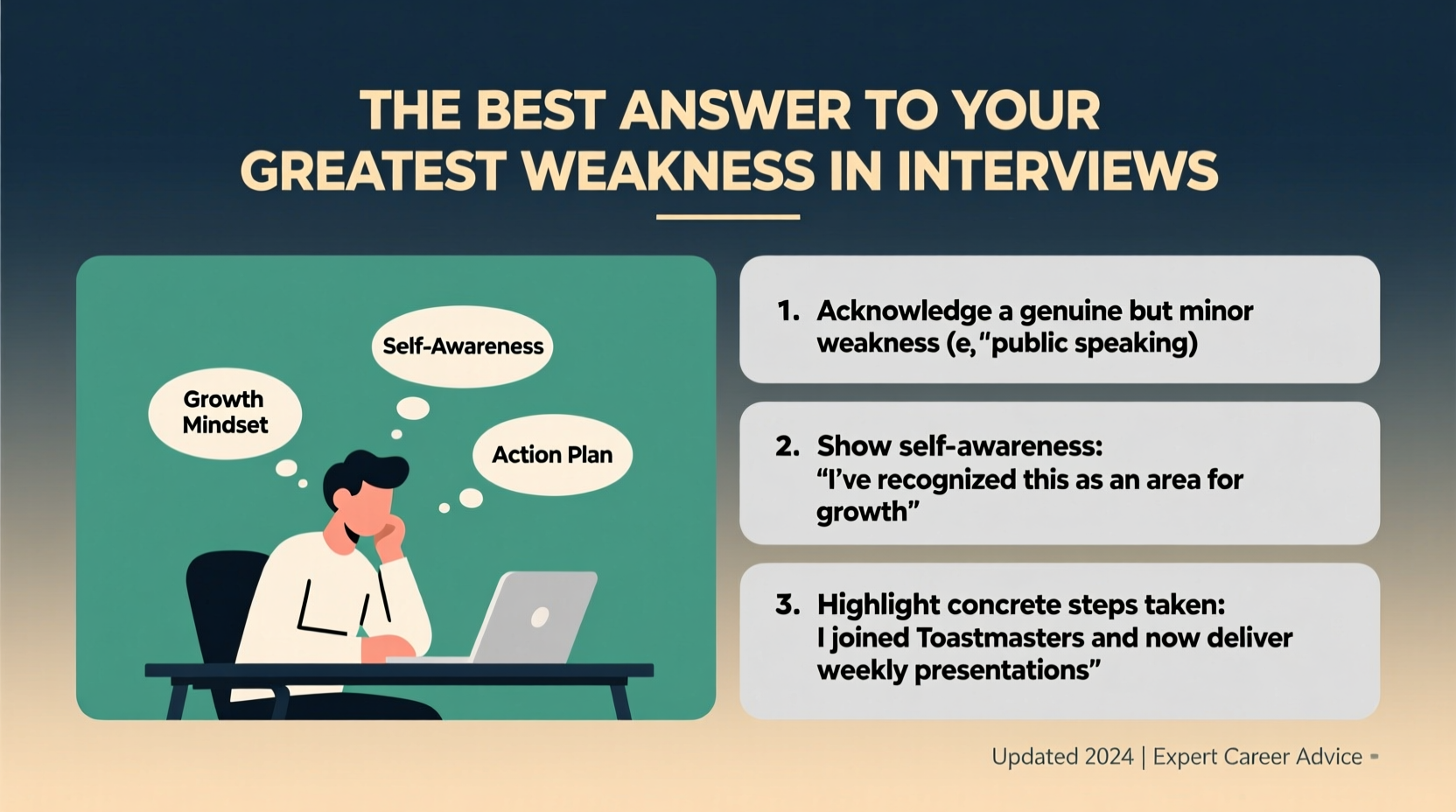
Employers ask about weaknesses not to trap candidates, but to evaluate three critical traits:
- Self-awareness: Do you understand how you operate in professional settings?
- Accountability: Can you own mistakes without deflecting blame?
- Growth orientation: Are you actively working to improve?
A poorly constructed answer—such as “I work too hard” or “I’m a perfectionist”—is instantly recognizable as disingenuous. These clichés signal that you’re avoiding real introspection. On the other hand, a thoughtful response shows maturity and aligns with what employers truly value: resilience and adaptability.
“We don’t expect perfection. We want to see if someone can reflect on their limitations and take initiative to grow.” — Lisa Tran, Talent Acquisition Director at TechForward Inc.
Choosing the Right Weakness: Strategy Over Honesty Alone
Honesty is important, but so is strategy. Not every personal shortcoming should be shared in an interview. The goal is to select a genuine weakness that:
- Isn’t a core requirement of the role
- Has already been or is actively being addressed
- Doesn’t raise red flags about reliability or ethics
For example, admitting to poor time management when applying for a project coordinator role could be damaging. But sharing that you once struggled with public speaking—and have since taken steps to improve—can resonate strongly, especially if communication is a secondary skill.
Structuring Your Answer: The STAR-L Framework
To deliver a compelling response, use a modified version of the STAR method—add a \"Learning\" component at the end. This structure ensures clarity and impact:
- Situation: Briefly set the context.
- Task: Explain your responsibility.
- Action: Describe the steps you took to improve.
- Result: Share measurable outcomes or observed changes.
- Learning: Reflect on how this shaped your professional approach.
Real Example: From Hesitant Speaker to Confident Presenter
Raj, a mid-level marketing analyst, was asked about his greatest weakness during an interview for a senior strategist role. Instead of dodging the question, he responded:
“In my first year leading team meetings, I noticed I’d often rush through presentations because I was nervous about feedback. That made it harder for stakeholders to follow my analysis. I realized I needed to slow down and communicate more clearly. So I joined Toastmasters, practiced delivering mock reports with colleagues, and started recording myself to spot verbal tics. Within six months, my manager noted a significant improvement in my delivery. Now, I even mentor junior analysts on presentation skills. The experience taught me that discomfort is often a sign of growth.”
This answer works because it names a real challenge, shows proactive effort, and ends with positive transformation—all while staying relevant to workplace performance.
Common Mistakes and How to Avoid Them
Even well-intentioned responses can backfire if they fall into predictable traps. Below is a comparison of ineffective versus effective approaches:
| Do’s | Don’ts |
|---|---|
| Choose a skill-based weakness (e.g., delegation, public speaking) | Blame others or external factors (“My last boss never gave me feedback”) |
| Show concrete steps taken to improve | Use overused clichés (“I’m a workaholic”) |
| Keep the focus on professional development | Reveal a fatal flaw (“I hate working in teams”) |
| Limit the story to 60–90 seconds | Over-explain or sound apologetic |
| End with how you’ve grown | Leave the story unresolved |
Checklist: Crafting Your Ideal Response
Before your next interview, go through this checklist to refine your answer:
- ✅ Is the weakness real but not disqualifying?
- ✅ Can I describe a specific situation where it affected my work?
- ✅ Have I taken tangible steps to address it?
- ✅ Can I share a positive outcome or behavior change?
- ✅ Does the story end on a note of growth, not guilt?
- ✅ Have I rehearsed it naturally, without memorizing word-for-word?
Frequently Asked Questions
Can I say I don’t have any weaknesses?
No. This response signals a lack of self-awareness. Everyone has areas for growth. Saying otherwise damages credibility.
Should I mention a weakness that’s also a strength?
Only if it’s authentic. Phrases like “I care too much” are transparently insincere. Instead, pick a real developmental area and show how you’re improving.
How recent should the example be?
Preferably within the last 1–3 years. Older examples may suggest you haven’t evolved. However, if you’ve recently revisited the issue (e.g., mentoring others), it remains relevant.
Final Thoughts: Turn Vulnerability Into Value
The “greatest weakness” question isn’t about finding perfect candidates—it’s about identifying those who can grow. The most memorable answers aren’t flawless; they’re human. They reveal struggle, effort, and progress. When you frame a weakness as part of your professional journey, you do more than answer a question—you tell a story of resilience.
Remember: Employers aren’t looking for people who have never failed. They’re looking for people who have failed, learned, and kept going. Your answer should reflect that spirit—not as a confession, but as a testament to your commitment to excellence.




 浙公网安备
33010002000092号
浙公网安备
33010002000092号 浙B2-20120091-4
Comments
No comments yet. Why don't you start the discussion?