
Burnout doesn’t discriminate—but it does manifest differently depending on personality. While both introverts and extroverts can experience emotional exhaustion, mental fatigue, and diminished motivation, the triggers, warning signs, and recovery paths vary significantly. Understanding these differences isn't just about self-awareness; it's essential for sustainable energy management in a world that often misunderstands quiet strength and mislabels social vitality as endless stamina.
The key lies in recognizing that introversion and extroversion aren’t preferences for solitude or parties—they’re neurological wiring patterns related to dopamine sensitivity and stimulation thresholds. When burnout sets in, one size does not fit all. Recharging effectively means honoring your innate energy system, not conforming to external expectations.
How Burnout Develops Differently in Introverts and Extroverts
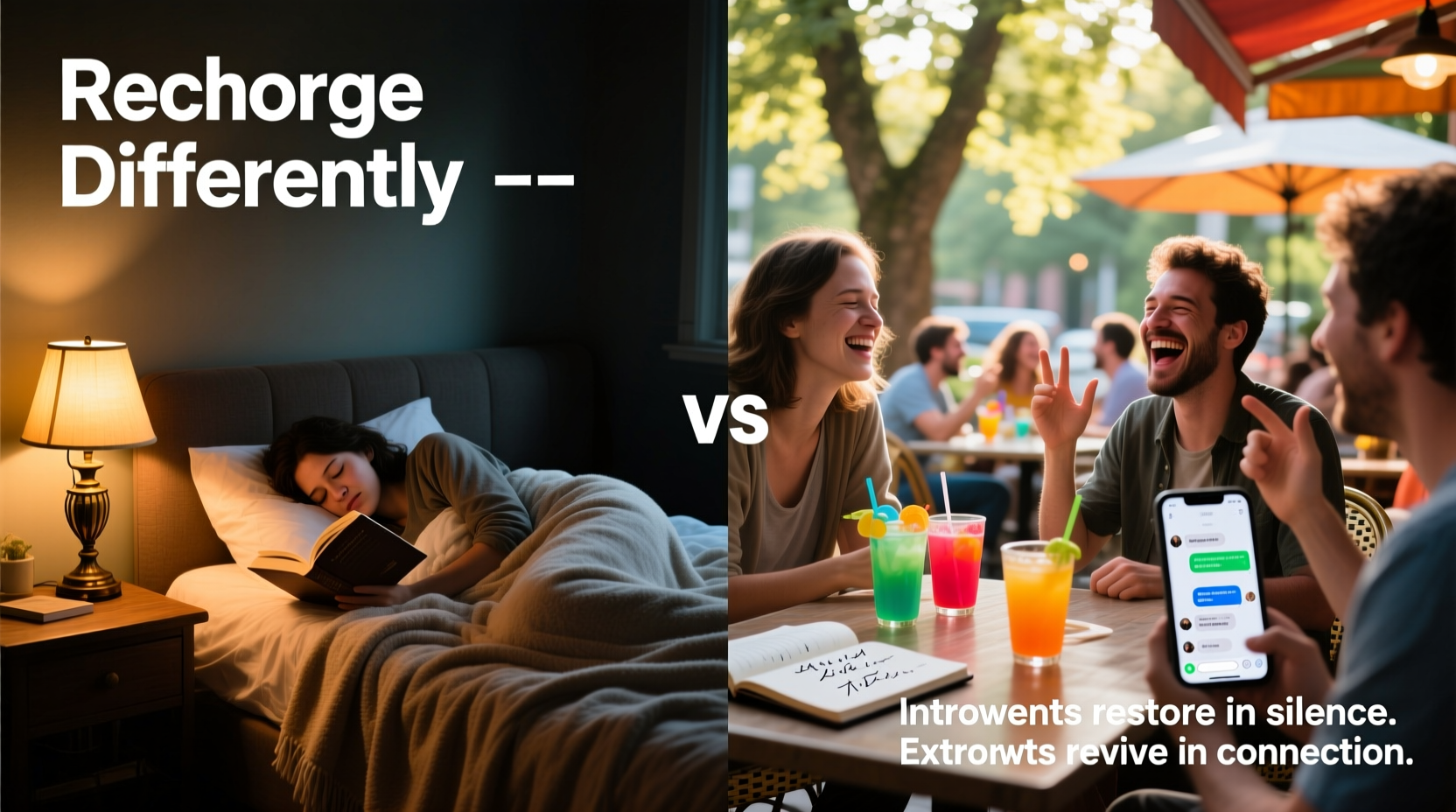
Burnout is more than stress. It’s chronic depletion—emotional, physical, and cognitive—often caused by prolonged mismatch between demands and recovery. For introverts, burnout typically arises from overstimulation: too many social interactions, open-office environments, back-to-back meetings, or lack of alone time. Their nervous systems are highly sensitive to external input, making even “normal” levels of interaction draining.
Extroverts, conversely, derive energy from external engagement. Their burnout usually stems from understimulation—lack of meaningful connection, isolation, or monotonous solo work. Without sufficient social fuel, they feel flat, disengaged, and emotionally stagnant. Ironically, an extrovert working remotely without team interaction may feel just as depleted as an introvert forced into daily networking events.
This fundamental difference explains why standard workplace wellness programs often fail. Mandating group activities ignores the introvert’s need for quiet reflection, while prescribing silent meditation retreats can leave extroverts feeling more disconnected.
“Burnout in introverts is often invisible because they internalize stress. For extroverts, it shows up as irritability or apathy when their social circuits go dark.” — Dr. Lena Torres, Clinical Psychologist & Personality Researcher
Recognizing the Signs: Early Warnings of Personality-Based Burnout
Early detection is critical. The sooner you identify burnout symptoms aligned with your temperament, the faster you can intervene.
| Symptom | Introvert Manifestation | Extrovert Manifestation |
|---|---|---|
| Fatigue | Mental fog after conversations; needing hours to recover from brief interactions | Lethargy despite rest; lack of motivation during solitary tasks |
| Irritability | Snapping at others after being pulled into unplanned socializing | Feeling restless or short-tempered when isolated for long periods |
| Withdrawal | Canceling plans, avoiding calls, retreating into digital silence | Uncharacteristic silence, skipping gatherings they’d normally enjoy |
| Sleep Disruption | Overthinking at night after social exposure | Difficulty sleeping due to mental restlessness from lack of engagement |
| Reduced Performance | Struggling to focus after group meetings or collaborative sessions | Procrastinating on independent tasks; losing enthusiasm for projects |
Notice the pattern: introverts deplete through input, extroverts through lack of output. Misreading these signals leads people to push in the wrong direction—urging introverts to \"get out more\" or telling extroverts to \"take quiet time,\" which can worsen the condition.
Recharging Strategies That Align With Your Temperament
Effective recovery isn’t about doing more—it’s about doing what restores *your* type of energy. Here’s how each personality can rebuild resilience.
For Introverts: Protect and Restore Through Strategic Solitude
Introverts recharge by reducing sensory load and returning to internal processing. This isn’t antisocial behavior—it’s biological necessity. The goal isn’t isolation, but intentional containment of stimulation.
- Schedule buffer zones: Block 30–60 minutes before and after high-interaction events. Use this time to decompress—walk alone, journal, or sit quietly with tea.
- Create low-stimulus spaces: Designate a room or corner free from noise, screens, and interruptions. Even a closet with noise-canceling headphones can serve as a reset zone.
- Limit digital chatter: Turn off non-essential notifications. Batch email and message responses instead of reacting in real-time.
- Use expressive writing: Journaling helps process internal experiences without verbalizing them, reducing cognitive strain.
For Extroverts: Re-energize Through Meaningful Connection
Extroverts need interaction to feel alive, but not all socializing is equal. Small talk drains everyone. What fuels extroverts is deep, reciprocal exchange—feeling heard, seen, and engaged.
- Seek quality interaction: Prioritize one-on-one conversations or small group discussions over large gatherings where they get lost in the crowd.
- Engage in verbal processing: Talk through ideas with a trusted colleague or friend. Thinking aloud isn’t indecisiveness—it’s cognition in motion.
- Incorporate movement-based socializing: Walk-and-talk meetings, coffee walks, or fitness classes with friends combine physical and social energy renewal.
- Volunteer or mentor: Teaching, coaching, or leading gives extroverts purpose-driven interaction that sustains motivation.
Mini Case Study: Two Employees, One Deadline, Different Burnout Paths
Consider Maya and Jordan, both marketing managers at the same firm. They face identical deadlines, workloads, and team responsibilities. Yet, when a major campaign launch approaches, their burnout trajectories diverge.
Maya, an introvert, starts declining lunch invites and turning off her camera during Zoom calls. She works best in the early morning and late evening, avoiding the middle of the day when the office buzz peaks. After three days of back-to-back client meetings, she calls in sick—not because she’s ill, but because her brain feels like it’s been sandblasted by sound and eye contact.
Jordan, an extrovert, thrives during the initial brainstorming phase, feeding off team energy. But when the project shifts to individual execution, he grows restless. He starts pacing, checking his phone constantly, and interrupting colleagues with unrelated questions. By week three, he’s bored, unmotivated, and snapping at teammates—even though he hasn’t had a packed schedule.
Their manager initially interprets both behaviors as disengagement. But upon coaching, she adjusts her approach: she gives Maya meeting summaries instead of requiring live attendance and allows asynchronous updates. For Jordan, she schedules bi-weekly check-ins focused on big-picture thinking and assigns him a co-pilot role to maintain collaboration.
Within two weeks, both rebound. Maya delivers polished copy ahead of deadline. Jordan reignites creative momentum. The difference? Support tailored to their energy needs, not assumptions about productivity.
Step-by-Step Guide to Building a Personalized Recharge Plan
Whether you're managing yourself or leading a team, follow this six-step process to prevent and reverse burnout based on personality dynamics.
- Identify your dominant energy type: Reflect honestly—are you energized by solitude or interaction? Take validated assessments like the Myers-Briggs Type Indicator (MBTI) or Carl Jung’s typology if unsure.
- Map your weekly energy cycles: For seven days, log your energy levels hourly. Note spikes and crashes alongside activities. Look for patterns tied to social exposure or isolation.
- Diagnose your burnout trigger: Are you exhausted from too much input (introvert burnout) or too little output (extrovert burnout)? Be specific: Is it volume, duration, or lack of meaning?
- Design daily micro-recovery habits: Build small rituals into your routine—5 minutes of silence post-meeting (introvert) or a 15-minute call with a peer (extrovert).
- Negotiate environmental adjustments: Request changes that support your needs: flexible meeting formats, hybrid work options, or designated quiet/collaborative zones.
- Review and revise monthly: Needs evolve. Reassess every 30 days. What worked last month may not suit current demands.
Checklist: Sustainable Energy Maintenance
Use this checklist weekly to stay ahead of burnout:
- ✅ Scheduled at least one true downtime block (no screens, no people)
- ✅ Had at least one meaningful conversation (not transactional)
- ✅ Limited exposure to draining environments (e.g., open offices, forced mingling)
- ✅ Advocated for one boundary (said no, rescheduled, delegated)
- ✅ Engaged in one activity purely for internal satisfaction (reading, creating, reflecting)
- ✅ Connected with someone who energizes you (in person or virtually)
FAQ: Common Questions About Personality and Burnout
Can someone be both introverted and extroverted?
Yes—about 30% of people fall into the “ambivert” category, showing balanced tendencies. Ambiverts may alternate between needing solitude and seeking connection, sometimes within the same day. Their challenge is recognizing shifting needs and adapting quickly.
Does burnout change your personality type?
No. Chronic burnout may cause temporary behavioral shifts—such as an extrovert becoming withdrawn or an introvert over-socializing to escape rumination—but core temperament remains stable. Recovery involves returning to natural rhythms, not adopting a new identity.
What if my job contradicts my energy needs?
Many roles demand acting against type—introverts in sales, extroverts in data analysis. Success here depends on compensation: build strong recovery practices outside work hours and negotiate autonomy where possible. Also, consider long-term alignment—sustained contradiction leads to chronic fatigue.
Conclusion: Reclaim Your Energy on Your Own Terms
Burnout isn’t a personal failure. It’s a signal—a mismatch between how you’re living and how you’re wired. Recognizing the distinction between introvert and extrovert burnout transforms recovery from guesswork into strategy. You don’t need to become more outgoing or more reserved. You need to honor your nature, not fight it.
Start today. Audit one day’s energy flow. Adjust one habit. Set one boundary. Small acts of self-knowledge compound into resilience. In a culture that glorifies hustle, choosing restoration is revolutionary. Whether you recharge in silence or in conversation, your energy matters—protect it fiercely.




 浙公网安备
33010002000092号
浙公网安备
33010002000092号 浙B2-20120091-4
Comments
No comments yet. Why don't you start the discussion?