
The modern workplace is no longer one-size-fits-all. As remote and hybrid work become standard, the way we design our personal work environments has a direct impact on concentration, energy levels, and long-term productivity. Central to this shift is understanding how personality—specifically introversion and extroversion—influences what kind of workspace fosters deep focus. While both types can thrive professionally, their cognitive needs differ significantly. Ignoring these differences can lead to fatigue, distraction, and diminished performance. By aligning your environment with your natural tendencies, you create conditions where focus isn’t forced—it flows.
The Psychology Behind Focus and Personality
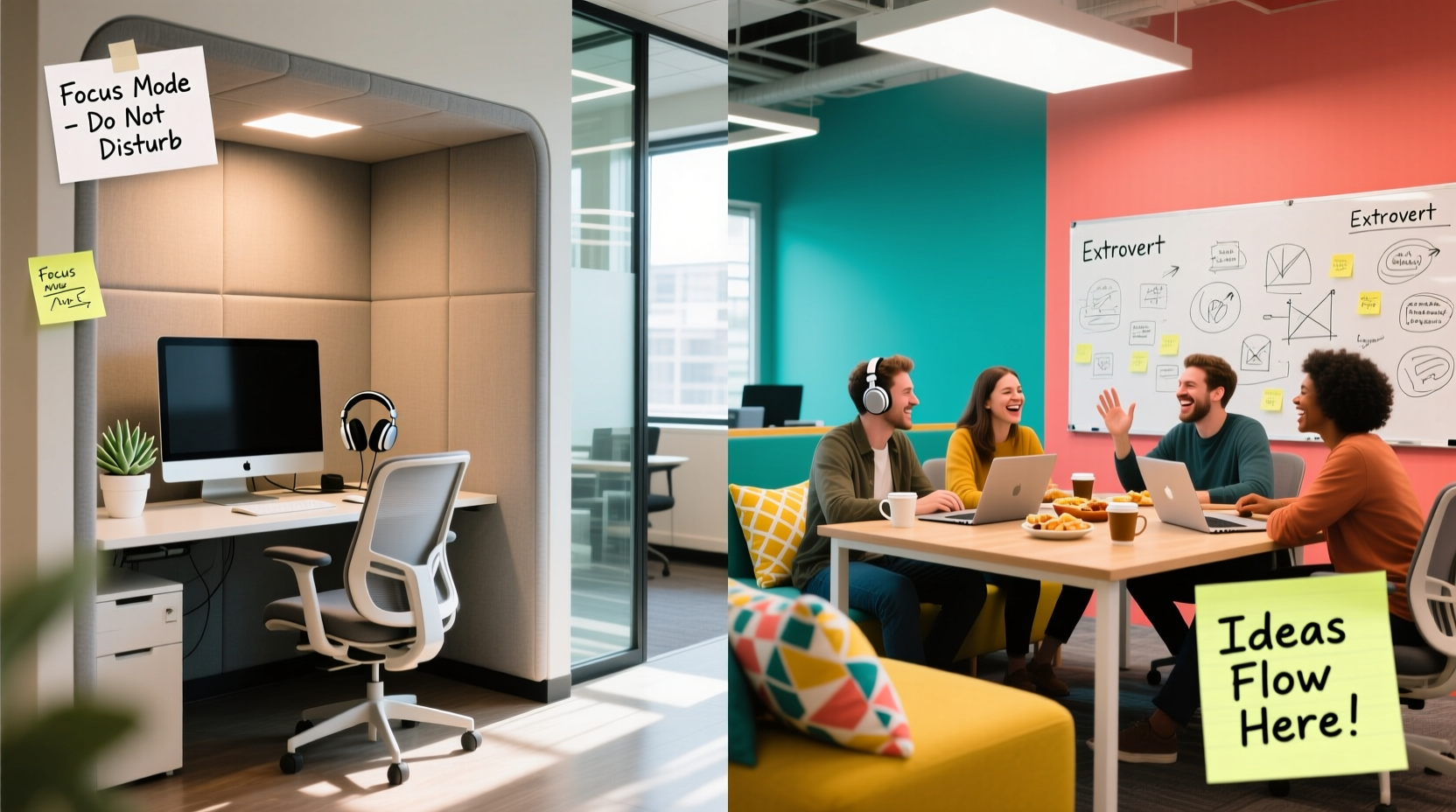
Carl Jung first introduced the concepts of introversion and extroversion as fundamental orientations of personality. Extroverts gain energy from external stimulation—social interaction, movement, sound—while introverts recharge through solitude and low-sensory input. These aren't just preferences; they reflect neurological differences in dopamine sensitivity and arousal thresholds. Introverts tend to be more easily overstimulated, meaning even subtle background noise or visual clutter can disrupt concentration. Extroverts, on the other hand, often perform better in dynamic settings where sensory input helps maintain alertness.
Dr. Marti Olsen Laney, author of *The Introvert Advantage*, explains:
“Introverts process information more deeply and are neurologically wired for greater internal stimulation. That means external distractions don’t just interrupt—they overwhelm.”
This distinction is crucial when designing a workspace. A setup that feels energizing to an extrovert might feel draining to an introvert, and vice versa. The goal isn’t to label one personality type as “better” for productivity, but to recognize that optimal focus arises when the environment supports the individual’s psychological wiring.
Introvert-Friendly Workspaces: Designing for Deep Focus
For introverts, focus thrives in quiet, controlled environments. Their brains process stimuli more intensely, making them prone to cognitive overload in chaotic spaces. To maximize concentration, introverts benefit from:
- Minimal visual distractions (few decorations, neutral colors)
- Soundproofing or noise-canceling solutions
- Private or semi-private areas away from high-traffic zones
- Natural lighting without glare
- Clear boundaries between work and living spaces (especially at home)
One effective strategy is the \"cocoon method\"—designing a small, enclosed area that limits peripheral vision and auditory intrusion. This could mean positioning your desk against a wall, using a monitor hood, or working in a spare bedroom rather than an open-plan living space.
A real-world example: Sarah, a technical writer and self-described introvert, struggled with focus while working from her apartment’s living room. After moving her workstation into a converted closet with soft lighting, acoustic panels, and a door she could close, her daily output increased by nearly 40%. She reported fewer interruptions and less mental fatigue by day’s end. The change wasn’t about equipment—it was about environmental control.
Extrovert-Friendly Workspaces: Channeling Energy Without Distraction
Extroverts often find silence unsettling. They rely on ambient stimulation to stay engaged and alert. A completely sterile, silent workspace can lead to boredom, restlessness, and reduced attention span. However, this doesn’t mean extroverts can’t focus—it means their ideal environment integrates stimulation in a structured way.
Effective strategies for extroverts include:
- Background music or podcasts (instrumental or low-dialogue)
- Flexible seating options (standing desks, exercise balls, walking pads)
- Proximity to others—even if not interacting—to maintain a sense of connection
- Bright lighting and vibrant colors to stimulate alertness
- Occasional social breaks built into the work rhythm
“We thrive on movement and interaction. But that doesn’t mean we can’t be focused. It means we need to channel our energy intentionally.” — James Reed, organizational psychologist
Co-working spaces often appeal to extroverts because they provide background activity without demanding direct engagement. At home, extroverts might benefit from placing their desk near a window with street activity or using a dual-monitor setup that allows one screen for work and another for a muted livestream or video call with a colleague.
The key is balance: enough stimulation to maintain arousal, but not so much that it fragments attention. White noise generators or curated playlists with consistent tempo (e.g., lo-fi beats or ambient house) can offer this middle ground.
Comparative Workspace Features: Introvert vs Extrovert
| Feature | Introvert Preference | Extrovert Preference |
|---|---|---|
| Noise Level | Silent or white noise only | Background music or ambient sound |
| Lighting | Soft, diffused, natural light | Bright, dynamic, possibly colored |
| Space Layout | Enclosed, private, minimal foot traffic | Open, accessible, near activity |
| Furniture | Fixed, ergonomic, stationary | Movable, adjustable, active (e.g., standing desk) |
| Decor | Minimalist, calming visuals | Vibrant, inspiring, expressive |
| Social Proximity | Low—prefer digital communication | High—value visible presence of others |
This table highlights that neither approach is inherently superior. The mismatch occurs when individuals are expected to adapt to environments that contradict their natural energy patterns. Employers and remote workers alike should treat workspace design as a personalized productivity tool, not a default template.
Creating a Hybrid Workspace: When You’re Neither Fully Introvert Nor Extrovert
Many people fall somewhere in the middle—what psychologists call \"ambiverts.\" These individuals draw energy from both solitude and social interaction, depending on context and mood. For ambiverts, flexibility is key. A static workspace may work one day and fail the next.
To accommodate shifting needs, consider a modular setup:
- Zones within one space: Divide your room into a “focus corner” (quiet, minimal) and an “energy zone” (bright, active).
- Adjustable tools: Use headphones that switch between noise-canceling and ambient modes. Have a playlist library ranging from classical to upbeat electronic.
- Daily intention check: Start each morning by asking: Do I need solitude today, or stimulation? Let that guide your setup.
- Time-blocked environments: Schedule deep work hours in silence, followed by collaborative or creative sessions with music or background talk.
Lena, a project manager and ambivert, uses two distinct setups in her home office. In the mornings, she faces the wall with noise-canceling headphones for report writing. In the afternoons, she rotates her chair toward the window, turns on upbeat music, and joins team calls with energy. This intentional duality has helped her maintain consistency without burnout.
Actionable Checklist: Optimize Your Workspace for Your Type
Use this checklist to audit and refine your current workspace based on your personality:
- ✅ Identify your dominant trait: introvert, extrovert, or ambivert (use validated tools like the Myers-Briggs or Big Five Inventory if unsure)
- ✅ Assess your current environment: What elements support or hinder focus?
- ✅ Reduce sensory mismatches: Remove overly stimulating decor if introverted; add movement or sound if extroverted
- ✅ Control auditory input: Invest in quality headphones or a white noise machine
- ✅ Define spatial boundaries: Use furniture, rugs, or lighting to mark “work mode” areas
- ✅ Test and iterate: Spend three days adjusting one variable (e.g., lighting or music) and track focus levels
- ✅ Schedule environment shifts (for ambiverts): Align workspace mode with task type
FAQ: Common Questions About Personality-Based Workspaces
Can introverts be productive in open offices?
It’s challenging but possible with adaptations. Introverts in open offices should use noise-canceling headphones, claim early access to quiet rooms, and establish clear “do not disturb” signals (e.g., a red flag on their desk). Scheduled remote days can also prevent chronic overstimulation.
Do extroverts always need noise to focus?
No—not all extroverts require sound, but most benefit from some form of background input. The key is predictability. Chaotic noise (e.g., loud conversations) harms focus, while rhythmic or familiar audio (e.g., instrumental jazz) can enhance it.
Is it possible to train yourself to focus in the opposite environment?
Short-term adaptation is possible, but long-term mismatch leads to stress and burnout. While everyone can tolerate non-ideal conditions occasionally, sustainable focus requires alignment with natural temperament. Think of it like diet: you can eat foods outside your preferences now and then, but long-term health depends on eating what suits your body.
Conclusion: Design for Who You Are, Not Who You Think You Should Be
The most effective workspace isn’t the most expensive or trendy—it’s the one that respects how your mind works. Whether you recharge in silence or thrive amid activity, your environment should amplify your strengths, not fight your nature. Companies that allow personalized setups see higher engagement and lower turnover. Individuals who honor their cognitive style report deeper focus, less fatigue, and greater job satisfaction.
Stop trying to fit into a mold designed for someone else. Audit your current space. Experiment with small changes. Pay attention to how you feel after a focused hour, not just what you accomplished. Then adjust accordingly. Productivity isn’t about enduring distraction—it’s about creating conditions where attention comes naturally.




 浙公网安备
33010002000092号
浙公网安备
33010002000092号 浙B2-20120091-4
Comments
No comments yet. Why don't you start the discussion?