
The idea of replacing your smartphone with a tablet for photography might sound far-fetched, but as tablets evolve into powerful multimedia tools, it’s worth asking: can the iPad Pro 10.5-inch truly stand in for an iPhone 7 Plus when it comes to taking photos? While both devices were released within a year of each other—iPhone 7 Plus in 2016 and iPad Pro 10.5 in 2017—their design philosophies differ significantly. The iPhone has always prioritized portability and camera excellence; the iPad Pro emphasizes productivity and screen real estate. Yet, Apple equipped the iPad Pro 10.5 with a surprisingly capable 12MP rear camera. But does that make it a viable alternative?
Camera Hardware Comparison
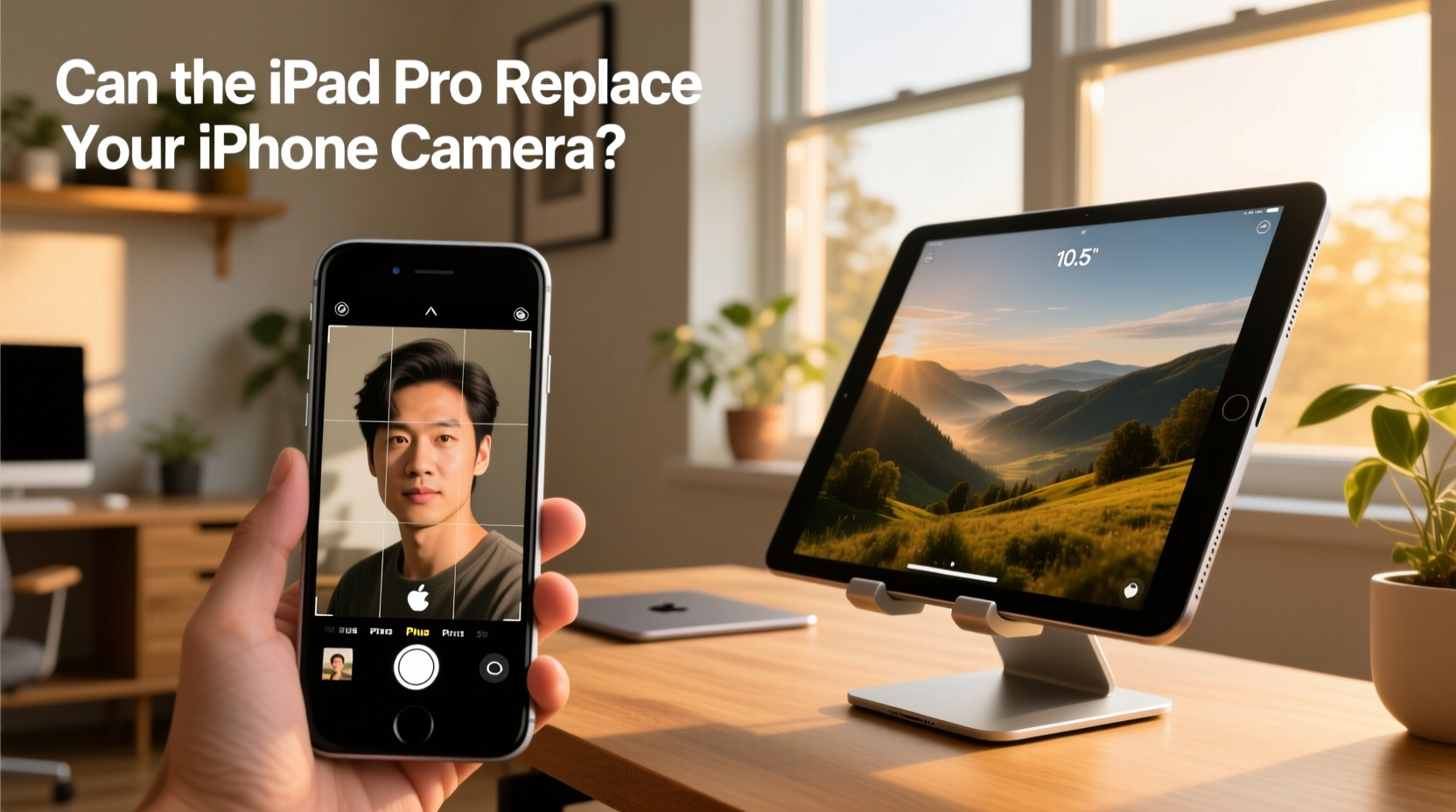
At first glance, the specs suggest parity. Both the iPad Pro 10.5 and iPhone 7 Plus feature a 12-megapixel rear camera with optical image stabilization (OIS), f/1.8 aperture, and 4K video recording at 30fps. On paper, they’re nearly identical. However, subtle differences in sensor tuning, lens quality, and software optimization tilt the balance.
The iPhone 7 Plus includes a dual-camera system—wide-angle and telephoto—enabling 2x optical zoom and Portrait Mode, a feature absent on the iPad Pro 10.5. This single omission limits the iPad’s versatility in scenarios requiring zoom or depth-controlled portraits. Additionally, the iPhone benefits from tighter integration between camera hardware and iOS features like Smart HDR (in later updates via software improvements) and faster autofocus algorithms optimized for quick snapshots.
“While the iPad Pro shares DNA with the iPhone camera, its tuning favors stability and video over spontaneity.” — David Lin, Mobile Imaging Analyst at TechVision Insights
Real-World Photo Performance
In daylight conditions, the iPad Pro 10.5 produces sharp, well-balanced images comparable to the iPhone 7 Plus. Colors are accurate, dynamic range is strong, and detail retention is impressive thanks to the larger body allowing slightly better thermal management during extended shooting.
However, low-light performance reveals a gap. Despite having OIS and the same aperture, the iPhone 7 Plus applies more aggressive noise reduction and computational enhancements through its image signal processor (ISP). Nighttime photos from the iPad tend to appear grainier and less refined. This is partly due to less aggressive software processing—Apple clearly prioritizes battery life and heat control on the iPad over pushing camera performance to its limits.
Another practical issue is composition. Holding a 10.5-inch tablet up to your face to frame a shot is awkward. There’s no ergonomic way to stabilize it one-handed, leading to shaky framing and unintentional motion blur. The iPhone, by contrast, fits naturally in one hand, enabling quick reaction to fleeting moments—a critical advantage in candid photography.
Detailed Feature Comparison
| Feature | iPad Pro 10.5 | iPhone 7 Plus |
|---|---|---|
| Rear Camera | 12MP, f/1.8, OIS, 4K@30fps | 12MP wide + 12MP telephoto, f/1.8 & f/2.8, OIS, 4K@30fps |
| Optical Zoom | No | 2x |
| Portrait Mode | No | Yes (via dual cameras) |
| Front Camera | 7MP, f/2.2 | 7MP, f/2.2 |
| Low-Light Processing | Moderate | Enhanced (Smart HDR precursors) |
| Ergonomics for Photography | Poor (large, two-handed use) | Excellent (compact, one-handed) |
| Video Capabilities | Strong, great for steady recording | Excellent, with better audio sync and stabilization |
When the iPad Pro Shines
While it falls short as a daily driver for casual snapshots, the iPad Pro excels in specific photographic contexts. Its large form factor becomes an asset when used with accessories. Mounted on a tripod, it functions as a reliable time-lapse rig or document scanner. Artists and educators use it to record tutorials with high-quality video, leveraging the expansive screen for real-time feedback.
One user, Sarah Nguyen, a freelance product photographer, shared her experience: “I use my iPad Pro 10.5 to photograph small handmade goods for Etsy. I mount it above my workspace with a clamp stand, connect a ring light, and shoot consistent overheads without touching the device. It’s not replacing my iPhone for lifestyle shots, but for controlled setups, it’s actually better.”
This highlights a key insight: the iPad Pro isn’t designed to replace the iPhone’s spontaneous photography role—it complements it in structured environments where stability, screen preview, and connectivity matter more than portability.
Can You Ditch Your iPhone for the iPad Pro Camera?
For most users, the answer is no. The iPhone 7 Plus offers superior ergonomics, faster launch times, better low-light results, and essential features like Portrait Mode and optical zoom. More importantly, it’s always with you. Photography isn’t just about hardware—it’s about accessibility. The best camera is the one you have when inspiration strikes.
The iPad Pro requires setup, planning, and often external support (like tripods or stands). It lacks the immediacy needed for street photography, family moments, or travel documentation. Furthermore, carrying a bulky tablet solely for photos defeats the purpose of mobile convenience.
Checklist: Is the iPad Pro Right for Your Photography Needs?
- ✅ Do you primarily shoot in controlled environments (studio, desk, tripod)?
- ✅ Are you focused on video tutorials, stop-motion, or time-lapse projects?
- ✅ Do you value screen size for live preview and manual focusing?
- ✅ Can you carry additional gear like mounts or lights?
- ❌ Do you need fast, spontaneous photo capture throughout the day?
- ❌ Are you reliant on zoom or portrait effects?
If most of your answers align with the first four, the iPad Pro could serve as a partial camera replacement. Otherwise, it remains a supplementary tool.
Frequently Asked Questions
Can the iPad Pro 10.5 take Portrait Mode photos?
No. Despite having a 12MP camera with advanced features, the iPad Pro 10.5 lacks the second telephoto lens required for depth mapping and Portrait Mode. Third-party apps offer simulated bokeh, but results are inconsistent and lack the precision of Apple’s implementation on the iPhone 7 Plus.
Is the front camera on the iPad Pro better for selfies or video calls?
The front-facing 7MP camera on the iPad Pro has the same resolution and aperture as the iPhone 7 Plus, but its wider field of view makes it ideal for group video calls. However, holding the tablet for selfies is impractical. For individual selfies, the iPhone remains more convenient and flattering due to better edge lighting awareness and facial recognition tuning.
Does the iPad Pro support third-party camera apps with manual controls?
Yes. Apps like ProCamera, Halide (older versions), and Filmic Pro allow manual ISO, focus, and exposure adjustments on the iPad Pro 10.5. These unlock creative potential beyond the stock Camera app, making it viable for semi-professional video work, though still limited by the absence of stereo audio and smaller microphone arrays compared to newer iPhones.
Conclusion: A Tool, Not a Replacement
The iPad Pro 10.5’s camera is technically impressive, especially for a tablet. It captures excellent stills and solid 4K video under optimal conditions. But being “good” doesn’t mean “sufficient” as a standalone photography device. The iPhone 7 Plus—despite its age—remains more versatile, responsive, and user-friendly for everyday imaging.
Rather than viewing the iPad Pro as a phone substitute, consider it a niche tool for deliberate, composed visual storytelling. Whether documenting crafts, teaching online, or filming product demos, it adds value—but only alongside a smartphone, not instead of one.




 浙公网安备
33010002000092号
浙公网安备
33010002000092号 浙B2-20120091-4
Comments
No comments yet. Why don't you start the discussion?