
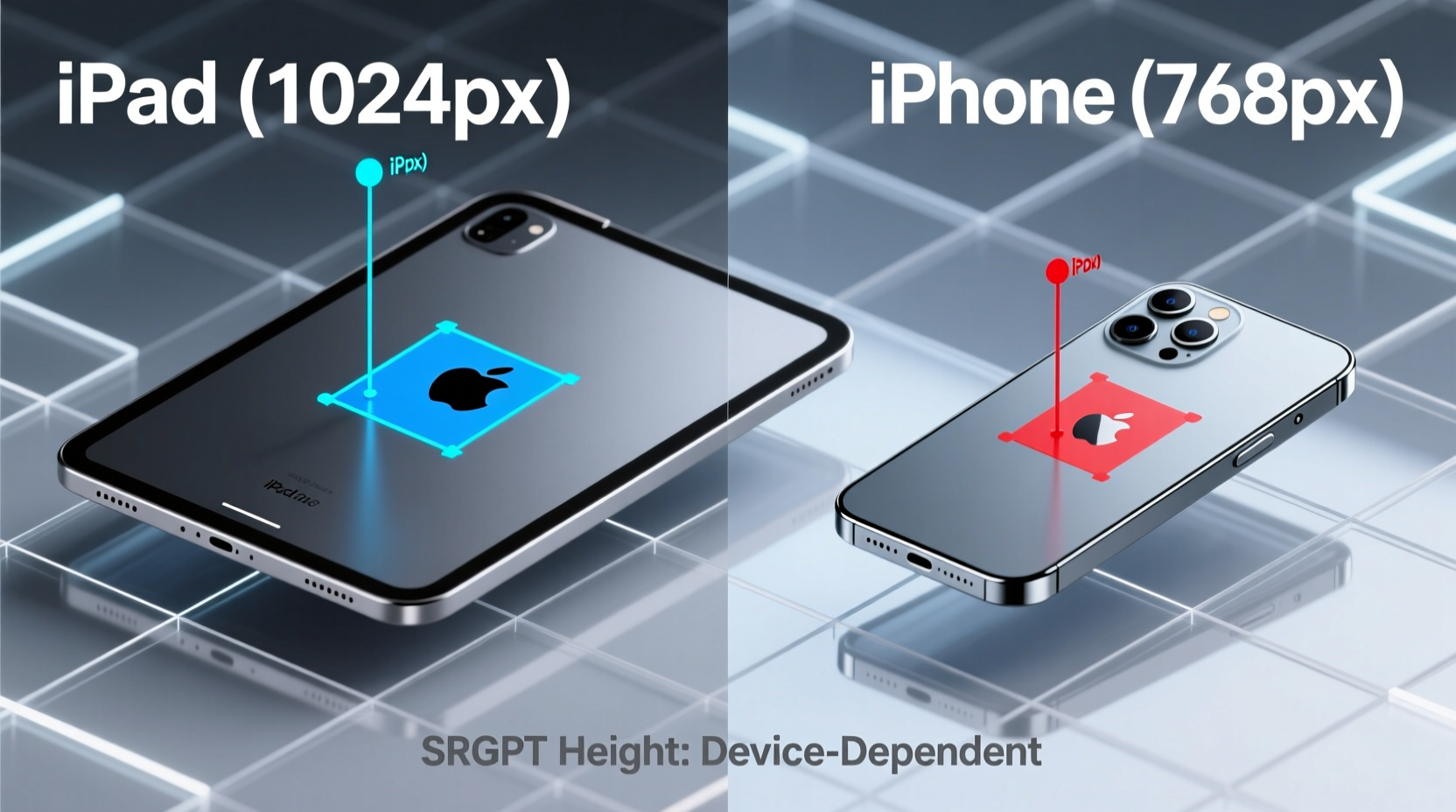
When developing for iOS, understanding screen dimensions and coordinate systems is essential for creating responsive, adaptive user interfaces. One common point of confusion among developers—especially those new to UIKit—is whether CGRect height values are universal across devices or if they vary between iPad and iPhone. The short answer: there is no universal height. Screen geometry, including the height derived from UIScreen.main.bounds.size.height, varies significantly across devices, orientations, and even interface configurations like multitasking on iPad.
This variability isn't a flaw—it's by design. Apple’s ecosystem spans multiple form factors, resolutions, and aspect ratios. A robust app must adapt dynamically rather than rely on fixed assumptions about screen size.
Understanding CGRect and UIScreen Bounds
In UIKit, CGRect is a structure that defines a rectangle in terms of its origin (x, y) and size (width, height). When you retrieve the main screen’s bounds using UIScreen.main.bounds, you get a CGRect representing the entire screen area available to your app at that moment.
However, this value is not static. It changes based on:
- The specific device (iPhone 13 mini vs. iPad Pro 12.9-inch)
- Device orientation (portrait vs. landscape)
- Interface idiom (phone vs. pad)
- Multitasking modes (split view, slide over on iPad)
- Status bar visibility and dynamic island (on newer iPhones)
For example, an iPhone 15 Pro Max in portrait mode returns a height of approximately 932 points, while an iPad Air (5th gen) in the same orientation reports around 1024 points. These differences make it clear: there is no single “universal” height.
view.bounds.size within your view controller for layout-safe measurements.
iPad vs iPhone: Key Differences in Screen Geometry
The distinction between iPad and iPhone goes beyond physical size. Their interface behaviors, default orientations, and multitasking capabilities affect how CGRect heights should be interpreted and used.
| Device | Portrait Height (Points) | Landscape Height (Points) | Idiom |
|---|---|---|---|
| iPhone SE (3rd gen) | 667 | 375 | Phone |
| iPhone 15 | 852 | 393 | Phone |
| iPhone 15 Pro Max | 932 | 430 | Phone |
| iPad mini (6th gen) | 810 | 1080 | Pad |
| iPad Air (5th gen) | 1024 | 1366 | Pad |
| iPad Pro 12.9-inch (6th gen) | 1024 | 1366 | Pad |
Note that iPads typically have larger screens and often run apps in full-screen, split-view, or slide-over configurations. In multitasking scenarios, the reported bounds.height reflects only the portion allocated to your app—not the full screen.
“Assuming a fixed screen height is one of the most common mistakes in early-stage iOS development. Adaptivity starts with respecting the runtime environment.” — Jordan Lee, Senior iOS Engineer at BrightPath Labs
Designing for Variability: A Practical Approach
Rather than seeking a universal constant, adopt strategies that embrace variability. Here’s how to build interfaces that work seamlessly across all devices:
Use Auto Layout and Safe Area Constraints
Auto Layout eliminates reliance on hardcoded frame sizes. Instead of setting a view’s height based on UIScreen.main.bounds.height, anchor it relative to safe areas or superview edges.
Respond to Trait Collections
iOS provides UITraitCollection to describe the current environment, including horizontalSizeClass and verticalSizeClass. You can use these to conditionally adjust layout:
override func traitCollectionDidChange(_ previousTraitCollection: UITraitCollection?) {
    super.traitCollectionDidChange(previousTraitCollection)

    if traitCollection.verticalSizeClass == .compact {
        // Likely landscape on iPhone – adjust layout
    } else {
        // Regular height (e.g., portrait or iPad)
    }
}
Avoid Hardcoded Offsets
Instead of writing code like frame.origin.y = 800, calculate positions dynamically:
let availableHeight = view.bounds.height - bottomInset
let targetY = availableHeight * 0.8 // 80% down the screen
UIView.layoutMarginsGuide or
safeAreaLayoutGuide when constraining views programmatically. This ensures compatibility with notches, home indicators, and status bars.
Mini Case Study: Building a Responsive Dashboard
A fintech startup was developing a dashboard that displayed real-time charts and transaction lists. Early builds assumed an iPhone-like screen height of ~800 points. On iPads, the chart became disproportionately large, pushing critical controls off-screen.
The fix involved replacing hardcoded frame logic with stack views and priority-based constraints. By anchoring the chart to occupy 50% of the available height in regular environments (iPad), and up to 70% in compact vertical spaces (iPhone landscape), the UI adapted naturally. Additionally, they used size classes to switch between single-column (iPhone) and two-column (iPad) layouts.
Result: a consistent, usable experience across all devices without maintaining separate storyboards.
Checklist: Ensuring Device-Agnostic Layouts
- ✅ Query screen bounds at runtime, never hardcode dimensions
- ✅ Use Auto Layout constraints instead of manual frames where possible
- ✅ Anchor views to safe areas, not screen edges
- ✅ Test in both portrait and landscape on multiple devices
- ✅ Handle size class changes for adaptive behavior
- ✅ Account for multitasking on iPad (use
windowScene?.isMultiWindowDisplayCapable) - ✅ Prefer programmatic layout or SwiftUI for maximum control
Frequently Asked Questions
Is UIScreen.main.bounds.height always the same on the same device model?
Yes, for a given orientation and fullscreen mode, the value will be consistent. However, it changes with rotation and multitasking. For example, an iPad running your app in split view will report a smaller height than in full screen.
Can I use UIScreen.main.bounds to center a view vertically?
You can, but it's safer to use Auto Layout. If you do use bounds, make sure to update the frame in viewDidLayoutSubviews() to catch layout changes after rotation or keyboard appearance.
Why does my iPhone report a height of 812 but the actual resolution is higher?
iOS uses points, not pixels. A point is a logical unit that abstracts away pixel density. For instance, the iPhone 15 Pro has a scale factor of 3x, meaning 1 point = 3 pixels. So a height of 812 points corresponds to 2436 pixels.
Conclusion: Embrace Flexibility Over Constants
There is no universal CGRect height for iPad or iPhone—and that’s intentional. Apple’s design philosophy prioritizes adaptability across a diverse range of devices. Relying on fixed numbers leads to fragile layouts that break under real-world conditions.
By leveraging Auto Layout, trait collections, and runtime-safe dimension queries, you future-proof your app against new devices and changing usage patterns. Whether you're placing a button, sizing a container, or animating a transition, let the system tell you the available space instead of guessing it.




 浙公网安备
33010002000092号
浙公网安备
33010002000092号 浙B2-20120091-4
Comments
No comments yet. Why don't you start the discussion?