
In 2020, the launch of the Samsung Galaxy S20 Plus marked a pivotal moment in the smartphone camera arms race. With bold claims around resolution, zoom, and AI processing, Samsung positioned its flagship as a true challenger to Apple’s iPhone 11 Pro Max — long considered the gold standard for mobile photography. But did Samsung actually surpass Apple? Or was it more marketing than merit? This deep dive compares both devices across real-world usage scenarios, sensor technology, software processing, and creative flexibility to answer whether Samsung finally dethroned Apple in the camera department.
Sensor Specs and Hardware Foundations
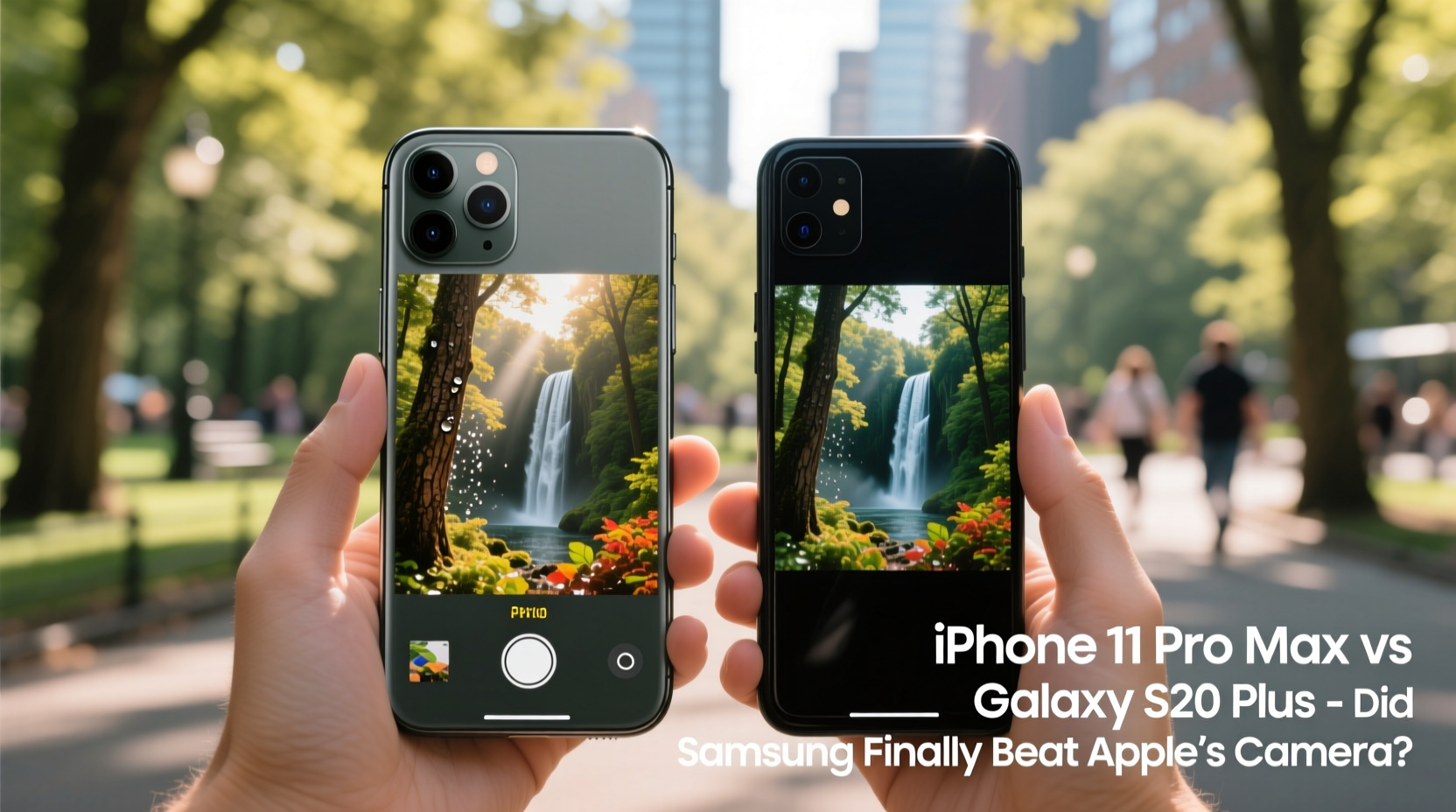
The foundation of any great camera is its hardware. The iPhone 11 Pro Max features a triple-lens system: 12MP wide, 12MP ultra-wide, and 12MP telephoto. All lenses use 1.4µm pixels, optical image stabilization (OIS) on two lenses, and Apple’s custom-designed image signal processor. While modest in megapixel count, Apple prioritizes pixel quality, dynamic range, and computational photography over sheer resolution.
In contrast, the Galaxy S20 Plus ups the ante with a quad-camera setup: 12MP wide (1.8µm pixels), 64MP telephoto (with hybrid zoom), 12MP ultra-wide, and a depth sensor. Its standout feature is the ability to capture at 64MP using pixel-binning technology, combining four pixels into one for improved low-light performance. Samsung also integrates space zoom up to 30x using AI-enhanced digital zoom, far beyond the iPhone’s 2x optical and 10x digital limit.
“Hardware matters, but how you use it matters more. Samsung packed more sensors, but Apple’s consistency across conditions remains unmatched.” — David Kim, Mobile Imaging Analyst at DXOMARK
Image Quality: Daylight and Dynamic Range
In well-lit environments, both phones deliver excellent results, but their philosophies diverge. The iPhone 11 Pro Max produces natural color reproduction, balanced exposure, and superior dynamic range. Skies retain detail without blowing out, and shadows preserve texture without crushing blacks. Apple’s Smart HDR processes multiple exposures seamlessly, often resulting in images that look polished yet authentic.
The Galaxy S20 Plus tends to favor vibrancy and contrast. Colors are punchier, which can be appealing for social media, but sometimes veer into oversaturation — particularly greens and reds. Its HDR implementation is aggressive, occasionally leading to haloing around high-contrast edges. However, the higher-resolution sensor allows for greater cropping flexibility without significant quality loss.
Low-Light Performance and Night Mode
This is where the battle gets interesting. Apple introduced Night Mode with the iPhone 11 series, offering automatic low-light enhancement with exposure times from 1 to 3 seconds. On the iPhone 11 Pro Max, Night Mode activates reliably, preserves natural color tones, and minimizes noise effectively. It works across all three rear cameras, giving users flexibility in framing without sacrificing quality.
Samsung responded with its “Nightography” mode on the S20 Plus. While not labeled as prominently as Apple’s Night Mode, it uses multi-frame stacking and AI denoising. In direct comparisons, the S20 Plus captures brighter images in extremely dark settings, but often at the cost of realism. Artificial lighting can appear washed out, and fine details like fabric textures or facial features may blur due to over-processing.
A key difference lies in usability: iPhone’s Night Mode provides a live countdown and stabilizes the shot using tripod detection. The S20 Plus lacks visual feedback during capture, making it harder to know when the shot is complete — a small but meaningful UX gap.
Zoom and Telephoto Capabilities
For users who frequently shoot distant subjects, zoom performance is critical. The iPhone 11 Pro Max offers 2x optical zoom via its dedicated telephoto lens and clean 4x digital zoom through sensor cropping. Beyond that, quality degrades quickly.
The Galaxy S20 Plus introduces Space Zoom with 3x hybrid zoom and up to 30x digital zoom powered by AI. At 5x–10x, the S20 Plus clearly outperforms the iPhone, retaining usable detail thanks to its higher-resolution sensor. However, beyond 10x, results become inconsistent — AI guesses missing details, creating artifacts like smudged edges or phantom textures. Still, having the option to capture distant scenes — even if imperfect — gives Samsung an edge in versatility.
| Feature | iPhone 11 Pro Max | Galaxy S20 Plus |
|---|---|---|
| Main Sensor Resolution | 12MP (1.4µm) | 12MP (1.8µm) + 64MP telephoto |
| Optical Zoom | 2x | 3x hybrid |
| Digital Zoom (usable) | Up to 10x | Up to 30x (AI-enhanced) |
| Night Mode | Yes (all lenses) | Yes (multi-frame, AI-based) |
| Video Recording | 4K@60fps, extended dynamic range | 8K@24fps, 4K@60fps with HDR10+ |
Video: Resolution vs. Stability
When it comes to video, the Galaxy S20 Plus made headlines by supporting 8K recording at 24fps — a first for smartphones. While impressive on paper, 8K files are massive (over 600MB per minute), require compatible displays to appreciate, and offer minimal practical benefit for most users. Stabilization in 8K mode is noticeably weaker than in 4K.
The iPhone 11 Pro Max sticks to 4K@60fps but delivers superior stabilization, especially when walking or moving. Its cinematic video quality benefits from extended dynamic range, accurate skin tones, and smooth autofocus transitions. Audio recording is also richer, with better directional pickup and wind noise reduction.
For content creators, the iPhone remains the preferred choice for vlogging and professional-grade footage. The S20 Plus wins on specs, but the iPhone wins on consistency and polish.
Real-World Example: Concert Photography
Jamal, a travel blogger based in Seoul, tested both phones at a nighttime outdoor concert. Lighting was uneven, with bright stage LEDs against a dark crowd. Using Night Mode on the iPhone, he captured clear shots of performers with accurate skin tones and controlled highlights. The S20 Plus produced brighter images initially, but upon closer inspection, faces appeared overly smoothed, and background lights created glowing halos. When zooming in post-capture, the S20 Plus image allowed tighter crops, but facial details were less defined due to aggressive sharpening. Jamal ultimately chose the iPhone version for his blog — not because it was brighter, but because it felt more truthful.
Actionable Tips for Maximizing Camera Performance
- Use grid lines: Enable the rule-of-thirds overlay in settings for better composition.
- Shoot in RAW (if available): Both phones support third-party apps like ProCamera or Filmic Pro for manual control and RAW output.
- Avoid digital zoom unless necessary: Crop later instead of zooming in-camera for better quality.
- Leverage editing tools: Apple Photos and Samsung Gallery offer robust non-destructive editing.
- Keep lenses clean: Smudges drastically reduce clarity, especially in backlit scenes.
Frequently Asked Questions
Does the Galaxy S20 Plus have better low-light photos than the iPhone 11 Pro Max?
It depends on your definition of “better.” The S20 Plus produces brighter images in near-darkness, but often sacrifices texture and color accuracy. The iPhone delivers more natural-looking results with better noise control and dynamic range, making it preferable for most photographers.
Can the iPhone compete with Samsung’s 30x zoom?
No, not in raw reach. The iPhone maxes out at about 10x digital zoom before severe degradation. However, within the 2x–5x range, the iPhone’s image quality is sharper and more reliable. For most users, moderate zoom with high fidelity beats extreme zoom with guesswork.
Is 8K video on the S20 Plus worth it?
Not for everyday users. Storage demands are high, playback compatibility is limited, and stabilization suffers. Unless you’re producing content for 8K displays or future-proofing archives, 4K remains the sweet spot.
Final Verdict: Did Samsung Beat Apple?
Samsung made significant strides with the Galaxy S20 Plus, pushing boundaries in zoom, resolution, and video specs. It offered tangible improvements in flexibility and technological ambition. However, “beating” Apple isn’t just about specs — it’s about delivering consistently excellent results across diverse conditions with minimal user effort.
In this regard, the iPhone 11 Pro Max still holds the edge. Its color science, dynamic range, video stabilization, and Night Mode integration create a more cohesive, reliable photography experience. Samsung won the spec sheet, but Apple retained the crown in overall image quality and usability.
That said, the gap narrowed dramatically. For users who prioritize zoom, high-resolution stills, or cutting-edge features, the S20 Plus is a compelling alternative. But for those seeking dependable, point-and-shoot excellence — especially in mixed lighting and video — the iPhone remains the benchmark.




 浙公网安备
33010002000092号
浙公网安备
33010002000092号 浙B2-20120091-4
Comments
No comments yet. Why don't you start the discussion?