
The Samsung Galaxy Note 9 was a powerhouse in its time—launched in 2018 with a large AMOLED display, S Pen functionality, and top-tier specs. Fast forward to 2019, and Apple released the iPhone 11 Pro Max, a device that promised professional-grade photography, all-day battery life, and seamless iOS integration. For users still holding onto their Note 9s, the question isn’t just about new features—it’s about real-world value. Is upgrading to the iPhone 11 Pro Max actually worth it?
This isn’t a simple specs race. It’s about how these devices perform today, three to five years after release, and whether the transition from Android to iOS delivers tangible benefits in daily use.
Performance and Longevity: A Tale of Two Ecosystems
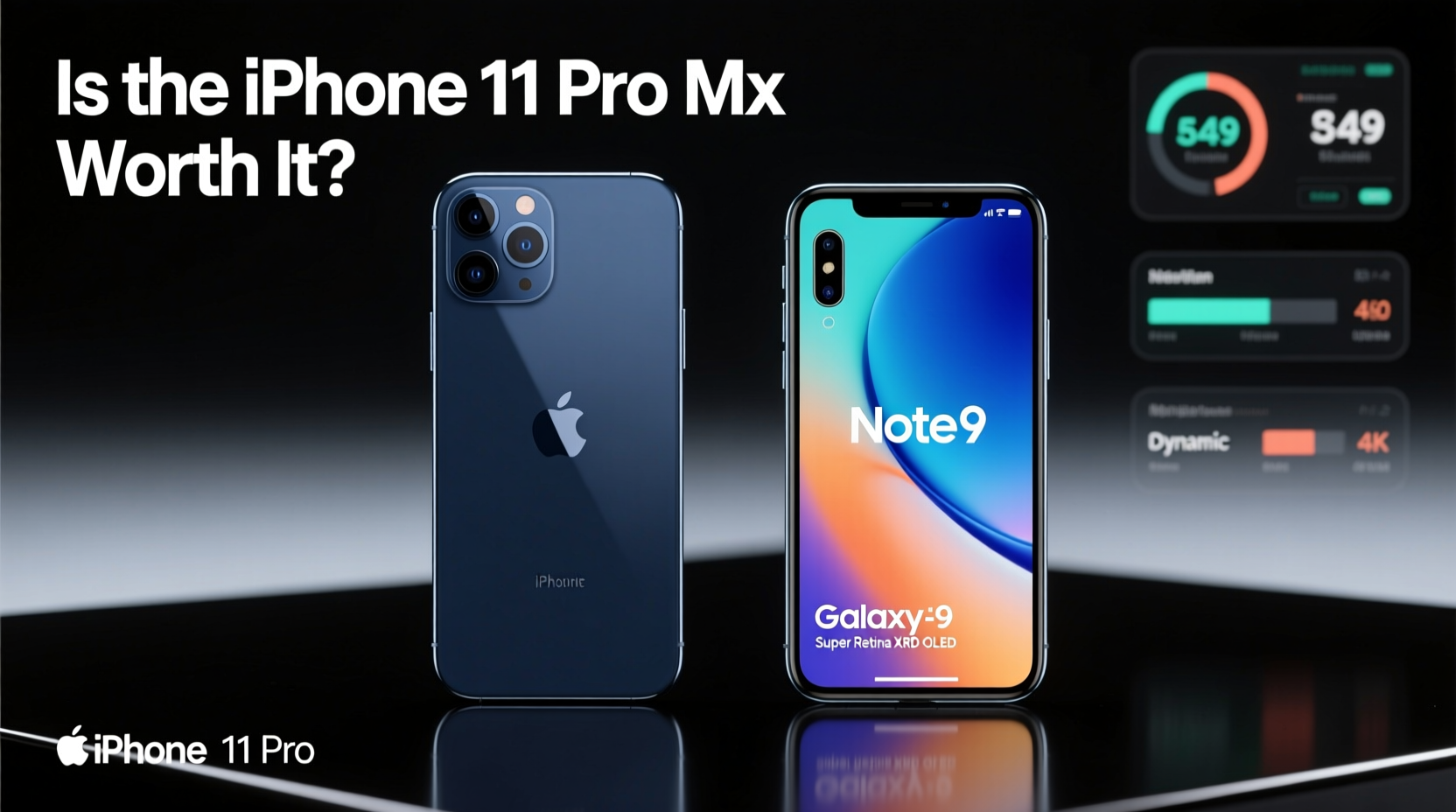
The Note 9 ran on either the Snapdragon 845 or Exynos 9810, depending on region—both were flagship chips at launch. The iPhone 11 Pro Max introduced Apple’s A13 Bionic chip, which outperformed most Android processors of its era in both CPU and GPU benchmarks. More importantly, Apple’s tight hardware-software integration ensures longer software support.
iOS updates for the iPhone 11 Pro Max continued through 2023–2024, with security patches likely extending into 2025. In contrast, the Note 9 stopped receiving major OS updates after Android 10, with security patches ending around 2021. This means the iPhone not only started stronger but also ages more gracefully.
“Apple’s ecosystem gives older devices extended relevance. An iPhone from 2019 can still run the latest apps smoothly two years after its last major update.” — David Lin, Mobile Systems Analyst
Camera Comparison: Night Mode, Triple Lenses, and Real-World Use
The Note 9 featured a single 12MP rear camera with variable aperture (f/1.5–f/2.4), impressive for its time. However, by 2019 standards, it lacked multiple lenses and computational photography features now considered standard.
The iPhone 11 Pro Max changed the game with a triple-camera system: wide, ultra-wide, and telephoto. More than just extra lenses, Apple leveraged the A13 chip for advanced image processing, including Night mode on all rear cameras and Deep Fusion for enhanced texture and detail in mid-light conditions.
In practical terms, the iPhone excels in low light and dynamic range. Photos taken at dusk or indoors show significantly less noise and better color accuracy. The ultra-wide lens adds creative flexibility, useful for landscapes or tight interior shots. While the Note 9’s camera was excellent in daylight, it struggles in challenging lighting compared to the 11 Pro Max.
Video quality is another area where the iPhone pulls ahead. It supports 4K recording at 60fps across all rear cameras, with superior stabilization and audio processing. For anyone who records family moments, travel clips, or social media content, this is a meaningful upgrade.
Camera Feature Comparison
| Feature | iPhone 11 Pro Max | Samsung Galaxy Note 9 |
|---|---|---|
| Rear Cameras | Triple: 12MP Wide, Ultra-Wide, Telephoto | Dual 12MP (same sensor, variable aperture) |
| Night Mode | Yes (all rear cameras) | No native night mode |
| Video Recording | 4K @ 60fps, extended dynamic range | 4K @ 30fps, no gyro-EIS |
| Front Camera | 12MP TrueDepth with Night mode | 8MP, basic HDR |
| Computational Photography | Deep Fusion, Smart HDR 3 | Limited scene optimizer |
Battery Life and Charging: From Stagnant to All-Day Power
The Note 9 came with a 4,000mAh battery—excellent for 2018. With moderate use, it lasted a full day. But as batteries degrade over time, many aging Note 9 units now struggle to make it through eight hours of active use.
The iPhone 11 Pro Max packs a slightly smaller 3,969mAh battery, but Apple’s efficiency optimizations allow it to outperform the Note 9 in real-world testing. Apple claimed up to 20 hours of video playback; independent tests confirm 10–12 hours of screen-on time under mixed usage.
Charging is another differentiator. The Note 9 supports fast charging (15W) and wireless charging, but lacks reverse wireless power sharing. The iPhone 11 Pro Max supports faster wired charging (with 18W adapter, sold separately), MagSafe-compatible wireless charging, and Qi wireless charging. It doesn’t offer reverse charging, but its charging ecosystem is more future-proof.
User Experience: iOS vs Android, S Pen vs Ecosystem
Switching from the Note 9 to the iPhone 11 Pro Max isn’t just a hardware change—it’s a shift in operating philosophy. Android offers deep customization, file system access, and multitasking features like split-screen and DeX. The S Pen remains one of the most unique tools in mobile—ideal for note-takers, artists, and professionals.
iOS counters with consistency, privacy controls, and seamless integration across Apple devices. If you own a Mac, iPad, or Apple Watch, the handoff, AirDrop, and iMessage continuity features are compelling. Face ID is fast and reliable, though some users miss the convenience of a fingerprint sensor.
The App Store often receives high-quality app updates earlier than Google Play, and many developers optimize first for iOS due to higher average user spending. For productivity and media consumption, the iPhone ecosystem feels more cohesive.
However, there’s a learning curve. Features like drag-and-drop text selection, default app settings, and file management require adjustment. You’ll lose the S Pen’s precision—but gain access to Apple Pencil compatibility if using an iPad later.
Mini Case Study: Sarah’s Upgrade Journey
Sarah, a freelance designer, used her Note 9 for four years. She loved the S Pen for sketching ideas and managing client notes. When her phone began slowing down and apps started crashing, she considered upgrading.
She switched to the iPhone 11 Pro Max for its camera quality and Mac integration. Initially frustrated by the lack of stylus support on the phone, she eventually paired it with an iPad Air and Apple Pencil. The seamless iCloud sync between devices allowed her to sketch on iPad, edit on Mac, and share via iPhone—all without touching a cable.
“The iPhone alone didn’t replace the S Pen,” she said, “but within Apple’s ecosystem, I ended up with a better workflow.”
Is the Upgrade Worth It? A Practical Checklist
Before making the switch, consider your priorities. Use this checklist to evaluate whether the iPhone 11 Pro Max makes sense for you:
- ✅ Are you experiencing slowdowns or app crashes on your Note 9?
- ✅ Do you want better low-light photos and 4K video capabilities?
- ✅ Do you use other Apple devices (Mac, iPad, Watch)?
- ✅ Is long-term software support important to you?
- ✅ Can you live without the S Pen for quick notes or drawing?
- ✅ Are you okay with switching messaging platforms (iMessage vs SMS/WhatsApp)?
- ✅ Is battery life becoming unreliable on your current device?
If you answered “yes” to three or more of the first five, the upgrade likely adds real value. If you heavily rely on the S Pen or prefer Android’s openness, staying put—or moving to a newer Note model—might be smarter.
Frequently Asked Questions
Can I transfer my data from Note 9 to iPhone 11 Pro Max easily?
Yes. Apple provides the “Move to iOS” app on the Google Play Store, which helps transfer contacts, messages, photos, and calendars during initial setup. Some app data may not carry over, but core content transfers smoothly.
Does the iPhone 11 Pro Max support expandable storage like the Note 9?
No. iPhones do not have microSD card slots. The 11 Pro Max comes in 64GB, 256GB, and 512GB variants. Cloud storage via iCloud is encouraged, so choose a capacity that fits your photo and app needs.
Is the iPhone 11 Pro Max still a good phone in 2024?
For light to moderate users, yes. It runs iOS 17 well, handles most apps efficiently, and the camera remains competitive. However, newer models offer better battery life, 5G, and improved low-light performance. As a daily driver in 2024, it’s capable but aging.
Final Verdict: Value Beyond the Specs
The iPhone 11 Pro Max isn’t just a newer phone—it’s a different experience. Compared to the Note 9, it offers superior long-term support, better camera versatility, and tighter ecosystem integration. If you’re still using a Note 9 in 2024, chances are you’ve already felt the limitations: sluggish performance, outdated software, and declining battery health.
Upgrading to the 11 Pro Max addresses those pain points effectively. It won’t give you the S Pen, and you’ll need to adapt to iOS, but the overall package delivers noticeable improvements in reliability, photo quality, and future-proofing.
Ultimately, the decision isn’t just about hardware—it’s about what kind of digital life you want. If you value simplicity, consistency, and longevity, the iPhone 11 Pro Max is absolutely worth the upgrade from a Note 9. If you depend on stylus input or Android-specific features, consider a modern Galaxy Note successor instead.




 浙公网安备
33010002000092号
浙公网安备
33010002000092号 浙B2-20120091-4
Comments
No comments yet. Why don't you start the discussion?