
Choosing when to upgrade your iPhone isn’t just about new features—it’s about real-world value. The jump from the iPhone 11 Pro to the 12 Pro and then to the 13 (non-Pro) represents three distinct generations of Apple’s smartphone evolution. Each brought meaningful changes, but not all upgrades deliver equal returns. For users still on a 11 Pro or even considering stepping down from a Pro model to the standard 13, the decision requires careful weighing of performance gains, camera improvements, battery life, and long-term usability.
This breakdown compares the key differences across these models, evaluates actual user benefits, and helps answer the core question: after owning an iPhone 11 Pro, is moving to the 12 Pro or 13 truly worth the cost?
Performance & Hardware Evolution
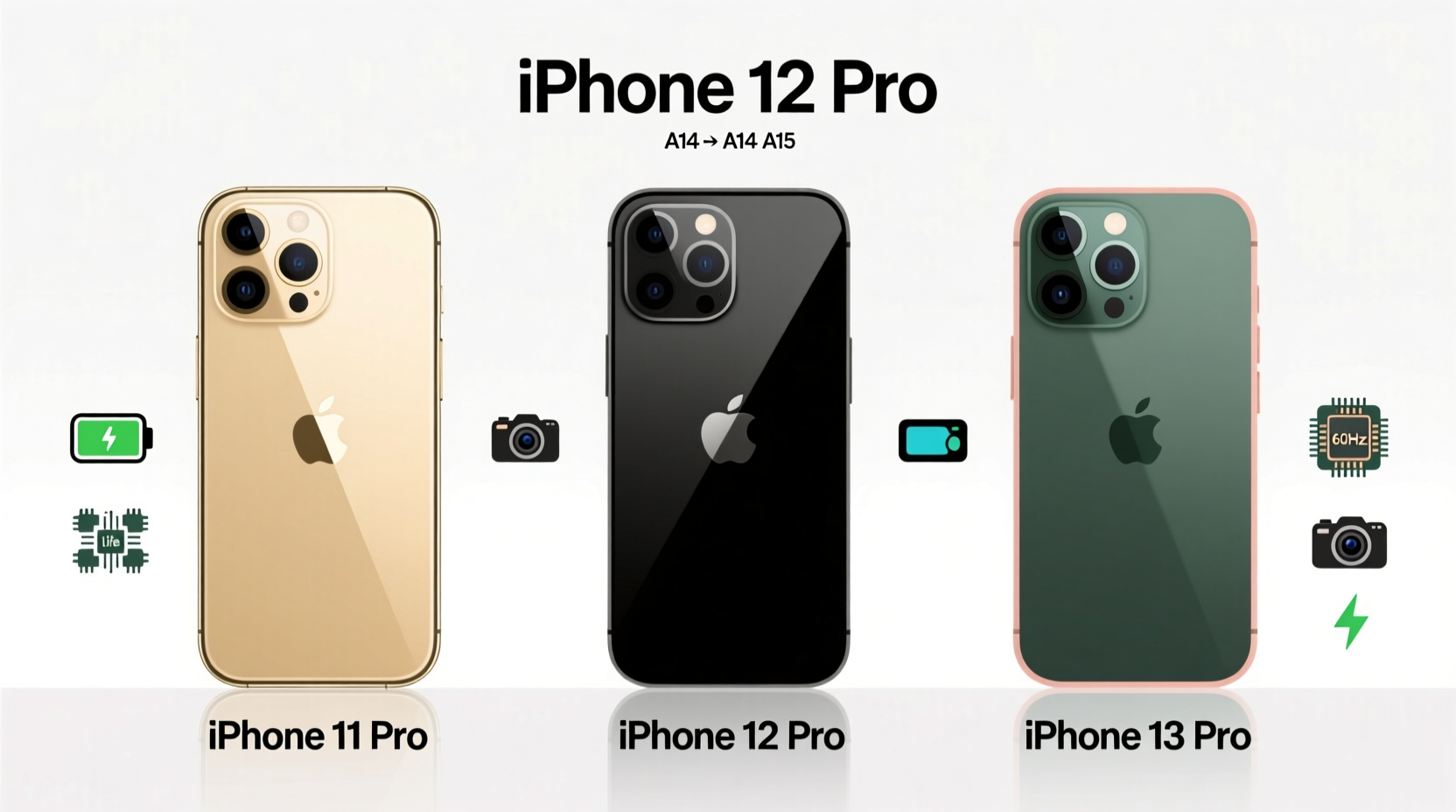
The foundation of any smartphone experience lies in its processor and internal architecture. Apple’s A-series chips have consistently pushed boundaries, and the transition from the A13 Bionic (11 Pro) to the A14 Bionic (12 Pro) and A15 Bionic (13) reflects significant generational leaps.
| Model | Chip | RAM | Storage Options | 5G Support |
|---|---|---|---|---|
| iPhone 11 Pro | A13 Bionic | 4GB | 64GB, 256GB, 512GB | No |
| iPhone 12 Pro | A14 Bionic | 6GB | 128GB, 256GB, 512GB | Yes (mmWave & sub-6GHz) |
| iPhone 13 | A15 Bionic (5-core GPU) | 4GB | 128GB, 256GB, 512GB | Yes (sub-6GHz only) |
The A14 brought a 16% CPU boost and 8% GPU improvement over the A13, while the A15 further increased efficiency and graphics performance by up to 50% in some benchmarks. More importantly, both newer models include Neural Engine upgrades that accelerate machine learning tasks—benefiting photography, AR apps, and Siri responsiveness.
Camera: From Great to Professional-Grade
The camera systems across these models show one of the most tangible areas of improvement. The 11 Pro introduced Apple’s first triple-lens setup, but the 12 Pro refined it with sensor-shift stabilization and better low-light performance. The iPhone 13, despite being non-Pro, adopted many Pro-level camera features thanks to computational photography.
- iPhone 11 Pro: 12MP triple cameras (wide, ultra-wide, telephoto), Night mode on wide lens only, Deep Fusion processing.
- iPhone 12 Pro: Same resolution but improved sensors, sensor-shift OIS (only on main wide lens), LiDAR scanner for depth mapping, Night mode on all lenses.
- iPhone 13: Larger sensor on main camera, improved sensor-shift OIS, Cinematic Mode (1080p/30fps), Night mode on all lenses plus front camera, Photographic Styles.
“From the 11 Pro onward, Apple shifted focus from megapixels to smarter image processing. The real gains are in dynamic range and consistency.” — David Kim, Mobile Photography Analyst at TechLens
In practical terms, the 12 Pro delivers more stable low-light photos and better AR experiences due to LiDAR. The iPhone 13, however, closes the gap with larger pixels capturing 47% more light and introducing Cinematic Mode—a feature absent even on the 12 Pro. For casual photographers, the 13 may actually feel like a bigger leap than the 12 Pro over the 11 Pro.
Battery Life & Efficiency Gains
Battery longevity is where the iPhone 13 shines brightest. Despite having a smaller physical battery than the 11 Pro, its power-efficient A15 chip and optimized iOS 15+ software result in significantly longer usage times.
Apple’s official ratings suggest:
- iPhone 11 Pro: Up to 18 hours video playback
- iPhone 12 Pro: Up to 17 hours
- iPhone 13: Up to 19 hours
Real-world tests often show the 13 lasting 2–3 hours longer than the 11 Pro under mixed use. This is largely due to the ProMotion-like optimization in display refresh logic (though the 13 lacks 120Hz), aggressive background task management, and reduced cellular power draw thanks to better modem efficiency.
Design & Durability: Subtle But Meaningful Changes
All three models share a premium stainless steel and glass design language, but there are subtle yet impactful differences:
- The 12 Pro introduced a flatter, more modern aerospace-grade aluminum frame (carried into 13).
- Ceramic Shield front cover debuted on the 12 Pro, offering 4x better drop protection.
- The 13 features slightly smaller notch and improved dust/water resistance (IP68 up to 6m for 30 mins).
While the 11 Pro already had IP68 rating, the structural improvements in the 12 Pro and 13 make them more resilient in daily drops and exposure to elements. Users who frequently commute or travel outdoors will appreciate the added durability.
Mini Case Study: Sarah’s Upgrade Journey
Sarah, a freelance designer based in Portland, used her iPhone 11 Pro heavily for client calls, photo editing, and social media content creation. By late 2022, she noticed slower app launches, shorter battery life, and increasing frustration with blurry night shots.
She considered the 12 Pro for its LiDAR and ProRAW support but ultimately chose the iPhone 13 after testing both in-store. Her reasoning? “The 13 gave me better battery, sharper selfies for Zoom, and cinematic videos for Instagram Stories—all at $300 less than the 12 Pro.”
Nine months later, she reports fewer charges per day, faster rendering in Lightroom Mobile, and no regrets skipping the Pro line. Her case illustrates how non-Pro models can now meet professional needs through software smarts rather than just hardware specs.
Is Upgrading Really Worth It?
The answer depends on your current device and usage patterns.
If you’re on an iPhone 11 Pro, upgrading to either the 12 Pro or 13 brings noticeable benefits:
- Faster performance for multitasking and future app support
- Better low-light photography and video capabilities
- 5G connectivity (valuable if you have access to fast networks)
- Improved battery life, especially with the 13
However, the **value proposition differs**:
- The 12 Pro makes sense if you need LiDAR (for AR development, interior design apps), prefer ProRAW editing, or want the full Pro ecosystem.
- The iPhone 13 offers 80–90% of the 12 Pro’s camera performance at a lower price, with superior battery and broader color options.
For most average users, the iPhone 13 delivers the best balance of innovation and affordability. The jump from 11 Pro to 13 feels substantial without requiring a Pro-tier investment.
Checklist: Should You Upgrade?
Answer these questions before making a decision:
- Is your current phone struggling with everyday tasks (e.g., app crashes, slow loading)?
- Do you regularly shoot photos or videos in low light?
- Are you running out of storage or unable to update to the latest iOS version?
- Do you travel often and need longer battery life between charges?
- Have repair costs (battery, screen) exceeded $200 recently?
If you answered “yes” to two or more, an upgrade is likely justified. If not, consider extending your device’s life with a battery replacement (~$89 from Apple) and cloud storage expansion.
FAQ
Can the iPhone 11 Pro still run the latest iOS updates?
Yes, the iPhone 11 Pro supports iOS 17, ensuring security patches and feature updates through at least 2024. However, some advanced AI features in future versions may be limited due to older hardware.
Does the iPhone 13 support ProRAW like the 12 Pro?
No, ProRAW is exclusive to Pro models. However, the 13’s Smart HDR 4 and Photographic Styles provide excellent flexibility for post-processing without needing RAW files.
Is 5G necessary on the 12 Pro or 13?
Only if you frequently download large files on cellular data or live in an area with strong mmWave coverage. Most users see minimal benefit today, though 5G readiness adds resale value.
Final Verdict
Upgrading from the iPhone 11 Pro to the 12 Pro or 13 is objectively beneficial—but whether it’s “worth it” hinges on personal priorities. The 12 Pro excels for professionals needing LiDAR and Pro features. The iPhone 13, however, emerges as the smarter choice for most: delivering major gains in battery, camera intelligence, and processor efficiency at a more accessible price.
Technology evolves fast, but value lasts longer. Before paying full price for new hardware, assess what you actually use. For many, the iPhone 13 isn’t just an upgrade—it’s the point where Apple’s mainstream model finally caught up with what most people truly need.




 浙公网安备
33010002000092号
浙公网安备
33010002000092号 浙B2-20120091-4
Comments
No comments yet. Why don't you start the discussion?