
When Apple released the iPhone 11 in 2019 as a successor to the iPhone XR, it raised a question many users still ask today: Is upgrading from the XR to the 11 actually worth it? Both phones share similar designs and core features, but subtle yet meaningful differences exist in performance, camera quality, battery life, and long-term software support. For anyone holding onto an iPhone XR—or considering buying one secondhand—this comparison delivers clarity on whether the iPhone 11 justifies the jump.
Design and Build: More Similar Than Different
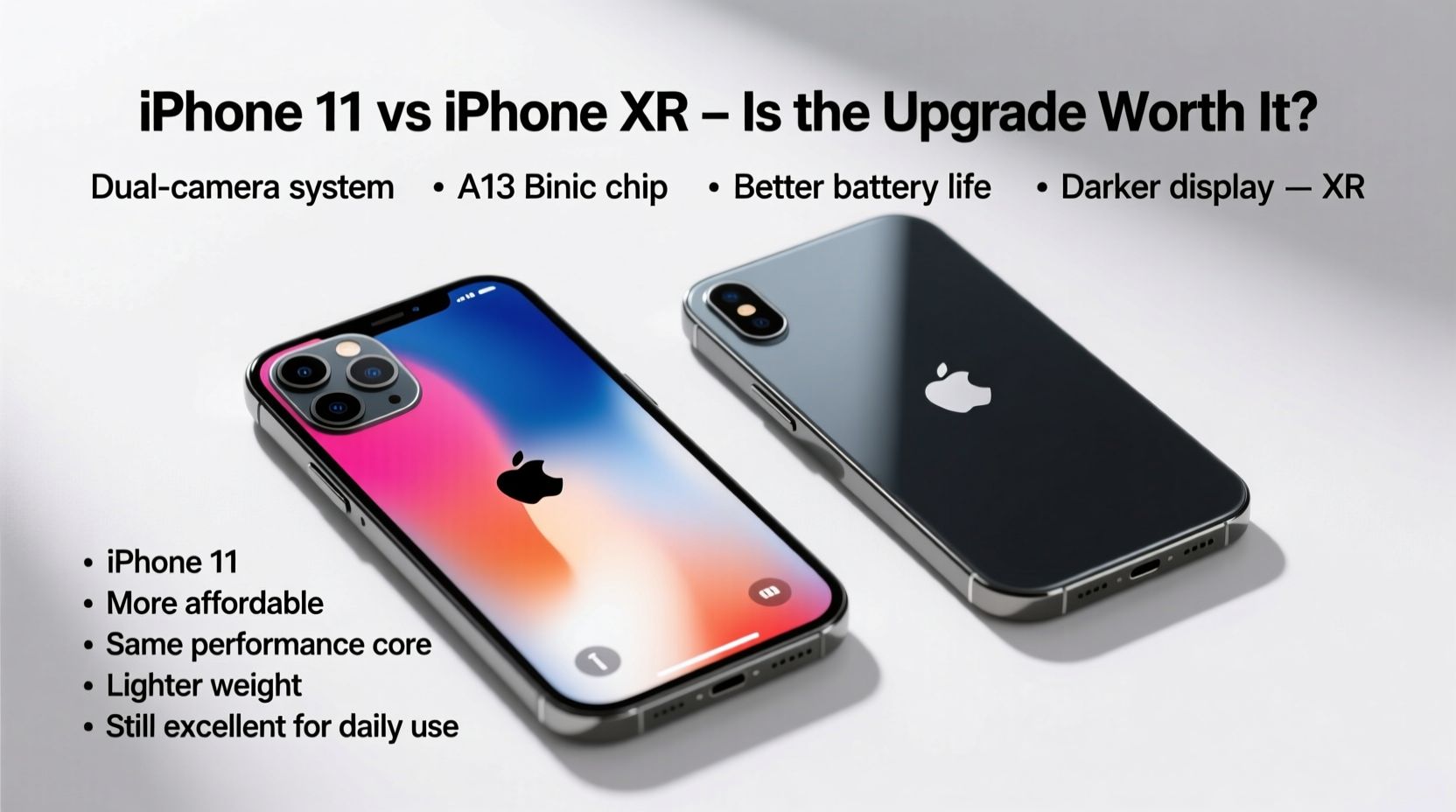
At first glance, the iPhone 11 and XR look nearly identical. Both feature a 6.1-inch Liquid Retina LCD display, aluminum frame, glass back, and Face ID-enabled front. The dimensions are almost the same, making them equally comfortable to hold. However, there’s one noticeable difference: color options. The iPhone 11 introduced more vibrant hues like purple, green, and yellow, while the XR launched with more muted tones.
The build quality is comparable, though both are susceptible to scratches without a case. Neither model has an IP68 water resistance rating at launch—the XR is rated IP67 (up to 1 meter for 30 minutes), while the iPhone 11 improves slightly to IP68 (up to 2 meters for 30 minutes). This small upgrade means the 11 can survive brief submersion better, which matters if you frequently use your phone near water.
Performance: A Noticeable Leap
The most significant difference between these two models lies under the hood. The iPhone XR runs on the A12 Bionic chip, while the iPhone 11 uses the A13 Bionic—Apple’s fastest processor at the time of its release. In real-world usage, this translates to faster app launches, smoother multitasking, and better longevity when running future iOS updates.
Benchmarks show the A13 is roughly 20% faster in CPU tasks and up to 30% faster in GPU performance. While daily tasks like browsing, messaging, and streaming may feel similar, the gap widens in graphics-intensive applications such as gaming or augmented reality apps. Users who play mobile games or rely on creative tools will notice the iPhone 11 handles sustained loads more efficiently, with less heat buildup and fewer frame drops.
“Even incremental improvements in chip efficiency translate to years of extra usability,” says Mark Thompson, senior mobile analyst at TechPulse Insights. “The A13 gives the iPhone 11 a clear edge in future-proofing.”
Camera Comparison: Where the 11 Shines
If photography matters to you, the iPhone 11 is the obvious winner. The XR has a single 12MP wide-angle rear camera, capable of solid photos in daylight but limited in versatility. The iPhone 11 adds a second 12MP ultra-wide lens, opening up creative possibilities. You can now capture landscapes, architecture, or group shots with significantly more context.
Low-light performance also improves thanks to Night mode, which automatically activates in dim environments. The XR lacks this feature entirely, meaning darker scenes often come out grainy or underexposed. Portrait mode sees refinements too, with better edge detection and six lighting effects compared to the XR’s single option.
On the front, both phones have a 7MP TrueDepth camera, but the 11 supports 4K video recording at 60fps, while the XR maxes out at 1080p. For vloggers or social media creators, that higher resolution makes a tangible difference.
Camera Feature Breakdown
| Feature | iPhone XR | iPhone 11 |
|---|---|---|
| Rear Cameras | 12MP Wide | 12MP Wide + 12MP Ultra-Wide |
| Night Mode | No | Yes (on both rear and front) |
| Portrait Mode | Limited lighting options | Six studio lighting effects |
| Front Video Recording | 1080p at 60fps | 4K at 60fps |
| Slofies (slow-motion selfie) | No | Yes |
Battery Life and Charging: Incremental Gains
Apple claimed the iPhone 11 offers one hour more battery life than the XR. Real-world testing confirms this modest improvement. On average, the XR lasts about 15–16 hours of mixed usage, while the 11 stretches to 17–18 hours. Not groundbreaking, but welcome for heavy users.
Both devices support fast charging (up to 50% in 30 minutes with an 18W adapter or higher), but neither includes the charger in the box. They also support Qi wireless charging. If you already own compatible accessories, this parity ensures a seamless transition between models.
Software Support and Longevity
As of 2024, both phones run iOS 17 and are expected to receive updates through at least iOS 18. However, historical trends suggest that devices with newer chips tend to stay supported longer. Given that the A13 is more powerful and efficient, the iPhone 11 may see official updates into 2025, whereas the XR could be phased out sooner.
This distinction matters for security, app compatibility, and access to new features. Apps increasingly optimize for newer hardware, and older processors struggle over time. If you plan to keep your phone for three years or more, the iPhone 11 provides greater peace of mind.
Mini Case Study: Sarah’s Upgrade Dilemma
Sarah has used her iPhone XR since 2019. By 2023, she noticed apps taking longer to load, occasional crashes in Instagram and TikTok, and diminishing battery health (now at 78%). She considered sticking with the XR due to its lower price on the used market but ultimately upgraded to a refurbished iPhone 11 after testing both in-store.
She immediately appreciated the dual-camera system for capturing her toddler’s birthday party in tight spaces and found Night mode invaluable during evening walks. Two years later, her iPhone 11 continues to handle iOS updates smoothly, while friends with aging XRs report increasing lag. Her decision paid off in usability and longevity.
Is the iPhone XR Still Good in 2024?
Yes—but with caveats. The iPhone XR remains a competent device for basic smartphone tasks. It handles calls, texts, email, social media, and HD video streaming without issue. Its screen is bright and colorful, and iOS optimization ensures a smooth experience even with aging hardware.
However, limitations become apparent over time. No Night mode, no ultra-wide camera, weaker processor, and shorter software support window make it less ideal for users who want modern features or plan to keep their phone long-term. It’s best suited for budget-conscious buyers, secondary devices, or light users.
Upgrade Checklist: Should You Move to the iPhone 11?
Use this checklist to decide if upgrading from the XR to the 11 makes sense for you:
- ✅ Do you take a lot of photos, especially in low light?
- ✅ Are you starting to notice app slowness or frequent reloading?
- ✅ Do you want better future iOS support?
- ✅ Is having an ultra-wide camera important for travel or creativity?
- ✅ Are you planning to keep your phone for 2+ more years?
If you answered yes to two or more, the iPhone 11 is a worthwhile upgrade.
Frequently Asked Questions
Can the iPhone XR still run the latest apps?
Most current apps still support the A12 chip, but some newer titles—especially graphically intensive games or AI-powered tools—may not be optimized or available. Performance may degrade over time.
Is the iPhone 11 waterproof?
It's water-resistant (IP68), meaning it can survive short submersions up to 2 meters deep for 30 minutes. But water damage isn’t covered by warranty, so caution is still essential.
Should I buy an iPhone XR in 2024?
Only if you're on a tight budget and need a basic, reliable phone for calls, messaging, and light browsing. For anyone wanting modern camera features or longer software support, consider the iPhone 11 or newer models.
Final Verdict: To Upgrade or Not?
The iPhone 11 is absolutely worth the upgrade from the XR if you value photography, performance, and long-term usability. The addition of Night mode, the ultra-wide lens, and the A13 chip collectively enhance the daily experience in ways that accumulate over time. While the XR remains functional, it’s beginning to show its age in key areas.
For those still using an XR, assess your needs honestly. If your current phone meets your expectations and you don’t mind missing newer features, staying put is perfectly reasonable. But if you’re ready for sharper photos, smoother performance, and a device that will likely last another few years without slowing down, the iPhone 11 delivers excellent value—even in today’s market.




 浙公网安备
33010002000092号
浙公网安备
33010002000092号 浙B2-20120091-4
Comments
No comments yet. Why don't you start the discussion?