
The iPhone 12 mini was a bold move by Apple—delivering flagship features in a compact body that hadn’t been seen since the iPhone SE (2016). But with its reduced footprint came compromises, most notably in battery capacity. When compared to the iPhone 11, a device known for solid endurance, the 12 mini’s power performance raises an important question: is the convenience of a smaller phone worth accepting noticeably shorter battery life?
This isn’t just about specs on paper. It’s about how these devices perform in daily use—commuting, working, streaming, and everything in between. To answer whether the 12 mini’s size advantage outweighs its battery limitations, we need to look at hardware, real-world usage patterns, user profiles, and long-term satisfaction.
Battery Specs: The Numbers Don’t Lie
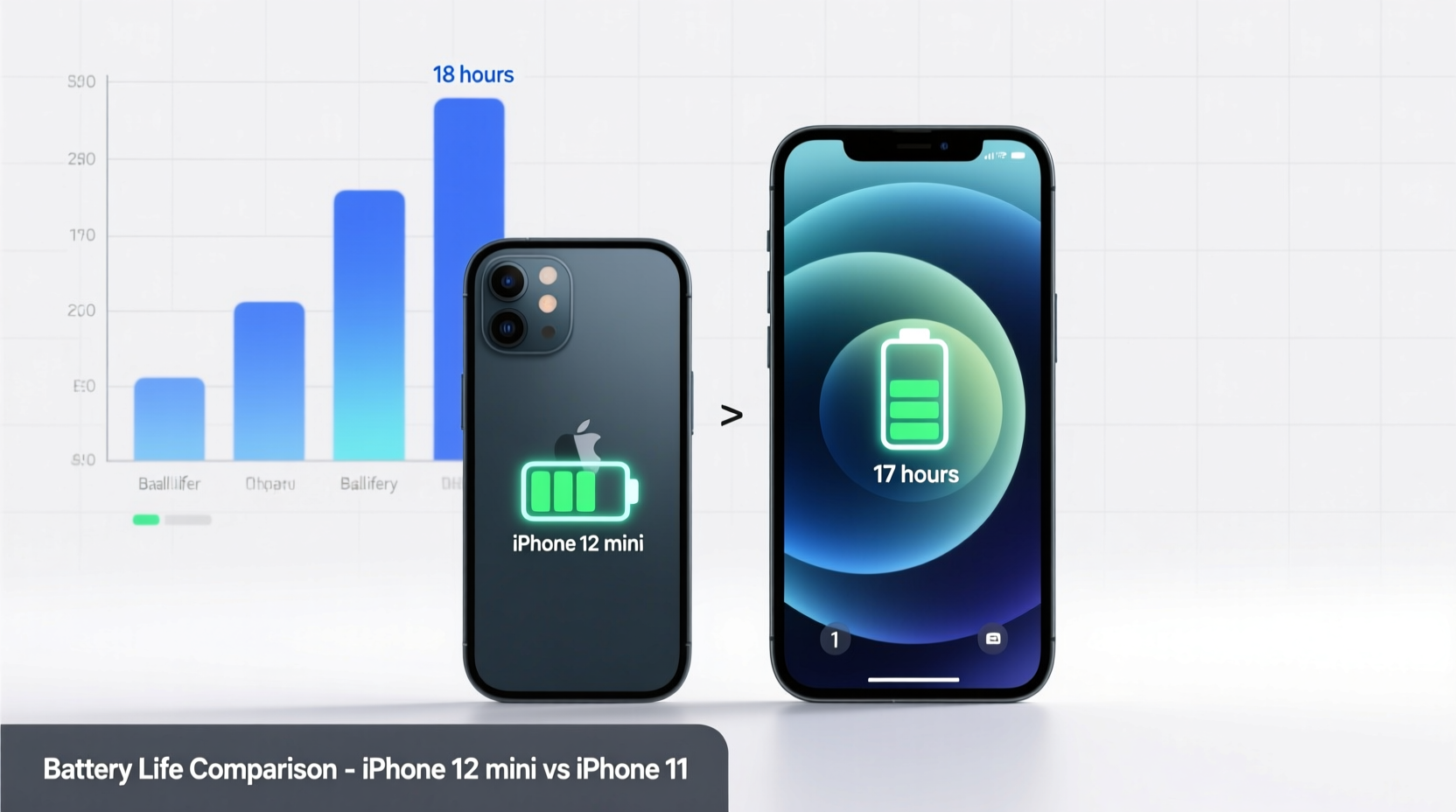
The iPhone 12 mini packs a 2,227 mAh battery, one of the smallest in any modern iPhone. In contrast, the iPhone 11 features a significantly larger 3,110 mAh cell. That’s nearly 40% more capacity, even though both devices run iOS and similar processors—the A14 Bionic in the 12 mini and the A13 Bionic in the 11.
While the A14 is more power-efficient due to its 5nm architecture, it powers a brighter, higher-resolution OLED display (vs. the 11’s LCD), 5G connectivity, and advanced camera processing—all of which consume more energy. As a result, the efficiency gains are largely offset by increased demands.
“Smaller phones inherently sacrifice battery life. There's no workaround when physics limits how much energy you can pack into a tiny chassis.” — Dr. Lena Torres, Mobile Hardware Analyst at TechInsight Labs
Real-World Battery Performance Comparison
To understand how these differences play out outside lab conditions, let’s break down typical usage scenarios:
| Usage Scenario | iPhone 11 Screen Time | iPhone 12 mini Screen Time |
|---|---|---|
| Moderate Use (email, messaging, browsing) | ~8–9 hours | ~5–6 hours |
| Heavy Use (video streaming, gaming, GPS) | ~6 hours | ~3.5–4 hours |
| Standby Overnight (8 hours) | Loses ~5% | Loses ~8–10% |
| 5G Streaming (YouTube over cellular) | ~4.5 hours | ~2.5 hours |
The data shows a consistent trend: the iPhone 12 mini struggles to keep pace, especially under high-demand conditions. While it manages all-day use for light users, those who rely on their phones throughout the day often find themselves reaching for a charger by early evening.
User Profiles: Who Should Consider the 12 mini?
The decision between the 12 mini and the 11 ultimately depends on lifestyle and priorities. Here’s a breakdown of who benefits most from each device:
- Choose the iPhone 12 mini if: You value pocketability, one-handed use, and modern design. Ideal for users who charge midday or carry a portable battery pack, or those who use their phone lightly (under 5 hours screen time).
- Stick with the iPhone 11 if: Battery longevity is critical. This includes frequent travelers, field workers, parents, or anyone who can't reliably access charging during the day.
A Real Example: Commuter vs. Office Worker
Consider two users: Maya, a graphic designer who works remotely from cafes and commutes via subway, and James, a sales manager who works from a desk but uses his phone heavily after work for family coordination and social apps.
Maya loves the 12 mini because it fits in her small bag, doesn’t strain her hand during sketching sessions, and she always has a power bank nearby. She charges during lunch and ends the day with 15–20% battery. For her, the trade-off is acceptable.
James, however, found the 12 mini draining by 3 PM despite moderate use. He missed calls due to dead battery and grew frustrated. After switching back to his old iPhone 11, he gained two extra hours of reliable use and stopped worrying about low-power mode kicking in during dinner.
Their experiences highlight a key insight: context determines value. Size is a luxury for some; battery is a necessity for others.
Optimization Tips for iPhone 12 mini Owners
If you’ve chosen—or are considering—the 12 mini, there are proven ways to maximize its limited battery life without sacrificing core functionality.
- Use LTE instead of 5G: Go to Settings > Cellular > Cellular Data Options > Voice & Data, then select LTE. 5G drains the battery quickly, and in many areas, the speed benefit is minimal.
- Lower screen brightness: Set auto-brightness and avoid max brightness. OLED screens save power on dark themes—consider using Dark Mode.
- Enable Low Power Mode automatically: Set it to turn on at 80% or 70% via Shortcuts in the Automation tab to prevent sudden drops.
- Limit push notifications: Each alert wakes the CPU and display. Disable non-urgent alerts to reduce background activity.
- Close unused apps: While iOS manages memory well, force-closing heavy apps like games or navigation tools after use prevents background drain.
Frequently Asked Questions
Can the iPhone 12 mini last a full day?
For light to moderate users—under 5 hours of screen time—it can. Heavy users will likely need a midday charge. Realistically, expect 12–14 hours of total uptime with average use, but only 6–8 hours of active use.
Is the iPhone 11 still worth buying in 2024?
Absolutely. It runs the latest iOS versions efficiently, has excellent battery life, and is often available at steep discounts. For users prioritizing reliability over cutting-edge features, it remains a smart choice.
Does the 12 mini support fast charging?
Yes, with a 20W adapter (sold separately), it reaches 50% in about 30 minutes. However, frequent fast charging may accelerate long-term battery wear, so balance convenience with longevity.
Final Verdict: Is the Trade-Off Worth It?
The iPhone 12 mini is a triumph of engineering—a powerful, pocket-sized smartphone that delivers flagship performance in a rare form factor. But its battery life is undeniably its Achilles’ heel. Compared to the iPhone 11, it falls short by several hours in almost every scenario.
So, is the smaller size worth the shorter life? Only if your lifestyle aligns with the mini’s strengths. If you charge frequently, value portability, and don’t mind managing power closely, the 12 mini offers a unique experience that larger iPhones can’t match.
But if peace of mind matters—if you want to wake up, go to work, run errands, and come home without hunting for an outlet—the iPhone 11’s enduring battery gives you freedom the 12 mini simply can’t provide.
In the end, this isn’t just about battery percentages. It’s about how a device fits into your life. The 12 mini excels for those who prioritize design and convenience. The 11 wins for those who value reliability and stamina.




 浙公网安备
33010002000092号
浙公网安备
33010002000092号 浙B2-20120091-4
Comments
No comments yet. Why don't you start the discussion?