
For millions of iPhone 7 users still holding onto their trusty devices, the question isn’t just about desire—it’s about necessity. Released in 2016, the iPhone 7 was a landmark device: solid build, excellent camera for its time, and long-term software support. But we’re now deep into 2024, and Apple has moved on. The iPhone 12 mini, released in 2020, represents a significant leap forward—especially for those coming from older models. So, is making the jump from an iPhone 7 to an iPhone 12 mini truly worthwhile today?
The answer depends on your needs, expectations, and how much you rely on your phone for daily productivity, photography, or connectivity. Let’s break down the key differences and real-world implications of this upgrade path.
Performance and Software Experience
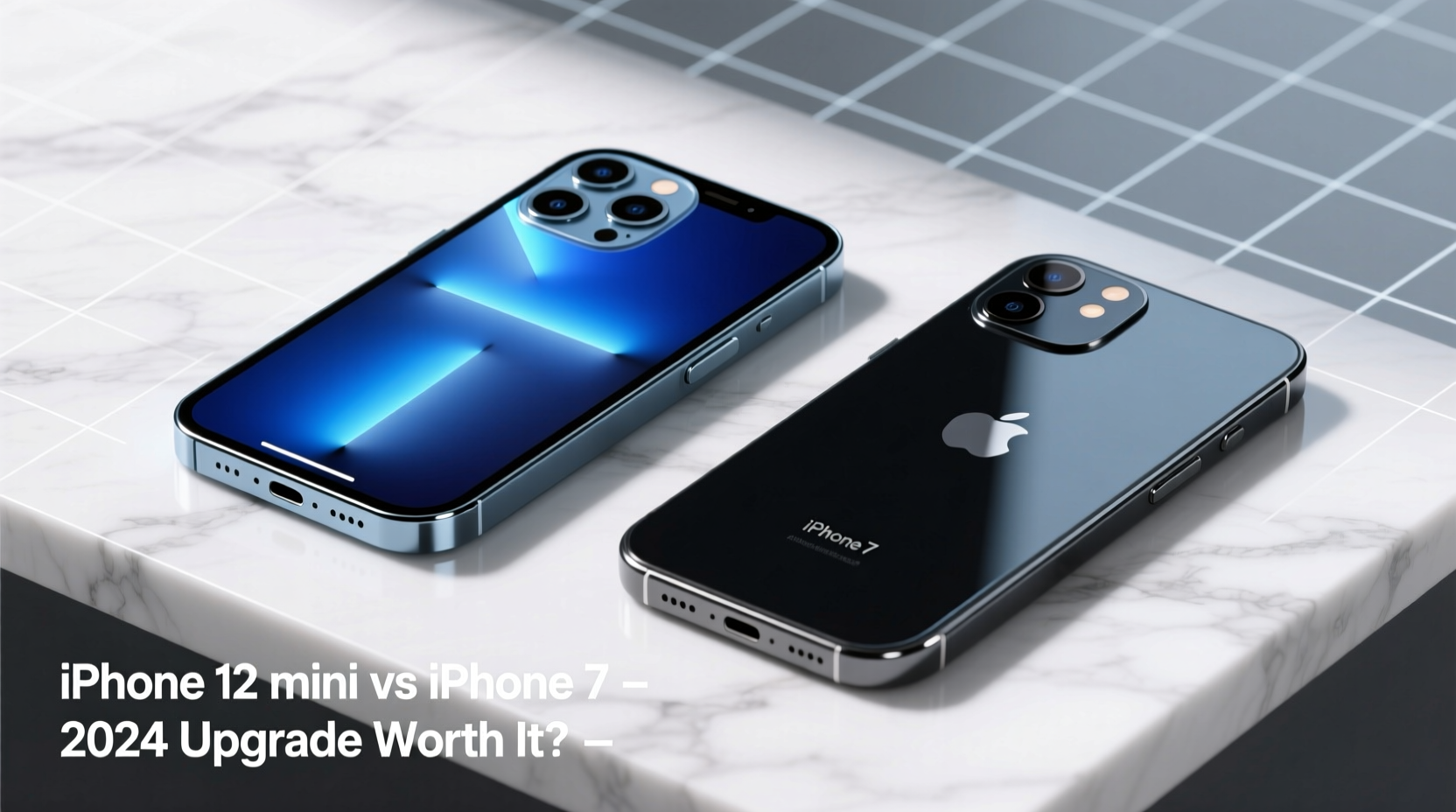
The most dramatic difference between the iPhone 7 and the iPhone 12 mini lies under the hood. The iPhone 7 runs on Apple’s A10 Fusion chip—a capable processor in its day but now significantly outpaced by modern standards. In contrast, the iPhone 12 mini features the A14 Bionic chip, one of the first 5nm processors in smartphones. This isn't just a minor improvement; it's generational.
Real-world impact? Apps launch faster, multitasking is smoother, and newer iOS features run without lag. As of 2024, iOS 17 continues to support the iPhone 12 mini, while the iPhone 7 maxed out at iOS 16. More importantly, future updates—iOS 18 and beyond—are unlikely to support the iPhone 7, meaning security patches and feature enhancements will soon stop arriving.
Camera Comparison: Night Mode, Portrait Lighting, and Video Quality
Photography has evolved drastically since 2016. The iPhone 7 introduced optical image stabilization to the base model and had a solid 12MP rear camera. However, the iPhone 12 mini brings computational photography to the table—most notably with Night mode, Deep Fusion, and Smart HDR 3.
In low-light conditions, the difference is staggering. Where the iPhone 7 produces grainy, poorly exposed night shots, the iPhone 12 mini delivers bright, detailed images even in dim environments. Portrait mode also sees a major upgrade: the 12 mini uses machine learning to better separate subjects from backgrounds and supports portrait lighting effects in real time.
Video quality jumps from 4K at 30fps on the iPhone 7 to Dolby Vision HDR recording at 4K/60fps on the 12 mini—making it one of the few phones that can capture cinema-grade video straight out of the box.
“Smartphone photography today isn’t just about megapixels—it’s about AI processing and sensor intelligence. The gap between 2016 and 2020 tech is wider than ever.” — Marcus Lin, Mobile Imaging Analyst at TechPulse
Durability, Design, and Display Upgrades
The iPhone 7 was built with aluminum and featured a home button with Touch ID. It was water-resistant (IP67), which was impressive at the time. The iPhone 12 mini, however, swaps to a flat-edge aerospace-grade aluminum design with Ceramic Shield front cover—Apple claims it’s tougher than any smartphone glass before.
The display upgrade is also meaningful. The iPhone 7 has a 4.7-inch LCD screen with 750 x 1334 resolution. The 12 mini improves to a 5.4-inch Super Retina XDR OLED display, offering deeper blacks, higher brightness (up to 1200 nits), and better color accuracy. While slightly larger, the 12 mini remains compact and one-handed friendly—ideal for those who appreciate smaller phones.
| Feature | iPhone 7 | iPhone 12 mini |
|---|---|---|
| Display | 4.7\" LCD (1334x750) | 5.4\" OLED (2340x1080) |
| Processor | A10 Fusion | A14 Bionic |
| Rear Camera | 12MP, f/1.8 | 12MP, f/1.6 + Night Mode |
| Front Camera | 7MP | 12MP + Night Mode |
| Battery Life | ~13 hours video playback | ~15 hours video playback |
| Charging | Lightsaber only | Lightsaber + MagSafe wireless |
| Water Resistance | IP67 (1m for 30 min) | IP68 (6m for 30 min) |
| Connectivity | LTE, Bluetooth 4.2 | 5G, Bluetooth 5.0 |
Real-World Case: Sarah’s Upgrade After Five Years
Sarah, a freelance writer in Portland, used her iPhone 7 daily for work—email, note-taking, and occasional photography. By 2023, she noticed apps freezing, battery draining by noon, and iOS updates failing to install. She hesitated to upgrade, partly due to cost and partly because “it still turns on.”
After switching to the iPhone 12 mini, her experience transformed. Notes sync instantly across devices via iCloud. Face ID works seamlessly with masks enabled. Most importantly, the improved battery life means she no longer carries a power bank. “It feels like I’ve gone from dial-up to broadband,” she said. “I didn’t realize how much friction my old phone added until it was gone.”
Sarah’s story reflects a common pattern: gradual degradation makes poor performance feel normal—until a new device resets expectations.
Is the Upgrade Worth It in 2024?
If you're using an iPhone 7 in 2024, you’re likely experiencing several pain points: slow app launches, limited storage, outdated security, and lack of 5G. The iPhone 12 mini addresses nearly all of these. Even though it’s not Apple’s latest model, it remains fully supported, performs excellently, and offers modern features like 5G, MagSafe, and advanced camera modes.
However, consider your usage. If you primarily make calls, send texts, and check email, the iPhone 7 may still suffice—especially if you’ve replaced the battery recently. But if you use your phone for navigation, streaming, social media, or content creation, the 12 mini delivers a dramatically better experience.
Step-by-Step Guide to Deciding Whether to Upgrade
- Assess current performance: Does your iPhone 7 freeze often or take more than 10 seconds to open apps?
- Check battery health: Go to Settings > Battery > Battery Health. If maximum capacity is below 80%, replacement or upgrade is advisable.
- Evaluate iOS support: Are you missing critical security updates or unable to install new apps? That’s a sign of obsolescence.
- Test camera needs: Do you struggle to take clear photos in low light or want to record high-quality video?
- Consider future-proofing: Will you keep your phone for 2+ more years? The 12 mini will last longer with software updates.
- Review budget: Refurbished 12 minis start around $350–$450. Compare that to potential repair costs on the 7.
Frequently Asked Questions
Can the iPhone 7 still be used in 2024?
Yes, but with limitations. It runs iOS 16, lacks 5G, and many newer apps may run slowly or not support it at all. Basic tasks are possible, but performance degrades over time.
Does the iPhone 12 mini have good battery life?
For its size, yes. Apple rates it at up to 15 hours of video playback. Real-world usage typically yields a full day, though heavy use may require midday charging. It supports fast and wireless charging, unlike the iPhone 7.
Is the iPhone 12 mini still supported by Apple?
Yes. As of 2024, it receives iOS updates and is expected to support iOS 18. Security patches will continue through at least 2026.
Final Verdict: Yes, the Upgrade Is Worth It
Upgrading from an iPhone 7 to an iPhone 12 mini in 2024 isn’t just about getting a newer phone—it’s about reclaiming speed, reliability, and access to modern mobile experiences. The A14 chip, OLED display, advanced cameras, and 5G connectivity represent a quantum leap from 2016 technology.
While the iPhone 7 was a great phone in its era, it’s now functionally obsolete for anyone relying on their smartphone for more than basic communication. The iPhone 12 mini, even as a four-year-old model, delivers a future-ready experience that will remain relevant for years to come.




 浙公网安备
33010002000092号
浙公网安备
33010002000092号 浙B2-20120091-4
Comments
No comments yet. Why don't you start the discussion?