
The iPhone 12 mini and iPhone SE (3rd generation) represent two distinct philosophies in Apple’s smartphone lineup. One is a compact flagship with modern design and advanced features; the other is a budget-friendly powerhouse wrapped in a familiar, no-frills package. Choosing between them isn’t just about price—it’s about trade-offs in size, screen quality, camera capabilities, and long-term usability. For users who value portability but don’t want to compromise on performance, this decision is especially nuanced.
Design and Build: Size vs Familiarity
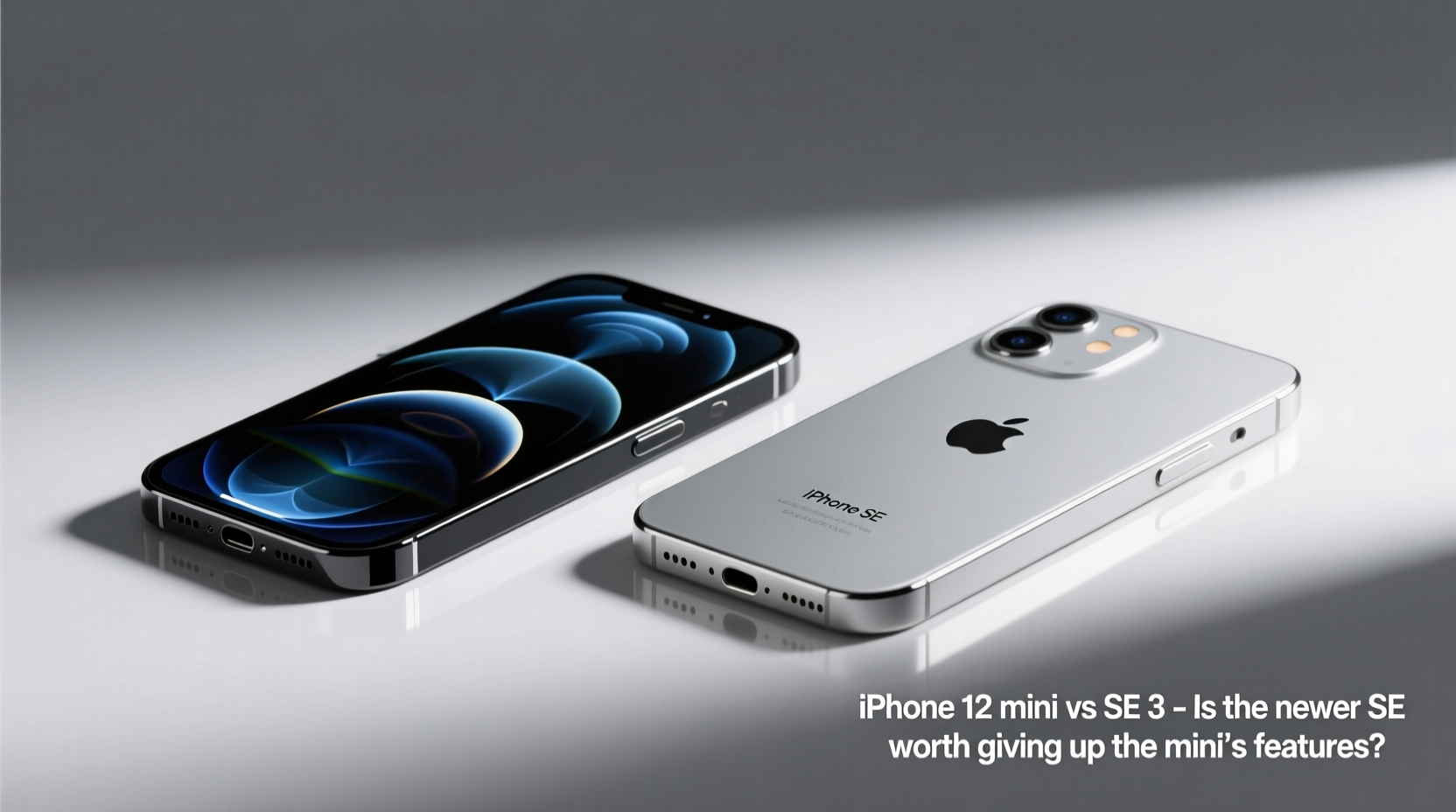
The iPhone 12 mini measures 5.18 x 2.53 x 0.29 inches and weighs just 135 grams. Its compact OLED display fits comfortably in one hand, making it ideal for users who prioritize pocketability and single-handed use. It features flat aluminum edges, Ceramic Shield front cover, and IP68 water resistance—hallmarks of Apple’s premium design language.
In contrast, the iPhone SE (2022) reuses the iPhone 8’s chassis: a 4.7-inch LCD screen, thick bezels, Touch ID home button, and glass back with aluminum frame. While durable and functional, its design feels outdated next to the sleekness of the 12 mini. However, that same retro layout appeals to longtime iPhone users who prefer physical buttons and smaller overall width.
Display and Usability: OLED Clarity vs Practical Width
The 12 mini’s 5.4-inch Super Retina XDR OLED display delivers deep blacks, vibrant colors, and excellent outdoor visibility. At 476 PPI, text is sharp, and HDR video playback is immersive. True to its name, it supports modern features like HDR10 and Dolby Vision.
The SE (3rd gen), meanwhile, uses a 4.7-inch Retina HD LCD with 326 PPI. While adequate for daily tasks, it lacks contrast, brightness range, and power efficiency. Scrolling through web pages or reading e-books reveals noticeable backlight bleed and lower clarity. Still, some users appreciate the narrower body—the SE is only 2.31 inches wide, compared to the 12 mini’s 2.53 inches—making it easier to grip without stretching thumbs across the screen.
“Smaller phones aren’t just nostalgic—they’re ergonomic tools in an era of oversized slabs.” — David Pierce, The Verge
Performance: Nearly Identical Power, Different Efficiency
Both devices are powered by Apple’s A15 Bionic chip (though the SE uses a slightly less powerful variant with fewer GPU cores). In everyday use—browsing, messaging, streaming, and even gaming—the performance difference is negligible. Apps launch instantly, multitasking is smooth, and both support iOS updates well into the late 2020s.
However, thermal management and sustained performance vary. The 12 mini’s larger logic board and better heat dissipation allow longer gameplay or video editing sessions before throttling begins. The SE, constrained by its older internal layout, heats up faster under load, which can impact prolonged high-performance tasks.
| Feature | iPhone 12 mini | iPhone SE (3rd Gen) |
|---|---|---|
| Chip | A15 Bionic (full GPU) | A15 Bionic (reduced GPU) |
| RAM | 4GB | 4GB |
| Storage Options | 64/128/256GB | 64/128/256GB |
| Benchmark (Geekbench 5) | Single: ~1720 | Multi: ~4300 | Single: ~1700 | Multi: ~4200 |
| Thermal Performance | Better sustained output | Faster throttling under load |
Camera Comparison: One Sensor, Two Experiences
The 12 mini has dual cameras: a 12MP main sensor and a 12MP ultra-wide lens. This enables versatile shooting—wide landscapes, tight spaces, and portrait mode with depth control. Night mode works on both rear cameras and the front-facing sensor, delivering strong low-light results.
The SE relies solely on a single 12MP wide camera—same sensor as the 12 mini’s primary lens—but lacks ultra-wide capability and computational photography enhancements like Smart HDR 4 and Deep Fusion (available only on Pro models at the time). While daylight photos are crisp and color-accurate, the absence of Night mode on the rear camera until software updates limited early usability in dim environments.
Front-facing, the 12 mini’s 12MP TrueDepth camera supports Face ID, Portrait Mode, and 4K video recording. The SE’s 7MP FaceTime HD camera lacks Portrait Mode and records video at 1080p max.
Battery Life and Charging: Where Compromise Meets Reality
Despite its tiny frame, the 12 mini offers up to 15 hours of video playback. The SE provides similar endurance—Apple rates it at 13 hours—though real-world usage shows the SE lasting slightly longer due to the less demanding LCD screen. However, the 12 mini supports MagSafe and Qi wireless charging; the SE only supports basic Qi charging, not MagSafe alignment or fast wireless charging.
Wired charging is identical: both support 20W fast charging (adapter sold separately). Neither includes a charger in the box.
Mini Case Study: Daily Driver Dilemma
Sophie, a freelance photographer and commuter in Brooklyn, used her iPhone 12 mini for two years. She loved its pocketability during shoots and subway rides. When it developed battery issues, she considered upgrading to the SE (3rd gen) for cost savings. After testing both side-by-side, she kept the 12 mini’s replacement—another compact model—not the SE.
“I thought the A15 would make up for the old design,” she said. “But once I tried taking a photo in a dim café, I realized how much I missed Night mode and the ultra-wide lens. And watching reels on that small LCD felt like stepping backward.”
Should You Upgrade? A Practical Checklist
Use this checklist to determine if switching from the 12 mini to the SE (or choosing between them new) makes sense for your lifestyle:
- ✅ Need maximum pocketability and narrow width?
- ✅ Prefer Touch ID over Face ID?
- ✅ On a strict budget (SE starts $100–$150 lower)?
- ✅ Use your phone mostly for calls, texts, and light apps?
- ❌ Do you take frequent photos or record videos?
- ❌ Want the best screen for streaming or reading?
- ❌ Value future-proof accessories like MagSafe wallets or chargers?
If most checked items are positives, the SE could be a fit. But if any of the negatives matter to you, the 12 mini—or its spiritual successors—remains the smarter investment.
Frequently Asked Questions
Can the iPhone SE (2022) run the latest iOS versions?
Yes. The iPhone SE (3rd gen) runs iOS 17 and will likely receive updates through iOS 21 or later, ensuring four to five years of software support from its release date.
Is the iPhone 12 mini still available new?
No. Apple discontinued the iPhone 12 mini in 2022 after releasing the iPhone 13 series. It’s only available through refurbished channels or third-party sellers.
Does the SE have 5G?
Yes. The iPhone SE (3rd gen) includes 5G connectivity (mmWave in U.S. models, sub-6GHz elsewhere), matching the 12 mini’s network speeds. Both support Wi-Fi 6 and Bluetooth 5.0.
Final Verdict: Progress Over Price
The iPhone SE (3rd generation) is an impressive feat of engineering—a budget phone with flagship-tier processing power. But raw speed doesn’t tell the whole story. By reverting to an older design, Apple sacrificed display quality, camera versatility, biometric security, and ecosystem integration.
The iPhone 12 mini, though no longer sold new, offered a complete modern smartphone experience in a rare small form factor. Giving up its OLED display, Face ID, dual cameras, and MagSafe compatibility for a minor price reduction means accepting limitations that affect daily enjoyment.
For users deciding today, the question isn’t just whether the SE saves money—it’s whether those savings come at too high a cost in functionality. Unless you specifically need Touch ID, dislike Face ID, or operate under tight financial constraints, the 12 mini’s feature set remains more compelling—even years later.




 浙公网安备
33010002000092号
浙公网安备
33010002000092号 浙B2-20120091-4
Comments
No comments yet. Why don't you start the discussion?