
When Apple released the iPhone 12 lineup in 2020, the introduction of two high-end models—iPhone 12 Pro and iPhone 12 Pro Max—left many consumers wondering: is the larger model truly better? Both share nearly identical hardware, but the Pro Max’s increased screen size, battery capacity, and slight camera improvements raise a practical question: does the extra bulk deliver meaningful benefits? For users deciding between these two premium devices, understanding how size translates into real-world performance is essential.
Design and Physical Dimensions
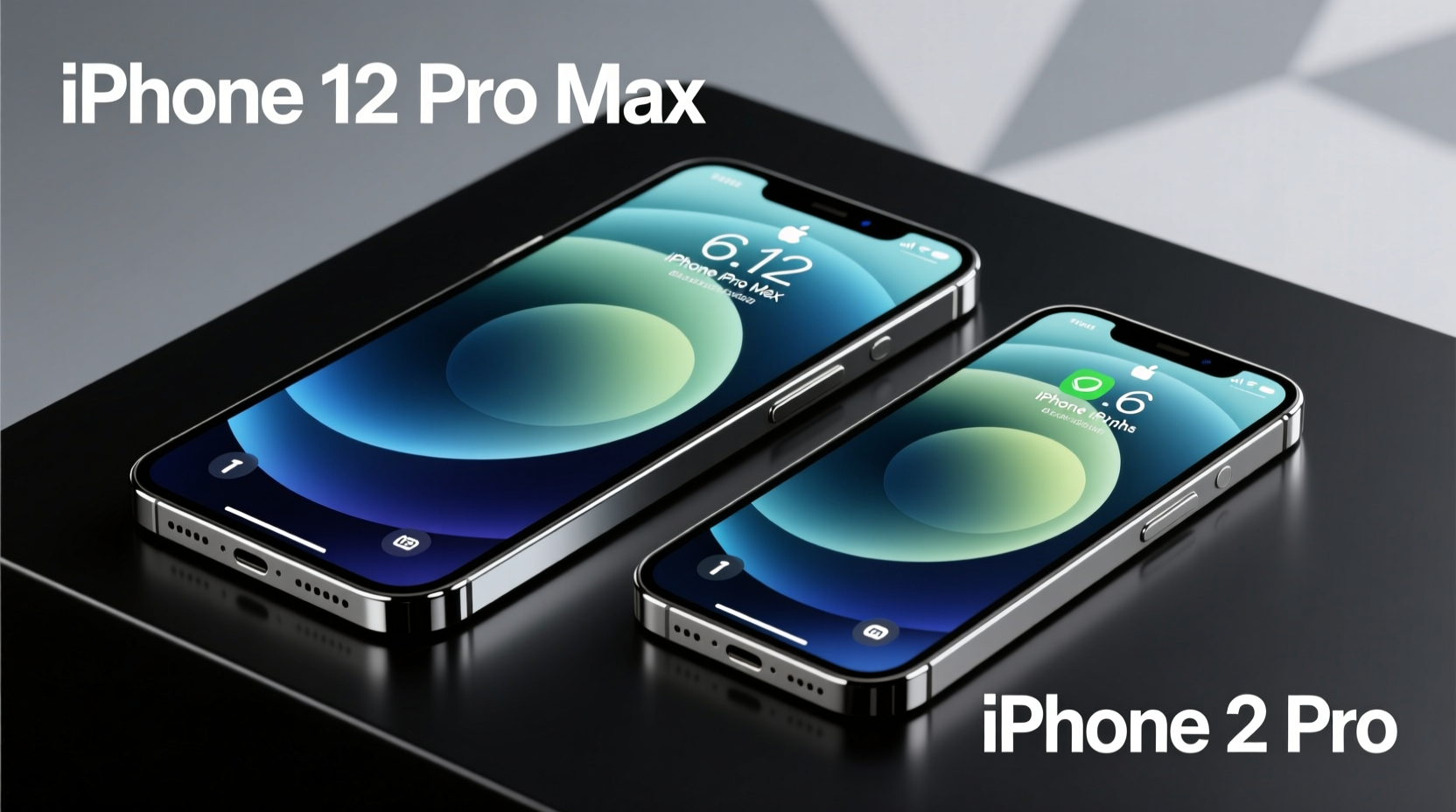
The most immediate difference between the iPhone 12 Pro and 12 Pro Max lies in their physical design. The Pro measures 5.78 x 2.82 x 0.30 inches and weighs 6.66 ounces (189 grams), while the Pro Max stretches to 6.33 x 3.07 x 0.30 inches and tips the scales at 8.46 ounces (240 grams). That’s nearly half an inch taller and wider, with a noticeable weight increase.
This isn’t just about aesthetics—it affects daily usability. The Pro Max demands two hands for comfortable one-handed navigation, especially when reaching the top corners of the display. In contrast, the 12 Pro fits more naturally in smaller pockets and feels less fatiguing during extended use, such as reading or watching videos in bed.
Display Comparison: Size vs Usability
The 12 Pro features a 6.1-inch Super Retina XDR OLED display, while the Pro Max boasts a 6.7-inch version of the same panel. Both have the same pixel density (460 ppi) and support HDR10, Dolby Vision, and true 10-bit color. Visually, they’re indistinguishable in quality—but the experience differs due to size.
A larger screen enhances media consumption. Watching movies on the Pro Max provides a more immersive experience, closer to a mini tablet. Multitasking also improves slightly, particularly when using split-view in compatible apps or editing documents. However, for general browsing, messaging, and social media, the 6.1-inch screen remains more than sufficient.
It's worth noting that despite the larger display, the Pro Max doesn’t offer additional screen real estate in iOS’s interface. Apps don’t automatically scale to take advantage of the extra space unless specifically optimized. So, while the screen is physically larger, functional gains are limited.
Battery Life: Where the Pro Max Pulls Ahead
One of the most tangible advantages of the larger chassis is battery capacity. The iPhone 12 Pro Max houses a 3,687 mAh battery compared to the 12 Pro’s 2,815 mAh unit. This results in significantly longer endurance.
Apple rated the Pro Max for up to 20 hours of video playback, versus 17 hours on the 12 Pro. Real-world usage confirms this gap: heavy users report an extra 2–3 hours of screen-on time with the Pro Max. For travelers, professionals on back-to-back calls, or anyone who can’t charge midday, this improvement is substantial.
“Battery life is often the unsung hero of smartphone satisfaction. A few extra hours can eliminate charging anxiety.” — David Lin, Mobile Tech Analyst at TechPulse Weekly
Camera Enhancements: Subtle but Meaningful
Both phones feature a triple-camera system: 12MP wide, ultra-wide, and telephoto lenses. They share Night mode, Deep Fusion, and Apple ProRAW support. However, the Pro Max introduces sensor-shift optical image stabilization (OIS) on the main wide lens—a first for iPhones.
Sensor-shift OIS moves the sensor itself rather than the lens elements, offering superior stability. This translates to sharper low-light photos and smoother video, especially when walking or shooting in windy conditions. While the difference may not be dramatic in daylight, night photographers and videographers will appreciate the edge.
In addition, the Pro Max’s larger body allows for slightly better thermal management during extended 4K recording, reducing the likelihood of overheating warnings during long shoots.
Detailed Feature Comparison
| Feature | iPhone 12 Pro | iPhone 12 Pro Max |
|---|---|---|
| Display Size | 6.1 inches | 6.7 inches |
| Weight | 189 g (6.66 oz) | 240 g (8.46 oz) |
| Battery (Video Playback) | Up to 17 hours | Up to 20 hours |
| Main Camera Stabilization | Standard OIS | Sensor-Shift OIS |
| Water Resistance | IP68 (6m for 30 min) | IP68 (6m for 30 min) |
| Storage Options | 128GB, 256GB, 512GB | 128GB, 256GB, 512GB |
| Price at Launch | $999 | $1,099 |
Real-World Use Case: A Photographer’s Perspective
Consider Sarah, a freelance travel photographer based in Portland. She used the iPhone 12 Pro for six months before upgrading to the Pro Max. Initially skeptical about the size, she found the trade-off worthwhile. “I’m constantly shooting in dim cafes or during golden hour,” she explains. “The sensor-shift stabilization means fewer blurry shots. And the battery lasts through full-day shoots without needing a pack.”
However, she did adjust her carry habits. “I switched from jeans pockets to a small sling bag. The phone doesn’t fit comfortably anymore, but the photo quality gain is worth it.” For creatives whose phones double as primary cameras, the Pro Max’s advantages accumulate across real-world scenarios.
Who Should Choose Which Model?
- Choose the iPhone 12 Pro if: You prefer a compact flagship, use your phone one-handed often, or want minimal pocket bulk. It delivers flagship performance without stretching comfort limits.
- Choose the iPhone 12 Pro Max if: You prioritize battery life, consume a lot of video content, or rely on your phone for photography. The larger size pays dividends in endurance and imaging.
Checklist: Decide Between 12 Pro and 12 Pro Max
- Measure your hand span—can you comfortably reach across a 6.7-inch screen?
- Evaluate your daily charging routine—do you need longer battery life?
- Assess your media habits—do you watch a lot of videos or edit photos on your phone?
- Test the weight—does 8.46 oz feel too heavy for all-day carry?
- Consider your case and pocket space—will it still fit?
Frequently Asked Questions
Is the iPhone 12 Pro Max too big for average users?
It depends on personal preference. Many users adapt quickly, but those with smaller hands or who dislike two-handed operation may find it cumbersome. Try holding a similarly sized device before committing.
Do both phones support 5G?
Yes, both models include mmWave and sub-6GHz 5G connectivity, ensuring fast network speeds wherever coverage is available.
Can the camera difference be noticed by casual users?
For everyday snapshots in good light, no. The improvements in stabilization and low-light performance are subtle and most beneficial to enthusiasts or professionals.
Final Verdict: Is the Bigger Screen Worth It?
The answer hinges on what you value most. The iPhone 12 Pro Max isn’t simply a larger version of the 12 Pro—it’s a specialized tool for users who benefit from extended battery life, enhanced camera stability, and a cinematic viewing experience. But that comes at the cost of portability and one-handed ease.
If your priority is balance—power, size, and usability—the 12 Pro remains an excellent choice. But if you're willing to carry more weight for measurable gains in endurance and photography, the Pro Max justifies its premium. The bigger screen isn’t inherently “better”—but for the right user, it’s undeniably worth it.




 浙公网安备
33010002000092号
浙公网安备
33010002000092号 浙B2-20120091-4
Comments
No comments yet. Why don't you start the discussion?