
When Apple released the iPhone 12 Pro Max and Samsung launched the Galaxy S20 Ultra, both devices entered the flagship arena with bold claims about their camera systems. The S20 Ultra boasted a revolutionary 100x \"Space Zoom,\" while the iPhone 12 Pro Max introduced sensor-shift stabilization and improved low-light performance. But in practical photography, does Samsung’s extreme zoom capability deliver meaningful advantages over Apple’s more conservative approach? Or is it more of a marketing gimmick than a real upgrade?
The answer isn’t straightforward. While zoom range looks impressive on paper, real-world image quality, consistency, and usability matter far more for most photographers. This comparison dives deep into camera hardware, software processing, and actual shooting scenarios to determine whether the S20 Ultra’s zoom is truly worth prioritizing over the iPhone’s balanced, reliable imaging system.
Camera Hardware: Specs on Paper
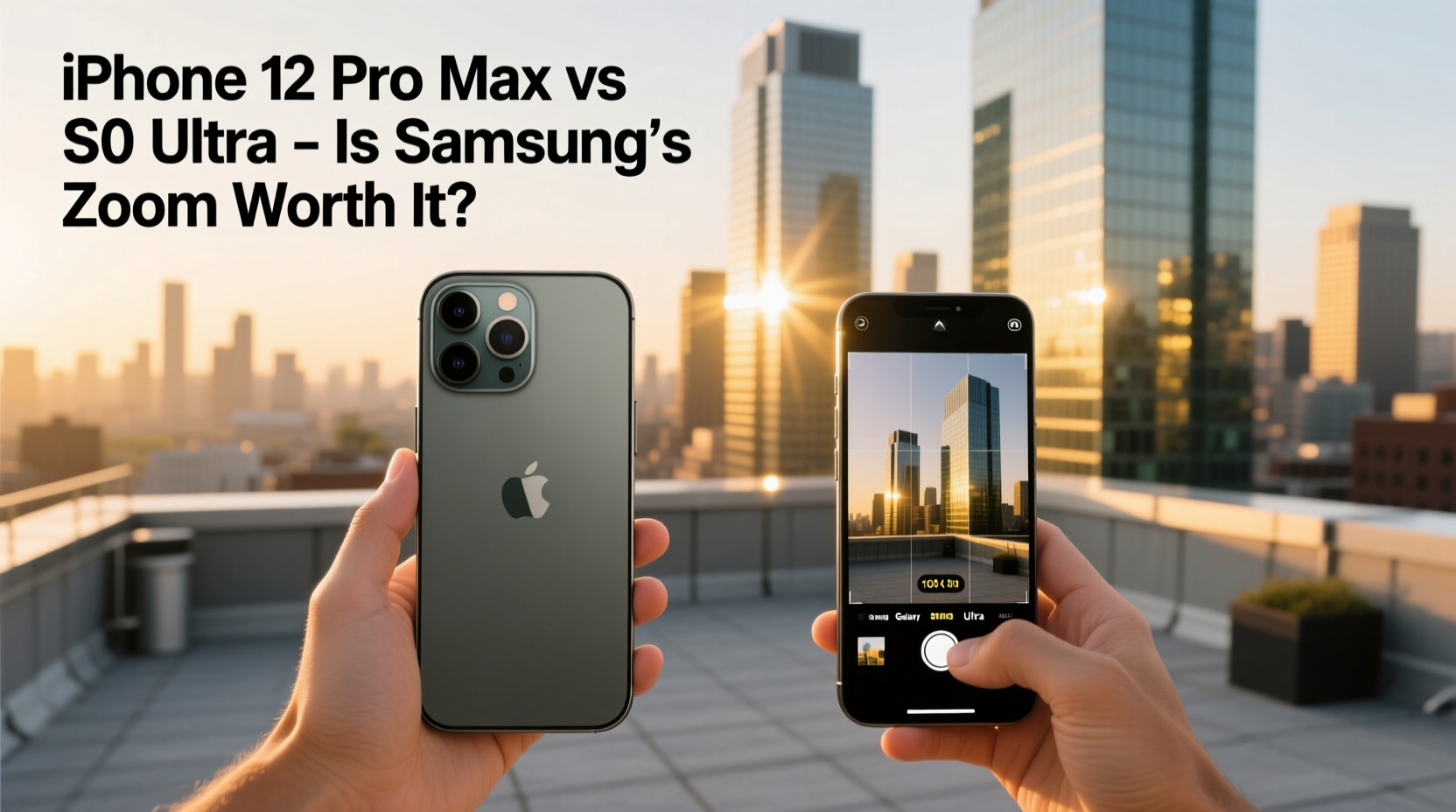
Understanding the physical differences between these two cameras starts with their hardware configurations.
| Feature | iPhone 12 Pro Max | Samsung Galaxy S20 Ultra |
|---|---|---|
| Main Sensor | 12MP, f/1.6, 1.7µm pixels, sensor-shift OIS | 108MP, f/1.8, 0.8µm (pixel-binned to 12MP) |
| Ultra-Wide | 12MP, f/2.4, 120° FoV | 12MP, f/2.2, 120° FoV |
| Telephoto | 12MP, f/2.0, 2.5x optical zoom | 48MP, f/3.5, folded periscope lens, 4x optical (10x hybrid) |
| Digital Zoom | Up to 12x digital zoom | Up to 100x digital zoom (\"Space Zoom\") |
| Video Recording | 4K up to 60fps, Dolby Vision HDR | 8K at 24fps, 4K up to 60fps |
On paper, the S20 Ultra wins the spec war. Its 108MP main sensor captures more data, and the periscope telephoto enables higher optical and hybrid zoom levels. The 100x zoom sounds like science fiction—until you use it.
Zoom Performance: Reality vs Hype
The S20 Ultra’s 100x zoom is technically functional, but usable only under perfect conditions: bright daylight, rock-steady hands, and a completely still subject. Even then, results are often soft, grainy, and artifact-ridden. At 30x, fine details blur, edges become jagged, and dynamic range collapses.
In contrast, the iPhone 12 Pro Max offers a modest 2.5x optical zoom but excels in consistency. Its telephoto lens produces sharp, well-exposed images up to 5x using high-quality digital cropping from the main sensor. Beyond that, Apple’s Smart HDR and Deep Fusion maintain color accuracy and noise control better than Samsung’s aggressive sharpening.
Realistically, the sweet spot for the S20 Ultra is between 4x (optical) and 10x (hybrid). Beyond 10x, image degradation accelerates. The iPhone may not match peak zoom numbers, but its photos remain usable at similar ranges.
“High-magnification zoom without stabilization and computational support quickly becomes a novelty. Consistency across lighting conditions is what defines a great camera.” — David Kim, Mobile Imaging Analyst at DXOMARK
Low-Light and Dynamic Range Comparison
Where the iPhone 12 Pro Max pulls ahead decisively is in low-light photography. Its larger sensor, sensor-shift stabilization, and superior computational photography produce brighter, cleaner night shots with natural color tones.
The S20 Ultra struggles in dim environments. Despite its high megapixel count, the small pixel size (0.8µm before binning) limits light capture. Night mode exists, but results often appear overprocessed, with excessive smoothing and halo effects around bright lights.
In backlit scenes, the iPhone maintains better highlight retention and shadow detail. Smart HDR 3 analyzes the scene in real time, preserving skies and facial features even in harsh sunlight. Samsung’s HDR processing tends to oversaturate greens and boost contrast unnaturally, making some photos look cartoonish.
- The iPhone excels in consistent exposure and skin tone accuracy.
- Samsung favors vibrant, punchy colors that appeal initially but lack realism.
- In mixed lighting, the iPhone handles white balance more reliably.
Mini Case Study: Concert Photography
Consider a real-world scenario: photographing a live concert from the back of a dimly lit venue. You’re too far for a standard shot, but you want to capture the performer clearly.
A user with an S20 Ultra might switch to 10x zoom, hoping to get close. In practice, the combination of low light and motion blur renders most shots unusable. Even with tripod support, noise and focus hunting degrade quality. The resulting image may show the artist’s silhouette but lacks facial detail or texture.
With the iPhone 12 Pro Max, the photographer uses the 2.5x optical zoom and crops tightly in post-processing. Thanks to the large, stable sensor and Night mode optimization, the cropped image retains significantly more detail and lower noise. While not as magnified as 10x, the final output is sharper and more natural-looking.
This illustrates a key insight: sometimes, a lower zoom level with better base image quality outperforms extreme magnification with poor input.
Actionable Tips for Maximizing Camera Performance
Regardless of which phone you own, these practices improve photo quality:
- Use proper lighting: Natural daylight yields the best results for any smartphone camera.
- Avoid max zoom unless necessary: Stick to 5x or below for sharpest results on either device.
- Tap to focus and expose: Manually set focus point for portraits or detailed subjects.
- Shoot in Pro mode (S20 Ultra): Gain control over ISO and shutter speed for better low-light outcomes.
- Enable Night mode (iPhone): Let the phone stabilize automatically for cleaner dark shots.
Checklist: Choosing Based on Your Needs
Ask yourself the following before deciding which camera suits your lifestyle:
- ✅ Do I frequently shoot distant subjects like wildlife or sports?
- ✅ Am I willing to carry a tripod or stabilize the phone for long zoom shots?
- ✅ Do I prioritize realistic colors and consistent performance over flashy specs?
- ✅ Is low-light photography (e.g., indoor events, nightscapes) a regular need?
- ✅ Do I value video quality, especially in HDR or cinematic formats?
If you answered yes to the first two, the S20 Ultra’s zoom might offer occasional value. If the last three resonate more, the iPhone 12 Pro Max is the stronger all-around choice.
Frequently Asked Questions
Is the S20 Ultra’s 100x zoom actually usable?
Only in ideal conditions. It requires bright light, complete stillness, and often multiple attempts to get one acceptable shot. Most users find it impractical for daily photography.
Does the iPhone 12 Pro Max have night mode on all lenses?
Night mode is available on the wide and front cameras. The ultra-wide and telephoto support it in later iOS updates, though with more limitations.
Which phone takes better portrait photos?
The iPhone consistently delivers more natural depth mapping and skin tones. Samsung’s bokeh effect can be overly aggressive, creating halos and edge errors, especially around hair.
Final Verdict: Is the Samsung Zoom Worth It?
The S20 Ultra’s 100x zoom is a technological marvel, but marvels don’t always translate to utility. For the vast majority of users, the iPhone 12 Pro Max offers a more dependable, high-quality photography experience. Its strength lies not in headline-grabbing specs, but in refined software, superior stabilization, and balanced color science.
Samsung’s zoom is fun to demo and occasionally useful—like capturing a distant landmark or reading a sign from afar. But when evaluating overall camera performance, consistency, dynamic range, and low-light capability outweigh maximum zoom range.
If you're choosing between these two phones today, ask not “How far can I zoom?” but rather “How good are my everyday photos?” In that contest, the iPhone 12 Pro Max emerges as the more practical, professional-grade option.




 浙公网安备
33010002000092号
浙公网安备
33010002000092号 浙B2-20120091-4
Comments
No comments yet. Why don't you start the discussion?