
The (PRODUCT)RED edition of Apple’s iPhones has always carried more than just aesthetic appeal—it represents a commitment to global health initiatives through the Global Fund. But beyond the cause, many buyers are drawn to the bold, vibrant red finish that stands out in a sea of black, white, and silver smartphones. When comparing the iPhone 12 (Red) and the iPhone 11 (Red), a natural question arises: if you already own the iPhone 11 in red, is upgrading to the iPhone 12 in the same color justified—especially if the motivation is largely visual?
The short answer: not solely for the color. While both models wear the signature red with pride, the decision to upgrade should be based on tangible improvements in performance, display, connectivity, and longevity—not just aesthetics. That said, the visual refresh does come alongside meaningful upgrades that, when combined, may tip the scale for some users.
Design and Build: Subtle Shifts, Significant Impact
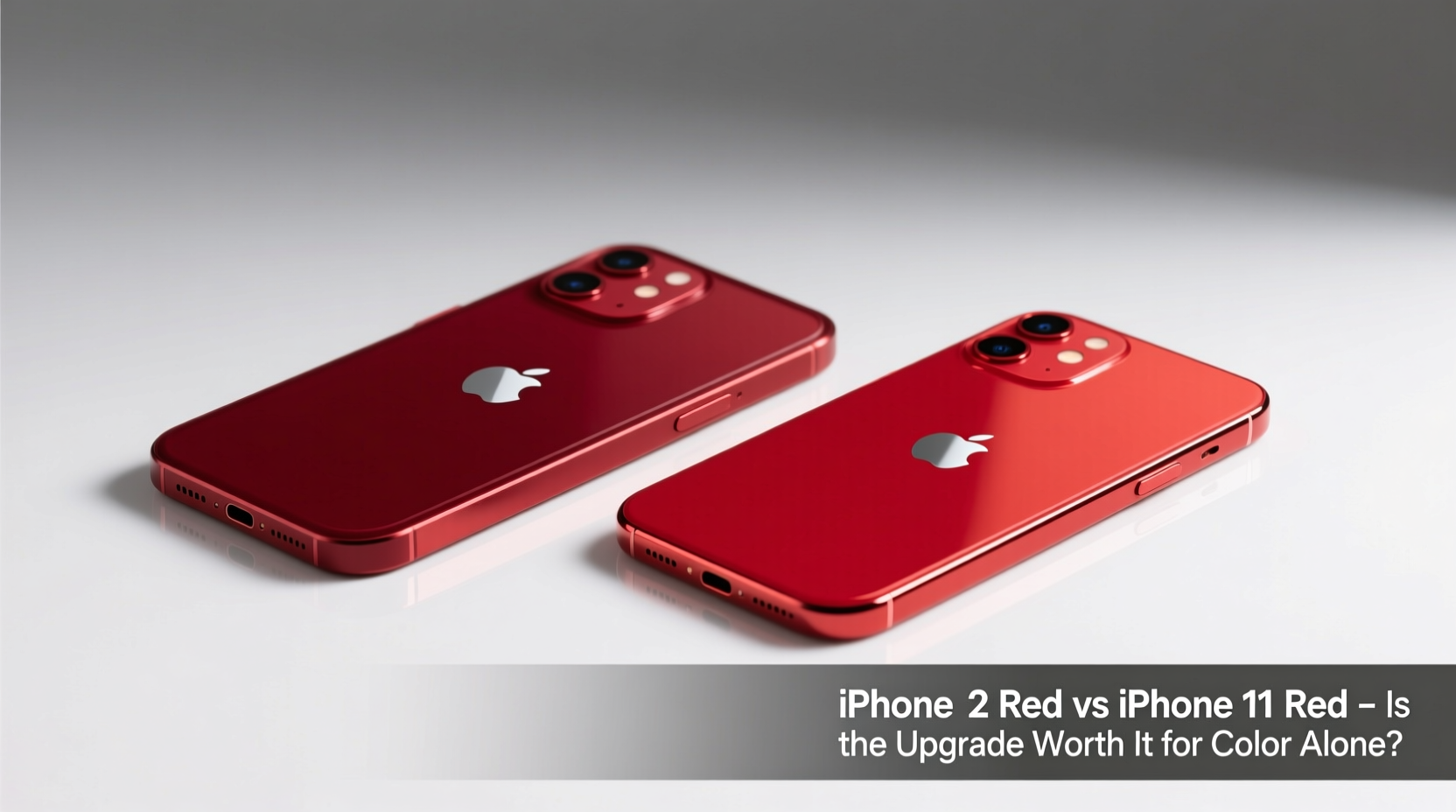
At first glance, both phones share the same iconic red hue, but their design philosophies diverge noticeably. The iPhone 11 (Red) features rounded aluminum edges and a glossy glass back, giving it a softer, more traditional feel. In contrast, the iPhone 12 (Red) adopts a flat-edge stainless steel frame reminiscent of the iPhone 5 era, lending it a more modern, premium look and feel.
The shift isn’t just cosmetic. The iPhone 12’s flatter sides make it slightly easier to grip and less prone to slipping, despite being marginally thinner and lighter. Additionally, the Ceramic Shield front cover introduced with the iPhone 12 offers improved drop protection—Apple claims up to four times better resistance to drops.
Display Differences: Night and Day Clarity
One of the most significant upgrades between the two models lies under the surface—the display. The iPhone 11 uses an LCD-based Liquid Retina HD display at 1792 x 828 resolution, while the iPhone 12 steps up to a Super Retina XDR OLED panel with a sharper 2532 x 1170 resolution.
OLED technology delivers deeper blacks, higher contrast ratios, and more accurate color reproduction. For media consumption, photo editing, or even everyday scrolling, the difference is immediately noticeable. Text appears crisper, videos pop with richer detail, and HDR content benefits from true black levels.
If you frequently watch movies, play games, or use your phone outdoors, the iPhone 12’s screen is a major leap forward—even if the color remains the same.
Performance Comparison: Speed That Matters
Beneath the red glass, the hardware tells a compelling story. The iPhone 11 runs on the A13 Bionic chip, still capable and efficient, but the iPhone 12 introduces the A14 Bionic—the first smartphone chip built on a 5-nanometer process.
This advancement translates into real-world benefits: up to 16% faster CPU performance and 8% faster GPU speeds. More importantly, the A14 improves machine learning tasks, enhances camera processing, and ensures smoother multitasking. Apps launch quicker, AR experiences are more stable, and future iOS updates will likely be optimized first for A14 and newer chips.
For long-term ownership, this performance gap becomes increasingly relevant. Users who plan to keep their phone for three years or more will benefit significantly from the extra headroom provided by the A14.
“Even if the color stays consistent, the underlying technology evolves fast. The jump from A13 to A14 isn’t just incremental—it’s foundational for future-proofing.” — David Lin, Mobile Hardware Analyst at TechPulse Insights
Camera Capabilities: Beyond the Lens Color
Both phones feature dual-camera systems: a 12MP wide lens and a 12MP ultra-wide. However, the iPhone 12 brings key enhancements. Smart HDR 3 improves dynamic range in mixed lighting, capturing more detail in shadows and highlights. Night mode now extends to the ultra-wide lens, allowing better low-light photography across both cameras.
Perhaps most notably, the iPhone 12 supports Dolby Vision HDR recording at 4K up to 30 fps—an industry-first for smartphones. This means your videos have cinematic color grading and contrast, especially when viewed on compatible screens. The iPhone 11 lacks this capability entirely.
If you value content creation or simply enjoy taking high-quality photos and videos, the iPhone 12’s camera system offers measurable advantages over its predecessor.
Network and Connectivity: Welcome to 5G
This is where the iPhone 12 pulls decisively ahead. It was Apple’s first lineup to support 5G connectivity. While the iPhone 11 is limited to 4G LTE, the iPhone 12 opens the door to faster download and upload speeds, lower latency, and improved streaming quality—where network coverage allows.
However, it’s important to note that 5G availability varies widely by region and carrier. In rural areas or locations with limited infrastructure, the benefit may be negligible. Additionally, early 5G implementations can impact battery life due to modem inefficiencies.
Still, as 5G networks expand, having access to next-generation connectivity adds long-term value—especially for users who rely on cloud services, remote work tools, or real-time gaming.
Should You Upgrade Just for the Red?
The allure of the (PRODUCT)RED finish is undeniable. It's stylish, symbolic, and rare enough to feel special. But upgrading from the iPhone 11 (Red) to the iPhone 12 (Red) purely for the sake of owning both colors doesn't make practical sense.
That said, if your iPhone 11 is showing signs of slowdown, your battery life has degraded, or you’re eager for better photos and 5G readiness, then the upgrade is worthwhile—and the shared red theme makes it a satisfying aesthetic transition.
| Feature | iPhone 11 (Red) | iPhone 12 (Red) |
|---|---|---|
| Display | Liquid Retina HD (LCD) | Super Retina XDR (OLED) |
| Chipset | A13 Bionic | A14 Bionic |
| 5G Support | No | Yes |
| Video Recording | 4K HDR (no Dolby Vision) | 4K Dolby Vision HDR |
| Front Material | Glass (standard) | Ceramic Shield |
| Starting Storage | 64GB | 64GB |
| Battery Life (Video Playback) | Up to 17 hours | Up to 17 hours |
Real User Scenario: Maria’s Upgrade Dilemma
Maria had been using her iPhone 11 (Red) since 2019. She loved the color and felt a personal connection to the (RED) campaign. By late 2022, her phone began lagging during app switches, battery drained faster, and she noticed her videos looked flat compared to friends’ footage.
When she saw the iPhone 12 (Red) on sale, she hesitated—was it just about matching her accessories again? After testing both devices side-by-side at an Apple Store, she noticed the brighter display, snappier response time, and superior night photos. She also realized her carrier now offered expanded 5G coverage in her neighborhood.
Maria decided to upgrade—not because of the color, but because the overall experience justified it. The familiar red finish made the transition emotionally satisfying, but the technical gains sealed the deal.
Frequently Asked Questions
Is the red color identical on both models?
No. While both are labeled “(PRODUCT)RED,” the finishes differ slightly. The iPhone 11 (Red) has a glossier, deeper red tone, while the iPhone 12 (Red) appears slightly more subdued due to its matte-finish glass back. Lighting and viewing angle can affect perception.
Does the (RED) purchase still support global health causes?
Yes. Apple continues to donate a portion of every (PRODUCT)RED purchase to the Global Fund to fight HIV/AIDS, with recent efforts expanding to include pandemic preparedness and maternal health programs in sub-Saharan Africa.
Can I expect longer software support on the iPhone 12?
Yes. Given its newer chipset and release date (October 2020 vs. September 2019), the iPhone 12 is expected to receive iOS updates for one to two additional years compared to the iPhone 11. Historically, Apple supports devices for 5–6 years post-release.
Final Verdict: Upgrade for More Than Hue
The iPhone 12 (Red) and iPhone 11 (Red) share a bold color and a noble cause, but they represent different generations of smartphone evolution. Upgrading solely for the sake of owning the newer red model isn’t financially or functionally justified. However, if your current device is aging, or you want better performance, display quality, camera features, and 5G readiness, then the iPhone 12 offers a compelling package—and the red finish is a welcome continuity.
Color can inspire emotion, but technology drives utility. Make your decision based on how you use your phone daily, not just how it looks on your desk.




 浙公网安备
33010002000092号
浙公网安备
33010002000092号 浙B2-20120091-4
Comments
No comments yet. Why don't you start the discussion?