
When Apple released the iPhone 12 lineup in 2020, it introduced a tiered approach to its flagship models—offering consumers a choice between compact design and expansive utility. The iPhone 12 and iPhone 12 Pro Max sit at opposite ends of this spectrum. While both share core technologies like the A14 Bionic chip and 5G connectivity, their differences in size, camera capabilities, and overall experience raise a critical question: Is the larger screen of the iPhone 12 Pro Max truly worth the trade-offs?
This isn’t just about inches on a spec sheet. It’s about how the device fits into your daily life—how you consume media, take photos, navigate apps, and carry it through your day. Let’s break down the key differences and examine whether the Pro Max’s larger display delivers meaningful value or simply adds bulk.
Design and Build: Size Matters More Than You Think
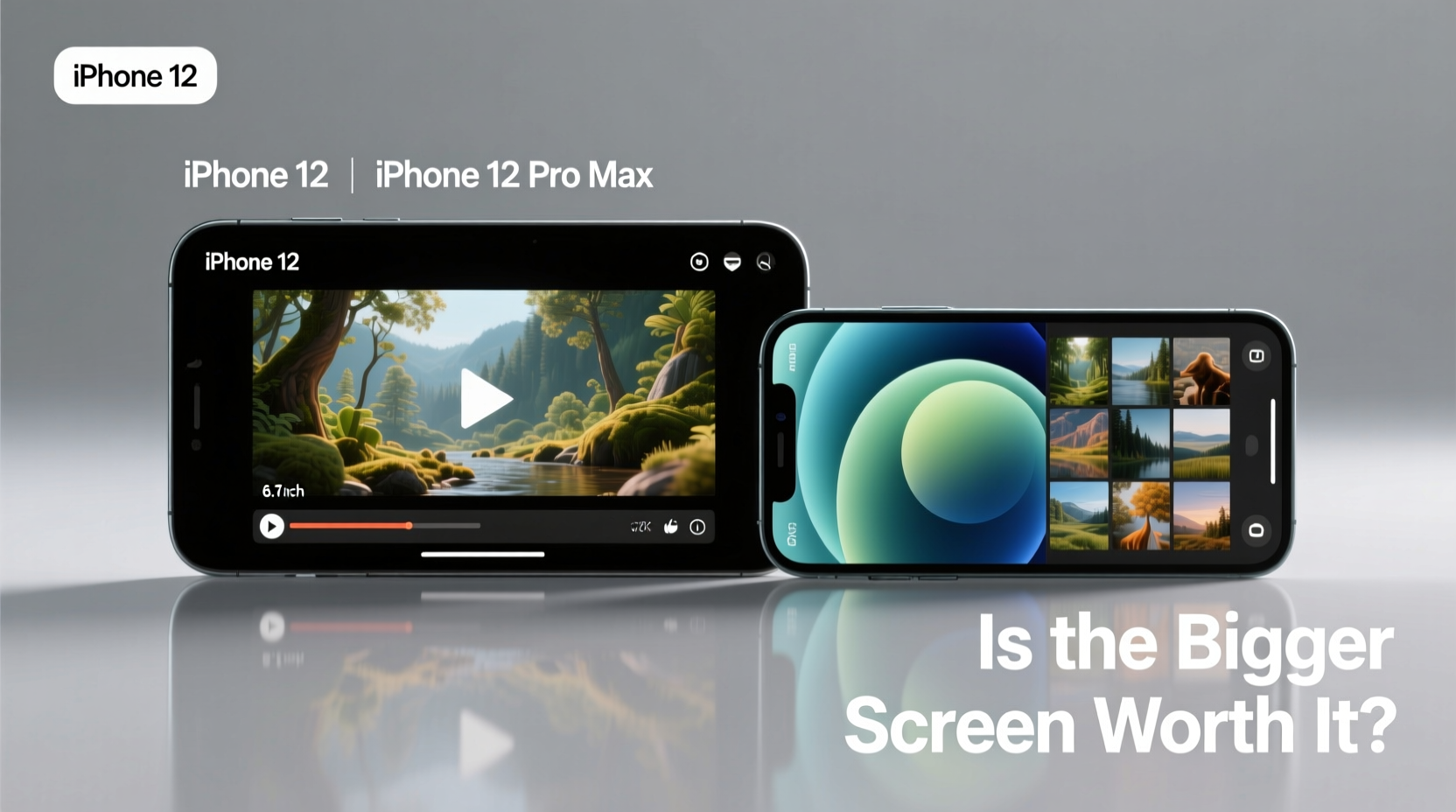
The most immediate difference between the iPhone 12 and iPhone 12 Pro Max is physical presence. The iPhone 12 features a 6.1-inch Super Retina XDR OLED display, while the Pro Max stretches that to 6.7 inches—the largest iPhone screen at the time of release. That extra real estate translates to a significantly taller and wider device.
The Pro Max weighs 228 grams compared to the iPhone 12’s 164 grams. That’s a 64-gram difference—equivalent to carrying an extra AA battery in your pocket. For many users, especially those with smaller hands, this makes one-handed use challenging. Swiping from corner to corner requires deliberate movement, and accidental drops become more likely due to reduced grip security.
On the flip side, the Pro Max’s flat edges are slightly more pronounced, giving it a premium stainless steel frame (vs. aluminum on the iPhone 12), which improves durability but also adds to the weight. Both devices have Ceramic Shield front cover and IP68 water resistance, so protection levels are comparable.
Display Quality: Bigger, But Not Necessarily Better
Both phones use OLED technology with HDR support and a resolution density that ensures sharp text and vibrant colors. However, the Pro Max offers a slightly higher peak brightness (up to 1,200 nits for HDR content) compared to the iPhone 12’s 1,200-nit peak under specific conditions, though real-world differences are minimal.
Where the Pro Max shines is in immersive experiences. Watching movies, editing documents, or multitasking with Split View on iPadOS-style interfaces benefits from the expanded canvas. Scrolling through long web pages or reading e-books feels less cramped. Gamers appreciate the extra screen space for controls and visuals.
Yet, for everyday tasks—messaging, browsing social media, checking email—the iPhone 12’s screen is more than sufficient. In fact, many users report greater satisfaction with the balance of screen size and portability offered by the standard model.
“Larger screens improve media consumption, but they don’t automatically make a phone better. Usability and ergonomics must be part of the equation.” — David Kim, Mobile Device Analyst at TechInsight Group
Camera Capabilities: Where the Pro Max Pulls Ahead
If there’s one area where the Pro Max clearly outperforms the iPhone 12, it’s photography. Both share dual and triple-lens systems respectively, but the Pro Max includes a telephoto lens with 2.5x optical zoom (vs. 2x on the iPhone 12 Pro, not present on base iPhone 12), sensor-shift image stabilization, and enhanced Night mode across all lenses.
Sensor-shift stabilization—a feature borrowed from DSLRs—keeps the sensor steady rather than moving the lens. This results in sharper low-light photos and smoother video, particularly when walking or filming in unstable conditions.
| Feature | iPhone 12 | iPhone 12 Pro Max |
|---|---|---|
| Rear Cameras | Dual: 12MP Wide + Ultra-Wide | Triple: 12MP Wide + Ultra-Wide + Telephoto |
| Optical Zoom | 1x–2x digital | 0.5x–2.5x optical |
| Image Stabilization | Wide: Optical, Ultra-Wide: Digital | Wide: Sensor-Shift, Others: Optical |
| Night Mode | Wide & Ultra-Wide | All lenses including front |
| LiDAR Scanner | No | Yes – improves AR and low-light focus |
The LiDAR scanner enables faster autofocus in dark environments and enhances augmented reality applications, making the Pro Max a favorite among photographers and developers. Portrait mode accuracy improves significantly, especially in dim lighting.
Real Example: Travel Photographer’s Experience
Maya Tran, a freelance travel photographer based in Vancouver, upgraded from an iPhone 11 to the iPhone 12 Pro Max primarily for its camera system. “I shoot over 70% of my Instagram content on my phone,” she explains. “The extra zoom lets me isolate subjects without cropping, and sensor-shift stabilization means I can film handheld clips while hiking without a gimbal. The larger screen helps with framing, but honestly, I wish it were lighter.”
Her experience highlights a key insight: professionals who rely on mobile photography benefit from the Pro Max’s capabilities, even if the size is a compromise.
Battery Life and Performance: Power Meets Endurance
Despite sharing the same A14 Bionic chip—still powerful enough for demanding apps and games in 2024—the two models differ significantly in battery longevity. Apple rated the iPhone 12 for up to 17 hours of video playback, while the Pro Max boasts up to 20 hours. Real-world usage shows the gap widening during intensive tasks like GPS navigation, video streaming, or gaming.
The larger chassis of the Pro Max accommodates a bigger battery, enabling longer endurance without increasing charging frequency. Users who spend extended periods away from outlets—road trippers, field workers, or frequent flyers—often cite this as a decisive factor.
Step-by-Step Guide: Maximizing Battery Efficiency
- Go to Settings > Battery and review app usage weekly.
- Reduce background refresh for non-essential apps (Settings > General > Background App Refresh).
- Lower screen brightness or enable Auto-Brightness.
- Turn off Location Services for apps that don’t need it.
- Use Wi-Fi instead of 5G when possible; toggle via Control Center.
Price and Value: Assessing the Upgrade Cost
The iPhone 12 launched at $799, while the iPhone 12 Pro Max started at $1,099—a $300 premium. Even today, used or refurbished models reflect this gap. So, what do you get for the extra cost?
- Larger, more immersive display
- Better camera system with telephoto and LiDAR
- Improved battery life
- Premium stainless steel build
For casual users, much of this may go underutilized. If you mostly stream videos, text, and browse, the iPhone 12 offers excellent performance at a lower price point. But for power users, creatives, or those seeking future-proofing, the Pro Max justifies its cost through sustained usability and advanced features.
Checklist: Should You Choose the iPhone 12 Pro Max?
- ✅ Do you prioritize camera quality and zoom capability?
- ✅ Do you watch a lot of videos or edit content on your phone?
- ✅ Do you need all-day battery life without carrying a charger?
- ✅ Are you comfortable with a large, heavy device in pockets or small bags?
- ✅ Is budget flexible, or are you investing for long-term use?
If you answered yes to three or more, the Pro Max is likely worth the upgrade.
Frequently Asked Questions
Is the iPhone 12 Pro Max too big for average users?
Many users find it bulky, especially for one-handed use. If you prefer compact devices or have smaller hands, the iPhone 12 offers a more balanced form factor.
Does the bigger screen drain the battery faster?
While larger screens typically consume more power, the Pro Max compensates with a significantly larger battery. In practice, it lasts longer despite the bigger display.
Can the iPhone 12 still handle modern apps and iOS updates?
Absolutely. The A14 chip remains capable of running iOS 17 and most current apps smoothly. Unless you're doing professional photo/video editing, the iPhone 12 holds up well in 2024.
Final Verdict: Is the Bigger Screen Worth It?
The iPhone 12 Pro Max delivers tangible benefits: superior cameras, longer battery life, and a cinematic viewing experience. But these advantages come with trade-offs in size, weight, and price. The bigger screen enhances media and productivity, but only if you’re willing to accommodate its physical footprint.
For professionals, travelers, or anyone deeply invested in mobile photography and video, the Pro Max is a compelling choice. For everyday users who value convenience, pocketability, and value, the iPhone 12 strikes a smarter balance.




 浙公网安备
33010002000092号
浙公网安备
33010002000092号 浙B2-20120091-4
Comments
No comments yet. Why don't you start the discussion?