
The iPhone 12 brought smartphone photography into a new era. With its Night mode, Deep Fusion processing, and 12MP dual-camera system, it delivers stunning images that rival many point-and-shoots. But despite these advances, there are still situations where a dedicated Canon DSLR or mirrorless camera pulls far ahead. Understanding when and why this happens can help photographers—amateur or professional—choose the right tool for the job.
Smartphones have redefined accessibility in photography. They’re always with you, intuitive to use, and capable of producing excellent results under ideal conditions. Yet, they remain constrained by physics, sensor size, lens flexibility, and dynamic range. Real cameras, like those from Canon, are engineered to overcome these limitations. The choice isn’t about which device is “better” overall, but rather which one performs better in specific contexts.
Sensor Size and Image Quality
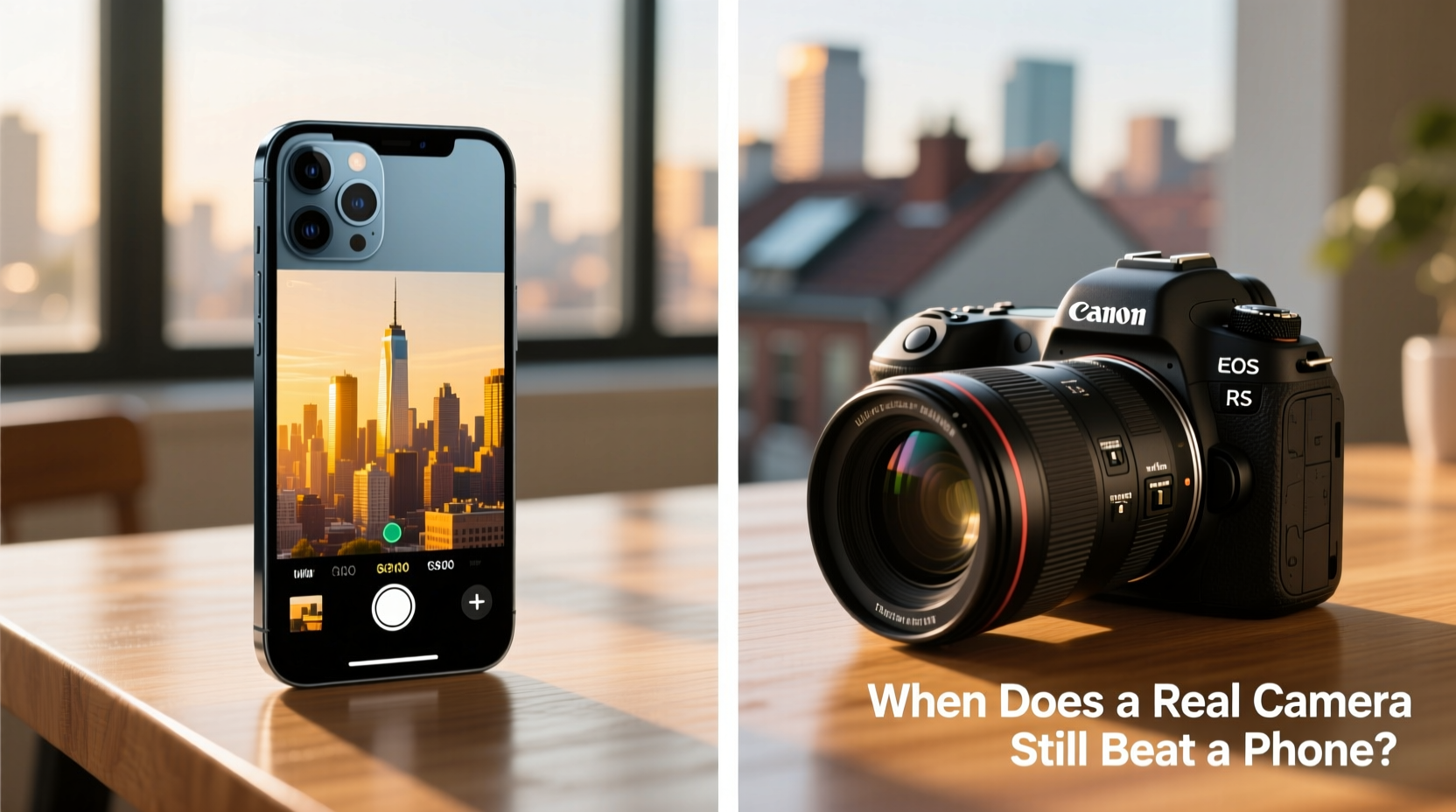
The fundamental difference between the iPhone 12 and any Canon camera lies in the image sensor. The iPhone 12 uses a tiny 1/2.55-inch sensor, while even entry-level Canon DSLRs like the EOS Rebel series feature APS-C sensors over ten times larger. Full-frame models like the EOS R5 use sensors significantly larger still.
Larger sensors capture more light, deliver better dynamic range, and produce less noise in low-light environments. This becomes especially evident when comparing RAW files. While the iPhone 12 processes images heavily using computational photography, Canon cameras allow manual control over exposure, white balance, and focus—preserving far more detail for post-processing.
| Feature | iPhone 12 | Canon EOS R (Full Frame) |
|---|---|---|
| Sensor Size | 1/2.55\" | 36 x 24 mm (Full Frame) |
| Pixel Size | ~1.4µm | ~6.6µm |
| Dynamic Range (approx.) | 11 stops | 14+ stops |
| Low-Light Performance | Good with Night mode | Excellent with high ISO capability |
| Manual RAW Support | Limited (via third-party apps) | Full control via native settings |
Optical Zoom and Lens Flexibility
The iPhone 12 offers digital zoom and a modest 2x optical zoom via its telephoto lens. Beyond that, image quality degrades quickly due to cropping and upscaling. In contrast, Canon cameras support interchangeable lenses—from ultra-wide 16mm to super-telephoto 600mm—with true optical zoom and minimal quality loss.
This flexibility is critical for genres like wildlife, sports, or event photography. Imagine photographing a bird on a distant tree branch. On the iPhone 12, even at 3x zoom, the subject appears small and soft. A Canon EOS R6 with a 100-400mm lens captures sharp, detailed images without sacrificing resolution.
- Canon lenses offer superior aperture control (e.g., f/1.2–f/4), enabling shallow depth of field and better background separation.
- Specialized optics like macro, tilt-shift, or fisheye are unavailable on smartphones.
- Filters (ND, polarizing) can be screwed directly onto Canon lenses, giving creative control impossible with phone attachments.
“While smartphones excel in convenience, nothing replaces the optical precision and creative freedom of a high-quality lens system.” — Daniel Kim, Professional Wildlife Photographer
Performance in Low Light and Action Scenarios
In dimly lit restaurants or evening cityscapes, the iPhone 12 activates Night mode and produces impressive results. However, it requires several seconds of stabilization. Any movement—either from the subject or your hand—can blur the shot. Canon cameras, equipped with advanced autofocus systems and high ISO performance (up to 102,400+), freeze motion instantly.
Beyond stills, video reveals another gap. The iPhone 12 records 4K at 60fps with decent stabilization, but lacks external microphone inputs, log profiles, or interchangeable lenses. Canon’s Cinema EOS line, or even hybrid models like the EOS R5, supports 8K video, dual-pixel autofocus, and professional codecs essential for filmmaking.
Real Example: Concert Photography
Alex, a freelance photographer, attended a local band performance in a dark club. He brought both his iPhone 12 and Canon EOS 7D Mark II with a 70-200mm f/2.8 lens. The iPhone struggled: images were grainy, colors inaccurate, and fast-moving musicians appeared blurred. With the Canon, he shot at ISO 3200, f/2.8, and 1/500s shutter speed—capturing crisp, well-exposed shots with natural color rendition. Post-processing revealed clean shadows and recoverable highlights, something the iPhone’s compressed JPEGs couldn’t match.
Workflow and Professional Control
For professionals, consistency and control matter. The iPhone 12 automates nearly every decision—focus, exposure, white balance, tone curve. While convenient, this limits creative intent. Canon cameras offer full manual mode, customizable picture styles, histogram displays, and focus peaking for videographers.
Additionally, Canon integrates seamlessly with studio setups—flash triggers, tethered shooting, GPS tagging, and metadata embedding. These features are either missing or limited on iPhones, making them unsuitable for commercial shoots, weddings, or editorial assignments.
Checklist: When to Choose a Canon Camera Over iPhone 12
- You need optical zoom beyond 3x (e.g., sports, wildlife).
- Shooting in consistently low-light conditions without flash.
- Creating content for print or large-format display.
- Requiring precise manual control over aperture, shutter, and ISO.
- Using specialized lenses or filters for creative effects.
- Recording professional-grade video with external audio and monitoring.
- Working in fast-paced environments where burst shooting and AF tracking are essential.
FAQ
Can the iPhone 12 replace a Canon camera for travel photography?
For casual travelers who prioritize convenience and social sharing, yes—the iPhone 12 is more than sufficient. But if you're capturing landscapes at golden hour, want maximum detail, or plan to print large, a Canon with a wide-angle lens will deliver noticeably better results.
Is it worth carrying a Canon camera if I already have an iPhone 12?
It depends on your goals. If photography is a serious hobby or profession, carrying a compact Canon like the EOS M50 Mark II adds minimal weight and vastly expands your creative potential. For everyday moments, the iPhone remains unbeatable for speed and simplicity.
Do Canon cameras take better portraits than the iPhone 12?
In controlled conditions, the iPhone 12 Portrait mode works well. But in variable lighting or complex backgrounds, Canon cameras with fast prime lenses (e.g., 50mm f/1.8) produce more natural bokeh, accurate skin tones, and greater depth precision—especially when shooting in RAW.
Conclusion: Knowing Your Tool, Mastering Your Craft
The iPhone 12 is a remarkable device that has elevated mobile photography to unprecedented levels. It excels in spontaneity, connectivity, and ease of use. But when image fidelity, creative control, and adaptability under pressure are required, a Canon camera remains unmatched.
The real answer isn’t about replacement—it’s about recognition. Recognize the strengths of each tool. Use your iPhone for quick shares, candid moments, and everyday documentation. Turn to your Canon when the scene demands more light, more reach, or more artistry. Mastery comes not from owning the best gear, but from knowing when and how to use it.




 浙公网安备
33010002000092号
浙公网安备
33010002000092号 浙B2-20120091-4
Comments
No comments yet. Why don't you start the discussion?