
The leap between iPhone generations often brings subtle but meaningful improvements—especially in areas like display technology. For owners of the iPhone 12 Pro Max considering an upgrade to the iPhone 13 Pro Max, one of the most pressing questions is whether the display upgrade justifies the cost. Both devices feature Apple’s premium Super Retina XDR OLED panels, but behind the similarities lie critical differences in brightness, power efficiency, motion handling, and visual refinement. This deep dive compares every aspect of their displays to help you decide if the upgrade delivers real value.
Display Specifications at a Glance
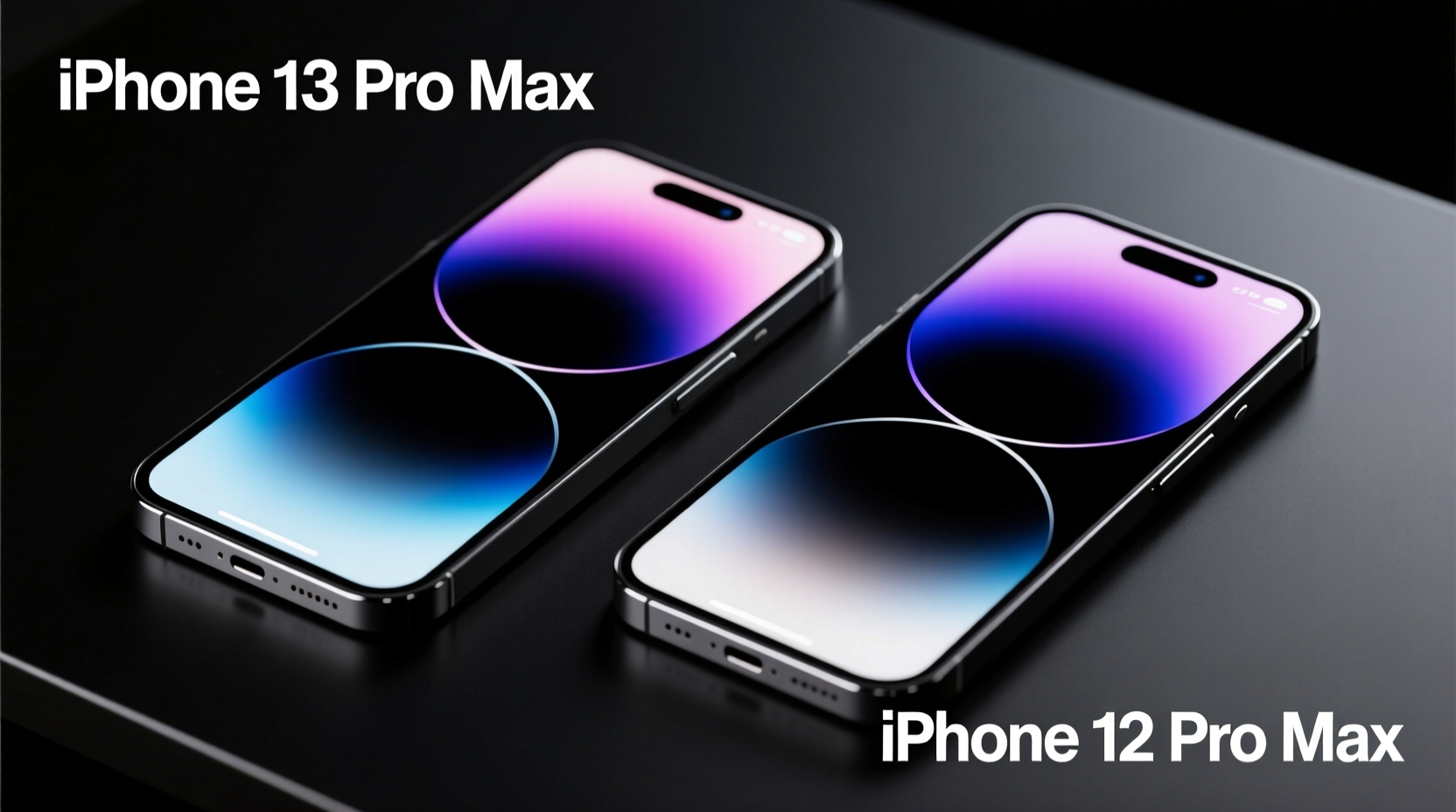
At first glance, the specs for both phones appear nearly identical: 6.7-inch Super Retina XDR OLED displays with HDR support, True Tone, and Ceramic Shield front cover. However, closer inspection reveals key enhancements in the iPhone 13 Pro Max that impact daily use.
| Feature | iPhone 12 Pro Max | iPhone 13 Pro Max |
|---|---|---|
| Display Size | 6.7 inches | 6.7 inches |
| Panel Type | Super Retina XDR OLED | Super Retina XDR OLED (ProMotion) |
| Refresh Rate | 60Hz | 10–120Hz Adaptive |
| Peak Brightness (HDR) | 1200 nits | 1000 nits (typical), 1200 nits (HDR) |
| Typical Brightness | 800 nits | 1000 nits |
| Contrast Ratio | 2,000,000:1 | 2,000,000:1 |
| Always-On Display | No | No (introduced later in iPhone 14 Pro) |
While the jump from 800 to 1000 nits typical brightness may seem minor on paper, it translates into noticeably better outdoor visibility under direct sunlight. The iPhone 13 Pro Max handles glare more effectively, reducing the need to manually increase brightness—a small but consistent improvement in usability.
ProMotion: The Game-Changer You Can’t Unsee
The most significant upgrade in the iPhone 13 Pro Max is the introduction of ProMotion technology—an adaptive 10–120Hz refresh rate. Unlike the fixed 60Hz panel on the 12 Pro Max, the 13 Pro Max dynamically adjusts its refresh rate based on content. Scrolling through Safari, swiping between apps, or playing fast-paced games all benefit from buttery-smooth motion that feels more responsive and fluid.
This isn’t just a marketing gimmick. Once experienced, returning to a 60Hz display often feels sluggish. Apple’s implementation is particularly refined because iOS is optimized to take full advantage of variable refresh rates without sacrificing battery life unnecessarily. When viewing static content like e-books or photos, the display drops to 10Hz, conserving energy while maintaining perfect image stability.
“ProMotion fundamentally changes how users perceive responsiveness. It’s not just about speed—it’s about perceived quality.” — Dr. Lisa Chen, Human-Computer Interaction Researcher, Stanford University
Real-World Viewing Experience: Where the Differences Matter
To understand whether the display upgrade is worth it, consider how you actually use your phone. Are you frequently outdoors? Do you consume a lot of video content or play mobile games? These habits determine how much value you’ll extract from the newer display.
A photographer using the iPhone 12 Pro Max for field editing might appreciate the improved brightness and color fidelity of the 13 Pro Max, especially when reviewing RAW images in daylight. Similarly, frequent travelers navigating maps in bright environments will find the higher peak and sustained brightness levels make a tangible difference.
In a mini case study, Sarah, a travel blogger based in Miami, upgraded from the 12 Pro Max to the 13 Pro Max primarily for outdoor usability. She reported that during beach shoots and city tours, she no longer had to shade her screen with her hand to see navigation cues or check email. “It sounds small,” she said, “but not having to stop and adjust my position just to read a message adds up over time.”
Color Accuracy and Power Efficiency
Both models offer P3 wide color gamut and precise color calibration, making them excellent for creative professionals. However, the 13 Pro Max improves upon this foundation with tighter control over pixel response and reduced motion blur—thanks in part to the higher refresh rate.
Apple also optimized the OLED panel’s power delivery system. Despite driving a more advanced display, the 13 Pro Max achieves comparable or slightly better battery life than its predecessor. This efficiency gain comes from several factors:
- Smaller transistor design in the display driver IC
- Better synchronization between GPU output and screen refresh cycles
- Adaptive refresh rate minimizing unnecessary frame draws
The result is a display that looks better, performs smoother, and doesn’t drain the battery faster—even though it’s technically doing more work.
Should You Upgrade? A Practical Checklist
If you're still on the fence, ask yourself the following questions. Check off each item that applies to your usage pattern:
- Do you spend more than 3 hours per day actively using your phone’s screen?
- Are you often outdoors or in brightly lit environments?
- Do you watch HDR video content (Netflix, Apple TV+, YouTube) regularly?
- Do you notice or care about animation smoothness in iOS transitions?
- Have you used a high-refresh-rate Android phone and noticed the difference?
- Are you planning to keep your phone for 2+ years after upgrading?
If you checked four or more items, the display upgrade on the iPhone 13 Pro Max likely offers meaningful benefits. The combination of brighter visuals, smoother interaction, and long-term durability makes it a worthwhile investment. If you only check one or two, and your current 12 Pro Max is functioning well, the marginal gains may not justify the cost—especially if budget is a concern.
Frequently Asked Questions
Does the iPhone 13 Pro Max have an always-on display?
No, the always-on display feature was introduced with the iPhone 14 Pro series. Both the 12 Pro Max and 13 Pro Max turn off the screen completely when idle.
Is the screen more scratch-resistant on the 13 Pro Max?
Both models use Ceramic Shield front cover, which Apple claims offers the best drop performance in any smartphone glass. There’s no official difference in scratch resistance, though some lab tests suggest slight improvements due to refinements in coating technology.
Can I tell the brightness difference indoors?
Not significantly. The 1000-nit typical brightness shines most in outdoor settings. Indoors, both phones look excellent, with rich blacks and accurate whites thanks to OLED technology.
Conclusion: Making the Right Choice for Your Needs
The iPhone 13 Pro Max’s display isn’t a radical departure from the 12 Pro Max—it’s an evolution. But sometimes, evolution brings transformation. The addition of ProMotion, increased brightness, and smarter power management collectively elevate the user experience in ways that accumulate over time. Smooth scrolling, clearer outdoor visibility, and enhanced media immersion aren’t isolated perks; they form a cohesive improvement in daily usability.
If you’re someone who values precision, responsiveness, and future-proofing your device, the display upgrade is absolutely worth it. For casual users who rarely push their phone’s limits, the difference may be less compelling. Ultimately, the decision hinges not on specs alone, but on how those specs translate into real-life utility.




 浙公网安备
33010002000092号
浙公网安备
33010002000092号 浙B2-20120091-4
Comments
No comments yet. Why don't you start the discussion?