
Choosing whether to upgrade from an iPhone 13 Pro Max to an iPhone 14 isn’t just about checking spec sheets—it’s about understanding how those changes impact your daily use. Apple’s incremental updates can make decisions tricky, especially when you're already on a premium device like the 13 Pro Max. The iPhone 14 may seem like a natural next step, but does it offer enough new features to justify the cost? Or are the improvements so subtle that the difference barely registers?
This comparison cuts through marketing language to examine real-world upgrades in performance, camera quality, battery life, design, and longevity. Whether you’re due for a contract renewal or simply eyeing a newer model, this breakdown will help you determine if the switch is truly worthwhile.
Design and Display: Subtle Changes, Same Feel
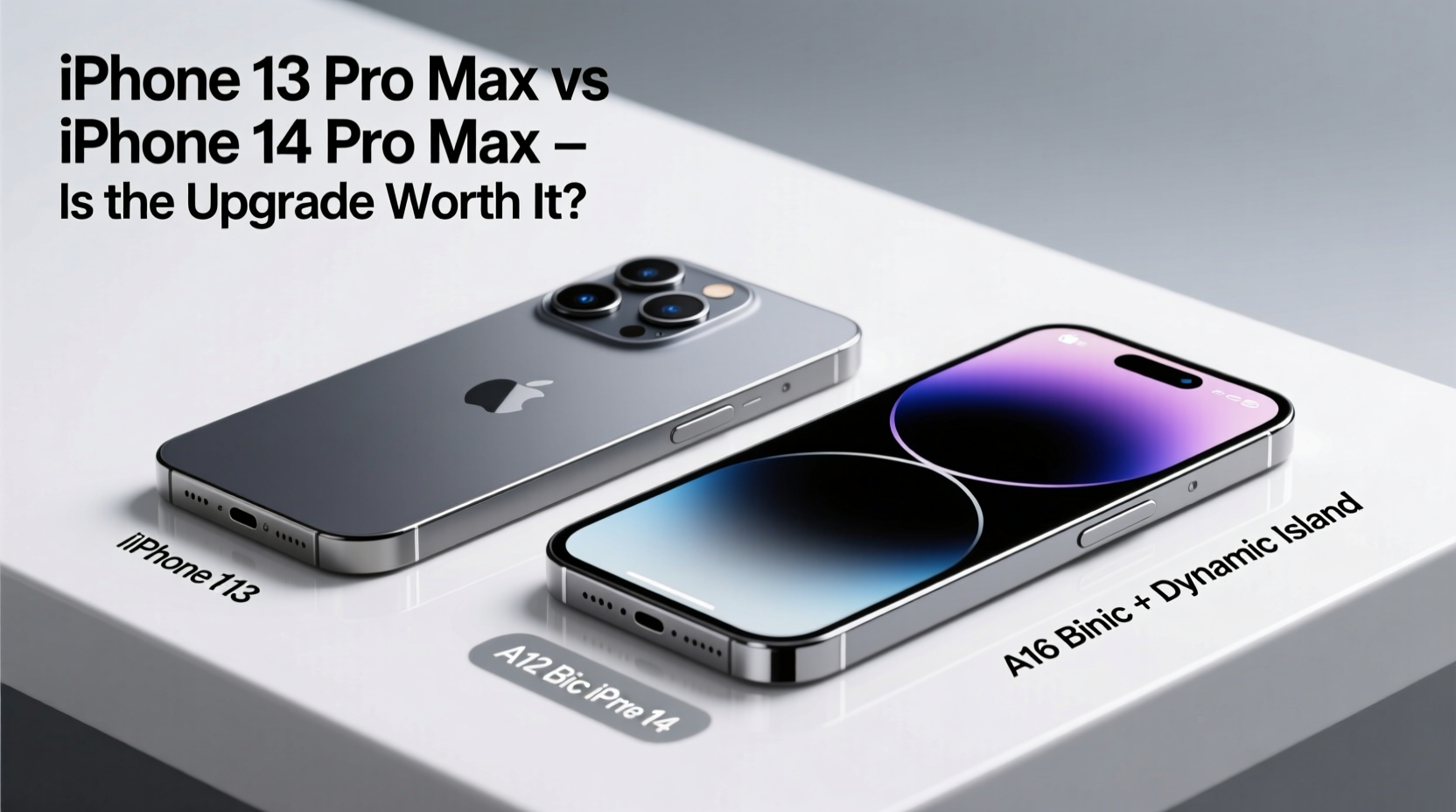
At first glance, the iPhone 13 Pro Max and iPhone 14 look nearly identical. Both feature flat aluminum edges, glass backs, and IP68 water resistance. However, there are critical differences in size, weight, and screen technology.
The iPhone 13 Pro Max has a 6.7-inch Super Retina XDR display with ProMotion technology—offering a 120Hz adaptive refresh rate that makes scrolling and animations buttery smooth. The iPhone 14, despite being a newer release, only has a 6.1-inch screen and sticks to a standard 60Hz refresh rate. That means the older Pro Max actually delivers a more responsive visual experience.
In terms of durability, both phones use Ceramic Shield front cover glass, but the 13 Pro Max adds textured matte glass on the back, which feels more premium and resists fingerprints better than the glossy finish of the iPhone 14.
Performance: A Closer Look at Chipsets and Real-World Speed
The iPhone 13 Pro Max runs on Apple’s A15 Bionic chip, specifically the enhanced five-core GPU version used only in Pro models. The iPhone 14 uses the A15 as well—but a slightly less powerful variant with a four-core GPU. This distinction is often overlooked in Apple’s marketing.
While both phones handle everyday tasks like browsing, messaging, and social media without issue, the Pro Max holds a clear edge in graphics-intensive applications. Gamers, video editors, and multitaskers will notice smoother frame rates and faster rendering times on the 13 Pro Max.
That said, for average users who don’t push their devices to the limit, the difference in CPU performance between the two models is negligible. Both have ample RAM and optimized iOS integration, ensuring long-term software support likely into 2027 or beyond.
“Chip performance gaps between Pro and non-Pro models are becoming as important as the price gap.” — Mark Gurman, Bloomberg Senior Reporter
Camera System: Evolution vs Revolution
The iPhone 14 brought notable camera upgrades compared to its predecessor, but not all of them benefit every user equally.
The base iPhone 14 features a 12MP main sensor with larger pixels and improved low-light performance thanks to sensor-shift optical image stabilization—a feature previously exclusive to Pro models. It also introduces Photonic Engine, enhancing mid-to-low light photos across all lenses.
However, the iPhone 13 Pro Max still outperforms it in several areas. Its triple-camera system includes a telephoto lens with 3x optical zoom, while the iPhone 14 only offers digital zoom beyond 2x. The Pro Max also supports macro photography, ProRes video recording, and Night mode on all cameras—features absent from the standard iPhone 14.
If you frequently shoot in low light or rely on optical zoom, the 13 Pro Max remains superior. But for casual photographers, the iPhone 14’s camera improvements—especially sharper detail and better HDR—are noticeable and valuable.
| Feature | iPhone 13 Pro Max | iPhone 14 |
|---|---|---|
| Main Sensor | 12MP, sensor-shift OIS | 12MP, sensor-shift OIS |
| Ultra-Wide Lens | 12MP, f/2.4 | 12MP, f/2.4 |
| Telephoto Lens | 12MP, 3x optical zoom | None |
| Night Mode (All Cameras) | Yes | No (front & ultra-wide limited) |
| ProRes Video | Yes (4K up to 30fps) | No |
Battery Life and Charging: Where Size Still Matters
Battery endurance is one area where the iPhone 13 Pro Max continues to dominate. Apple rates it for up to 28 hours of video playback, making it one of the longest-lasting iPhones ever released. The iPhone 14, while improved over the iPhone 13, maxes out at around 20 hours under similar conditions.
In real-world usage, this translates to the Pro Max easily lasting a full day—and often a second day—with moderate use. The iPhone 14 typically requires daily charging, sometimes twice if you're streaming or using GPS heavily.
Charging speeds are identical: both support 20W wired fast charging and MagSafe wireless charging. Neither includes a charger in the box. So while efficiency has improved slightly in the iPhone 14, the sheer battery capacity of the Pro Max gives it a decisive lead.
Safety Features and Longevity: The Case for Upgrading
One compelling reason to consider the iPhone 14 is its inclusion of advanced safety features absent in the 13 Pro Max: Emergency SOS via Satellite and Crash Detection.
Emergency SOS allows users to send messages to emergency services via satellite when outside cellular coverage—an invaluable tool for hikers, travelers, or anyone in remote areas. Crash Detection uses motion sensors and algorithms to automatically call emergency services if a severe car crash is detected.
These features aren’t everyday conveniences, but they could be life-saving in critical moments. While the 13 Pro Max received software updates to support some newer iOS features, these hardware-dependent functions cannot be added retroactively.
Additionally, the iPhone 14 launched with iOS 16, giving it at least one extra year of official software support compared to the 13 Pro Max (released with iOS 15). Given Apple’s typical 5–6 year support window, the iPhone 14 may stay updated until 2028, potentially offering longer usability.
Mini Case Study: Sarah’s Upgrade Dilemma
Sarah, a freelance photographer based in Colorado, owned an iPhone 13 Pro Max since 2021. She considered upgrading to the iPhone 14 in 2023 after her contract ended. Initially drawn by the new camera enhancements, she tested both devices side by side.
She found the iPhone 14 took brighter daylight photos with slightly better dynamic range, but missed the 3x optical zoom when shooting landscapes. More importantly, during a weekend hiking trip, she realized the Emergency SOS via Satellite feature gave her peace of mind in areas with no signal.
Ultimately, she kept her 13 Pro Max as her primary work phone but bought the iPhone 14 as a secondary device for travel—using it specifically for its safety features and portability.
Checklist: Should You Upgrade?
- ✅ Do you prioritize emergency safety features like satellite connectivity?
- ✅ Are you tired of charging your phone multiple times a day?
- ✅ Do you need a smaller, lighter phone for one-handed use?
- ❌ Are you satisfied with your current camera quality and zoom needs?
- ❌ Do you rely heavily on ProMotion or plan to edit video on your phone?
- ❌ Is budget a concern? (The 13 Pro Max retains higher resale value.)
If most checked items are positives, upgrading may make sense. If negatives dominate, staying put is likely the smarter move.
Frequently Asked Questions
Is the iPhone 14 faster than the iPhone 13 Pro Max?
No, not in meaningful ways. While both use variants of the A15 chip, the 13 Pro Max has a more powerful GPU and better thermal management due to its larger chassis, allowing sustained performance in demanding apps.
Can the iPhone 14 last as long as the iPhone 13 Pro Max on a charge?
No. Despite efficiency improvements, the iPhone 14 has a significantly smaller battery. Under heavy use, it typically lasts 6–8 hours, compared to 9–12 hours on the 13 Pro Max.
Will the iPhone 13 Pro Max stop receiving updates soon?
Unlikely. Apple typically supports iPhones for 5–6 years. Since the 13 Pro Max launched in 2021, it should receive updates through at least 2027, possibly into 2028.
Final Verdict: Is Upgrading Worth It?
The iPhone 14 is a solid device, particularly for users coming from older models like the iPhone 12 or earlier. But when comparing it directly to the iPhone 13 Pro Max, the upgrade calculus shifts dramatically.
You’re not moving from an outdated phone to a modern one—you’re trading a larger, more powerful, longer-lasting flagship for a smaller, safer, but less capable successor. The iPhone 14 brings meaningful innovations in emergency tech and slightly better photo processing, but it lacks the high-refresh display, superior zoom, and endurance that define the Pro experience.
Unless you specifically value compact size, satellite SOS, or plan to keep your phone for six years or more, sticking with the iPhone 13 Pro Max—or upgrading to an iPhone 15 or later model—is the more logical choice.




 浙公网安备
33010002000092号
浙公网安备
33010002000092号 浙B2-20120091-4
Comments
No comments yet. Why don't you start the discussion?