
The iPhone XR remains one of Apple’s most enduring mid-range successes—launched in 2018, it offered flagship-level performance at a more accessible price. Millions still use it daily, thanks to its reliable A12 Bionic chip and iOS support that lasted through multiple updates. But as we move deeper into 2024, the question arises: Is it still practical to stick with the XR, or is now the time to upgrade to something like the iPhone 13 Pro Max?
This isn’t just about new features—it’s about longevity, usability, and whether the investment truly improves your daily experience. Let’s examine the key differences and help you decide if making the jump is justified.
Performance: From Solid to Future-Proof
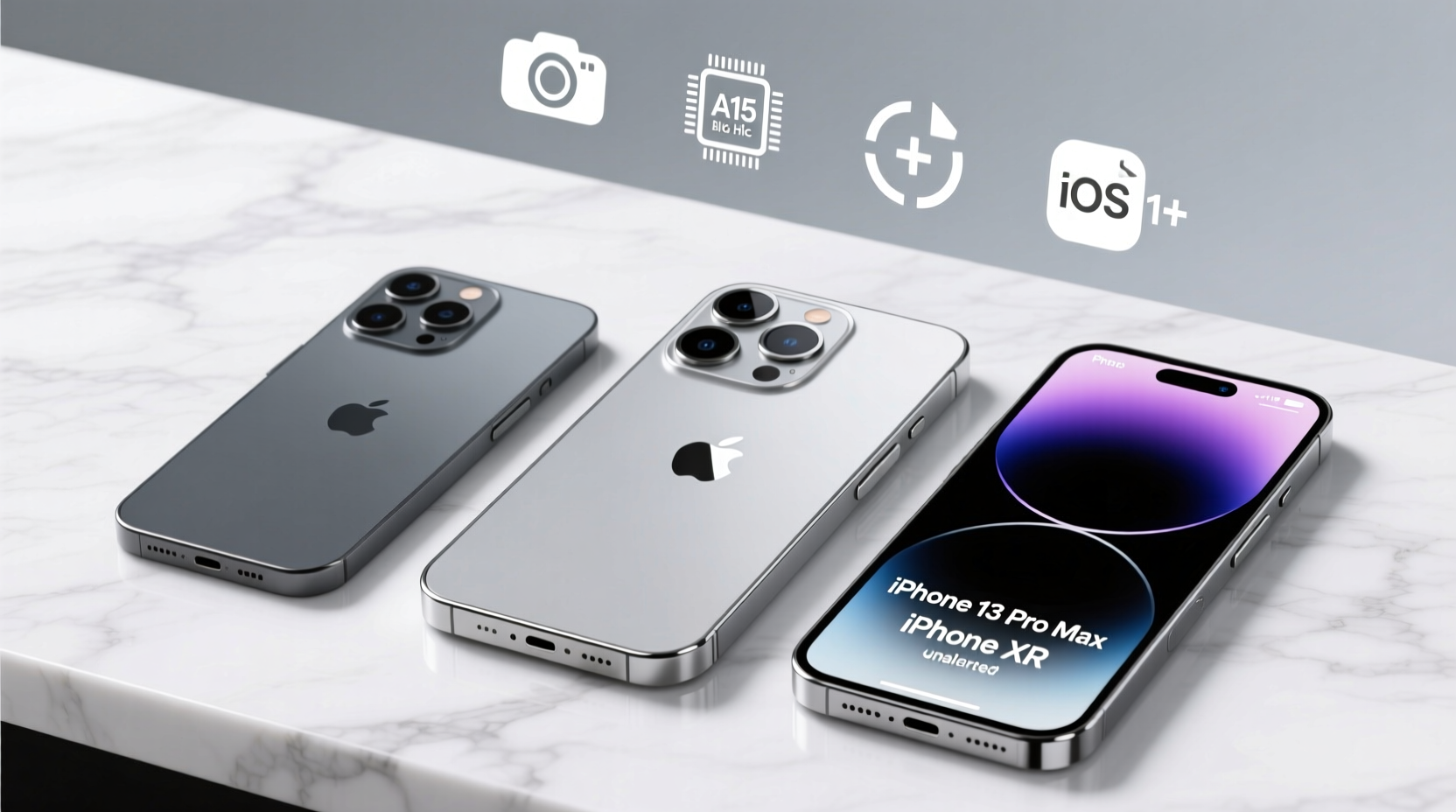
The iPhone XR was powered by the A12 Bionic chip—an impressive piece of engineering for its time. In 2018, it handled multitasking, gaming, and augmented reality smoothly. Fast forward to 2024, and while the A12 still manages basic tasks, it struggles with heavier apps, longer video edits, and newer games optimized for modern hardware.
In contrast, the iPhone 13 Pro Max features the A15 Bionic chip with a 5-core GPU and advanced Neural Engine. This translates to faster app launches, seamless photo and video rendering, and significantly better performance under load. Apps like Adobe Lightroom, Procreate, and 4K video editors run fluidly, even with complex timelines.
Apple typically supports iPhones for five to six years with OS updates. The XR received updates up to iOS 17, but future versions may become sluggish. The 13 Pro Max, released in 2021, will likely receive updates through at least 2027, ensuring long-term software relevance.
Display & Design: Night and Day Difference
The iPhone XR uses an LCD display with a 6.1-inch Liquid Retina screen at 1792×828 resolution. While bright and colorful, it lacks the depth and contrast of OLED panels. It also has thicker bezels and a single-wide color gamut, which affects media immersion.
The iPhone 13 Pro Max steps up dramatically with a 6.7-inch Super Retina XDR OLED display, offering higher resolution (2778×1284), HDR support, and Apple’s ProMotion technology—120Hz adaptive refresh rate. Scrolling feels buttery smooth, animations are crisper, and videos on platforms like Netflix or YouTube look noticeably richer.
Design-wise, both phones have aluminum frames, but the 13 Pro Max uses surgical-grade stainless steel and a matte glass back, giving it a premium feel. It’s also more durable with Ceramic Shield front cover and improved water resistance (IP68 vs IP67).
“Display quality directly impacts user satisfaction over time—especially for people who consume media or work on their phones.” — David Lin, Mobile UX Analyst at TechPulse Insights
Camera Comparison: A Generational Leap
The iPhone XR’s single 12MP wide camera was capable in good lighting but limited in versatility. No telephoto lens, no macro mode, and Portrait mode worked only on people—not objects. Low-light performance relied heavily on computational photography, often resulting in grainy night shots.
The iPhone 13 Pro Max changes the game with a triple-camera system:
- 12MP Wide: Larger sensor, better low-light capture
- 12MP Ultra-Wide: For expansive landscapes and tight spaces
- 12MP Telephoto: 3x optical zoom for portraits and distant subjects
It introduces Night mode across all lenses, Sensor-shift stabilization, and Cinematic Mode for video—features absent on the XR. The ability to shoot ProRes video adds professional-grade flexibility.
For casual users, the difference is most noticeable in portrait framing and low-light clarity. For creatives, the 13 Pro Max opens doors to mobile photography and videography that simply weren’t possible on the XR.
Real Example: Sarah’s Upgrade Journey
Sarah, a freelance photographer based in Portland, used her iPhone XR for social media content for nearly five years. She loved the color accuracy and ease of sharing, but found herself frustrated during evening shoots. “My night photos were always too dark or too noisy,” she said. After upgrading to the 13 Pro Max, she noticed immediate improvements. “I can now shoot full reels in dim cafes without flash. The cinematic blur in videos makes my content look way more polished.”
Battery Life & Charging: Real-World Endurance
The iPhone XR delivers solid battery life—up to 16 hours of video playback. That was excellent in 2018, but today’s usage patterns demand more. With heavier app reliance, constant notifications, and high-resolution media consumption, many XR users report needing midday charging.
The 13 Pro Max boasts one of the best battery lives in any iPhone—Apple rates it at up to 28 hours of video playback. In real-world mixed use, it consistently lasts a full day and a half, even with GPS navigation, streaming, and photo editing.
Charging has also evolved. While both phones support fast charging and wireless Qi charging, the 13 Pro Max benefits from slightly faster speeds and better thermal management during prolonged use.
| Feature | iPhone XR | iPhone 13 Pro Max |
|---|---|---|
| Chip | A12 Bionic | A15 Bionic (5-core GPU) |
| Display | 6.1\" LCD (1792×828) | 6.7\" OLED 120Hz (2778×1284) |
| Rear Cameras | 12MP Wide (f/1.8) | Triple: Wide, Ultra-Wide, Telephoto (3x zoom) |
| Video Recording | 4K@60fps | 4K@60fps + Cinematic Mode, ProRes |
| Battery Life (Video) | Up to 16 hours | Up to 28 hours |
| Water Resistance | IP67 (1m for 30 min) | IP68 (6m for 30 min) |
| iOS Support Outlook | Likely ends with iOS 18 | Expected through iOS 21+ |
Is It Worth Upgrading in 2024? A Practical Checklist
Before spending $800–$1,000 on a new device, consider these factors. Use this checklist to evaluate your personal needs:
- Does your XR struggle with everyday tasks? If apps freeze, Safari tabs reload constantly, or the camera takes seconds to focus, hardware limitations are affecting usability.
- Do you take a lot of photos or videos? The 13 Pro Max’s camera system offers dramatic improvements in flexibility and quality.
- Are you planning to keep your phone for 3+ more years? The 13 Pro Max will remain supported and performant longer than the aging XR.
- Do you value screen quality and smoothness? The 120Hz display is a luxury that becomes hard to live without once experienced.
- Can you recoup cost via trade-in? Many carriers and retailers offer $200–$300 for a functional XR, reducing the upgrade gap.
Frequently Asked Questions
Will the iPhone XR stop working in 2024?
No, the iPhone XR will continue to function normally. However, newer apps may be optimized for faster chips, and future iOS versions could introduce lag or compatibility issues. Security updates may also end soon after iOS 18.
Can I notice the camera difference in real life?
Absolutely. The combination of better low-light performance, optical zoom, and ultra-wide shots gives you creative freedom the XR simply can’t match. Even casual photographers benefit from sharper details and natural bokeh effects.
Is the size of the 13 Pro Max manageable?
At 6.7 inches, it’s larger than the XR, but the edge-to-edge design and rounded corners make it comfortable to hold. Many users adapt quickly, especially if they use cases or one-handed mode.
Final Verdict: To Upgrade or Not?
If you're using an iPhone XR in 2024, you're already running on borrowed time in tech terms. While it still works, the experience is increasingly compromised by slower performance, outdated camera capabilities, and diminishing software support.
The iPhone 13 Pro Max isn’t just an incremental upgrade—it’s a transformation in display quality, photographic power, and long-term reliability. For users who rely on their phones for productivity, creativity, or content creation, the leap is not only worth it but necessary to stay competitive and efficient.
However, if your usage is minimal—mostly calls, texts, and light browsing—and your XR still performs adequately, waiting another year might make sense. But if you want a device that will serve you well into 2027 and beyond, the 13 Pro Max is a smart, future-proof investment.




 浙公网安备
33010002000092号
浙公网安备
33010002000092号 浙B2-20120091-4
Comments
No comments yet. Why don't you start the discussion?