
For iPhone users who value both portability and photographic excellence, the decision to upgrade from an iPhone 11 Pro to the iPhone 13 Pro isn’t just about raw performance—it’s about tangible improvements in size, design, and most notably, camera capabilities. With Apple refining its flagship lineup over the years, the differences between these two models go beyond specs on a sheet. Real-world usability, ergonomics, and image quality are where the rubber meets the road.
The iPhone 11 Pro launched in 2019 as Apple’s first triple-lens system on an iPhone, marking a significant leap in mobile photography. The iPhone 13 Pro, released in 2021, built upon that foundation with computational photography enhancements, sensor upgrades, and subtle but meaningful changes in form factor. But if you're holding onto a still-capable iPhone 11 Pro, is the jump truly justified—especially when considering size and camera alone?
Design and Size: Subtle Shifts, Noticeable Differences
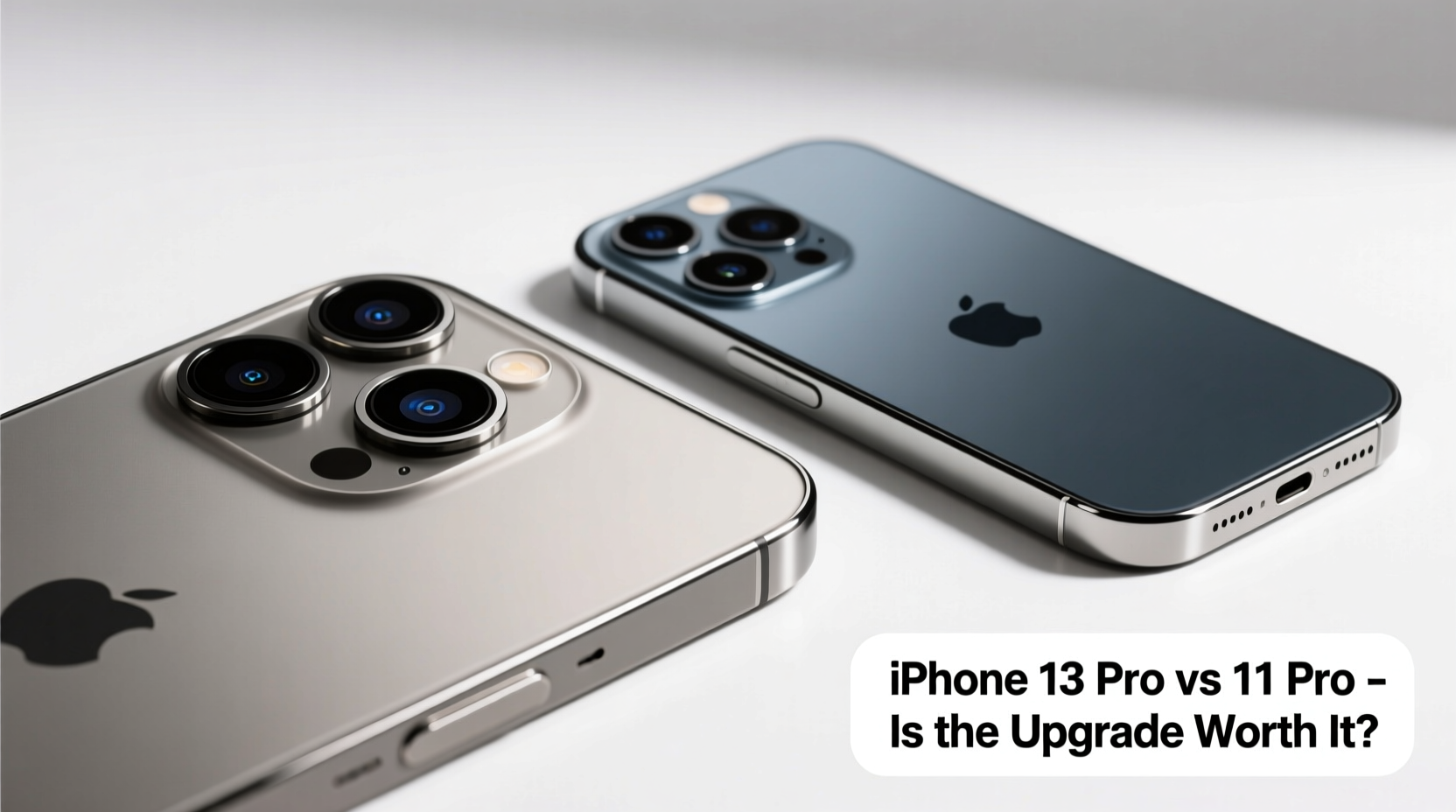
At first glance, the iPhone 13 Pro and 11 Pro appear nearly identical. Both feature stainless steel frames, matte glass backs, and a compact 5.8-inch OLED display. However, closer inspection reveals nuanced changes that impact daily use.
The iPhone 13 Pro is slightly thicker (7.65mm vs 8.1mm) and heavier (204g vs 188g), due in part to a larger battery and improved internal components. While the screen size remains unchanged, Apple repositioned the front-facing TrueDepth camera into a smaller notch, freeing up a marginal amount of screen real estate. More importantly, the rear camera module is noticeably larger and more prominent on the 13 Pro, housing upgraded sensors and lenses.
The increased weight of the 13 Pro can be felt during extended use, particularly when shooting video or browsing. However, this added mass contributes to better balance and reduced hand fatigue in landscape mode—important for photographers and videographers.
Camera Comparison: Where the 13 Pro Truly Shines
The camera is arguably the strongest argument for upgrading. While both phones feature triple-camera systems (wide, ultra-wide, telephoto), the advancements in the 13 Pro are substantial—not just in hardware, but in software-driven features.
The iPhone 13 Pro introduced larger sensors across all lenses, especially on the main wide camera. This means better low-light performance, reduced noise, and improved dynamic range. Combined with Sensor-Shift Optical Image Stabilization (OIS)—previously exclusive to the Max models—the primary lens now captures sharper images in motion and dim environments.
One of the most impactful upgrades is **Night mode**, now available on all three rear cameras and the front-facing selfie cam. On the 11 Pro, Night mode was limited to the wide lens only. In practical terms, this means you can take well-exposed, detailed shots at night using the ultra-wide or telephoto lenses—something previously impossible.
“Apple’s fusion of hardware and computational photography in the 13 Pro series set a new benchmark for consistency across lighting conditions.” — David Pogue, Tech Journalist and Author
ProRes Video and Cinematic Mode
For creators, the addition of **ProRes video recording** and **Cinematic Mode** marks a generational leap. ProRes allows for higher-fidelity video capture with greater color depth and post-production flexibility—ideal for filmmakers and content creators. Cinematic Mode automatically shifts focus between subjects in videos, mimicking the depth-of-field effects of professional cinema cameras.
While the iPhone 11 Pro records excellent 4K video, it lacks the processing power and sensor coordination needed for these advanced features. If video is a priority, the 13 Pro offers tools that fundamentally change how you capture moments.
Detailed Camera Feature Comparison
| Feature | iPhone 11 Pro | iPhone 13 Pro |
|---|---|---|
| Main Sensor Size | 1/2.55\" | 1/1.9” (larger) |
| Sensor-Shift OIS | No | Yes (main camera) |
| Night Mode (All Cameras) | No (wide only) | Yes (all rear + front) |
| Cinematic Mode | No | Yes (1080p HDR) |
| ProRes Video | No | Yes (up to 4K 30fps) |
| Telephoto Zoom | 2x optical | 3x optical |
| Ultra-Wide Low-Light Performance | Moderate noise | Significantly improved |
Real-World Example: Portrait Photography in Mixed Lighting
Consider a photographer capturing portraits outdoors at golden hour. The subject stands near a shaded tree, creating high contrast between sunlight and shadow. On the iPhone 11 Pro, Smart HDR does a decent job balancing exposure, but details in shadows can appear muddy, and skin tones sometimes lean too warm.
With the iPhone 13 Pro, the larger sensor and next-gen Smart HDR 4 process retain more highlight detail while lifting shadows naturally. Skin tones remain consistent, and background separation in Portrait mode is more accurate thanks to improved depth mapping. The result is a photo that requires little to no editing before sharing.
In another scenario—shooting a concert or dimly lit café—the 13 Pro’s Night mode activates earlier and produces cleaner results. The 11 Pro often struggles with blur and chromatic aberration in such settings, even with steady hands.
Should You Upgrade? A Practical Checklist
Deciding whether to upgrade depends on your usage patterns. Use this checklist to evaluate your needs:
- ✅ Do you frequently shoot photos or videos in low light?
- ✅ Are you interested in cinematic-style video with focus transitions?
- ✅ Do you edit footage professionally or share content regularly?
- ✅ Have you noticed limitations in zoom or ultra-wide clarity?
- ✅ Is battery life becoming a constraint with your 11 Pro?
- ❌ Are you satisfied with current photo quality and rarely push camera limits?
If you answered “yes” to three or more of the first five, the upgrade delivers measurable benefits. If you’re mostly happy with your 11 Pro’s output, the gains may not justify the cost—especially if budget is a concern.
Frequently Asked Questions
Is the iPhone 13 Pro much bigger than the 11 Pro?
No, the overall footprint is nearly identical. The 13 Pro is slightly heavier and has a thicker camera bump, but it fits in the same pockets and cases designed for the 11 Pro (though cutouts may differ slightly).
Can the iPhone 11 Pro still take good photos?
Absolutely. In daylight and moderate conditions, the 11 Pro produces excellent images. Its camera system remains capable for casual and semi-professional use. However, it falls behind in low light, dynamic range, and video features compared to the 13 Pro.
Does the 13 Pro camera improve front-facing selfies significantly?
Yes. The 13 Pro’s TrueDepth camera benefits from Night mode and Smart HDR 4, resulting in better low-light selfies and more natural skin tones. Face detection is also faster, improving Portrait mode accuracy.
Conclusion: Making the Right Choice for Your Needs
The iPhone 13 Pro isn’t a radical departure from the 11 Pro in appearance, but beneath the surface lies a more refined, powerful imaging platform. The upgrades in sensor size, stabilization, low-light performance, and video functionality represent a meaningful evolution—particularly for users who rely on their phone as a primary camera.
While the size difference is negligible, the way the 13 Pro handles light, motion, and creative control is demonstrably superior. For photography enthusiasts, social media creators, or anyone who values crisp, consistent results across environments, the upgrade is absolutely worth it.
However, if your current iPhone 11 Pro meets your daily needs and you don’t actively engage in advanced photography or videography, holding off on an upgrade remains a perfectly rational choice. Technology evolves quickly, but utility lasts longer than novelty.




 浙公网安备
33010002000092号
浙公网安备
33010002000092号 浙B2-20120091-4
Comments
No comments yet. Why don't you start the discussion?