
Dog owners around the world know that moment: a sudden noise—a squeaky toy, an unfamiliar word, or even the jingle of keys—and your dog’s ears perk up. Then comes the signature move—the slow, deliberate tilt of the head, one ear possibly flopping down, eyes wide with curiosity. It's undeniably cute, often prompting smiles, laughter, and rapid-fire photo sessions. But beyond the charm lies a deeper question: why do dogs do this? Is it just for attention, or is there real science behind the tilt? The answer combines auditory anatomy, cognitive processing, social learning, and evolutionary adaptation—revealing more about how dogs perceive the world than we might think.
The Anatomy of Canine Hearing
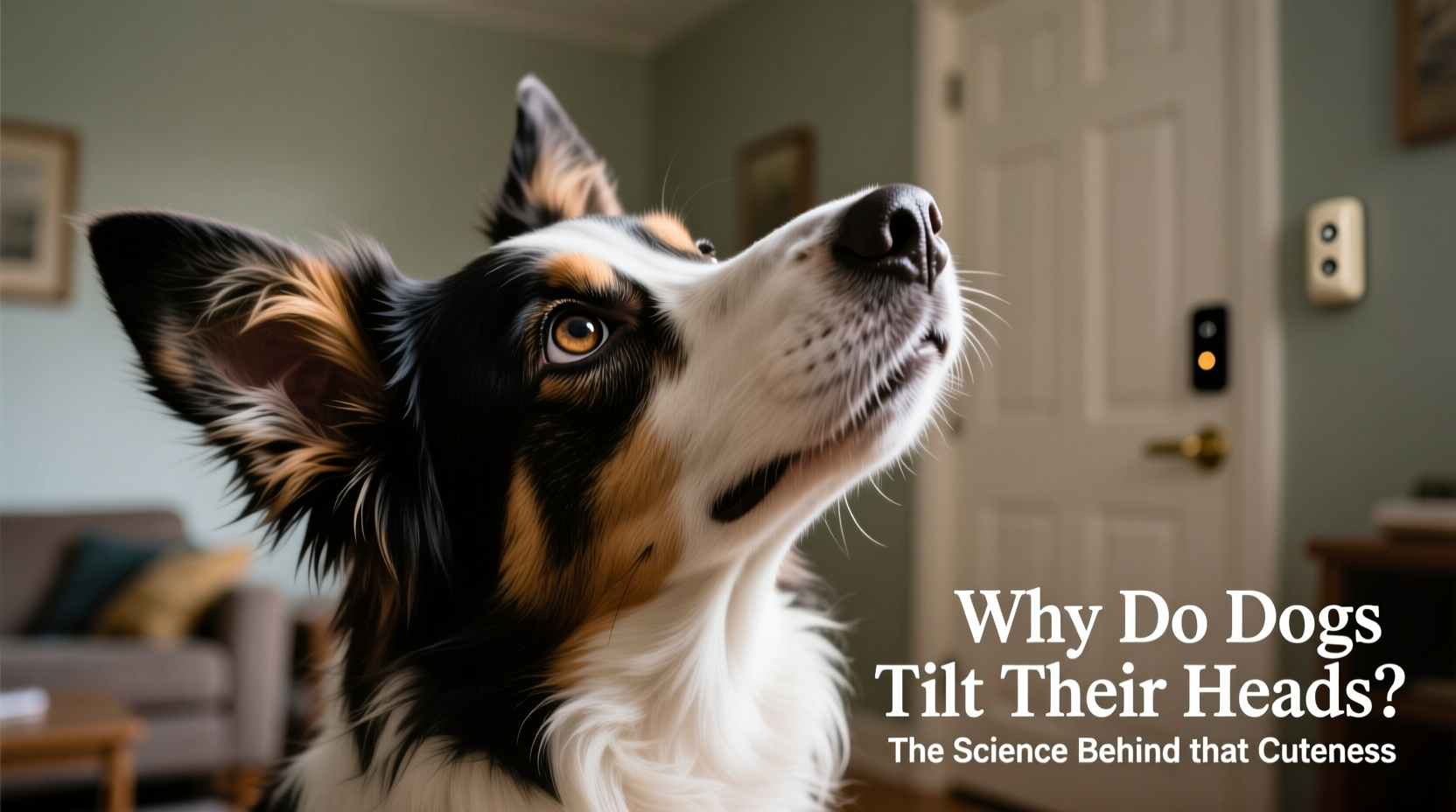
Dogs hear differently than humans—not just in range, but in structure and function. Their external ears, or pinnae, are highly mobile and capable of independent movement. This allows them to funnel sound more precisely into the ear canal. However, when faced with ambiguous or high-pitched noises, especially those coming from unfamiliar directions, dogs may physically adjust their head position to optimize sound reception.
The shape and length of a dog’s muzzle play a role as well. Brachycephalic breeds (like Pugs or Bulldogs) have shorter snouts, which means less obstruction between the ear and the source of sound. Dolichocephalic breeds (such as Collies or Greyhounds), on the other hand, have longer muzzles that can partially block sound waves entering the ear. Tilting the head may help these dogs shift their muzzle out of the way, effectively “clearing the path” for clearer auditory input.
Cognitive Processing and Sound Localization
One leading scientific explanation for head tilting involves sound localization—the ability to determine where a sound originates. Dogs, like humans, use interaural time differences (the slight delay between when a sound reaches one ear versus the other) to pinpoint its origin. But because many domesticated dogs have floppy ears or long fur around the ears, sound can be muffled or distorted. A head tilt may change the orientation of the ear canal relative to the sound source, enhancing directional accuracy.
A 2022 study published in *Animal Cognition* observed 40 dogs of various breeds responding to familiar and novel sounds. Researchers found that dogs were significantly more likely to tilt their heads when exposed to high-frequency or unfamiliar sounds—particularly human speech containing new words. The frequency range most associated with head tilting was between 3,000 and 16,000 Hz, well above typical human conversational tones but within the upper limits of canine hearing sensitivity.
This suggests that head tilting isn’t random—it’s a functional behavior linked to auditory discrimination. When a dog hears something they don’t immediately recognize—like the word “vet,” “bath,” or a strange electronic beep—they may tilt their head not only to hear better but also to gather more contextual information from facial expressions and tone of voice.
“Head tilting appears to be a multimodal response. It’s not just about hearing—it’s about integrating auditory cues with visual input.” — Dr. Deborah Wells, Canine Behavior Researcher, Queen’s University Belfast
Social Learning and Reinforcement
While anatomy and acoustics explain part of the behavior, social dynamics complete the picture. Dogs are exceptionally attuned to human reactions. If a dog discovers that tilting their head elicits positive feedback—smiles, treats, affection, or verbal praise—they’re likely to repeat the action, even in the absence of genuine auditory confusion.
This phenomenon is known as operant conditioning. Over time, a behavior initially triggered by curiosity or sensory adjustment becomes reinforced through rewards. In some cases, dogs may begin to tilt their heads preemptively upon noticing subtle human cues—such as a change in tone or the beginning of a sentence—even before any unusual sound occurs.
Breeds known for high trainability and social engagement—Border Collies, Golden Retrievers, and Poodles—are more likely to display frequent head tilting, possibly due to both cognitive flexibility and a stronger desire to interact meaningfully with humans.
Real Example: Max the Rescue Terrier
Max, a mixed-breed rescue adopted by a family in Oregon, rarely tilted his head during his first few months at home. His guardians assumed he wasn’t expressive. But after they began consistently praising him with treats and excited voices whenever he cocked his head—especially during training sessions—Max started doing it more often. Within weeks, he’d tilt his head at the sound of the fridge opening, the microwave beep, or even whispered conversations. A behavior that may have once been purely functional evolved into a learned social signal, strengthening the bond between Max and his people.
Emotional Intelligence and Communication
Dogs don’t just respond to sounds—they interpret intent. Head tilting often occurs when humans use \"dog-directed speech\" (DDS), the high-pitched, exaggerated tone similar to baby talk. Studies show that dogs pay more attention to DDS than normal adult speech, and they’re more likely to approach speakers using it.
The head tilt may serve as an active listening cue—analogous to humans nodding during conversation. By tilting their head, dogs may be signaling attentiveness, much like raising eyebrows or leaning forward in human dialogue. This gesture could help regulate social interaction, showing the speaker (the owner) that the message has been received and is being processed.
Furthermore, the asymmetry of the tilt—often favoring one side—might relate to hemispheric brain specialization. Some research indicates that dogs process emotional sounds primarily in the right hemisphere, which controls the left side of the body. Observations show that dogs tend to tilt their heads to the left when hearing emotionally charged sounds (like crying or aggressive tones) and to the right when hearing neutral or positive ones. While more data is needed, this lateralization hints at sophisticated emotional processing beneath a seemingly simple gesture.
When Head Tilting Isn’t Cute—Health Considerations
While occasional head tilting is normal, persistent or involuntary tilting—especially if accompanied by circling, loss of balance, or eye twitching (nystagmus)—can signal underlying medical conditions. Common causes include:
- Otitis externa: Inflammation or infection of the outer ear.
- Otitis media/interna: Middle or inner ear infections that affect balance and hearing.
- Vestibular disease: A condition affecting the balance system, often mistaken for stroke in older dogs.
- Neurological disorders: Tumors, inflammation, or trauma impacting the brainstem or cranial nerves.
In such cases, the tilt is usually constant rather than intermittent and may worsen over time. Unlike the quick, responsive tilt seen during play or listening, pathological tilting often leaves the dog appearing disoriented or uncomfortable.
| Normal Head Tilt | Potentially Concerning Head Tilt |
|---|---|
| Intermittent; triggered by sounds or speech | Constant, even at rest |
| Dog maintains balance and coordination | Dog walks in circles or falls |
| Responsive to commands and environment | Appears confused or lethargic |
| No odor, redness, or discharge from ears | Ear scratching, head shaking, foul smell |
| Resolves quickly after stimulus ends | Persists for hours or days |
Step-by-Step: How to Assess Your Dog’s Head Tilting
- Observe the context: Does the tilt happen during specific sounds, speech, or in silence?
- Note frequency and duration: Is it brief and occasional, or prolonged and constant?
- Check for other symptoms: Look for head shaking, ear scratching, imbalance, or changes in appetite.
- Test responsiveness: Call your dog’s name or offer a treat. Do they react normally?
- Consult your vet: If tilting persists beyond a few minutes or recurs daily, schedule an examination.
Expert Insight: What Vets and Ethologists Say
Dr. Alexandra Horowitz, cognitive scientist and author of *Inside of a Dog*, emphasizes that while we often anthropomorphize canine behaviors, head tilting likely serves multiple functions. “We see it as endearing, but for the dog, it may be a practical adjustment—one that coincidentally draws our attention. Over time, they learn which expressions work best in their social world.”
Likewise, veterinary neurologist Dr. Simon Platt notes that distinguishing between behavioral and medical causes is essential. “I’ve seen dogs brought in for ‘being extra cute,’ only to discover a middle ear tumor. Never assume a head tilt is harmless without ruling out pathology.”
FAQ
Do all dogs tilt their heads?
No. While many dogs do, the frequency varies widely by breed, individual personality, and hearing ability. Some dogs never develop the habit, while others do it constantly. Breeds with shorter muzzles or upright ears may show it less often.
Can head tilting be trained?
Yes, indirectly. You can’t command a dog to tilt their head on cue like “sit” or “stay,” but you can reinforce the behavior when it happens naturally. Over time, dogs may associate certain words or sounds with the rewarded action and perform it more deliberately.
Is head tilting a sign of intelligence?
Not directly. However, dogs that tilt their heads frequently may be more attentive, curious, or socially engaged—traits often associated with trainability and problem-solving skills. It reflects awareness more than IQ.
Conclusion: More Than Just Cute
The head tilt is one of the most universally beloved behaviors in the canine repertoire. But behind the charm lies a complex interplay of biology, cognition, and social connection. From improving sound clarity to strengthening human-dog bonds, this small gesture speaks volumes about how dogs navigate their world.
Understanding the science doesn’t diminish the magic—it enhances it. The next time your dog cocks their head at the sound of a zipper or the word “walk,” you’re witnessing not just cuteness in motion, but a finely tuned sensory system at work, shaped by evolution and refined by companionship.




 浙公网安备
33010002000092号
浙公网安备
33010002000092号 浙B2-20120091-4
Comments
No comments yet. Why don't you start the discussion?