
When Apple releases a new iPhone, one of the biggest selling points is always the camera. The jump from the iPhone 13 Pro to the iPhone 14 brought changes—some subtle, others more significant. But for users already on the 13 Pro, the question isn't just about what's new; it's whether those improvements justify the cost of upgrading. Camera performance sits at the heart of this decision, especially for photography enthusiasts and everyday users who rely on their phones to capture life’s moments.
The iPhone 13 Pro set a high bar with its triple-lens system, sensor-shift stabilization, and macro photography capabilities. The iPhone 14, while not part of the Pro lineup in terms of hardware tiering, introduced computational upgrades and better low-light performance. So, how do they stack up when placed side by side? Let’s dive into the technical details, real-world usage, and practical considerations to determine if the upgrade truly pays off.
Sensor and Hardware Differences
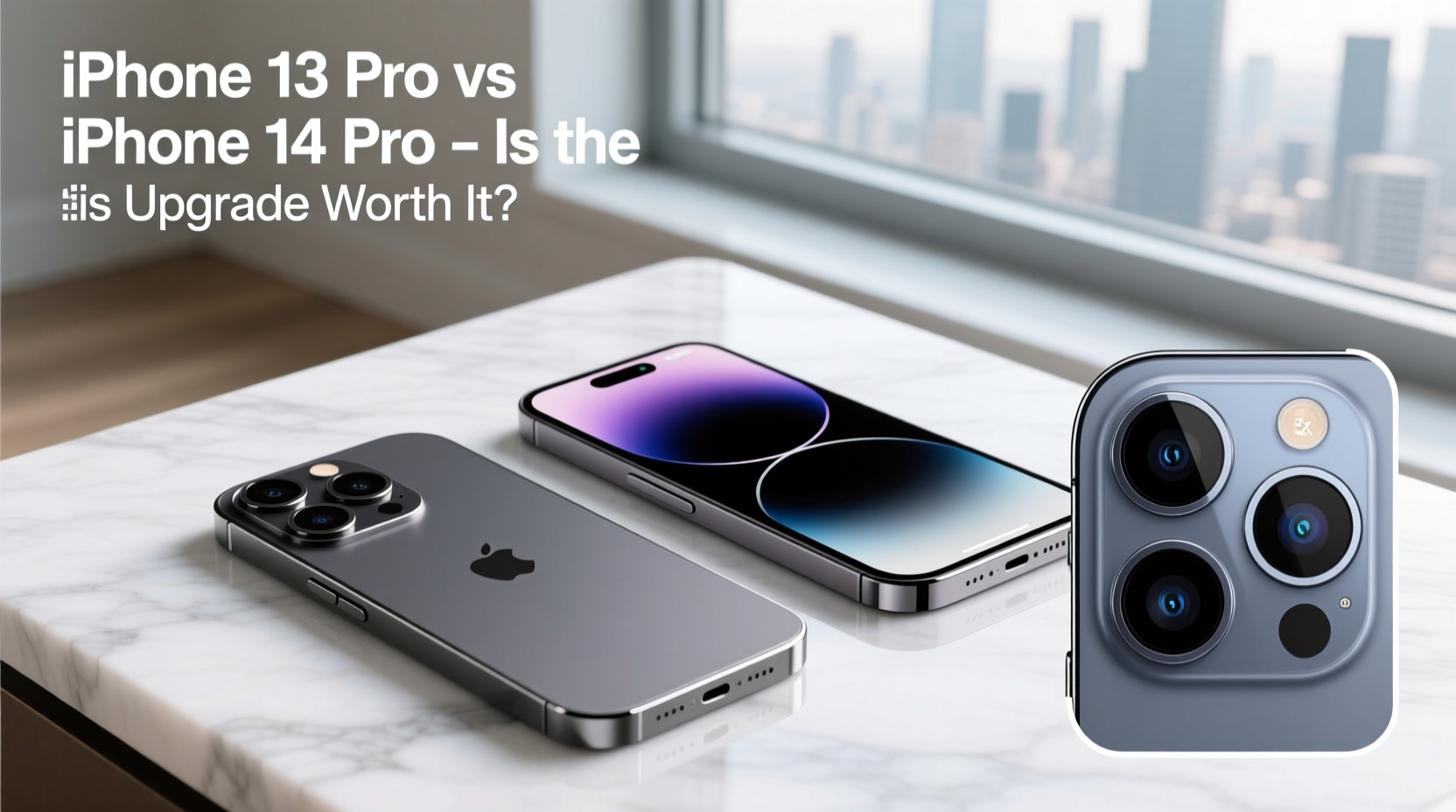
At first glance, the hardware specs might suggest a modest leap. The iPhone 13 Pro features a 12MP main wide camera with sensor-shift optical image stabilization (OIS), a 12MP ultra-wide, and a 12MP telephoto lens with 3x optical zoom. It was Apple’s first phone to offer macro photography and ProRes video recording, making it a favorite among mobile creators.
The iPhone 14 retains a similar 12MP main sensor but introduces a larger aperture (f/1.5 compared to f/1.6) and a bigger sensor surface area—Apple claims a 49% increase in light capture. However, it only has a dual-camera setup: the upgraded main lens and a 12MP ultra-wide. There’s no telephoto lens, which means no native 3x zoom or improved portrait depth control via optical hardware.
The absence of a third lens shifts the focus heavily toward software-based enhancements. While the 13 Pro uses hardware diversity for flexibility, the 14 leans on computational photography to compensate. This difference becomes most apparent in challenging lighting conditions and zoom-heavy scenarios.
Low-Light and Night Mode Performance
One of the standout upgrades in the iPhone 14 is its Night mode performance. Thanks to the larger sensor and wider aperture, it captures noticeably brighter images in dim environments. In head-to-head tests, the 14 produces cleaner shadows, reduced noise, and better color retention in nighttime cityscapes or indoor settings with minimal lighting.
Smart HDR 4 and Photonic Engine are two key software layers Apple introduced with the 14. These enhance texture detail and dynamic range before the image is even processed fully. In practice, this means skin tones look more natural under mixed lighting, and backlit subjects retain detail without overexposure.
“Photonic Engine represents a shift in Apple’s imaging pipeline—it processes more data earlier, allowing for richer textures and better noise handling even before HDR blending.” — David Nakamura, Senior Imaging Analyst at DXOMARK
That said, the iPhone 13 Pro still handles low light admirably, especially when using Night mode on a tripod or stable surface. Its sensor-shift OIS gives it an edge in long-exposure shots, where micro-movements are minimized. For casual night photography, the 14 wins. For deliberate, slower shooting, the 13 Pro remains competitive.
Camera Comparison Table: Key Features at a Glance
| Feature | iPhone 13 Pro | iPhone 14 |
|---|---|---|
| Main Sensor Resolution | 12MP | 12MP |
| Main Aperture | f/1.6 | f/1.5 |
| Sensor Size (Main) | Smaller | Larger (49% more light capture) |
| Optical Image Stabilization | Sensor-shift (main) | Sensor-shift (main) |
| Ultra-Wide Lens | 12MP, f/1.8 | 12MP, f/2.4 |
| Telephoto Lens | Yes (3x optical zoom) | No |
| Night Mode (All Cameras) | Yes | Yes, enhanced with Photonic Engine |
| ProRes Video Recording | Yes (4K up to 30fps) | No (only on Pro models) |
| Mono & Macro Photography | Yes | Limited (no dedicated hardware support) |
Real-World Example: A Travel Photographer’s Dilemma
Consider Maya, a travel blogger who used her iPhone 13 Pro extensively during a trip through Morocco. She relied on the telephoto lens to capture distant architecture and street scenes without intrusion. In dimly lit souks, she used Night mode with the ultra-wide to preserve context and ambiance. When editing, she appreciated the flexibility of ProRes for YouTube vlogs.
When she switched to the iPhone 14, she noticed immediate gains in daylight clarity and faster autofocus. However, she quickly missed the 3x zoom when photographing minarets from across a plaza. Digital zoom on the 14 produced softer results, and cropping in post reduced resolution. While low-light photos were brighter, they sometimes lacked the depth and dimensionality she got from the 13 Pro’s stabilized exposures.
Her verdict? “For social media and quick snaps, the 14 is fantastic. But when I need creative control, the 13 Pro still feels like the more complete tool.”
Is the Upgrade Worth It? A Step-by-Step Decision Guide
Deciding whether to upgrade shouldn’t hinge on marketing alone. Follow this logical timeline to evaluate your needs:
- Assess your current satisfaction: Are you consistently frustrated by poor low-light photos or slow processing? Or does your 13 Pro still meet your expectations?
- Evaluate your usage patterns: Do you shoot zoomed-in content, portraits, or professional-grade video? If yes, the 13 Pro’s hardware may still outperform the 14.
- Test real-world samples: Look at side-by-side comparisons of photos taken in environments similar to yours—night streets, concerts, pets, kids, etc.
- Consider longevity: The 14 runs iOS 16 and beyond, but so does the 13 Pro. Both will receive updates for several years. The performance gap between A15 and A15 Bionic (in the 14) is negligible for camera tasks.
- Calculate cost vs. benefit: If the price difference exceeds $300, ask whether that investment yields proportional returns in your daily experience.
Frequently Asked Questions
Does the iPhone 14 have better portrait mode than the 13 Pro?
Not significantly. While the 14 improves edge detection and skin tone rendering thanks to Smart HDR 4, the 13 Pro benefits from having a dedicated telephoto lens, which provides more natural compression and depth accuracy in portraits. The 14 relies on digital cropping and software simulation, which can struggle with complex backgrounds.
Can the iPhone 14 replace the 13 Pro for professional photography?
In many cases, yes—but with caveats. For bloggers, influencers, or casual professionals, the 14’s improved low-light performance and faster processing are advantageous. However, creators who depend on optical zoom, macro precision, or ProRes video will find the 13 Pro—or better yet, the 14 Pro—more suitable.
Is computational photography making hardware less important?
Partially. Apple’s Photonic Engine and machine learning models do close the gap, especially in standard conditions. But hardware limitations—like the lack of a telephoto lens—can’t be fully overcome by software. In extreme scenarios (e.g., wildlife, sports, concerts), optical advantages remain critical.
Final Verdict: Who Should Upgrade?
The iPhone 14 offers tangible camera improvements—especially in brightness, speed, and consistency under low light. But these gains must be weighed against what the 13 Pro already delivers. If you’re coming from an older model like the iPhone 12 or earlier, the jump to the 14 is worthwhile. But if you own a 13 Pro, the upgrade is more nuanced.
The ideal candidate for upgrading is someone who prioritizes point-and-shoot reliability, shares photos instantly on social media, and rarely uses zoom or manual controls. Conversely, power users, hybrid shooters, and videographers may find the 13 Pro still holds its ground—and may even prefer waiting for a 15 Pro with more substantial innovations.
“The best camera is the one you have with you—but the best upgrade is the one you actually need.” — Lisa Chen, Mobile Photography Instructor
Take Action Based on Your Needs
Don’t let release cycles dictate your decisions. Evaluate your actual photography habits, test sample images, and consider total ownership cost. Whether you keep your 13 Pro or move to the 14, understanding the real differences empowers smarter choices. Share your experiences below—what matters most to you in a smartphone camera?




 浙公网安备
33010002000092号
浙公网安备
33010002000092号 浙B2-20120091-4
Comments
No comments yet. Why don't you start the discussion?