
When upgrading from an older iPhone to a newer model, one of the first things users notice is the physical change—especially in size. The jump from the iPhone 11 to the iPhone 13 Pro isn’t just about processing power or camera quality; it’s also about how the device feels in your hand, fits in your pocket, and integrates into your daily routine. While specs like A15 Bionic chips and ProMotion displays grab headlines, the real-world impact of size often goes overlooked. But does it actually matter? For some, yes. For others, not at all. Let’s break down what the differences mean beyond the numbers.
Design and Physical Dimensions: More Than Just Numbers
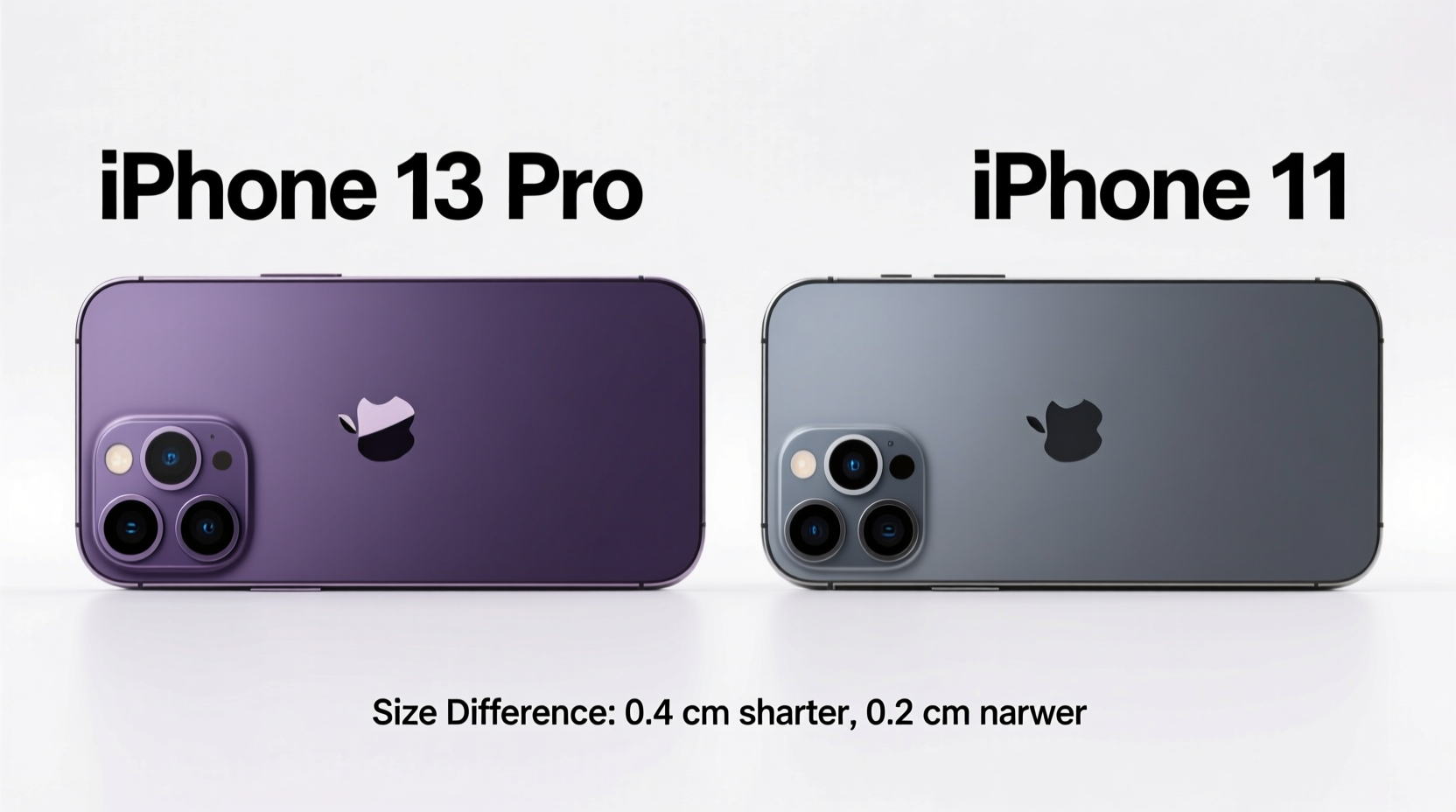
The iPhone 11 and iPhone 13 Pro sit three years apart in Apple’s release timeline, and that gap shows in their design language. The iPhone 11, released in 2019, features a more traditional slab design with thicker bezels and a prominent notch. It measures 150.9 x 75.7 x 8.3 mm and weighs 194 grams. In contrast, the iPhone 13 Pro, launched in 2021, is slightly taller and wider at 146.7 x 71.5 x 7.65 mm but manages to feel more compact due to refined ergonomics and flatter edges. It weighs 203 grams—only 9 grams more than the iPhone 11—but that extra weight is concentrated in a denser, more premium build with surgical-grade stainless steel and textured matte glass.
The screen size tells part of the story: 6.1 inches on both models, but the implementation differs. The iPhone 11 uses an LCD (Liquid Retina HD), while the 13 Pro boasts a Super Retina XDR OLED panel with higher brightness, better contrast, and ProMotion technology offering a 120Hz refresh rate. Despite having the same diagonal measurement, the way the screen is integrated affects perceived size. The 13 Pro’s smaller notch and tighter bezels make the display appear more immersive, even if the footprint is similar.
“Size isn’t just about dimensions—it’s about how the phone balances in your hand and responds to touch over time.” — David Lin, Mobile Usability Analyst at TechForma
Real-World Usability: Comfort vs. Capability
For many users, especially those with smaller hands or who prefer one-handed use, the iPhone 11’s rounded aluminum frame offers a gentler grip. Its slightly curved back allows it to nestle comfortably in the palm. The iPhone 13 Pro, with its flat edges, provides a more secure hold but can feel sharper during prolonged use. This subtle shift in design philosophy reflects Apple’s move toward a more professional aesthetic, aligning with the “Pro” branding.
Pocketability is another factor. The iPhone 11 fits easily in most front jeans pockets, though it may stretch thinner fabrics. The 13 Pro, despite being marginally shorter, has a denser mass and firmer edges, making it slightly less forgiving in tight spaces. However, its improved water resistance (IP68 up to 6 meters vs. 2 meters) means it’s better suited for active lifestyles where accidental drops or exposure to moisture are concerns.
Performance and Feature Gaps That Outweigh Size
While size influences comfort, the functional differences between these two phones far outweigh ergonomic preferences. The iPhone 13 Pro runs on the full-power A15 Bionic chip with 6-core GPU, giving it a 50% graphics performance boost over the iPhone 11’s A13. This translates to smoother gaming, faster photo editing, and better multitasking—especially when using Pro apps like Final Cut Camera or Adobe Lightroom.
Camera systems are where the divide becomes stark. The iPhone 11 has a dual 12MP setup (wide and ultra-wide), capable of decent low-light shots thanks to Night mode. The 13 Pro adds a third telephoto lens, macro photography capability, sensor-shift stabilization, and Cinematic Mode for depth-controlled video recording. These upgrades don’t just enhance photo quality—they change how you interact with the device, encouraging more creative use.
Battery life also improves significantly. The 13 Pro delivers up to 22 hours of video playback versus 17 hours on the 11. Over a day of mixed usage, this can mean the difference between needing a midday charge or sailing through to bedtime.
Feature Comparison Table
| Feature | iPhone 11 | iPhone 13 Pro |
|---|---|---|
| Display | 6.1\" LCD (Retina HD) | 6.1\" OLED (Super Retina XDR, 120Hz) |
| Chipset | A13 Bionic | A15 Bionic (full 5-core GPU) |
| Rear Cameras | Dual 12MP (Wide, Ultra-Wide) | Triple 12MP (Wide, Ultra-Wide, Telephoto + Macro) |
| Water Resistance | IP68 (2m for 30 min) | IP68 (6m for 30 min) |
| Battery Life (Video) | Up to 17 hours | Up to 22 hours |
| Storage Options | 64/128/256GB | 128/256/512GB/1TB |
| Weight | 194g | 203g |
Mini Case Study: Sarah’s Upgrade Experience
Sarah, a freelance photographer and long-time iPhone 11 user, upgraded to the iPhone 13 Pro primarily for its camera system. Initially hesitant about the slightly heavier, boxier design, she found the transition smoother than expected. “I was worried it would feel too big,” she said, “but after a week, I didn’t even notice the size. What I did notice was how much sharper my close-up shots were and how much longer the battery lasted during shoots.”
She now uses macro mode regularly for product photography and relies on ProRes video for client edits. While she occasionally misses the softer edges of the iPhone 11, the productivity gains and image quality improvements have made the trade-off worthwhile. Her experience underscores a key point: as functionality expands, physical form becomes secondary for many professionals and power users.
When Size Actually Matters: Who Should Care?
For certain users, size remains a decisive factor. Children, seniors, or anyone with limited hand strength may find the iPhone 13 Pro’s flat edges and increased rigidity less comfortable. Likewise, those who prioritize portability—such as runners or commuters—might prefer the lighter, rounder iPhone 11.
However, for creatives, multitaskers, or anyone invested in mobile photography and video, the benefits of the 13 Pro’s advanced hardware justify the minor increase in bulk. The 120Hz display alone reduces eye strain and enhances scrolling fluidity, which accumulates over hours of daily use.
- Choose iPhone 11 if: You want a lightweight, affordable device with solid performance for everyday tasks.
- Choose iPhone 13 Pro if: You value cutting-edge cameras, longer battery life, and future-proof software support.
Checklist: Is the Size Difference a Dealbreaker?
- Test both phones in-store or via loaner programs to assess grip comfort.
- Consider your primary use case: casual browsing vs. content creation.
- Evaluate pocket size and carrying habits (purse, holster, etc.).
- Check accessory compatibility—cases and mounts may differ.
- Weigh the importance of display quality and refresh rate in daily use.
Frequently Asked Questions
Is the iPhone 13 Pro noticeably bigger than the iPhone 11?
Not significantly in screen size—both are 6.1 inches—but the 13 Pro feels denser and more compact due to reduced bezels and a different frame design. The weight difference is minimal (9g), but the stainless steel body gives it a heavier perception.
Can I use iPhone 11 cases on the iPhone 13 Pro?
No. Although both are 6.1-inch models, the camera layout, button placement, and frame shape differ enough to make cases non-interchangeable. The 13 Pro’s larger camera bump requires specific cutouts.
Does the size affect battery life?
Indirectly. The 13 Pro packs a larger battery in a slightly slimmer profile thanks to more efficient internal components and iOS optimization. So despite similar dimensions, it achieves longer endurance.
Conclusion: Size Is a Factor, Not the Deciding One
The size difference between the iPhone 13 Pro and iPhone 11 exists, but it’s not the defining factor in choosing between them. For most users, the leap in performance, display technology, camera capabilities, and software longevity will overshadow any ergonomic adjustments. Yes, the 13 Pro is slightly heavier and sharper-edged, but these traits come with tangible benefits that enhance daily usability.
If you're still clinging to an iPhone 11 purely because it feels more familiar, consider whether comfort is worth missing out on five additional years of support, superior photos, and smoother interactions. Technology evolves not just in power, but in purpose—and sometimes, holding something a little bigger means gaining so much more.




 浙公网安备
33010002000092号
浙公网安备
33010002000092号 浙B2-20120091-4
Comments
No comments yet. Why don't you start the discussion?