
For years, the iPhone 7 Plus was a benchmark for durability, camera quality, and iOS longevity. Released in 2016, it remained a reliable daily driver for millions well into the 2020s. Now, with the iPhone 13 available since 2021 and still widely used, many long-time 7 Plus owners are asking: is upgrading truly worth it in 2024? The answer depends on your needs, budget, and how much modern smartphone technology matters to you.
This isn’t just about newer hardware—it’s about whether the improvements translate into meaningful real-world benefits. Let’s break down the key differences and determine if the jump from the iPhone 7 Plus to the iPhone 13 delivers enough value to justify the upgrade.
Performance: A Quantum Leap in Speed and Efficiency
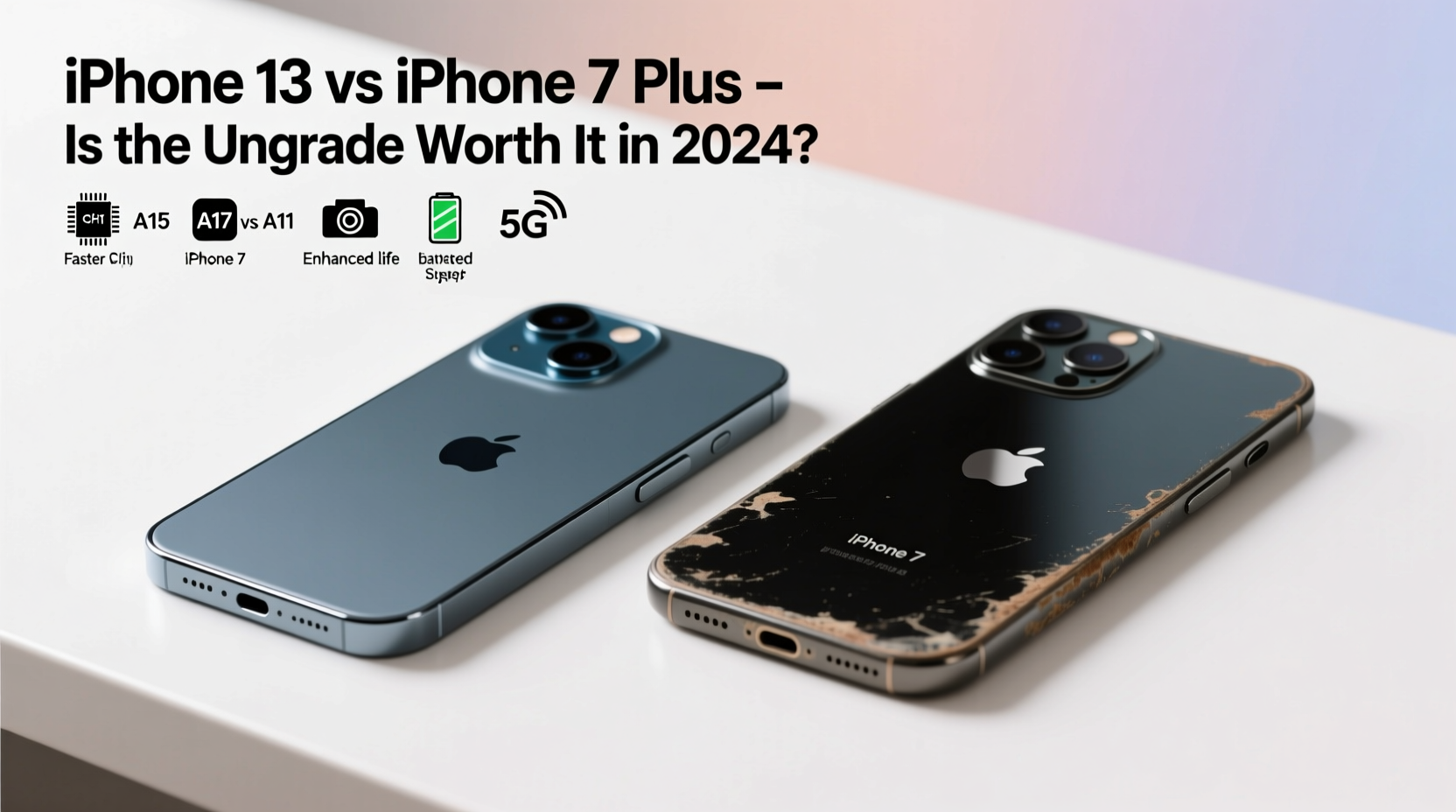
The most dramatic difference between these two phones lies under the hood. The iPhone 7 Plus runs on Apple’s A10 Fusion chip, a solid performer in its time but now severely outdated. In contrast, the iPhone 13 features the A15 Bionic chip—one of Apple’s most efficient and powerful processors to date.
The A15 Bionic uses a 5-nanometer architecture, enabling significantly faster processing speeds, improved graphics performance, and far better energy efficiency. Apps launch instantly, multitasking is seamless, and demanding tasks like video editing or gaming run smoothly without lag.
Even everyday actions—like scrolling through social media, switching between apps, or using augmented reality features—are noticeably smoother on the iPhone 13. The older A10 struggles with modern iOS versions, which are optimized for newer chips. While iOS 17 still supports some older devices, the 7 Plus stopped receiving updates after iOS 16, leaving it vulnerable to security risks and incompatible with future apps.
Camera Comparison: Night Mode, Portrait Enhancements, and Computational Photography
The camera systems on these phones reflect the evolution of smartphone photography over seven years. The iPhone 7 Plus featured a dual 12MP rear setup (wide and telephoto), which was revolutionary at the time for portrait mode and 2x optical zoom. However, by today’s standards, it lacks essential features like Night mode, Deep Fusion, and Smart HDR.
The iPhone 13 improves dramatically with its dual-camera system featuring a 12MP wide lens with larger sensors, sensor-shift stabilization, and advanced computational photography. Night mode now works across all lenses, including the ultra-wide, allowing for stunning low-light photos. Portrait mode has evolved with better edge detection, depth control, and post-capture focus adjustments.
“Smartphone photography isn’t just about megapixels anymore—it’s about how software enhances every shot. The iPhone 13 captures more light, detail, and dynamic range than any previous model before it.” — David Lin, Mobile Photographer & Tech Reviewer
Video recording sees even greater gains. The iPhone 13 supports Dolby Vision HDR recording up to 4K at 60fps, while the 7 Plus maxes out at 1080p at 30fps. For users who create content or simply want higher-quality family videos, this is a game-changer.
Battery Life and Charging: From All-Day to Multi-Day Usability
Battery degradation is inevitable, especially on a phone as old as the 7 Plus. Even with a replaced battery, its capacity and efficiency can’t match newer models. The iPhone 13 offers up to 19 hours of video playback, compared to the 7 Plus’s 13 hours—nearly 50% more endurance.
Real-world usage reflects this gap. Users report going from charging their 7 Plus twice daily to needing only one charge with the iPhone 13, even with heavier use. Additionally, the iPhone 13 supports faster charging (up to 50% in 30 minutes with a 20W adapter) and MagSafe wireless charging, neither of which the 7 Plus offers.
| Feature | iPhone 7 Plus | iPhone 13 |
|---|---|---|
| Battery Life (Video Playback) | Up to 13 hours | Up to 19 hours |
| Fast Charging | No (5W standard) | Yes (20W compatible) |
| Wireless Charging | No | Yes (Qi & MagSafe) |
| Charging Port | Lightning | Lightning |
Design, Display, and Durability
The design philosophy has shifted significantly. The iPhone 7 Plus features thick bezels, a home button with Touch ID, and a glossy aluminum back. The iPhone 13 adopts a flat-edge stainless steel design with a ceramic shield front, offering better drop protection and a more modern aesthetic.
The display is another major improvement. The 7 Plus has a 5.5-inch LCD with 1334x750 resolution, while the iPhone 13 boasts a 6.1-inch Super Retina XDR OLED display with higher brightness, deeper blacks, and superior color accuracy. Outdoor visibility, HDR support, and overall screen vibrancy make media consumption far more enjoyable.
Durability also gets a boost. The iPhone 13 has an IP68 rating (up to 6 meters for 30 minutes), compared to the 7 Plus’s IP67 (1 meter for 30 minutes). This added water resistance provides peace of mind in wet conditions or accidental spills.
Mini Case Study: Sarah’s Upgrade Journey
Sarah had been using her iPhone 7 Plus since 2017. By 2023, she noticed frequent app crashes, slow performance on Instagram and TikTok, and poor photo quality in dim lighting. Her battery died by mid-afternoon, forcing her to carry a power bank.
After upgrading to the iPhone 13, she immediately noticed the difference. Apps opened instantly, videos loaded faster, and her social media stories looked professional thanks to Dolby Vision recording. She no longer needed to carry a charger during day trips. Most importantly, her older apps began working again—some had stopped functioning due to compatibility issues with iOS 16.
“It wasn’t just about having a new phone,” Sarah said. “It was about regaining confidence in my device. I didn’t realize how much frustration I’d accepted until it was gone.”
Is the Upgrade Worth It? A Practical Checklist
Before making the switch, consider the following checklist to determine if the iPhone 13 is right for you:
- Are you experiencing daily performance issues? Frequent freezing, app reloads, or long load times signal that your hardware is struggling.
- Do you want better photos and videos? If you take pictures often, especially in low light, the iPhone 13’s camera will be a significant upgrade.
- Is battery life affecting your routine? Needing multiple charges per day limits freedom and productivity.
- Have you stopped receiving iOS updates? Security patches and new features are critical for long-term usability.
- Are newer apps becoming incompatible? Some apps now require iOS 15 or later, locking out 7 Plus users.
- Can you afford the upgrade? Refurbished or carrier deals can reduce the cost significantly.
Frequently Asked Questions
Will my accessories work with the iPhone 13?
Most Lightning cables and headphones will work, but cases won’t be compatible due to different dimensions and camera layout. Wireless chargers are new to the 13, so you’ll need to purchase one separately.
Can the iPhone 13 last another 5–6 years like the 7 Plus did?
Likely yes. Apple typically supports iPhones with updates for 5–6 years. Since the iPhone 13 launched in 2021, it should receive updates through at least 2027, possibly 2028, assuming Apple maintains its current support timeline.
Is the iPhone 13 waterproof?
It’s water-resistant, not waterproof. The IP68 rating means it can survive submersion in up to 6 meters of water for 30 minutes under controlled conditions. However, water damage isn’t covered under warranty, so caution is still advised.
Final Verdict: Yes, Upgrading Is Worth It in 2024
For most iPhone 7 Plus users still relying on this aging device, upgrading to the iPhone 13 is not just beneficial—it’s practical. The improvements in performance, camera quality, battery life, and long-term software support represent a generational leap. You’re not just getting a newer phone; you’re gaining reliability, security, and access to modern mobile experiences that the 7 Plus can no longer deliver.
If you’ve held onto your 7 Plus out of loyalty or hesitation, now is the ideal time to move forward. Whether you buy new, refurbished, or through a trade-in program, the investment pays off in daily usability and peace of mind.




 浙公网安备
33010002000092号
浙公网安备
33010002000092号 浙B2-20120091-4
Comments
No comments yet. Why don't you start the discussion?