
The iPhone X was a landmark device—Apple’s first edge-to-edge OLED display, Face ID debut, and a design language that shaped future iPhones. Released in 2017, it remains surprisingly functional in 2024. Meanwhile, the iPhone 13, launched in 2021, brought significant upgrades in processing power, camera systems, and battery efficiency. But if you're still using an iPhone X, is upgrading to the iPhone 13 truly necessary? Or can the X hold its ground another year?
This comparison dives deep into real-world performance, software support, camera quality, and longevity to help you make a smart decision—whether you’re clinging to nostalgia or ready for a meaningful leap forward.
Design and Display: Evolution of Form and Function
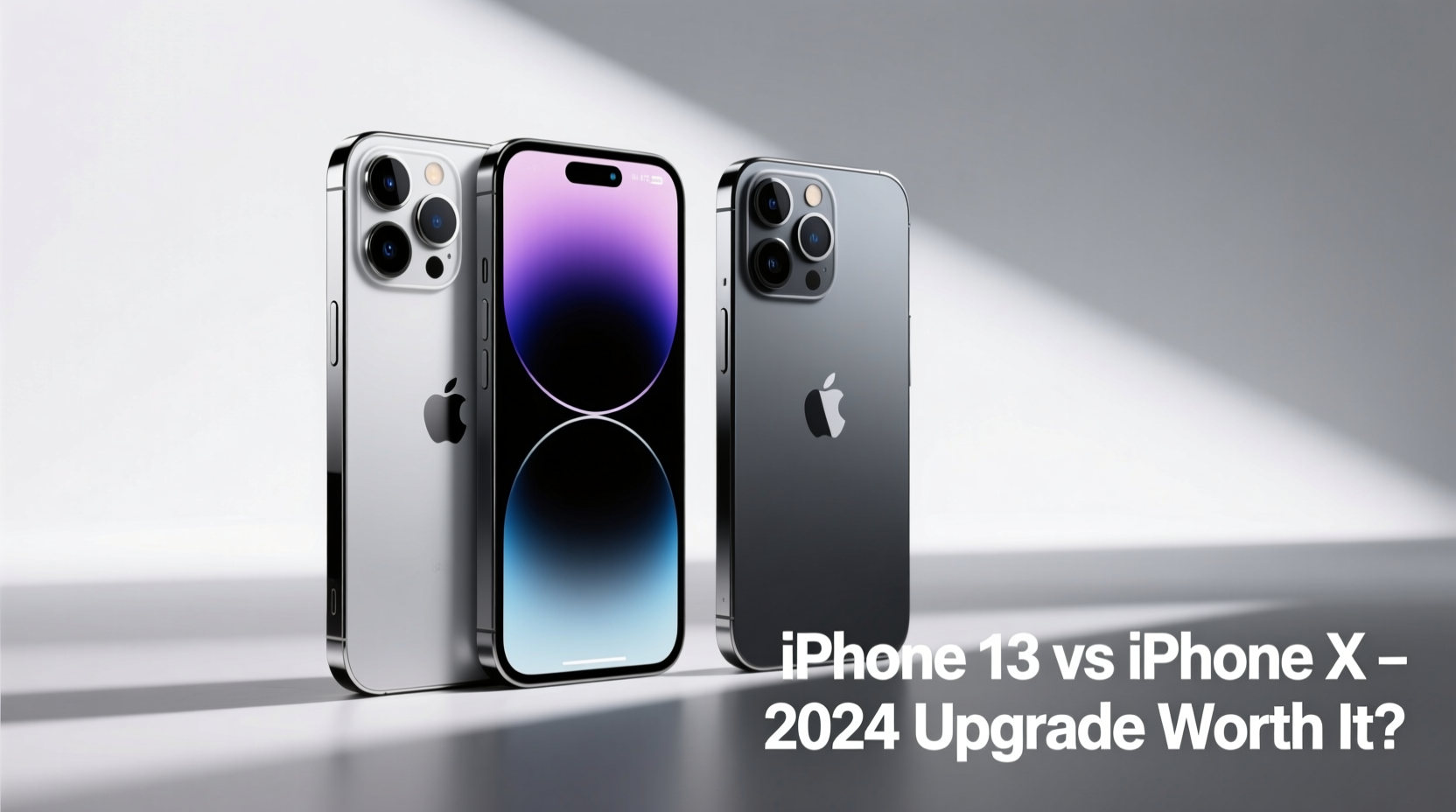
The iPhone X introduced the \"all-screen\" front with a notch housing Face ID—a design Apple reused through the iPhone 12 series. The iPhone 13 retains this layout but refines it with a smaller notch and improved durability. Both devices feature stainless steel frames and glass backs, though the iPhone 13 adds Ceramic Shield front cover, enhancing drop resistance.
Display-wise, both use OLED panels at 5.8 inches with HDR support and 625 nits peak brightness. However, the iPhone 13 benefits from Apple’s newer Super Retina XDR display, offering better contrast, color accuracy, and outdoor visibility. While not revolutionary, the difference is noticeable in direct sunlight or when watching HDR content.
Performance: A Generational Leap in Speed and Efficiency
Under the hood, the gap between these two phones is vast. The iPhone X runs on the A11 Bionic chip—an impressive processor in 2017 but now struggling with modern multitasking and graphics-heavy apps. In contrast, the iPhone 13 uses the A15 Bionic, one of Apple’s most efficient chips to date, built on a 5nm process with significantly faster CPU and GPU performance.
In real-world terms, the iPhone 13 launches apps nearly twice as fast, handles 4K video editing smoothly, and sustains high frame rates in games like Genshin Impact. More importantly, the A15 ensures smoother iOS updates. As iOS 18 rolls out in 2024, the iPhone X—already limited to iOS 16—is completely excluded, while the iPhone 13 will likely receive updates through 2027.
“Hardware longevity isn’t just about how long a phone turns on—it’s about sustained software relevance.” — Mark Rivera, Mobile Analyst at TechPulse Insights
Camera Comparison: Night Mode, Computational Photography, and Real-World Use
The camera systems highlight one of the most compelling reasons to upgrade. The iPhone X features a dual 12MP rear setup (wide + telephoto) without Night mode, sensor-shift stabilization, or深度融合 (Deep Fusion). Low-light photos are grainy, dynamic range is limited, and portrait lighting effects feel artificial.
The iPhone 13 improves dramatically: larger sensors, Night mode on all lenses, Photographic Styles, and Cinematic Mode for video. Its main wide lens captures up to 48% more light, making nighttime shots usable without a tripod. Smart HDR 4 enhances skin tones and shadow detail, while the front TrueDepth camera gains Night mode and improved autofocus.
If photography matters—even casually—the iPhone 13 offers a tangible upgrade. Social media sharing, family moments, and travel snapshots benefit from richer colors, better low-light performance, and more natural bokeh effects.
Battery Life and Charging: From All-Day Anxiety to Full-Day Confidence
Battery degradation is inevitable after six years, and even well-maintained iPhone X units rarely last a full day under moderate use in 2024. Apple rated the iPhone X for up to 13 hours of video playback; real-world usage today often lands around 5–6 hours of screen time.
The iPhone 13, by contrast, boasts up to 19 hours of video playback. Most users report 7–9 hours of screen time under mixed use—easily lasting a full day, even with aging batteries. It also supports faster charging (up to 50% in 30 minutes with a 20W adapter) and MagSafe wireless charging, which the iPhone X lacks entirely.
| Feature | iPhone X | iPhone 13 |
|---|---|---|
| Battery Life (Video Playback) | Up to 13 hours | Up to 19 hours |
| Fast Charging Support | Limited (via third-party adapters) | Yes (20W+ recommended) |
| MagSafe Compatibility | No | Yes |
| Wireless Charging | Qi only | Qi + MagSafe alignment & accessories |
Real-World Example: Sarah’s Upgrade Dilemma
Sarah has used her iPhone X since 2018. By early 2024, she noticed frequent app crashes, slow camera wake-up, and dwindling battery life. She considered buying a refurbished iPhone X again, spending less than $200. Instead, she tested an iPhone 13 at an Apple Store.
She was stunned by how quickly Messages loaded, how clear her Zoom calls looked with the improved front camera, and how her battery lasted through her workday without charging. After trading in her old device, she paid $550 for a 128GB iPhone 13—more than double her initial budget—but hasn’t regretted it. “It feels like my phone finally keeps up with me,” she said.
Software Support and Future-Proofing
As of 2024, the iPhone X supports only up to iOS 16. It missed critical features in iOS 17 and will not receive iOS 18. This means no new security patches, no upcoming privacy tools, and no compatibility with future app versions that may require newer APIs.
The iPhone 13, however, received iOS 17 and is eligible for iOS 18. Given Apple’s typical 5–6 year update cycle, it should remain supported until at least 2027. That extra three years of updates translates to better app compatibility, enhanced privacy controls, and access to new AI-powered features expected in coming iOS versions.
Is the iPhone X Still Good in 2024?
Yes—but with major caveats. The iPhone X still runs iOS apps, supports Face ID, and delivers acceptable performance for light tasks: texting, email, web browsing, and music streaming. If you’re on a tight budget and only need a basic smartphone, a well-maintained iPhone X can function as a secondary device or emergency phone.
However, it struggles with modern demands: multitasking, AR apps, high-resolution video recording, and prolonged gaming. Battery replacement costs (around $89 from Apple) may be justified only if you plan to use it short-term. For daily drivers, the limitations are increasingly apparent.
Upgrade Checklist: Should You Move to iPhone 13?
Use this checklist to determine if the iPhone 13 is right for you:
- ✅ Do you want at least 3 more years of iOS updates?
- ✅ Is your current phone slowing down during everyday tasks?
- ✅ Do you take photos in low light or record videos regularly?
- ✅ Does your battery die before bedtime?
- ✅ Are you frustrated by missing new iOS features?
- ✅ Can you trade in or sell your iPhone X to offset cost?
If you answered “yes” to three or more, the upgrade is likely worthwhile.
Frequently Asked Questions
Can the iPhone X run iOS 18?
No. The iPhone X is incompatible with iOS 18. It stopped receiving updates after iOS 16, limiting future app compatibility and security.
How much does it cost to upgrade from iPhone X to iPhone 13?
Trade-in values for a used iPhone X range from $50–$120 depending on condition. New iPhone 13 models start at $599 (refurbished options from $450). After trade-in, net cost can be as low as $350–$500.
Is the iPhone 13 waterproof like the iPhone X?
Yes, and better. iPhone X has IP67 rating (1m for 30 mins), while iPhone 13 improves to IP68 (up to 6m for 30 mins), offering greater protection against spills and rain.
Conclusion: Make the Move When It Serves Your Lifestyle
The iPhone X was revolutionary in 2017, but technology moves fast. By 2024, its hardware limitations, lack of updates, and degraded batteries make it impractical as a primary device for most users. The iPhone 13 isn’t just faster—it’s smarter, safer, and built to last.
If you rely on your phone for communication, creativity, or productivity, upgrading brings real improvements in speed, camera quality, and peace of mind. The investment pays off in reliability, longevity, and daily usability.




 浙公网安备
33010002000092号
浙公网安备
33010002000092号 浙B2-20120091-4
Comments
No comments yet. Why don't you start the discussion?