
Apple’s annual iPhone releases often come with bold claims about performance, camera quality, and battery life. But when you're already on a capable device like the iPhone 14 Plus, the question becomes more nuanced: Is upgrading to the iPhone 16 Plus truly beneficial, or are you just paying for incremental changes wrapped in marketing hype? For many users, the answer depends not on specs alone, but on how those upgrades translate into daily use.
The iPhone 14 Plus remains a strong performer in 2024—excellent battery life, solid camera system, and iOS support for years to come. The iPhone 16 Plus, expected to launch with new chipsets, enhanced AI features, and refined cameras, promises evolution, not revolution. So, before you trade in your current phone, let’s examine what’s actually changed—and whether it matters to you.
Performance: A Noticeable Leap or Paper Gains?
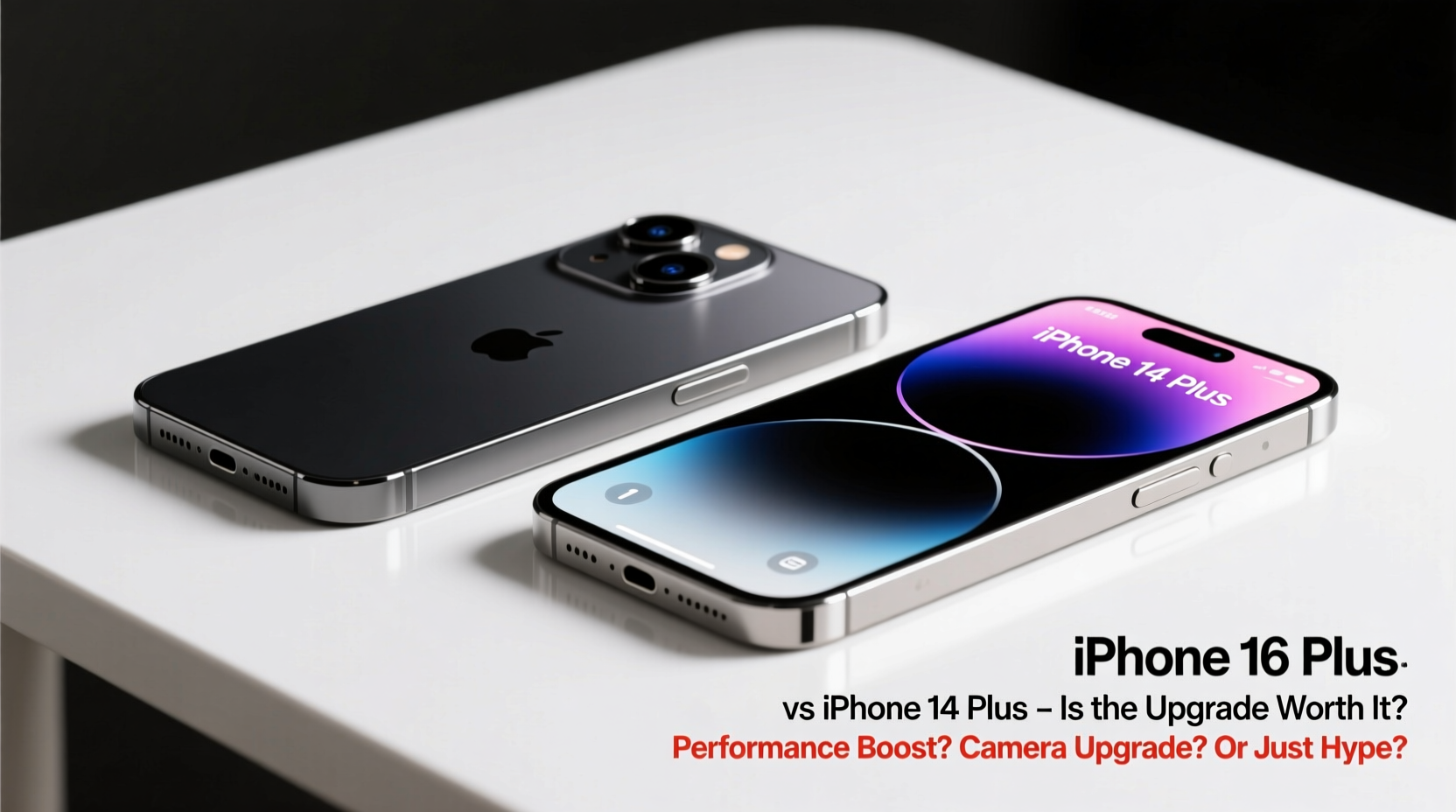
The iPhone 14 Plus runs on the A15 Bionic chip (in the Plus model, a slightly enhanced version), which still handles everyday tasks, multitasking, and even demanding games with ease. In contrast, the iPhone 16 Plus is expected to debut with the A18 Pro chip, built on a more advanced 3nm process. This brings better power efficiency, improved thermal management, and stronger neural engine performance for AI-driven tasks.
While benchmark scores will show a significant jump—likely 20–30% higher CPU and GPU performance—the real-world impact varies. If you edit 4K video on your phone, run machine learning apps, or play graphics-heavy games for hours, the difference may be tangible. But for browsing, messaging, social media, and streaming, both phones feel similarly snappy.
Camera Upgrades: Better Photos or Just More Hype?
One of Apple’s biggest selling points has always been camera quality. The iPhone 14 Plus features a dual-camera setup: 12MP main and 12MP ultra-wide, with decent low-light performance and Photographic Styles. The iPhone 16 Plus is rumored to introduce a next-gen sensor, improved computational photography, and enhanced Night mode across all lenses.
More importantly, the 16 Plus may feature Apple’s new “Fusion” zoom system, combining optical and digital techniques for sharper 3x and 5x zoom shots. It could also offer better subject tracking, reduced shutter lag, and AI-powered scene optimization. These aren’t headline-grabbing changes, but they add up in subtle ways—especially for users who take photos frequently in challenging lighting.
“Camera improvements in recent iPhones are less about megapixels and more about consistency—getting great shots without needing manual tweaks.” — David Lin, Mobile Photography Analyst at TechScope
If you rely on your iPhone as your primary camera, especially in dim environments or for action shots, the 16 Plus might deliver a noticeably better experience. But if you mostly capture casual moments, the 14 Plus still produces excellent results.
Battery Life: Diminishing Returns?
The iPhone 14 Plus already sets a high bar for battery endurance. With up to 26 hours of video playback, it outlasts most smartphones—even some in the Pro lineup. The iPhone 16 Plus is expected to match or slightly exceed that, thanks to a more efficient chipset and possible battery chemistry improvements.
However, gains here are marginal. You’re unlikely to gain more than 10–15% extra screen-on time. That might mean an additional hour of YouTube or two more podcasts—but not a full extra day of use. For heavy travelers or those constantly away from chargers, every bit counts. For others, it’s a nice-to-have, not a game-changer.
Design and Display: Subtle Refinements
Externally, the differences between the iPhone 14 Plus and 16 Plus are minimal. Both feature flat edges, aerospace-grade aluminum, and a 6.7-inch Super Retina XDR display with HDR support. Rumors suggest the 16 Plus may adopt a slightly thinner bezel and a brighter panel (up to 2000 nits peak brightness), improving outdoor visibility.
A more notable change could be the introduction of an under-display Face ID system, though this is more likely reserved for future Pro models. For now, expect the same notch, the same durable Ceramic Shield glass, and similar weight distribution. If you love the 14 Plus’s form factor, the 16 Plus won’t feel radically different in hand.
Software and AI: The Real Game-Changer?
This is where the iPhone 16 series could differentiate itself meaningfully. Apple is investing heavily in on-device AI, with features expected to include real-time language translation during calls, smarter Siri responses, automatic photo cleanup, and contextual suggestions based on usage patterns.
The A18 chip’s upgraded Neural Engine and increased RAM (possibly 6GB in the 16 Plus) will enable these features to run smoothly and privately—without sending data to the cloud. While iOS updates will bring some AI tools to older devices, full functionality may be limited to newer hardware.
If you value productivity enhancements, voice assistants that finally feel useful, or intelligent photo and note organization, the software leap could justify an upgrade—even if the hardware feels familiar.
Comparison Table: iPhone 14 Plus vs iPhone 16 Plus (Expected)
| Feature | iPhone 14 Plus | iPhone 16 Plus (Expected) |
|---|---|---|
| Chipset | A15 Bionic (enhanced) | A18 Bionic |
| RAM | 6GB | 6GB |
| Rear Cameras | 12MP Main + 12MP Ultra-Wide | 48MP Main + 12MP Ultra-Wide + Improved Processing |
| Zoom | 2x Optical, 15x Digital | 3–5x Fusion Zoom, 25x Digital |
| Battery Life | Up to 26 hrs video playback | Up to 28–30 hrs (estimated) |
| Display Brightness | 1000 nits (HDR) | Up to 2000 nits (HDR) |
| AI Features | Limited on-device processing | Full suite of on-device AI tools |
| Starting Price (Launch) | $899 | $999 (estimated) |
Mini Case Study: Sarah’s Upgrade Dilemma
Sarah has used her iPhone 14 Plus since late 2022. She’s a freelance writer who relies on her phone for notes, emails, and occasional video calls. Her battery lasts all day, and she rarely edits photos. When the iPhone 16 Plus launched, she was intrigued by the AI features—especially live call transcription and smarter reminders.
After testing a demo unit, she noticed that Siri understood complex requests better, and her Notes app automatically summarized long articles. These small efficiencies saved her 10–15 minutes per day. Though the camera and design were similar, the software improvements aligned with her workflow. She upgraded—not for flash, but for function.
Sarah’s story illustrates a key point: the value of an upgrade isn’t always visible. Sometimes, it’s felt in smoother interactions, faster access to information, and reduced friction in daily tasks.
Checklist: Should You Upgrade?
- ✅ Are you still satisfied with your iPhone 14 Plus’s speed and battery?
- ✅ Do you take a lot of photos, especially in low light or with zoom?
- ✅ Would on-device AI features (like smart summaries or real-time translation) improve your productivity?
- ✅ Is your current phone showing signs of wear, battery degradation, or storage limits?
- ✅ Can you afford the upgrade without financial strain?
If you answered “yes” to three or more, an upgrade may be worthwhile. If not, extending your 14 Plus’s life with a battery replacement or case could save hundreds.
Frequently Asked Questions
Will the iPhone 16 Plus get longer software support?
Yes. As a newer model, the iPhone 16 Plus will likely receive iOS updates until 2031 or beyond, compared to the 14 Plus’s estimated end-of-support around 2029. If you plan to keep your phone for 5+ years, this matters.
Can I notice the camera difference in everyday use?
In ideal lighting, no. But in low light, backlit scenes, or when using digital zoom, the 16 Plus should produce cleaner, more detailed images with less noise. Sample comparisons will help determine if the improvement is meaningful to you.
Is the price jump justified?
At an estimated $100–$150 increase, the cost reflects new silicon, AI capabilities, and camera refinements. For early adopters and tech enthusiasts, yes. For practical users, it depends on how much you’ll use the new features.
Conclusion: Upgrade Only If It Serves Your Needs
The iPhone 16 Plus is not a revolutionary leap over the 14 Plus. It refines what already works well—better efficiency, smarter software, slightly improved cameras, and future-proofing for AI. If you’re happy with your current phone, there’s no urgent need to upgrade. But if you want the latest in on-device intelligence, longer support, and incremental gains that add up over time, the 16 Plus offers quiet but meaningful progress.




 浙公网安备
33010002000092号
浙公网安备
33010002000092号 浙B2-20120091-4
Comments
No comments yet. Why don't you start the discussion?