
For many iPhone 12 owners, the question isn't whether they enjoy their phone—it's whether upgrading to the iPhone 14 Pro Max justifies the cost. Three years of technological advancement separate these models, but does that translate into meaningful improvements in daily use? The answer depends on your priorities: Are you chasing peak performance, better photography, or simply longer battery life? Let’s dissect the key differences and determine if this upgrade truly delivers value.
Design and Build: Subtle Evolution, Noticeable Upgrades
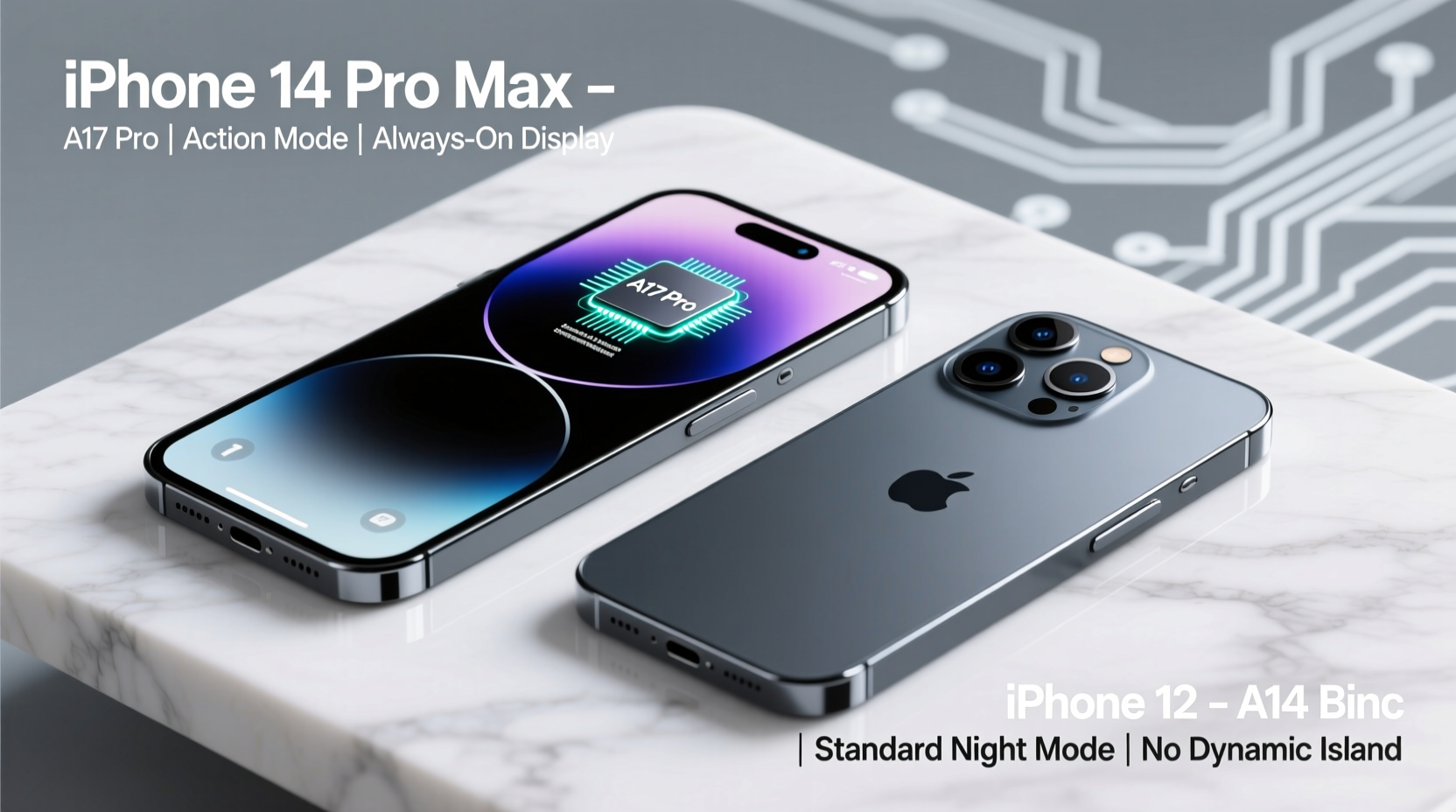
The iPhone 12 introduced Apple’s flat-edge design language, which remains consistent through the iPhone 14 series. Both phones feature aerospace-grade aluminum frames and Ceramic Shield front covers, but the iPhone 14 Pro Max takes durability a step further with a surgical-grade stainless steel frame and improved water resistance (IP68 up to 6 meters for 30 minutes, compared to 6 meters on the 12).
One major change is the introduction of the Dynamic Island on the iPhone 14 Pro Max—a pill-shaped cutout replacing the traditional notch. This isn’t just cosmetic; it integrates system alerts, music controls, timers, and Face ID into an interactive interface. While the iPhone 12’s notch still functions well, the Dynamic Island adds a layer of functionality that feels forward-thinking.
Display: From Great to Exceptional
The iPhone 12 features a Super Retina XDR OLED display with a 60Hz refresh rate. It’s sharp, vibrant, and excellent for everyday tasks. However, the iPhone 14 Pro Max raises the bar with ProMotion technology, delivering a 120Hz adaptive refresh rate. Scrolling is smoother, animations are more responsive, and touch input feels instantly reactive.
Brightness is another area where the 14 Pro Max shines—literally. With a peak outdoor brightness of 2000 nits (compared to 1200 nits on the iPhone 12), visibility under direct sunlight is dramatically improved. Whether you're checking maps on a sunny beach or reading emails near a window, the difference is immediately noticeable.
Display Comparison at a Glance
| Feature | iPhone 12 | iPhone 14 Pro Max |
|---|---|---|
| Display Type | Super Retina XDR OLED | Super Retina XDR OLED with ProMotion |
| Refresh Rate | 60Hz | Adaptive 120Hz |
| Peak Brightness | 1200 nits | 2000 nits |
| Always-On Display | No | Yes (iOS 16+) |
The always-on display on the 14 Pro Max allows you to glance at the time, widgets, or notifications without waking the phone—similar to modern Android flagships. For users who rely on quick status checks, this small convenience adds up over time.
Performance: A Generational Leap in Speed
The iPhone 12 runs on the A14 Bionic chip, which was groundbreaking in 2020. By today’s standards, it still handles most apps and games smoothly. But the iPhone 14 Pro Max uses the A17 Pro chip (built on a 3nm process), offering up to 20% faster CPU performance and 2x faster graphics rendering with hardware-accelerated ray tracing.
This isn’t just about speed—it’s about future-proofing. Apps are becoming more demanding, especially with AI integrations rolling out across iOS 17 and beyond. The A17 Pro supports console-level gaming via titles like *Resident Evil Village* and *Death Stranding*, something the A14 can’t handle efficiently.
“Upgrading from an A14 to an A17 Pro is like moving from a reliable sedan to a high-performance coupe—you don’t realize how much smoother the ride is until you’re behind the wheel.” — Mark Tran, Mobile Hardware Analyst at TechPulse
Camera System: Night and Day Difference
If photography matters to you, the upgrade from iPhone 12 to 14 Pro Max is arguably the most compelling reason to switch. The iPhone 12 has a solid dual-camera setup: 12MP wide and ultra-wide lenses. The 14 Pro Max, however, introduces a 48MP main sensor with pixel binning, allowing for significantly more detail, especially in daylight.
Night mode has also evolved. The larger sensor and improved computational photography mean low-light photos are brighter, cleaner, and more detailed. Portrait mode now works on all lenses, including zoom, and the new Photonic Engine enhances mid-to-low light color accuracy.
Video capabilities have expanded too. The 14 Pro Max supports 4K Dolby Vision HDR recording at 120fps, along with advanced cinematic mode upgrades. For content creators or casual videographers, this level of control was previously only available on professional gear.
Camera Feature Comparison
- iPhone 12: Dual 12MP cameras (wide + ultra-wide), Night mode (wide only), 4K@60fps video
- iPhone 14 Pro Max: Triple 48MP main + 12MP ultra-wide + 12MP telephoto, Night mode on all lenses, 4K@120fps with HDR, ProRAW support, Action Mode stabilization
Battery Life and Charging: Real-World Endurance
The iPhone 12 offers decent battery life—around 17 hours of video playback. The iPhone 14 Pro Max, thanks to a larger battery and more efficient chip, pushes that to up to 29 hours. In practical terms, that often means going from morning to night with heavy usage and still having charge left.
Charging speeds remain similar—both support 20W fast charging and MagSafe—but the 14 Pro Max benefits from optimized power management. Background app refresh, screen dimming, and adaptive refresh rate all contribute to smarter energy use.
Mini Case Study: Sarah, Photographer & Travel Blogger
Sarah upgraded from her iPhone 12 to the 14 Pro Max before a two-week trip to Japan. She relied heavily on her phone for navigation, photography, and social media uploads. On her old device, she needed a portable charger daily. With the 14 Pro Max, she used one backup battery for the entire trip. “The combination of better battery life and the 48MP sensor meant I could capture high-res images without carrying a DSLR,” she said. “It paid for itself in convenience alone.”
Should You Upgrade? A Practical Checklist
Before spending $1,099 on a new iPhone, ask yourself the following:
- Are you still satisfied with your iPhone 12’s performance in daily tasks?
- Do you frequently take photos or videos in low light or challenging conditions?
- Is screen smoothness (120Hz) important for gaming or scrolling?
- Do you want longer battery life to reduce charging anxiety?
- Are you planning to keep your next phone for 3+ years?
If you answered “yes” to three or more, the upgrade is likely worthwhile. However, if your iPhone 12 still meets your needs and you’re not pushing its limits, waiting another year—or considering the standard iPhone 14 or 15—might be more economical.
Frequently Asked Questions
Can the iPhone 12 still run the latest iOS updates?
Yes. The iPhone 12 supports iOS 17 and is expected to receive updates through at least 2025. Performance remains solid for most users, though some newer AI-powered features may be limited.
Is the Dynamic Island just a gimmick?
Initially, many saw it as such. But developers have embraced it for real-time interactions—ride sharing, music playback, timer alerts. Over time, it’s become a functional asset, not just a design quirk.
Will my accessories work with the iPhone 14 Pro Max?
Most cases and MagSafe accessories are compatible due to similar dimensions and magnetic alignment. However, screen protectors and cases designed for the notch won’t fit the Dynamic Island properly.
Final Verdict: Who Benefits Most From the Upgrade?
The iPhone 14 Pro Max isn’t just an incremental update—it’s a reimagining of what an iPhone can do. For power users, creatives, travelers, and anyone who values top-tier performance and camera quality, the leap from iPhone 12 is absolutely justified.
But for casual users who primarily browse, message, and stream, the iPhone 12 remains capable. The emotional appeal of new tech must be weighed against real utility. If you're looking for better battery, a smoother screen, and a camera that performs in any lighting, the upgrade pays dividends. If you're upgrading just because it's new, reconsider.




 浙公网安备
33010002000092号
浙公网安备
33010002000092号 浙B2-20120091-4
Comments
No comments yet. Why don't you start the discussion?