
The evolution of smartphone photography has been nothing short of revolutionary. With each new iPhone release, Apple inches closer to challenging the dominance of traditional DSLRs. In 2024, the question is no longer whether smartphones can take decent photos—it's whether the iPhone 14 can genuinely replace a dedicated camera for most users. For professionals, enthusiasts, and everyday photographers alike, this comparison isn’t just about megapixels; it’s about usability, flexibility, image quality, and creative control.
Image Quality: Sensor Size vs Computational Magic
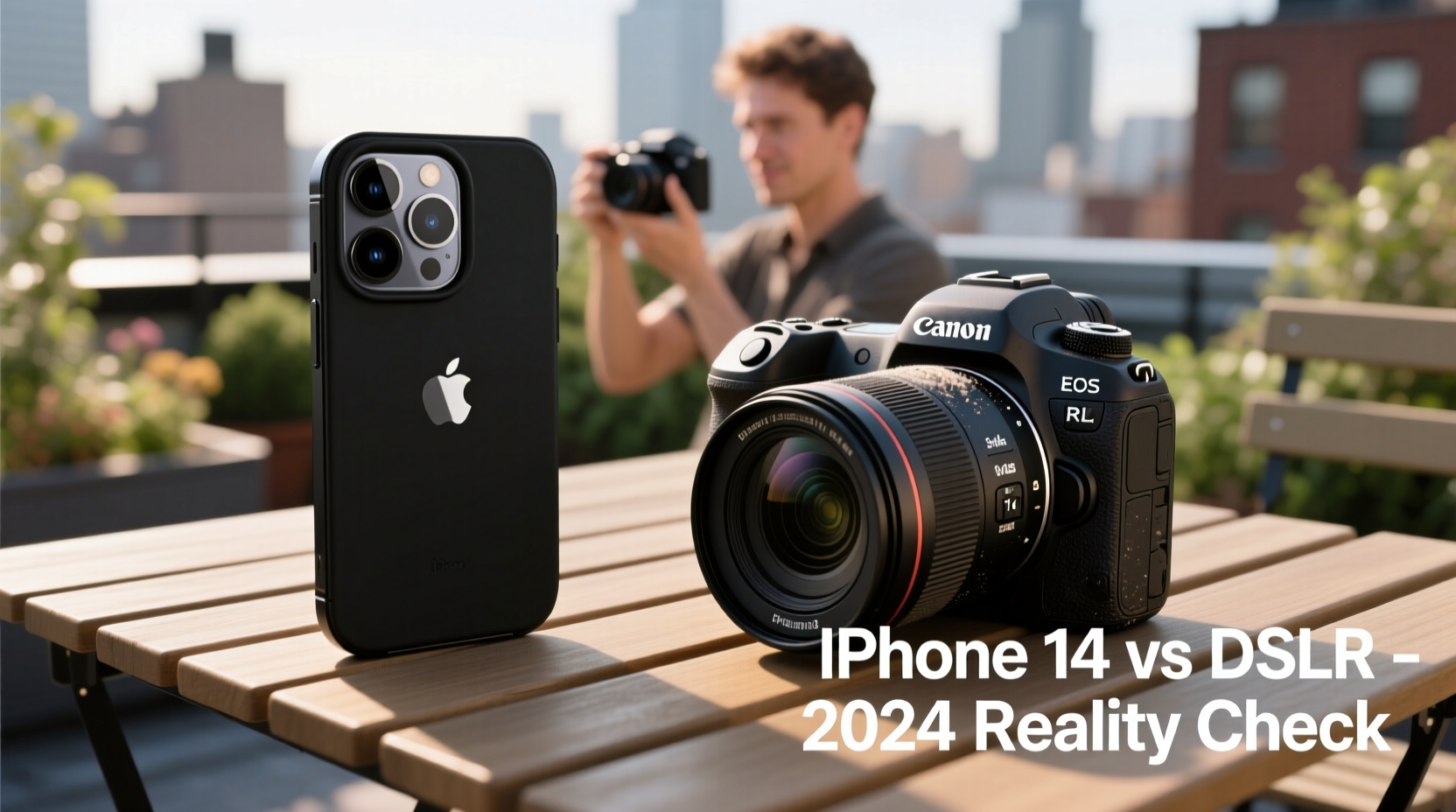
At the heart of any camera system lies the sensor. DSLRs use significantly larger sensors—APS-C or full-frame—compared to the tiny 1/1.28-inch sensor in the iPhone 14 Pro. Larger sensors capture more light, deliver better dynamic range, and produce less noise in low-light conditions. These are fundamental advantages that physics favors.
But Apple counters with computational photography. The iPhone 14 uses Smart HDR 4, Deep Fusion, and Photonic Engine to process multiple exposures, optimize color, and enhance detail in ways that single-sensor cameras cannot. In daylight, the difference in image quality between an iPhone 14 and a mid-tier DSLR like the Canon EOS 90D is often negligible to the untrained eye. Shadows are lifted, highlights preserved, and skin tones rendered naturally—all automatically.
However, when lighting gets tricky, the limitations emerge. A DSLR shooting in RAW at ISO 1600 will retain far more detail than an iPhone pushing its limits in Night mode. The iPhone may produce a pleasing, bright image, but upon zooming in, noise and smudging become apparent. For print work, commercial use, or cropping-heavy scenarios, the DSLR still holds a decisive edge.
Versatility and Lens Options
One area where DSLRs remain unmatched is lens versatility. A single DSLR body can pair with ultra-wide fisheye lenses, telephoto primes exceeding 600mm, macro lenses for extreme close-ups, and tilt-shift optics for architectural precision. The iPhone 14 offers three lenses: main (26mm equivalent), ultra-wide (13mm), and telephoto (77mm). While impressive for a phone, these are fixed and limited in reach.
Third-party clip-on lenses exist, but they degrade image quality and lack seamless integration. Meanwhile, DSLR lenses maintain optical excellence across focal lengths and apertures. If you're photographing wildlife, sports, or distant subjects, even the iPhone 14’s 3x optical zoom falls short. Digital zoom beyond that introduces softness and artifacts.
On the flip side, the iPhone wins in convenience. It fits in your pocket, connects instantly to social media, and allows immediate editing via apps like Lightroom Mobile. For travel bloggers, vloggers, or journalists on tight deadlines, that immediacy often outweighs technical shortcomings.
Low-Light and Video Performance
Night photography has become a signature strength for the iPhone. The Night mode now works across all lenses and adapts exposure times based on stability. In controlled tests, the iPhone 14 produces remarkably clean images in dim environments—sometimes outperforming older DSLRs without advanced noise reduction.
Yet, true low-light superiority still belongs to DSLRs with high-ISO capabilities and fast prime lenses. A Nikon D750 with a 50mm f/1.8 lens can shoot at ISO 6400 with usable results. The iPhone struggles past ISO 800 in manual equivalents, relying heavily on stacking and stabilization to simulate brightness.
Video is where the iPhone shines brightest. The iPhone 14 supports 4K Dolby Vision HDR recording at 30fps, with cinematic mode, stereo audio, and excellent stabilization. Most entry-level DSLRs don’t offer internal 4K, let alone HDR video. Even among those that do, autofocus during video tends to be clunky compared to the iPhone’s seamless face-tracking and tap-to-focus.
“Smartphones have redefined what ‘good enough’ means in visual storytelling. For documentary work and social-first content, the iPhone 14 is already a primary tool.” — Lena Torres, Photojournalist & Sony Alpha Ambassador
Workflow and Real-World Usability
In professional settings, workflow efficiency matters. The iPhone integrates effortlessly with iCloud, Messages, Instagram, and editing tools. You can shoot, edit, caption, and publish within minutes. No card transfers, no tethering, no software imports. This speed makes it ideal for time-sensitive content creation.
DSLRs, while slower in delivery, offer superior file integrity. RAW files from a DSLR contain vastly more data, enabling deeper color grading, shadow recovery, and large-format printing. They’re also more future-proof—today’s RAW file can be reprocessed years later with improved algorithms.
For hybrid shooters—those who want both mobility and quality—many now adopt a dual-device strategy: iPhone for candid moments, quick posts, and video logs; DSLR for studio work, events, and high-resolution needs.
| Feature | iPhone 14 Pro | Canon EOS 90D (Example DSLR) |
|---|---|---|
| Sensor Size | 1/1.28\" | APS-C (22.3 x 14.9mm) |
| Max Video Resolution | 4K HDR Dolby Vision | 4K (no HDR) |
| Zoom Range | 0.5x–3x optical | Lens-dependent (e.g., 18–135mm) |
| Low Light Performance | Strong with Night mode | Better native sensitivity (up to ISO 25600) |
| Portability & Sharing | Excellent | Poor (requires transfer steps) |
| Editing Flexibility | Moderate (HEIF/ProRAW) | High (14-bit RAW) |
Can the iPhone 14 Replace Your DSLR? A Practical Checklist
The answer depends on your needs. Use this checklist to determine if switching—or supplementing—with an iPhone makes sense:
- You prioritize speed over resolution: Need to post quickly to Instagram or Twitter?
- You shoot mostly in daylight or well-lit interiors: iPhone excels here.
- You value silent, discreet shooting: No shutter click alerts subjects.
- You create vertical video content: TikTok, Reels, YouTube Shorts—iPhone is optimized.
- You don’t crop heavily or print large: Avoid blowing up small details.
- You rely on interchangeable lenses: Then no, iPhone won’t suffice.
- You shoot in extreme low light frequently: DSLR remains superior.
- You need long battery life for extended shoots: DSLRs last longer per charge.
Real Example: Travel Photographer’s Dilemma
Consider Maya Chen, a freelance travel photographer documenting Southeast Asia. She used to carry a DSLR kit weighing over 8kg. After switching to a hybrid setup—iPhone 14 Pro for street scenes and stories, and her Nikon D850 for landscapes and portraits—she reduced pack weight by half. Her engagement increased because she posted daily updates directly from her phone. Clients still expect high-res deliverables, so she keeps the DSLR for key shots. “The iPhone didn’t replace my DSLR,” she says, “but it replaced my point-and-shoot, my vlogging cam, and my backup camera.”
Frequently Asked Questions
Can I professionally edit iPhone photos like DSLR images?
Yes, especially using ProRAW and apps like Adobe Lightroom. However, dynamic range and shadow detail are more limited than DSLR RAW files, so aggressive edits may reveal noise or banding.
Is the iPhone better than all DSLRs now?
No. While it surpasses older or entry-level DSLRs in ease of use and video, high-end DSLRs and mirrorless cameras still dominate in image fidelity, lens options, and manual control.
Should I sell my DSLR and go all-in on iPhone?
Only if your work doesn’t require large prints, heavy cropping, or specialized optics. For most hobbyists and mobile-first creators, the iPhone is sufficient. Professionals should keep their DSLR as a complementary tool.
Final Verdict: Coexistence, Not Replacement
The iPhone 14 hasn’t fully replaced the DSLR—but it has redefined the role of dedicated cameras. For casual photographers, content creators, and even some pros focused on digital distribution, the iPhone delivers exceptional results with unmatched convenience. It captures stunning images, records cinema-grade video, and streamlines publishing like no DSLR ever could.
Yet, the DSLR endures where optical excellence, customization, and creative control matter most. Instead of viewing them as rivals, think of them as collaborators. The future of photography isn’t about choosing one over the other—it’s about leveraging both to tell richer, faster, and more versatile visual stories.




 浙公网安备
33010002000092号
浙公网安备
33010002000092号 浙B2-20120091-4
Comments
No comments yet. Why don't you start the discussion?