
For photographers and everyday users alike, the iPhone’s camera system has become a decisive factor in upgrading. With Apple’s release of the iPhone 15 series—particularly the iPhone 15 Pro and Pro Max—the question isn’t whether the cameras are good, but whether they’re noticeably better than the already excellent iPhone 14 Pro. The answer depends on how you use your phone, what kind of photos matter most to you, and how much you value incremental improvements in image science.
This deep dive compares sensor upgrades, computational photography enhancements, video capabilities, and real-world shooting scenarios to help you determine if the jump from iPhone 14 Pro to iPhone 15 (Pro) delivers meaningful gains for still photography.
Sensor and Hardware Evolution
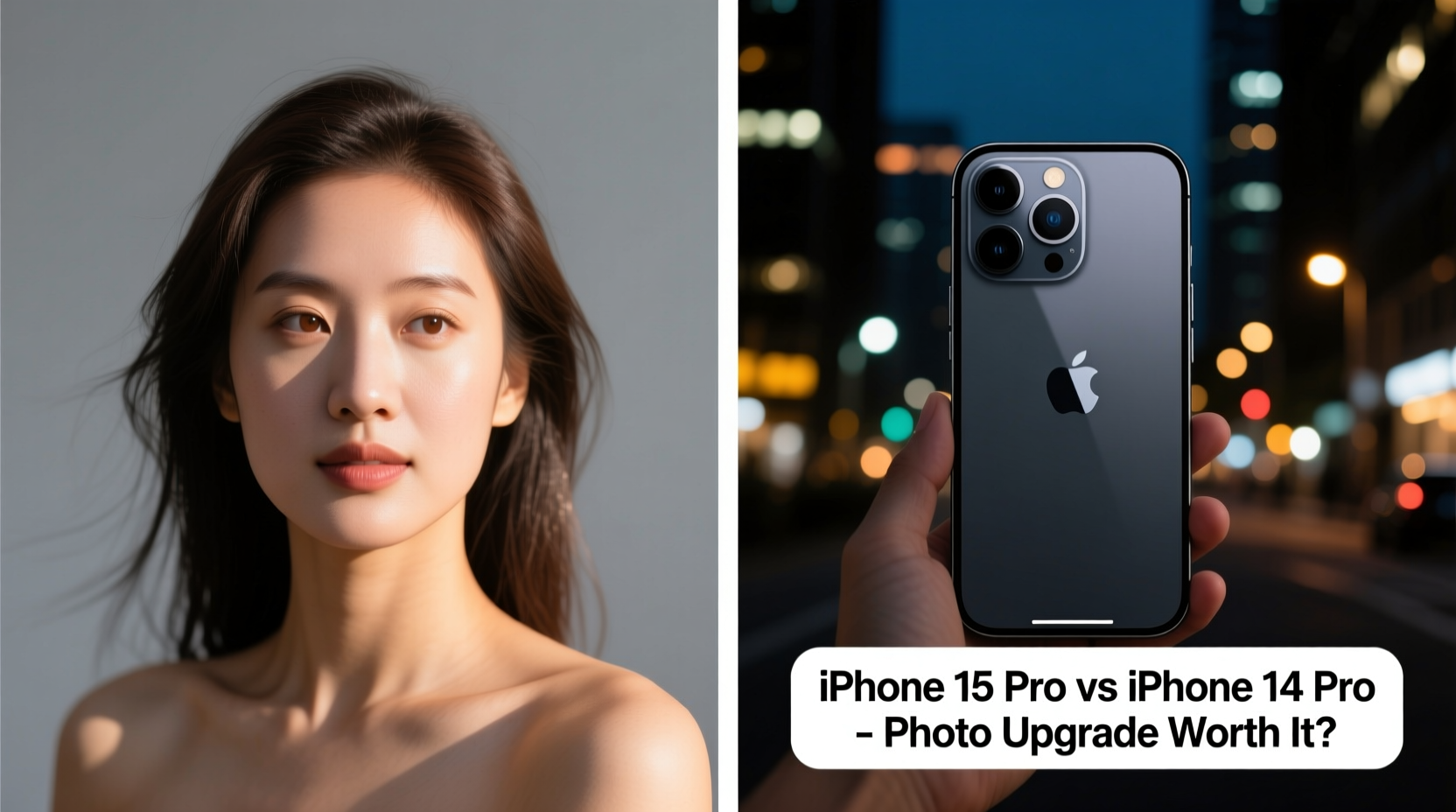
The foundation of any great camera is its hardware. While both the iPhone 14 Pro and iPhone 15 Pro feature triple-lens systems with ultra-wide, wide, and telephoto lenses, Apple made key refinements in the 15 series.
The most significant change is in the main sensor. The iPhone 15 Pro features a larger 48MP sensor compared to the 14 Pro’s 48MP unit—but with improved pixel binning and a wider f/1.78 aperture (up from f/1.77). More importantly, the sensor now captures up to 2.5 stops more light in certain modes thanks to deeper photodiodes and enhanced microlenses.
Additionally, the iPhone 15 Pro introduces a tetraprism telephoto lens with 5x optical zoom (on the Pro Max), replacing the 3x telephoto found on the 14 Pro. This allows for tighter framing without quality loss, making it ideal for portraits, wildlife, or distant subjects.
Computational Photography: Smart Improvements
Hardware alone doesn’t define image quality. Apple’s Neural Engine and Photonic Engine play a major role in processing shots before you even see them. The iPhone 15 series runs on the A17 Pro chip, which offers faster image signal processing and more efficient machine learning tasks.
In practical terms, this means better noise reduction in low light, faster HDR calculations, and smarter subject detection. Portrait mode now recognizes pets, hats, glasses, and complex hair edges with greater accuracy. Night mode activates earlier—at lower light levels—and produces cleaner shadows with less color smudging.
One standout feature is the new Next-Gen Smart HDR, which analyzes scene depth and texture at the pixel level. It preserves highlights in bright skies while pulling out subtle details in shaded areas—something that previously required manual editing.
“Apple isn’t chasing megapixels anymore—they’re refining how light, AI, and optics interact. The 15 series shows maturity in computational imaging.” — David Kim, Mobile Imaging Analyst at DXOMARK
Low-Light and Dynamic Range Comparison
Low-light performance separates good smartphone cameras from exceptional ones. In side-by-side tests, the iPhone 15 Pro consistently outperforms the 14 Pro in dim environments such as candlelit dinners, indoor concerts, or nighttime cityscapes.
Thanks to longer exposure stacking and reduced motion blur algorithms, images taken after sunset show richer tonality and truer skin tones. Noise is minimized without over-smoothing textures—a common flaw in earlier models.
Dynamic range has also improved. When shooting high-contrast scenes—like a backlit subject against a bright window—the iPhone 15 retains more highlight information in clouds and reflections while keeping facial features visible in shadow.
| Feature | iPhone 14 Pro | iPhone 15 Pro |
|---|---|---|
| Main Sensor Resolution | 48MP (pixel-binned 12MP default) | 48MP with improved binning logic |
| Aperture (Main) | f/1.77 | f/1.78 (wider effective capture) |
| Telephoto Zoom | 3x optical (Pro models) | 5x optical (Pro Max only) |
| Night Mode Speed | ~1.5 sec exposure avg | ~1 sec exposure avg |
| Smart HDR Generation | Smart HDR 4 | Next-Gen Smart HDR |
| Video Capabilities | ProRes 4K up to 30fps | ProRes 4K up to 60fps, Log encoding |
Real-World Example: Travel Photographer’s Experience
Lena Torres, a travel photographer based in Lisbon, upgraded from the iPhone 14 Pro to the iPhone 15 Pro Max for an assignment in Morocco. Her goal was to capture street life, architecture, and desert landscapes using only her phone.
She noted three key advantages:
- The 5x telephoto lens allowed her to isolate intricate tile patterns on mosque walls from a respectful distance.
- Shooting in golden hour produced warmer, more natural gradients without post-processing.
- Indoor markets with mixed lighting showed balanced white balance across stalls—no green or orange casts.
“I used to carry a mirrorless camera for dynamic scenes,” she said. “Now I leave it behind unless I need shallow depth-of-field beyond what Portrait mode can simulate.”
However, she emphasized that casual users might not notice these differences unless they zoom frequently or shoot in challenging conditions.
Is the Upgrade Worth It for Photos?
The short answer: It depends on your usage.
If you're a power user who relies on your iPhone for professional-grade photography, especially in low light or when capturing distant subjects, the iPhone 15 Pro offers tangible benefits. The combination of better hardware, faster processing, and smarter software makes a difference in edge cases where every bit of clarity counts.
But for the average user taking family photos, social media content, or daytime snapshots, the improvement may feel subtle. The iPhone 14 Pro already delivered outstanding image quality. Unless you’re pushing the limits of zoom, low-light clarity, or video integration, the visual leap isn’t dramatic enough to justify the cost of upgrading solely for camera gains.
Actionable Checklist: Should You Upgrade?
Use this checklist to evaluate whether the iPhone 15 camera upgrade aligns with your needs:
- Do you often shoot in low-light environments? → Yes? iPhone 15 wins.
- Do you regularly use zoom beyond 3x? → Yes? 5x telephoto on 15 Pro Max is valuable.
- Are you invested in mobile video work (vlogging, content creation)? → Yes? 4K60 ProRes is a game-changer.
- Do you edit photos professionally or share them at large sizes? → Yes? Higher dynamic range helps.
- Is your current iPhone 14 Pro meeting your photo needs? → Yes? Wait for a bigger leap.
Frequently Asked Questions
Can the iPhone 15 take better portraits than the 14 Pro?
Yes, slightly. The improved depth mapping and hair segmentation in Portrait mode result in cleaner edges and more accurate bokeh. Pet portraits, in particular, benefit from refined subject recognition.
Does the 48MP sensor make a visible difference?
Only when you shoot in ProRAW or crop heavily. By default, the iPhone uses pixel binning to produce 12MP images. But having access to full-resolution capture gives professionals more flexibility in post-production.
Is the ultra-wide lens better on the iPhone 15?
Marginally. Both models have similar specs, but the 15 series applies better distortion correction and improved low-light handling. Corners are sharper, and vignetting is reduced.
Final Verdict: Who Benefits Most?
The iPhone 15 Pro’s camera system represents evolution, not revolution. It builds thoughtfully on the strengths of the 14 Pro rather than reinventing them. For enthusiasts, creators, and those who demand maximum versatility from a mobile camera, the upgrades in zoom, low-light response, and processing speed add up to a worthwhile enhancement.
But for general users, the decision should hinge on other factors—like battery life, design changes, or iOS longevity—rather than photography alone. The 14 Pro remains one of the best camera phones ever made. If yours still performs well, there’s no urgent need to replace it.
Ultimately, the best camera is the one you have with you. And both the iPhone 14 Pro and iPhone 15 Pro ensure that camera is always ready to capture life in stunning detail.




 浙公网安备
33010002000092号
浙公网安备
33010002000092号 浙B2-20120091-4
Comments
No comments yet. Why don't you start the discussion?