
For iPhone enthusiasts, the decision to upgrade isn’t just about new features—it’s about real-world value. The jump from the iPhone 13 Pro to the iPhone 15 Pro spans three generations, making it one of the more significant transitions Apple has offered in recent years. But with a starting price that can exceed $999 even on older models, is the leap truly justified? Let’s break down the key differences in design, performance, camera capabilities, battery life, and software support to determine whether the iPhone 15 Pro delivers enough meaningful improvements to warrant replacing a still-powerful iPhone 13 Pro.
Design and Build: Refined, but Subtle
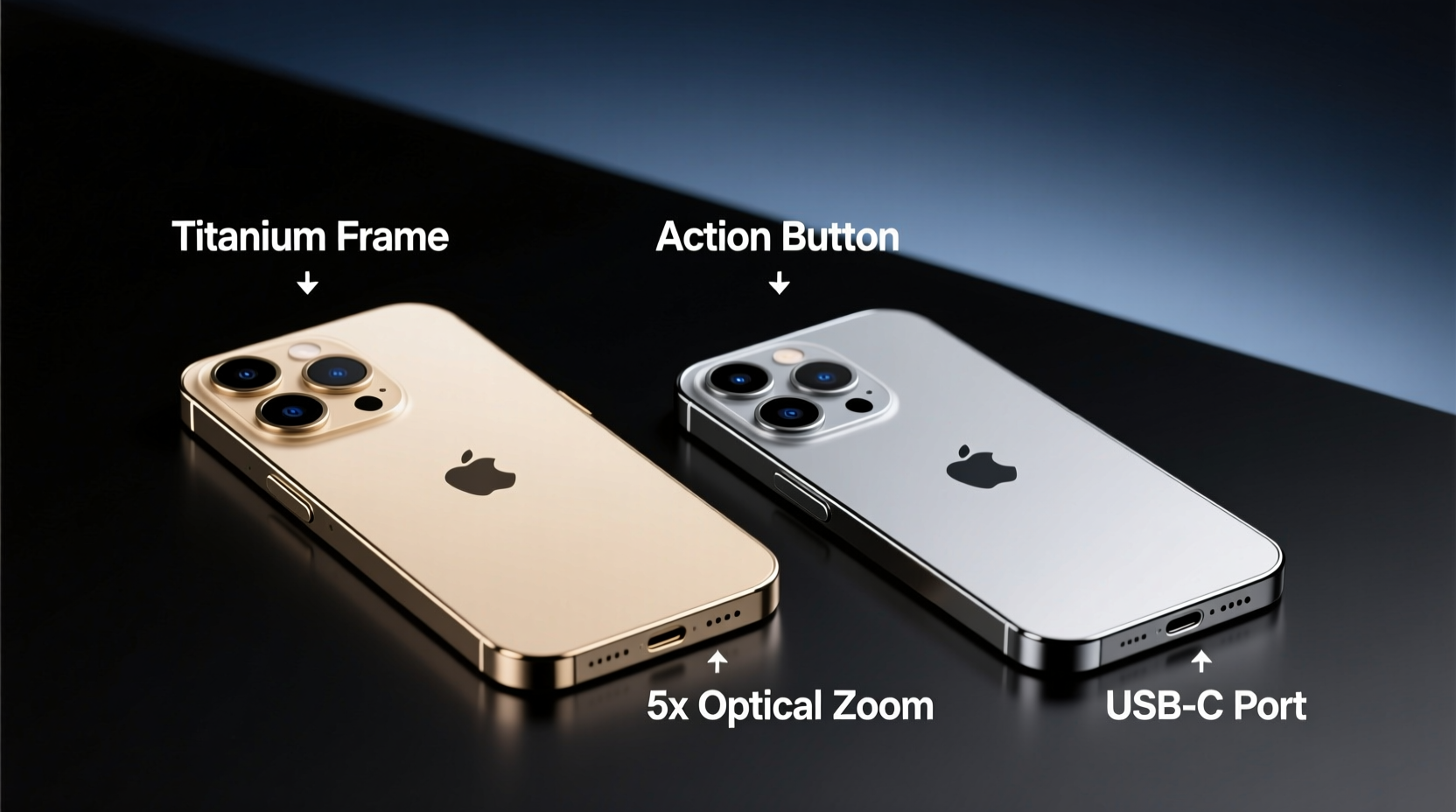
The most noticeable change between the two models lies in their physical construction. The iPhone 15 Pro introduces a titanium frame, reducing weight by nearly 10% compared to the stainless steel body of the 13 Pro. This makes the 15 Pro not only lighter but also more comfortable for extended use—especially important for users who rely on their phones throughout the day.
Apple also redesigned the edges, giving the 15 Pro slightly more rounded corners and a slimmer profile. While these changes may seem minor on paper, they contribute to a more premium feel in hand. Additionally, the 15 Pro ditches the traditional mute switch for a customizable Action Button, offering quick access to shortcuts like voice memos, camera mode, or flashlight.
Performance: Generational Leap in Speed and Efficiency
Under the hood, the difference is stark. The iPhone 13 Pro runs on the A15 Bionic chip, which was groundbreaking in 2021. Fast forward to 2023, and the iPhone 15 Pro features the A17 Pro chip—Apple’s first 3nm processor. This advancement translates into up to 20% faster CPU performance, 15% improved GPU efficiency, and significantly better neural engine capabilities for machine learning tasks.
Beyond raw speed, the A17 Pro enables console-level gaming on mobile through titles like *Resident Evil Village* and *Death Stranding*, thanks to hardware-accelerated ray tracing and MetalFX upscaling. For creative professionals, this means smoother rendering in video editing apps and faster photo processing in Lightroom or Final Cut Pro.
“Every year, Apple pushes the envelope with silicon efficiency. The A17 Pro isn’t just faster—it’s redefining what smartphones can do.” — Mark Liu, Mobile Hardware Analyst at TechInsight Group
Camera System: Evolution Over Revolution
Both devices feature triple-camera setups with ultra-wide, wide, and telephoto lenses, but the upgrades in the 15 Pro are focused on refinement rather than reinvention.
The standout addition is the 5x tetraprism zoom lens (replacing the 3x on the 13 Pro), which provides greater flexibility for distant subjects without sacrificing image quality. Combined with improved low-light algorithms and Smart HDR 5, the 15 Pro captures sharper details and more natural skin tones, especially in backlit environments.
Another major enhancement is the ability to shoot and edit in Log video format directly on the device—a feature previously limited to professional cameras. This gives videographers greater control during color grading, making the iPhone 15 Pro a viable tool for semi-pro content creation.
| Feature | iPhone 13 Pro | iPhone 15 Pro |
|---|---|---|
| Chipset | A15 Bionic | A17 Pro (3nm) |
| Rear Zoom | 3x optical | 5x optical |
| Frame Material | Stainless Steel | Titanium |
| Port | Lightning | USB-C (USB 3) |
| Battery Life (Video Playback) | Up to 22 hours | Up to 23 hours |
| Action Button | No | Yes (customizable) |
Battery and Charging: Incremental Gains
Battery life improvements between the two models are modest. Apple claims up to 23 hours of video playback for the 15 Pro, compared to 22 on the 13 Pro. Real-world usage shows similar results: both last a full day under moderate load, though heavy users will still need to charge by evening.
Where the 15 Pro pulls ahead is in connectivity. It features USB-C with USB 3 speeds (up to 10Gbps), allowing for dramatically faster file transfers—essential when moving 4K or Log-format videos to a computer. In contrast, the 13 Pro remains on Lightning with slower data throughput and limited accessory compatibility.
Charging speeds remain unchanged: both support 20W wired fast charging and 15W MagSafe wireless. However, the shift to USB-C aligns the iPhone with EU regulations and simplifies travel kits, eliminating the need for separate cables if you own other USB-C devices.
Software and Longevity: Future-Proofing Your Investment
One of the most compelling arguments for upgrading is long-term software support. iPhones typically receive iOS updates for five to six years. Since the iPhone 13 Pro launched in 2021, it’s likely nearing the end of its major update cycle by 2026–2027. The iPhone 15 Pro, released in 2023, should remain supported through at least 2029.
This extended lifespan matters for security patches, app compatibility, and access to new AI-driven features expected in upcoming iOS versions. Users invested in the Apple ecosystem—especially those using iPad, Mac, or Vision Pro—will benefit from tighter integration and optimized workflows available only on newer hardware.
Mini Case Study: Sarah, Freelance Photographer
Sarah upgraded from an iPhone 13 Pro to a 15 Pro last year after struggling with slow export times and limited zoom range during outdoor shoots. “I used to carry a mirrorless camera for client work,” she says. “Now, I often shoot entire events on my iPhone—especially weddings where discretion matters. The 5x zoom lets me capture candid moments from afar, and transferring footage via USB-C saves me over an hour per project.”
While she acknowledges the high cost, Sarah believes the productivity gains justify the investment. “It’s not just a phone anymore. It’s my primary editing station when I’m on location.”
Checklist: Should You Upgrade?
Use this checklist to evaluate whether the iPhone 15 Pro makes sense for your needs:
- ✅ Need longer optical zoom for photography or videography?
- ✅ Want faster file transfers via USB-C (especially for large media files)?
- ✅ Value future-proofing with longer software support?
- ✅ Interested in advanced video features like Log recording or ProRes?
- ✅ Prefer a lighter, more ergonomic design for daily comfort?
- ✅ Looking to leverage next-gen gaming or AR applications?
If you answered “yes” to three or more, the upgrade offers tangible benefits. If your current 13 Pro meets your needs and you don’t rely heavily on cutting-edge performance or pro-grade media tools, waiting may still be the smarter financial move.
Frequently Asked Questions
Can the iPhone 15 Pro replace a dedicated camera?
For many casual and even semi-professional photographers, yes—especially with the 5x zoom, improved sensors, and Log video support. However, dedicated cameras still offer superior dynamic range, interchangeable lenses, and better performance in extreme lighting.
Is the titanium build more durable?
Titanium is stronger and lighter than stainless steel, but scratch resistance depends on the finish. Both models use Ceramic Shield glass, so screen durability is comparable. The 15 Pro’s frame is less prone to dents, but neither is immune to drops without a case.
Will my Lightning accessories work with the 15 Pro?
No—the iPhone 15 Pro uses USB-C, so older Lightning headphones, chargers, and docks will require adapters or replacement. Apple includes a USB-C to USB-C cable in the box, but third-party accessories may need updating.
Conclusion: Making the Right Choice for Your Lifestyle
The iPhone 15 Pro isn’t a revolutionary leap, but it represents a thoughtful evolution designed for power users, creators, and early adopters. If you're still satisfied with your iPhone 13 Pro’s performance and don’t need advanced camera features or USB-C, holding off is reasonable. But for those seeking improved ergonomics, faster processing, enhanced photography tools, and longer software relevance, the upgrade delivers measurable value.




 浙公网安备
33010002000092号
浙公网安备
33010002000092号 浙B2-20120091-4
Comments
No comments yet. Why don't you start the discussion?