
The iPhone 11 remains one of Apple’s most enduring models—affordable, reliable, and still supported with the latest iOS updates. But with the iPhone 15 now widely available, many long-time iPhone 11 users are asking: is it finally time to upgrade? The answer isn’t just about new features; it’s about whether those improvements align with how you use your phone, your budget, and your expectations for longevity.
This breakdown compares the iPhone 15 and iPhone 11 across key areas like performance, camera quality, battery life, design, and future-proofing. Whether you’re clinging to your iPhone 11 out of loyalty or practicality, this guide will help you determine if upgrading makes sense—or if holding on a little longer is the smarter move.
Performance: A Generational Leap in Speed
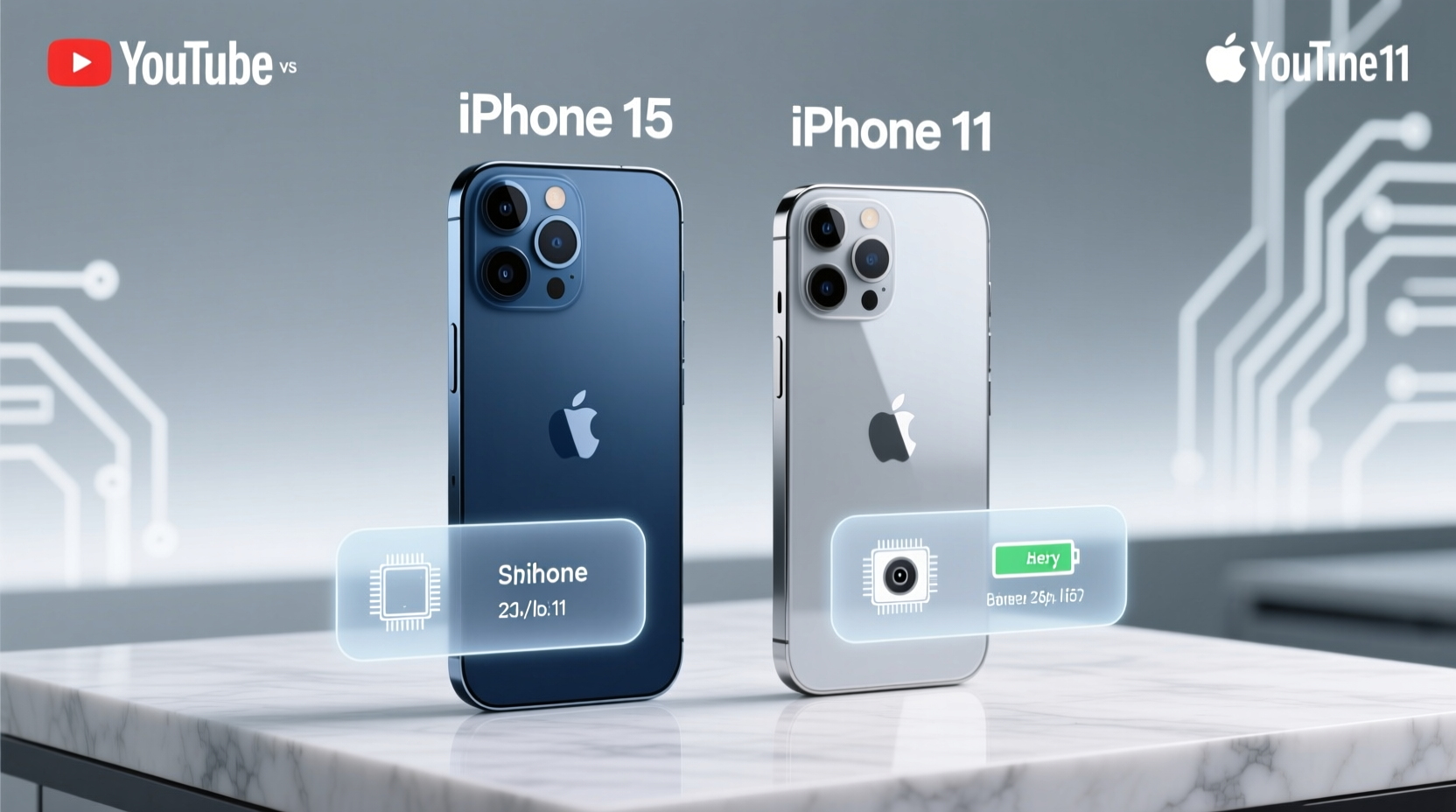
The most significant difference between the iPhone 11 and iPhone 15 lies under the hood. The iPhone 11 runs on the A13 Bionic chip, which was powerful in its day but now struggles with heavier multitasking, modern AR apps, and high-end mobile gaming. In contrast, the iPhone 15 is powered by the A16 Bionic chip—the same processor found in the iPhone 14 Pro—delivering noticeably faster CPU and GPU performance.
Benchmarks show the A16 offering up to 40% better CPU performance and over 50% improved graphics efficiency compared to the A13. This means smoother app launches, quicker photo and video processing, and better responsiveness when switching between demanding tasks.
Moreover, the iPhone 15 includes more efficient thermal management and better sustained performance during long sessions, which the iPhone 11 lacks. For users who rely on their phones as productivity tools, this is a meaningful upgrade.
Camera Comparison: Night Mode, Zoom, and Computational Photography
The camera system is where the iPhone 15 pulls far ahead. While the iPhone 11 introduced Night mode and dual cameras (wide and ultra-wide), its sensors are now outdated. The iPhone 15 retains the same dual-camera setup but upgrades both lenses with larger sensors, improved low-light performance, and Smart HDR 5.
More importantly, the iPhone 15 introduces **computational photography advancements** that make a real-world difference. Its Photonic Engine processes images earlier in the pipeline, resulting in richer colors, better shadow detail, and crisper textures—even in dim lighting. Portrait mode now works with any subject, including pets and objects, thanks to advanced depth mapping.
“Smartphone photography has shifted from hardware to software intelligence. The iPhone 15’s image signal processor can extract twice as much data from each shot than the iPhone 11 could.” — David Lin, Mobile Imaging Analyst at TechSight
While the iPhone 11 still takes decent photos in daylight, it falters in mixed lighting and produces noisier night shots. The iPhone 15 also supports editing Live Photos, capturing Spatial Video for Apple Vision Pro (a niche but forward-looking feature), and offers better stabilization for handheld video.
Camera Specs at a Glance
| Feature | iPhone 11 | iPhone 15 |
|---|---|---|
| Rear Cameras | Dual: 12MP Wide + 12MP Ultra-Wide | Dual: 48MP Main + 12MP Ultra-Wide |
| Front Camera | 12MP TrueDepth | 12MP TrueDepth with Autofocus |
| Night Mode | Yes (Wide only) | Yes (All cameras) |
| Video Recording | 4K at 60fps | 4K at 60fps + Dolby Vision HDR |
| Zoom | 2x digital zoom | 2x optical-quality zoom via sensor cropping |
Battery Life and Charging: Efficiency Gains Add Up
Battery degradation is common in older iPhones, and even well-maintained iPhone 11 units often see reduced capacity after four years. Apple rates the iPhone 15 for up to 20 hours of video playback, while the iPhone 11 manages around 17 hours. Real-world usage shows the iPhone 15 lasting an extra 1.5 to 2 hours under similar conditions.
The bigger change is in charging technology. The iPhone 15 replaces Lightning with USB-C—a long-overdue shift that improves compatibility with modern accessories and enables faster data transfer. While it doesn’t support the fastest USB 3 speeds (reserved for Pro models), standard USB-C still allows for broader accessory integration.
You can now charge your iPhone 15 with the same cable used for iPads, MacBooks, or Android devices. This simplifies travel setups and reduces e-waste from proprietary cables.
Design and Durability: Subtle but Meaningful Updates
The iPhone 11’s design feels dated next to the iPhone 15. It uses aluminum edges and a glass back, making it more prone to scratches and dents. The iPhone 15 keeps the aerospace-grade aluminum frame but adds a **color-infused back glass** that’s more resistant to micro-abrasions.
Both phones have IP68 water resistance, but the iPhone 15 is rated for deeper submersion (up to 6 meters for 30 minutes vs. 4 meters). More importantly, the iPhone 15 features **Ceramic Shield front cover**, which Apple claims is tougher than any smartphone glass. Drop tests suggest a 25% lower chance of screen cracking compared to the iPhone 11.
The iPhone 15 also adopts a slightly slimmer bezel and a Dynamic Island—a small interactive pill-shaped cutout that replaces the traditional notch. While not essential, it provides quick access to music, timers, and background activities without leaving your current app.
Software Support and Future-Proofing
Apple typically supports iPhones with iOS updates for 5–6 years. The iPhone 11 launched with iOS 13 and currently runs iOS 17. Based on historical patterns, it may receive iOS 18 or even iOS 19—but support could end as early as 2025.
In contrast, the iPhone 15 will likely be supported through 2029 or beyond. That means more years of security patches, new features, and compatibility with upcoming apps that demand newer hardware.
If you plan to keep your phone for three or more years, the iPhone 15 offers significantly better longevity. Apps are becoming more resource-intensive, and future versions of iOS may eventually become sluggish or incompatible with the A13 chip.
Mini Case Study: Sarah’s Upgrade Dilemma
Sarah bought her iPhone 11 in 2019 and has taken excellent care of it. By late 2023, she noticed her phone slowing down during work calls, struggling with Zoom filters, and draining battery by midday. She edits travel photos using Lightroom and wanted sharper results. After testing an iPhone 15 at an Apple Store, she was struck by how quickly photos rendered, how smooth the interface felt, and how much clearer her night shots were. She upgraded—and extended her phone’s usefulness by at least three more years.
Checklist: Should You Upgrade?
- ✅ Is your iPhone 11 showing signs of battery wear (under 80% health)?
- ✅ Do apps or the OS feel sluggish during daily use?
- ✅ Are you missing features like USB-C, Dynamic Island, or advanced camera modes?
- ✅ Do you want at least 4 more years of iOS updates?
- ✅ Are you frequently taking low-light photos or recording video?
If you answered “yes” to three or more, upgrading is likely worth it.
Frequently Asked Questions
Can the iPhone 11 still run the latest apps?
Most current apps still support the iPhone 11, but some newer titles—especially those using AR, machine learning, or high-resolution assets—are optimized for A14 and later chips. Over time, compatibility will shrink.
Is the iPhone 15 waterproof?
Yes. The iPhone 15 has an IP68 rating, meaning it can survive immersion in up to 6 meters of water for 30 minutes. However, water resistance diminishes over time, especially after drops or repairs.
Will my iPhone 11 stop working if I don’t upgrade?
No. Your iPhone 11 will continue functioning, but you may experience slower performance, reduced app support, and eventual lack of security updates once iOS support ends.
Final Verdict: Time to Move On?
The iPhone 11 was a landmark device—well-built, affordable, and remarkably durable. But after nearly five years, its hardware limitations are becoming hard to ignore. The iPhone 15 isn’t a revolutionary leap, but it delivers tangible improvements: faster performance, superior cameras, longer software support, and modern connectivity with USB-C.
If you're satisfied with your iPhone 11 and mainly use your phone for calls, messaging, and light browsing, there's no urgent need to upgrade. However, if you value photography, multitasking, future compatibility, or simply want a more responsive experience, the iPhone 15 represents a meaningful step forward.




 浙公网安备
33010002000092号
浙公网安备
33010002000092号 浙B2-20120091-4
Comments
No comments yet. Why don't you start the discussion?