
Switching between smartphone ecosystems isn’t a decision to make lightly. If you’ve been using the Samsung Galaxy S22 for the past two years and are now considering an upgrade to the iPhone 15, you’re likely weighing more than just specs. It’s about user experience, long-term value, software support, and how well each device fits into your daily life. The iPhone 15 brings Apple’s latest advancements in chip performance, camera intelligence, and ecosystem integration, while the Galaxy S22 remains a powerful Android flagship with deep customization and versatility. This comparison breaks down the key differences to help you determine whether making the switch is truly worth it.
Performance and Hardware: Speed Meets Efficiency
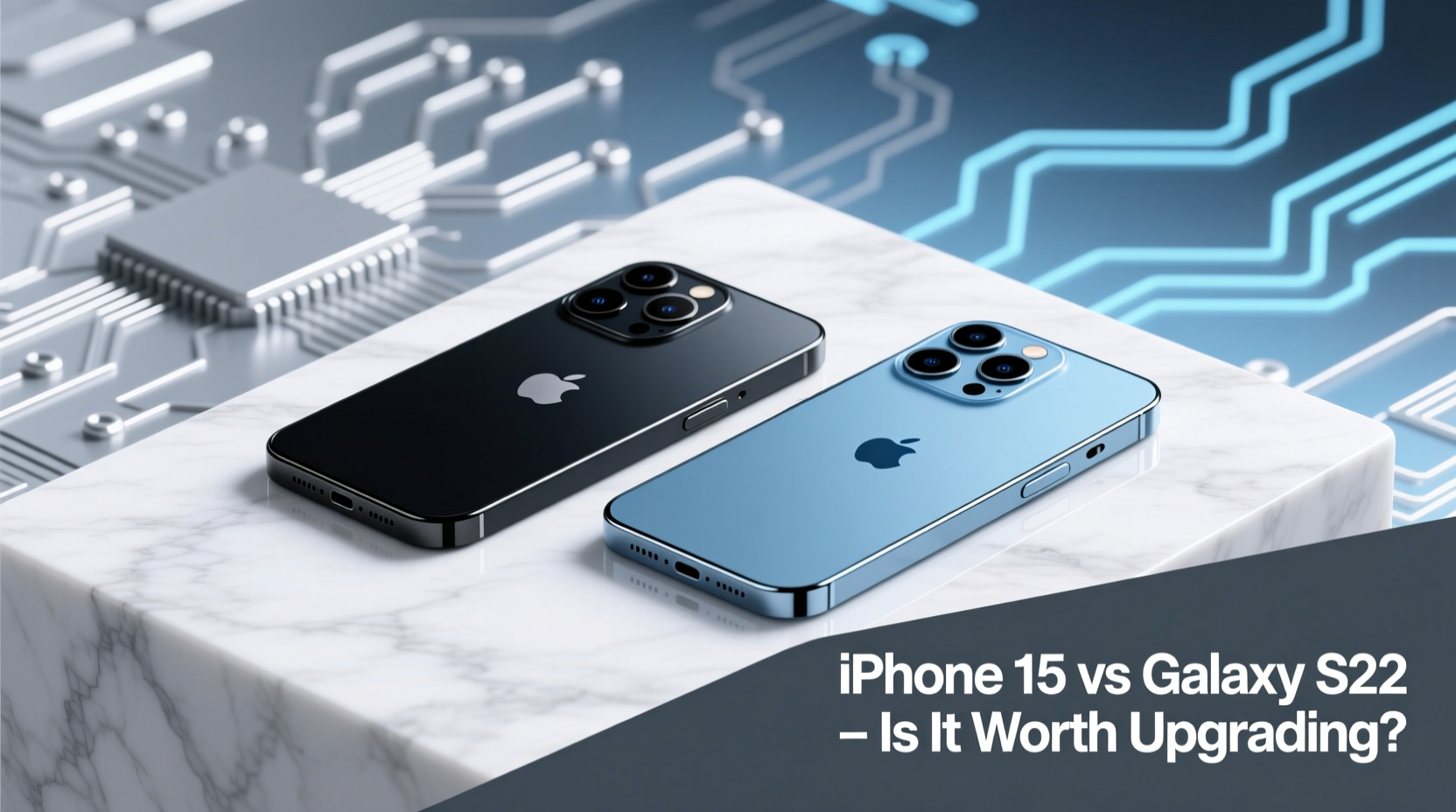
The iPhone 15 is powered by Apple’s A17 Bionic chip, built on a 3nm process that delivers faster CPU and GPU performance while improving energy efficiency. This translates to smoother multitasking, quicker app launches, and enhanced performance in graphics-intensive applications like mobile gaming or video editing. In contrast, the Galaxy S22 runs on the Qualcomm Snapdragon 8 Gen 1 (or Exynos 2200 in select regions), which was top-tier at launch but now shows its age when compared to newer silicon.
Benchmarks consistently show the A17 Bionic outperforming the older chipset in both single-core and multi-core tasks. However, real-world usage reveals a more nuanced picture. For most everyday activities—browsing, messaging, streaming—the S22 still performs admirably. But over time, users report slower app response and longer load times, especially after multiple OS updates.
Camera Comparison: Intelligence vs. Versatility
Both phones offer strong camera systems, but they approach photography differently. The Galaxy S22 features a triple-lens setup: 50MP main, 12MP ultra-wide, and 10MP telephoto with 3x optical zoom. Its strength lies in flexibility—manual controls, pro modes, and excellent dynamic range in daylight.
The iPhone 15, meanwhile, uses a dual-camera system: a 48MP main sensor and a 12MP ultra-wide. While it lacks a dedicated telephoto lens, Apple compensates with computational photography. Smart HDR 5, Deep Fusion, and Photonic Engine produce consistently balanced images with natural color science and exceptional detail in low light. Portrait mode now works across all lenses, and the new “Capture Beyond the Frame” feature allows slight cropping adjustments post-shot.
In head-to-head tests, the iPhone excels in consistency and automation. You don’t need to tweak settings to get great results. The S22 gives more control, but requires some expertise to maximize its potential.
“Apple’s tight integration between hardware and software enables smarter image processing that often outperforms higher megapixel counts.” — David Lin, Mobile Imaging Analyst at TechScope Review
Battery Life and Charging: Longevity vs. Convenience
Battery degradation is a critical factor when deciding whether to upgrade. After two years of daily charging cycles, many Galaxy S22 users report noticeable drops in battery health—some seeing as little as 75% capacity remaining. The iPhone 15 benefits from optimized power management and iOS efficiency, typically maintaining 85–90% battery health over the same period.
While the S22 has a 3700mAh battery, the iPhone 15 packs a slightly larger 4000mAh unit. Real-world usage shows the iPhone lasting up to 20 hours of mixed use, compared to around 15–16 hours on the S22 under similar conditions. Additionally, iOS provides granular battery usage insights and low-power mode that extends usability during critical moments.
| Feature | iPhone 15 | Galaxy S22 |
|---|---|---|
| Battery Capacity | 4000 mAh | 3700 mAh |
| Estimated Daily Use | 18–20 hours | 14–16 hours |
| Fast Charging | 20W wired, 15W MagSafe | 25W wired, 15W wireless |
| Wireless Charging | Yes (Qi & MagSafe) | Yes (Qi & proprietary) |
| Reverse Charging | No | Yes (Wireless PowerShare) |
Though the S22 supports faster wired charging, the iPhone’s overall battery longevity and optimization give it an edge for users prioritizing day-long reliability.
Ecosystem Integration: The Hidden Value of Staying Put
If you're deeply embedded in the Samsung ecosystem—using Galaxy Buds, a Galaxy Watch, a Windows PC synced via Link to Windows, or a Tab S-series tablet—the friction of switching to iPhone becomes significant. Features like quick share, seamless Bluetooth pairing, and cross-device clipboard rely on proximity and account syncing that only work within the Samsung universe.
Conversely, moving to iPhone opens access to Apple’s tightly integrated ecosystem: iMessage, FaceTime, AirDrop, Handoff, iCloud Photos, and continuity features like Universal Clipboard and Sidecar. If you own a Mac or iPad, these integrations create a fluid workflow that Android struggles to match. Even Apple Watch and AirPods deliver near-instant pairing and automatic switching between devices.
Software Updates and Long-Term Support
This is where Apple holds a decisive advantage. The iPhone 15 is guaranteed five years of iOS updates, meaning it will receive new features, security patches, and performance improvements through 2029. The Galaxy S22, despite Samsung’s improved update policy, is capped at four major Android versions and five years of security updates. As of 2024, it has already received three OS upgrades and is nearing the end of its major update cycle.
Longer software support means better resale value, improved security, and sustained app compatibility. For users who keep phones beyond three years, this makes the iPhone 15 a more future-proof investment.
Mini Case Study: Sarah’s Upgrade Decision
Sarah had used her Galaxy S22 since 2022. By mid-2024, she noticed sluggish performance in Instagram and WhatsApp, frequent overheating during video calls, and her battery barely lasted a full workday. She also owned a MacBook Pro and often switched between devices for work. After testing both phones at an Apple Store, she was impressed by how seamlessly her iPhone 15 synced notes, copied text from Safari to her Mac, and automatically connected her AirPods. Though she missed Quick Share, the overall ecosystem cohesion convinced her the switch was worthwhile—even if it meant relearning some workflows.
Checklist: Should You Upgrade?
Before making the leap, consider the following:
- ✅ Is your S22 showing signs of battery degradation or slowdown?
- ✅ Do you own other Apple devices that would benefit from iPhone integration?
- ✅ Are you frustrated with inconsistent camera results or app crashes?
- ✅ Do you plan to keep your next phone for 4+ years?
- ✅ Are you comfortable migrating contacts, photos, and data to iCloud?
- ✅ Can you adapt to iOS navigation and app ecosystem differences?
If you answered “yes” to three or more, the upgrade likely makes sense.
Frequently Asked Questions
Will my Samsung accessories work with the iPhone 15?
Most Bluetooth accessories like headphones or smartwatches will pair, but advanced features (like auto-switching or firmware updates) may not be supported. Galaxy Buds, for example, lose touch detection and wear sensing when used with iPhone.
Can I transfer my data easily from Galaxy S22 to iPhone 15?
Yes. Apple’s “Move to iOS” app simplifies transferring contacts, messages, photos, calendars, and Google account data during initial setup. Some app data may not carry over, and iMessage won’t sync old SMS unless backed up externally.
Is the iPhone 15 more durable than the Galaxy S22?
The iPhone 15 features Ceramic Shield front cover and IP68 water resistance, similar to the S22. However, Apple’s build quality and tighter quality control often result in fewer reports of screen lift or frame flex over time. Real durability depends heavily on usage and protection habits.
Final Verdict: Is It Worth It?
Upgrading from the Galaxy S22 to the iPhone 15 isn’t just about better specs—it’s about shifting ecosystems for long-term benefits. If you value consistent performance, extended software support, seamless integration with Apple devices, and a more reliable camera experience, the iPhone 15 is a compelling upgrade. However, if you rely heavily on Samsung-specific features or prefer Android’s customization, staying put—or upgrading within the Galaxy lineup—might serve you better.
The decision ultimately hinges on your digital lifestyle. For those ready to embrace iOS, the iPhone 15 offers a refined, future-ready experience that justifies the transition. For others, loyalty to Android’s openness and familiarity may outweigh incremental gains.




 浙公网安备
33010002000092号
浙公网安备
33010002000092号 浙B2-20120091-4
Comments
No comments yet. Why don't you start the discussion?