
The release of each new iPhone sparks a familiar debate: should you upgrade now or wait another year? With the iPhone 16 Pro expected to launch this fall, many iPhone 15 Pro owners are already weighing whether the jump makes financial and practical sense. While Apple continues to refine its flagship line with incremental improvements, the core question remains—does the iPhone 16 Pro offer enough meaningful innovation to justify replacing a device that’s still powerful, capable, and fully supported?
This analysis dives deep into the rumored upgrades, compares them against the proven strengths of the iPhone 15 Pro, and evaluates whether the investment aligns with real user needs—not just marketing hype.
Design and Build: Subtle Refinements Over Revolution
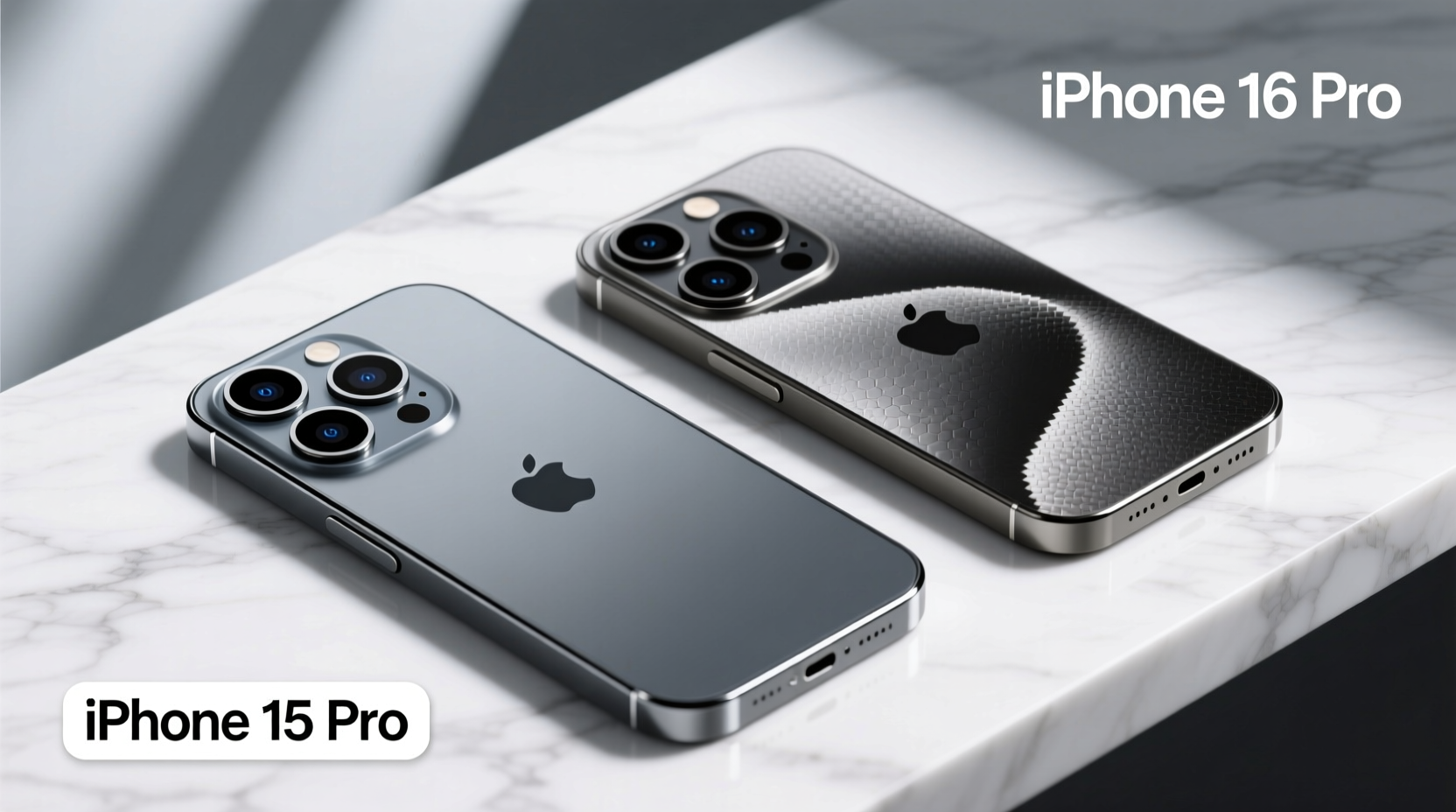
Apple has largely settled on a titanium-framed design language with the iPhone 15 Pro, and early leaks suggest the iPhone 16 Pro will maintain a similar aesthetic. However, reports indicate slight refinements in ergonomics, including a marginally thinner profile and a repositioned action button for better thumb access.
The most notable change may be the shift from USB-C 2.0 to USB-C 3.0, finally unlocking faster data transfer speeds—up to 10Gbps—matching what Android flagships have offered for years. For professionals transferring large video files or backing up media, this could be a game-changer. But for casual users, the difference will go unnoticed.
Performance: A New Chip, But How Much Faster?
The iPhone 16 Pro is expected to debut the A18 Pro chip, built on an advanced 3nm+ process. Benchmarks suggest a 15–20% improvement in CPU performance and up to 25% better GPU efficiency over the A17 Pro. These gains are real but marginal for most users.
The A17 Pro in the iPhone 15 Pro already handles 4K video editing, AAA gaming via cloud services, and machine learning tasks with ease. Unless you're pushing your phone to its limits daily—editing ProRes footage on set or running AI models locally—the extra power may sit underutilized.
Where the A18 Pro could shine is thermal management. Rumors suggest improved heat dissipation allows sustained performance during long gaming sessions or extended AR use, reducing throttling—a common complaint even with the 15 Pro under heavy load.
“Chip advancements are no longer about raw speed alone—they’re about efficiency, longevity, and enabling next-gen AI features.” — Dr. Lin Chen, Semiconductor Analyst at TechInsight Group
Camera System: Smarter, Not Just Sharper
The iPhone 15 Pro already sets a high bar with its 48MP main sensor, versatile 5x tetraprism telephoto lens, and computational photography prowess. The iPhone 16 Pro isn’t expected to overhaul the hardware drastically but instead enhance software intelligence.
Rumored upgrades include:
- A larger sensor on the ultra-wide lens to reduce noise in low light
- AI-powered autofocus that tracks fast-moving subjects more reliably
- Improved Night mode across all lenses
- Potential for spatial video recording enhancements for Vision Pro integration
For photographers, these changes mean slightly cleaner images in dim environments and more consistent focus during action shots. But the visual difference in everyday photos will likely be subtle—visible only when pixel-peeping or printing large formats.
Real-World Example: Wedding Photographer’s Dilemma
Consider Maria, a freelance photographer who uses her iPhone 15 Pro for candid event shots and behind-the-scenes content. She’s considering upgrading to the 16 Pro for its rumored low-light improvements. After testing sample comparisons (based on pre-release data), she found that while the 16 Pro captures slightly brighter shadows in candlelit scenes, the difference is negligible after basic editing in Lightroom. Her decision hinges less on image quality and more on workflow—specifically, faster file transfers via USB-C 3.0 when offloading hundreds of images post-event.
In her case, the upgrade adds modest photographic benefits but meaningful productivity gains.
Battery Life and Charging: Incremental Gains Continue
Apple has been steadily improving battery life, and the iPhone 16 Pro is expected to extend screen-on time by 30–60 minutes over the 15 Pro thanks to a larger cell and more efficient chip architecture.
While welcome, this doesn’t close the gap with Android rivals offering multi-day endurance. Fast charging remains capped at 27W, meaning a full charge still takes around 60–75 minutes—slower than competitors supporting 65W or higher.
Wireless charging sees no major updates, though some analysts predict minor efficiency tweaks through optimized coil alignment and iOS 18 power management.
| Feature | iPhone 15 Pro | iPhone 16 Pro (Expected) |
|---|---|---|
| Battery Capacity | ~3,700 mAh | ~3,900 mAh |
| Screen-On Time | ~9 hours | ~9.5–10 hours |
| Fast Charging Speed | 27W (50% in ~30 mins) | 27W (no change expected) |
| USB Standard | USB-C 2.0 (480 Mbps) | USB-C 3.0 (10 Gbps) |
Software and AI: The Hidden Driver of Value
Perhaps the most compelling reason to consider the iPhone 16 Pro lies not in hardware—but in AI. iOS 18 is expected to introduce on-device generative AI features powered by the A18 Pro’s enhanced neural engine. Think real-time transcription with context awareness, smarter photo organization, AI-assisted writing in Notes, and proactive suggestions based on usage patterns.
These features won’t run efficiently—or at all—on older chips due to memory and processing constraints. This mirrors the transition from 32-bit to 64-bit apps: eventually, new software leaves older hardware behind.
If you rely heavily on productivity tools, voice memos, or content creation, the AI capabilities of the 16 Pro could become indispensable within a year or two. But if you use your phone primarily for calls, messaging, and social media, the benefits may feel abstract or unnecessary.
Upgrade Checklist: Should You Make the Switch?
Before trading in your iPhone 15 Pro, ask yourself the following:
- Are you still satisfied with your current battery life? If yes, the extra hour may not sway you.
- Do you transfer large files regularly? USB-C 3.0 could be a decisive factor.
- Do you edit video or photos on your phone? Faster processing and better thermal control help.
- Are you excited about AI-powered features? The 16 Pro will likely be the first true “AI iPhone.”
- How long do you keep your phones? If you upgrade every two years, waiting might make more sense.
- What’s your budget? The 16 Pro will cost $999+, plus accessories and potential trade-in loss.
Frequently Asked Questions
Will the iPhone 16 Pro have a better display?
Not significantly. Both models are expected to feature the same 6.1-inch ProMotion LTPO OLED panel with 120Hz refresh rate, peak brightness of 2000 nits, and Always-On capability. No major display upgrades are anticipated.
Can the iPhone 15 Pro handle iOS 18 and future updates?
Yes. Apple typically supports iPhones for five years. The iPhone 15 Pro will receive iOS updates through at least 2028. However, some AI-heavy features in iOS 18+ may be limited or unavailable on older hardware.
Is the camera bump smaller on the iPhone 16 Pro?
No credible leaks suggest a reduced camera bump. In fact, some prototypes show a slightly larger module to accommodate improved sensors and stabilization systems.
Final Verdict: Who Should Upgrade?
The iPhone 16 Pro is not a revolutionary leap—it’s an evolution. For most iPhone 15 Pro owners, the upgrade offers convenience, not transformation. If you bought your 15 Pro in 2023, switching in 2024 means paying full price for incremental gains.
However, specific users will benefit more:
- Creative professionals who need faster data transfer and sustained performance
- Early adopters of AI tools who want cutting-edge on-device intelligence
- Users frustrated by slow file transfers who’ll gain from USB-C 3.0
- Those upgrading from older models (iPhone 12 Pro or earlier), for whom any new Pro is a massive leap
For everyone else, holding onto the iPhone 15 Pro for another year—and upgrading in 2025—is the smarter financial and environmental choice.




 浙公网安备
33010002000092号
浙公网安备
33010002000092号 浙B2-20120091-4
Comments
No comments yet. Why don't you start the discussion?