
Recent reports show that iPhone 16 sales have underperformed compared to previous launches. Analysts point to incremental upgrades, higher pricing, and strong competition as key factors. For consumers on the fence about upgrading, this raises a practical question: if the latest model isn’t moving off shelves, is it worth skipping it entirely in favor of last year’s iPhone 15?
The answer depends on your priorities—whether you value cutting-edge features, long-term software support, camera quality, or simply getting the best value for your money. Let’s examine the data, compare real-world performance, and explore why the iPhone 15 might be the smarter buy for most users.
Why iPhone 16 Sales Are Slowing Down
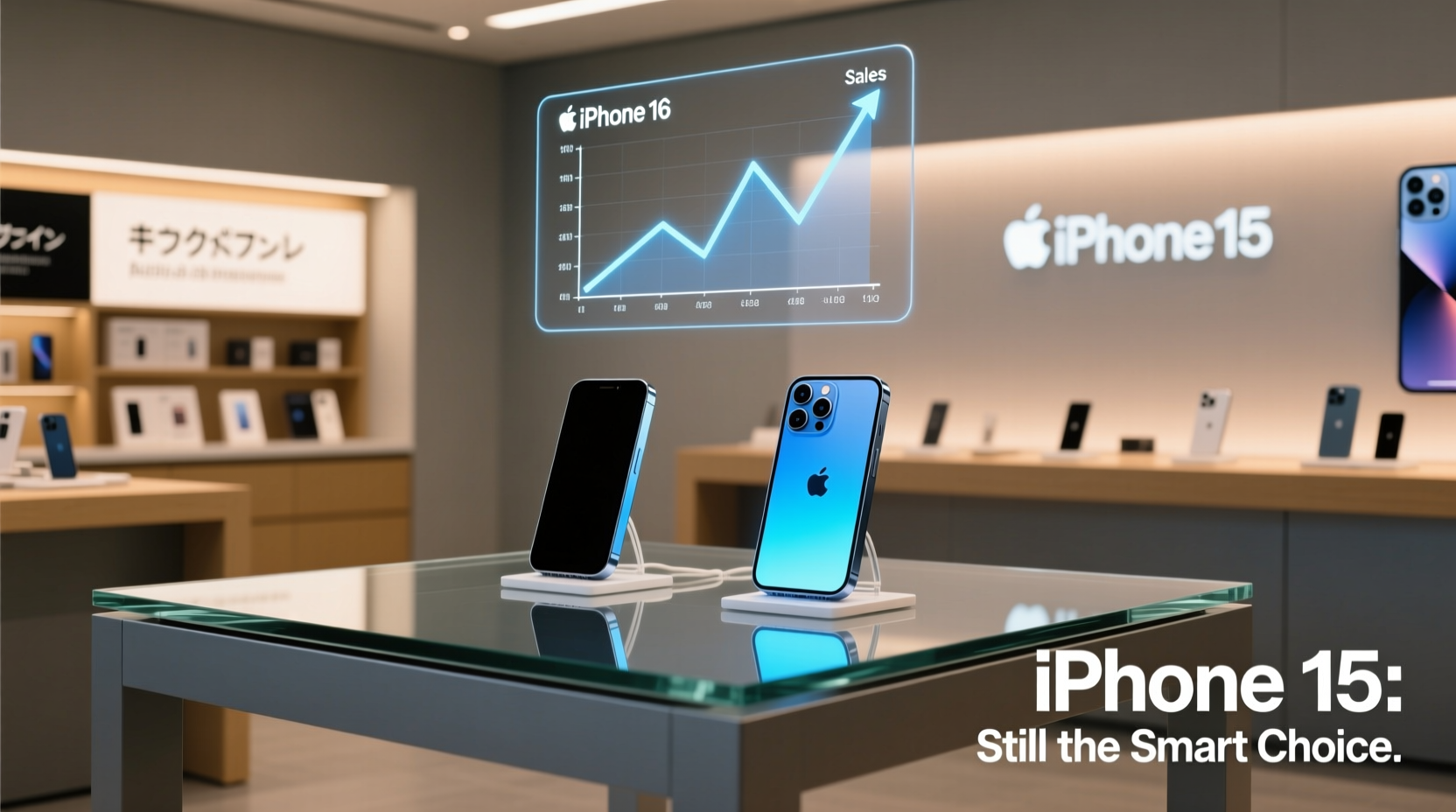
According to market research firm IDC, global smartphone shipments declined slightly in Q3 2024, with Apple reporting lower-than-expected iPhone 16 adoption despite aggressive marketing. Several industry analysts attribute this to:
- Minimal hardware improvements: The iPhone 16 offers only modest gains over its predecessor, including a slightly faster A17 chip and minor camera refinements.
- Pricing pressure: With base models starting at $999, many consumers find the cost unjustified for the changes offered.
- Longer device lifespans: Users are holding onto phones longer, averaging nearly four years before upgrading (per Consumer Intelligence Research Partners).
- Strong competition: Android flagships from Samsung, Google, and OnePlus offer comparable performance with more flexible pricing and innovative features like foldable screens.
“Apple is facing a value perception problem. When the upgrade feels incremental but costs $100 more, people start questioning necessity.” — Sarah Lin, Senior Tech Analyst at Gartner
iPhone 15 vs. iPhone 16: What’s Actually Different?
To make an informed decision, let’s compare the two models side by side. While Apple markets the iPhone 16 as “the smartest iPhone yet,” the reality is more nuanced.
| Feature | iPhone 15 (Pro Model) | iPhone 16 (Pro Model) |
|---|---|---|
| Chipset | A16 Bionic (standard), A17 Pro (Pro) | A17 Pro (all Pro models) |
| Display | 6.1\" Super Retina XDR OLED, 120Hz (Pro) | 6.3\" Super Retina XDR OLED, 120Hz (Pro) |
| Rear Cameras | 48MP main, 12MP ultrawide, 12MP telephoto (3x optical zoom) | 48MP main, 12MP ultrawide, 12MP telephoto (5x optical zoom via tetraprism) |
| Battery Life | Up to 23 hours video playback | Up to 26 hours video playback |
| USB Port | USB-C (slower transfer speeds on non-Pro models) | USB-C (faster USB 3.0 speeds across all models) |
| Starting Price (Pro) | $999 | $1,099 |
| Software Support (Estimated) | Until 2028–2029 | Until 2029–2030 |
The most notable improvements in the iPhone 16 are a larger display, better zoom capability, and marginally improved battery life. However, for everyday use—browsing, messaging, social media, even gaming—the difference between the A16 and A17 chips is barely perceptible.
When the iPhone 15 Is the Smarter Buy
For the majority of users, the iPhone 15—especially the Pro or Pro Max variants—remains a powerful, future-proof device. Here’s why switching to last year’s model could save you money without sacrificing much:
- Price drop after new release: Apple typically reduces iPhone 15 prices by $100–$150 once the 16 launches. Third-party retailers often offer additional discounts or trade-in bonuses.
- Nearly identical core experience: iOS runs smoothly on both generations. App compatibility, security updates, and feature access remain consistent.
- Still excellent cameras: The 48MP main sensor on the iPhone 15 Pro delivers stunning photos in daylight and strong low-light performance with Night mode.
- Five years of software support: Both models will receive iOS updates through at least 2029, meaning longevity isn’t a concern.
Real Example: Choosing Value Over Hype
Take the case of Marcus T., a freelance photographer based in Austin. He was considering upgrading to the iPhone 16 Pro for its improved zoom lens. After testing both devices side by side in low-light urban environments, he found that while the 5x zoom was sharper, his editing workflow didn’t require such tight cropping. Instead, he bought a refurbished iPhone 15 Pro Max for $849—saving $250—and invested the difference in a high-capacity portable charger and a premium editing app subscription.
“I’m not missing anything,” Marcus said. “The phone does everything I need. And I got more value overall by thinking beyond the newest label.”
Step-by-Step Guide: How to Decide Which iPhone to Buy
If you're unsure whether to go for the iPhone 16 or stick with the 15, follow this practical decision-making process:
- Evaluate your current phone: Is it slow, damaged, or lacking critical features? If it still performs well, consider waiting.
- List your must-have features: Do you need better zoom, faster charging, or USB 3.0 file transfers? If not, the 15 likely suffices.
- Check carrier deals and trade-ins: Many carriers offer steep discounts on iPhone 15 models when bundled with service plans.
- Compare prices across retailers: Look at Apple’s official store, Best Buy, Amazon, and certified refurbished sellers like Back Market or Apple Renewed.
- Test in person if possible: Visit an Apple Store to hold both models. Notice differences in size, weight, and screen brightness.
- Decide based on value, not novelty: Ask: “Am I paying for real utility or just the latest badge?”
Frequently Asked Questions
Is the iPhone 16 worth it over the 15?
Only if you specifically benefit from the improved telephoto lens, slightly larger screen, or faster USB-C transfer speeds. For general users, the iPhone 15 offers nearly identical performance at a lower price.
Will iPhone 15 get the same iOS updates as the 16?
Yes. Apple supports iPhones with major iOS updates for 5–6 years. Both the iPhone 15 and 16 will receive updates through at least 2029, so neither will become obsolete soon.
Should I wait for the iPhone 17 instead?
If you don’t urgently need a new phone, waiting could be wise. Rumors suggest the iPhone 17 may include a redesigned form factor, periscope zoom across more models, and potential AI integrations that could justify the upgrade cycle.
Final Recommendation: Buy Smart, Not Fast
The slowdown in iPhone 16 sales reflects a broader shift in consumer behavior: people are becoming more thoughtful about tech spending. They’re weighing actual utility against marketing hype and finding that last year’s flagship often meets their needs just as well.
The iPhone 15 remains one of the best smartphones on the market. It has a top-tier build, exceptional camera system, reliable battery life, and full access to Apple’s ecosystem. With prices now reduced, it represents significantly better value than the marginally improved iPhone 16.
Unless you’re a power user who relies on advanced photography, high-speed data transfer, or wants the absolute longest software lifespan, there’s no compelling reason to pay extra for the newest model. In fact, choosing the iPhone 15 might be the most financially and practically sound decision you make this year.




 浙公网安备
33010002000092号
浙公网安备
33010002000092号 浙B2-20120091-4
Comments
No comments yet. Why don't you start the discussion?