
For years, the debate between iPhone and Android has divided mobile users. But with Apple’s iPhone 16 launching into a market already energized by Samsung’s Galaxy S24, the question isn’t just about preference—it’s about evolution. If you’ve been loyal to Android, especially Samsung’s flagship line, the latest advancements in iOS 18 and the iPhone 16 hardware may prompt a serious reevaluation. This isn’t just another spec sheet showdown; it’s about how these devices fit into your life, workflow, and long-term tech ecosystem.
Design and Build: Subtle Shifts, Big Impacts
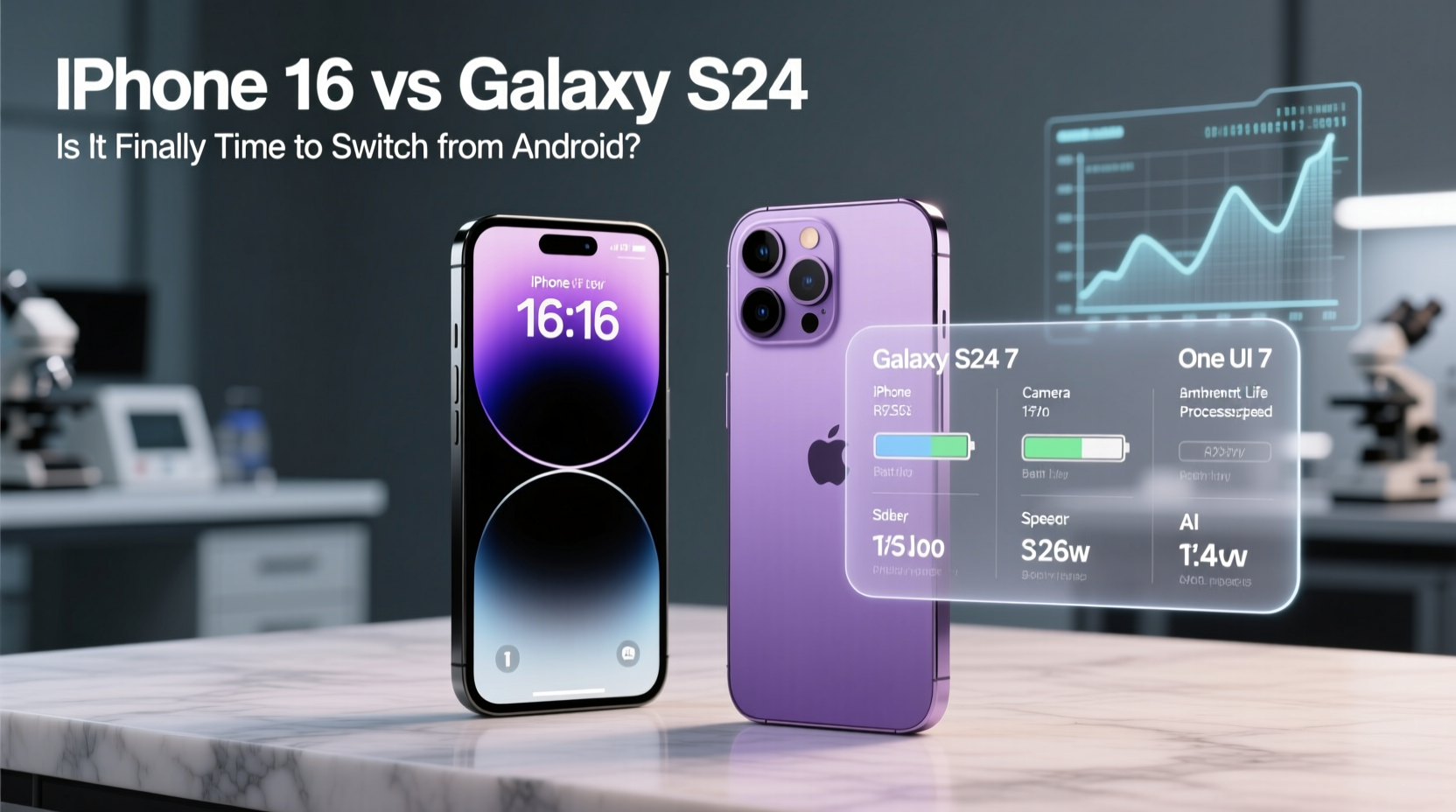
The Galaxy S24 continues Samsung’s tradition of sleek, minimalist design with its Titanium frame and flatter display edges. It feels modern, sturdy, and slightly more compact than its predecessor—ideal for one-handed use. The iPhone 16, meanwhile, introduces a refined aerospace-grade aluminum chassis and a marginally larger 6.3-inch Super Retina XDR display (up from 6.1 inches), striking a balance between screen real estate and pocketability.
While both phones are IP68-rated and built for durability, the iPhone 16 now features a ceramic shield that Apple claims is 30% more impact-resistant. Samsung counters with Gorilla Glass Victus 3, which excels in scratch resistance. In everyday handling, the S24 feels lighter and more agile, while the iPhone offers a denser, premium heft that many associate with quality.
Performance and Software Experience
The iPhone 16 is powered by the new A18 Pro chip, built on a 3nm+ process, delivering faster neural engine performance and improved power efficiency. Apple emphasizes machine learning capabilities—especially in camera processing and on-device AI features like enhanced Siri responses and predictive text. iOS 18 further deepens customization with customizable Control Center options and lock screen widgets, narrowing the gap with Android’s flexibility.
Samsung’s Galaxy S24 runs on either the Snapdragon 8 Gen 3 or Exynos 2400 (depending on region), paired with One UI 6.1 based on Android 14. The interface remains highly customizable, supporting third-party launchers, sideloading, and deeper system-level tweaks. Samsung also integrates Galaxy AI—a suite of on-device and cloud-powered tools for real-time translation, note summarization, and photo enhancement.
Where they diverge most is software philosophy. iOS offers tighter integration, longer update support (up to 6 years), and a more curated app ecosystem. Android provides freedom, multitasking prowess (like split-screen and pop-up windows), and broader hardware compatibility. For productivity-focused users, Android still leads in versatility; for those who value simplicity and longevity, iOS has closed the gap significantly.
“Apple’s focus on on-device AI with the A18 Pro could redefine user privacy expectations in smartphone computing.” — Dr. Lena Torres, Mobile Systems Researcher at MIT Media Lab
Camera Showdown: Philosophy Over Megapixels
Both phones feature triple-lens setups with main, ultra-wide, and telephoto sensors, but their approaches differ. The Galaxy S24 leans into computational photography with advanced HDR and multi-frame noise reduction, particularly effective in low-light conditions. Its 5x optical zoom and 100x Space Zoom remain impressive for distant subjects, though image quality degrades beyond 20x.
The iPhone 16 introduces a new tetraprism telephoto lens with 5x optical zoom and improved sensor-shift stabilization. Apple’s Photonic Engine now processes images across all lenses simultaneously, resulting in more consistent color science and dynamic range. The standout feature is \"Smart Capture,\" an AI-driven mode that automatically adjusts settings based on scene recognition—ideal for spontaneous shooting.
| Feature | iPhone 16 | Galaxy S24 |
|---|---|---|
| Main Sensor | 48MP, f/1.78, Sensor-Shift | 50MP, f/1.8, OIS |
| Ultra-Wide | 12MP, f/2.2 | 12MP, f/2.2 |
| Telephoto | 12MP, 5x Optical Zoom | 10MP, 5x Optical Zoom |
| Video Recording | 4K Dolby Vision HDR up to 120fps | 8K @ 30fps, HDR10+ |
| AI Enhancements | On-device Smart Capture, Night Mode Fusion | Galaxy AI Photo Edit, Eraser Tool |
In real-world use, the S24 offers more manual control and creative editing tools post-capture, such as object removal and background replacement. The iPhone delivers more natural skin tones and better video consistency, making it a favorite among vloggers and content creators who prioritize reliability over gimmicks.
Ecosystem Integration: The Hidden Decider
If you’re deeply invested in Google services—Gmail, Drive, Calendar, and YouTube—the S24 integrates seamlessly. However, if you own other Apple devices like a MacBook, iPad, or Apple Watch, the iPhone 16 unlocks powerful continuity features: Handoff, Universal Clipboard, AirDrop, and seamless FaceTime calling. With Continuity Camera, you can even use your iPhone as a high-quality webcam for your Mac.
One often overlooked advantage of switching to iPhone is iMessage. While controversial for its walled-garden approach, features like read receipts, typing indicators, and end-to-end encryption across devices create a cohesive communication experience—especially within families or social circles already using Apple products.
Conversely, Samsung’s Galaxy ecosystem—spanning tablets, watches, Buds earbuds, and even fridges—offers strong synergy too. Quick Share, Multi Control, and Seamless Audio Switching provide compelling alternatives, particularly for users who value cross-device file sharing without being locked into a single brand.
Mini Case Study: Sarah’s Switch After Seven Years
Sarah, a digital marketer from Austin, had used Samsung flagships since the Galaxy S15. She relied heavily on split-screen multitasking and DeX for presentations. But after getting a MacBook Air for work, she grew frustrated with file transfers and inconsistent syncing. “I was spending 10 minutes every day just moving photos and notes,” she said.
She tested the iPhone 15 Pro briefly and found AirDrop and iCloud sync transformative. When the iPhone 16 launched with improved battery life and better landscape photography modes, she made the switch. “The first week was tough—no sideloading, no default app changes—but within two weeks, the ecosystem just worked. My watch, laptop, and phone felt like one device.”
Should You Switch? A Practical Checklist
Moving from Android to iPhone isn’t just about specs—it’s a lifestyle adjustment. Use this checklist to evaluate your readiness:
- ✅ Do you own other Apple devices (Mac, iPad, Watch)?
- ✅ Do you rely heavily on iMessage or FaceTime?
- ✅ Are you frustrated with Android fragmentation or slow updates?
- ✅ Do you value long-term software support (5–6 years)?
- ✅ Are you willing to relearn gestures, settings, and app layouts?
- ❌ Do you depend on custom launchers, sideloading, or root access?
- ❌ Do you prefer open file management and default app freedom?
If most of your answers lean toward the positives, switching may offer tangible benefits. If not, staying on Android—especially with the S24’s robust feature set—remains a smart choice.
Frequently Asked Questions
Can I transfer my data easily from Galaxy S24 to iPhone 16?
Yes. Apple’s “Move to iOS” app, available on the Google Play Store, securely transfers contacts, messages, photos, videos, and calendars over Wi-Fi during setup. App data and some settings may not carry over, but media and core information transfer smoothly.
Is the iPhone 16 battery better than the S24?
The iPhone 16 offers up to 22 hours of video playback, while the S24 provides around 20 hours. Real-world usage shows comparable endurance, but the S24 supports faster charging (45W vs. iPhone’s 27W). However, the iPhone’s optimized software often results in more consistent battery degradation over time.
Will my Android apps work on iPhone?
Most major apps (WhatsApp, Instagram, Spotify) are available on both platforms. However, some Android-exclusive tools (like Tasker or Shelter) don’t have direct equivalents. Check the App Store for iOS versions before switching.
Conclusion: Time to Reassess, Not Rush
The iPhone 16 isn’t just an incremental upgrade—it’s a statement of Apple’s growing ambition in AI, ecosystem cohesion, and long-term usability. Meanwhile, the Galaxy S24 proves Android remains innovative, flexible, and powerful. Whether it’s time to switch depends less on which phone is “better” and more on which ecosystem aligns with your habits, devices, and priorities.
If you’ve been curious about iOS, now is a better time than ever to explore. The iPhone 16 bridges key gaps in customization and performance while offering unmatched integration for Apple users. But if you thrive on openness, multitasking, and control, Android—and the S24 in particular—still delivers an exceptional experience.




 浙公网安备
33010002000092号
浙公网安备
33010002000092号 浙B2-20120091-4
Comments
No comments yet. Why don't you start the discussion?