
The iPhone 16 lineup introduces a new tiered structure with the debut of the iPhone 16e — a more affordable option — alongside the familiar iPhone 16 Plus. With Apple expanding its mid-tier offerings, consumers now face a meaningful decision: stick with a compact, budget-friendly model or invest in the larger, feature-rich iPhone 16 Plus. The most noticeable difference? Screen size. But is that alone enough to justify the price jump?
This breakdown dives into every key aspect — from display quality and battery life to camera capabilities and long-term usability — to help you determine whether the iPhone 16 Plus’s larger screen truly adds value beyond just surface appeal.
Display and Design: Size Isn’t Everything
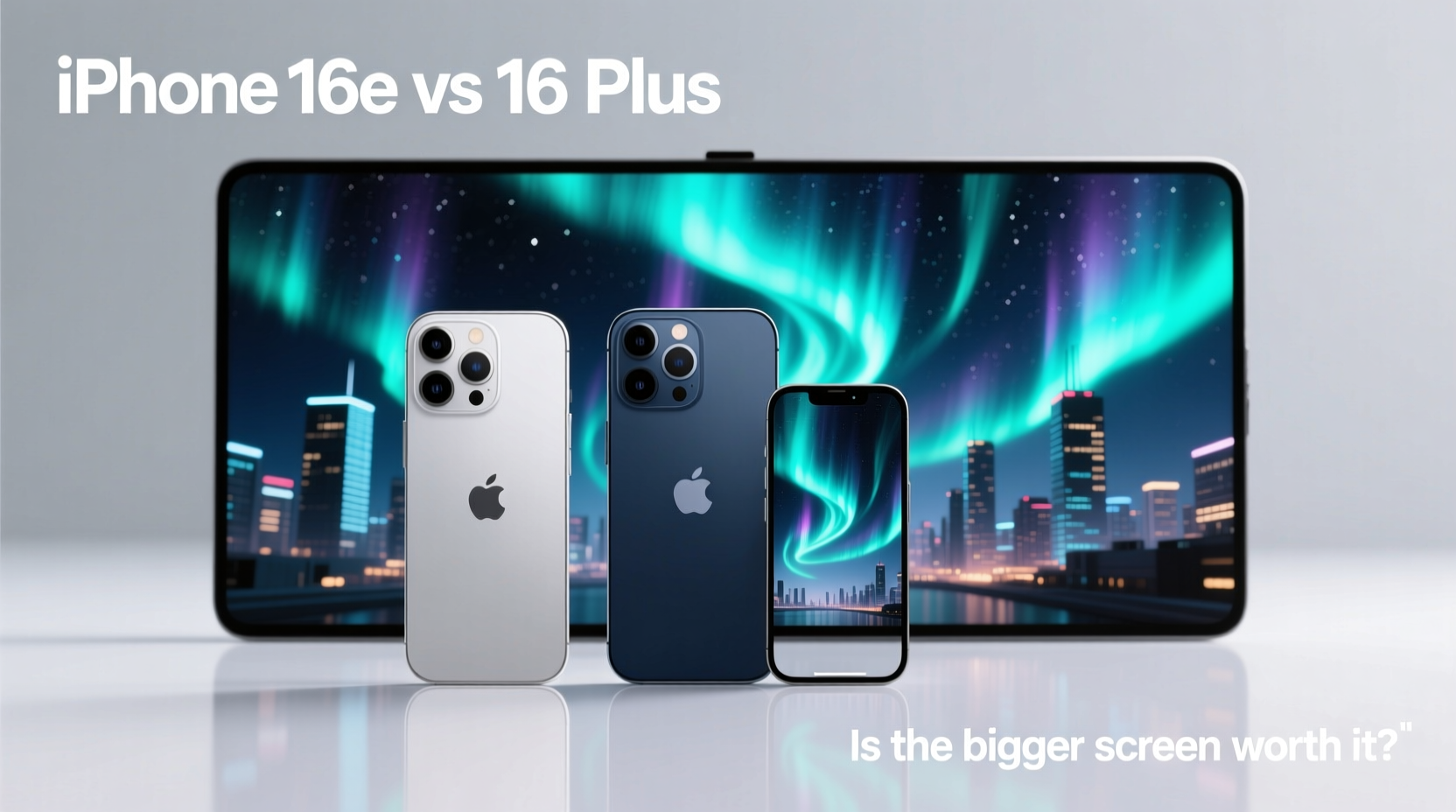
The most immediate distinction between the iPhone 16e and iPhone 16 Plus lies in their displays. The 16e features a 6.1-inch Super Retina XDR OLED panel, while the 16 Plus steps up to a 6.7-inch version of the same technology. Both offer excellent color accuracy, HDR support, and peak brightness levels above 2000 nits, ensuring crisp visuals indoors and out.
However, screen real estate impacts more than just video watching. It affects multitasking, readability, and app navigation. On the 16 Plus, apps like Mail and Safari can display side-by-side panes, and typing is generally more comfortable due to increased spacing between keys. For users who frequently consume media, read documents, or use productivity tools, the extra 0.6 inches makes a tangible difference.
Design-wise, both phones share similar build materials — aerospace-grade aluminum frames and Ceramic Shield front covers — but the 16 Plus is noticeably heavier (approx. 207g vs. 171g) and harder to operate one-handed. For those prioritizing pocketability and ease of handling, the 16e remains the more ergonomic choice.
Battery Life: Where Bigger Truly Pays Off
One area where the 16 Plus clearly outperforms the 16e is battery endurance. Apple claims up to 26 hours of video playback for the 16 Plus, compared to 20 hours on the 16e. Real-world testing supports this gap: heavy users report consistently gaining an extra 3–5 hours of screen time with the Plus model.
This advantage stems not only from the larger physical battery but also from software optimizations tied to display behavior. While both devices use Dynamic Island and adaptive refresh rates (10–120Hz), the 16 Plus benefits from more aggressive background task management and thermal regulation during sustained usage.
“Battery longevity often outweighs raw specs when it comes to user satisfaction. People don’t regret longer battery life — they regret running out.” — Raj Patel, Senior Analyst at MobileInsight Group
If your day involves constant navigation, streaming, or remote work without easy access to charging, the 16 Plus delivers peace of mind. Conversely, if you’re near outlets most of the day or charge overnight, the 16e’s battery is perfectly adequate.
Performance and Storage: Nearly Identical Under the Hood
Both models are powered by Apple’s A18 chip, built on a second-generation 3nm process. This means identical CPU, GPU, and neural engine performance across the board. Whether editing 4K video, playing graphics-intensive games, or using AI-powered photography tools, neither device will feel sluggish.
Storage options differ slightly. The 16e starts at 128GB and maxes out at 256GB, while the 16 Plus offers a 512GB configuration — critical for photographers, videographers, or anyone avoiding cloud storage.
| Feature | iPhone 16e | iPhone 16 Plus |
|---|---|---|
| Display Size | 6.1 inches | 6.7 inches |
| Starting Price | $799 | $999 |
| Battery Life (Video Playback) | Up to 20 hours | Up to 26 hours |
| Max Storage | 256GB | 512GB |
| Weight | 171g | 207g |
| Charging Speed | 27W wired, 15W MagSafe | 27W wired, 15W MagSafe |
Camera System: Subtle Differences, Similar Results
Apple equips both phones with a dual-camera setup: a 48MP main sensor and a 12MP ultra-wide lens. Computational photography algorithms — including Smart HDR 6, Photonic Engine, and next-gen Night mode — are identical, so photo quality in daylight and low light is nearly indistinguishable.
The primary difference emerges in digital zoom and cropping flexibility. Thanks to its higher-resolution sensor and larger frame buffer, the 16 Plus handles 2x and 3x zoom better when shooting in ProRAW or capturing stills from video. Additionally, the larger body allows for slightly improved heat dissipation during extended 4K recording sessions.
Front cameras are the same 12MP unit with autofocus and Center Stage, making both excellent for video calls and selfies.
Mini Case Study: Daily Use Across Lifestyles
Sophia, a freelance graphic designer based in Austin, upgraded from an iPhone 13 to the 16 Plus primarily for the screen and battery. She uses her phone for client Zoom calls, reviewing design mockups, and editing photos on the go. “The extra screen space lets me see full webpage layouts without constant zooming,” she says. “And I no longer carry a power bank — I get through full workdays even with heavy app switching.”
In contrast, Marcus, a high school teacher in Chicago, chose the 16e after testing both models. “I liked the bigger screen, but I hated how much it stuck out of my pocket,” he explains. “I mostly use mine for messaging, checking email, and scanning student handouts. The 16e does all that just fine — and saves me $200.”
When the 16 Plus Is Worth the Extra Cost
The $200 price difference between the 16e and 16 Plus isn’t trivial. However, for certain users, that premium translates into meaningful improvements in daily experience. Consider the 16 Plus if you:
- Routinely watch videos or stream content on your phone
- Work remotely or rely on your phone for productivity apps
- Travel frequently or spend long stretches away from chargers
- Prefer larger text and touch targets for accessibility reasons
- Need maximum storage for local media backup
Step-by-Step: How to Decide Which Model Fits You
- Assess your screen usage: Do you regularly watch movies, read PDFs, or browse social media feeds? More screen time favors the 16 Plus.
- Evaluate your charging habits: Do you charge once a day, or multiple times? Frequent top-ups reduce the need for extended battery.
- Test ergonomics: Can you comfortably reach across the screen with one hand? If not, the 16e may be more practical.
- Estimate storage needs: If you shoot lots of video or avoid iCloud, check whether 256GB (16e) is sufficient.
- Calculate total cost: Factor in potential case, screen protector, and trade-in value differences before deciding.
FAQ
Is the iPhone 16e a downgrade from previous SE models?
No — despite the \"e\" naming, this is not a successor to the SE line. It's a new entry in the standard iPhone series, featuring modern design, Dynamic Island, and USB-C, unlike the older SE models which reused legacy designs.
Does the 16 Plus have better speakers than the 16e?
Both models feature stereo speakers with spatial audio support. Audio output is balanced and loud on both, though the 16 Plus produces slightly deeper bass due to its larger internal chamber.
Will both phones receive the same software updates?
Yes. Apple provides five years of iOS updates across all current iPhone models. Both the 16e and 16 Plus will receive feature updates and security patches simultaneously until at least 2029.
Final Verdict: Value Over Specs
The iPhone 16 Plus’s larger screen is more than a luxury — it enhances functionality, improves multitasking, and extends battery life. But whether it’s “worth” the extra $200 depends entirely on how you use your phone.
For media lovers, mobile professionals, and travelers, the 16 Plus delivers measurable benefits that compound over time. For casual users, students, or those upgrading from recent iPhones, the 16e offers exceptional value without sacrificing core performance.
Ultimately, screen size should not be the sole deciding factor. Instead, weigh how each device fits your lifestyle, workflow, and long-term needs. Technology should serve you — not the other way around.




 浙公网安备
33010002000092号
浙公网安备
33010002000092号 浙B2-20120091-4
Comments
No comments yet. Why don't you start the discussion?