
Choosing between an iPhone and a flagship Android device has never been more nuanced. The rumored iPhone 16e — Apple’s anticipated compact, budget-friendly model — goes head-to-head with the established powerhouse, the Samsung Galaxy S24 Plus. For long-time Apple users considering a jump to Android, the question isn’t just about specs; it’s about ecosystem loyalty, daily usability, and long-term value. Is the Galaxy S24 Plus truly worth abandoning the seamless integration of iOS?
The answer depends on what you prioritize: tight software control and longevity from Apple, or expansive customization and hardware versatility from Samsung. Let’s break down both devices across key categories to help you make an informed decision.
Design and Build: Compact Simplicity vs Premium Flexibility
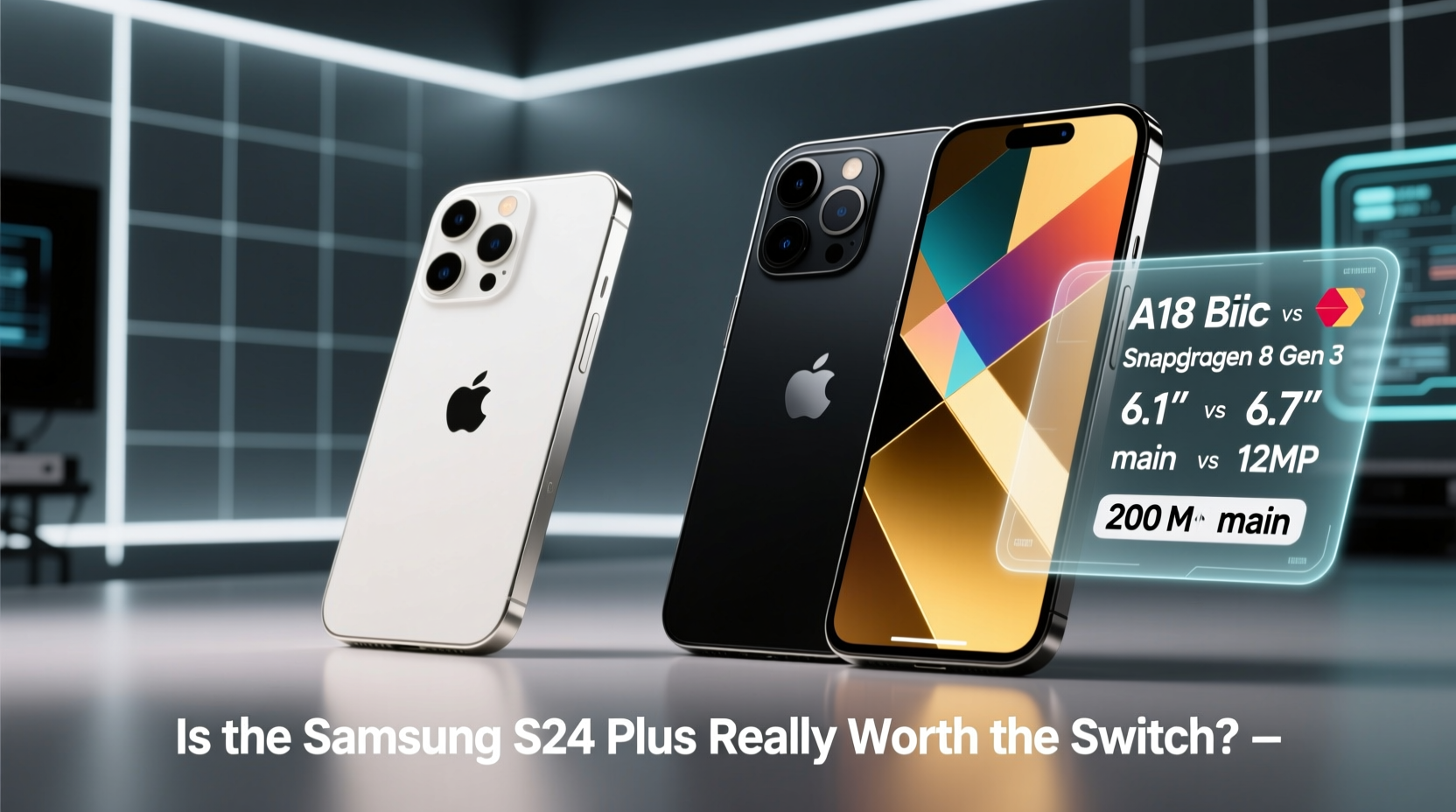
The iPhone 16e is expected to follow Apple’s tradition of minimalist design — likely featuring a 6.1-inch Super Retina XDR display, aerospace-grade aluminum frame, and Ceramic Shield front. It will appeal to users who prefer one-handed operation and a clean aesthetic. Apple’s build consistency ensures durability, though repair costs remain high.
In contrast, the Galaxy S24 Plus boasts a 6.7-inch Dynamic AMOLED 2X display with a 120Hz adaptive refresh rate, Gorilla Glass Victus 3, and an IP68 rating. Its slightly curved screen and slimmer bezels offer a more immersive experience. Samsung also uses titanium in the frame for improved strength-to-weight ratio, making it lighter than its predecessor despite the larger size.
Performance and Software Experience
Benchmark leaks suggest the iPhone 16e will be powered by the A18 chip, built on a 3nm process. This guarantees top-tier CPU and GPU performance, especially in single-threaded tasks. iOS 18 is expected to introduce AI-driven features like enhanced Siri, on-device summarization, and improved photo organization — all optimized tightly with Apple’s silicon.
The Galaxy S24 Plus runs on the Snapdragon 8 Gen 3 (or Exynos 2400 in select regions), paired with One UI 6.1 based on Android 14. Samsung has made significant strides in software optimization, reducing bloat and improving update speed. With seven years of OS and security updates promised, the S24 Plus now matches Apple’s support timeline — a major shift in Android longevity.
“Samsung’s commitment to seven-year updates closes the historical gap in software lifespan between Android and iOS.” — David Kim, Mobile Analyst at TechInsight Asia
However, iOS still leads in app optimization and background management, resulting in longer effective battery life and fewer hiccups over time. Android offers deeper customization — from launchers to default apps — but may feel cluttered to users coming from the simplicity of iOS.
Camera Comparison: Consistency vs Versatility
Apple continues to refine its computational photography with the iPhone 16e. Expect a 48MP main sensor with improved low-light processing, Smart HDR 6, and enhanced video stabilization. The focus remains on natural color science and reliable point-and-shoot results. However, the lack of a telephoto lens limits zoom capabilities — digital zoom beyond 5x degrades quality quickly.
The Galaxy S24 Plus counters with a triple-lens setup: 50MP main, 12MP ultra-wide, and 10MP 3x optical telephoto with AI-powered 30x Space Zoom. Its advanced HDR and multi-frame processing excel in dynamic scenes. Samsung’s AI-enhanced night mode and portrait editing tools give photographers more creative control post-capture.
| Feature | iPhone 16e (Expected) | Galaxy S24 Plus |
|---|---|---|
| Main Camera | 48MP, f/1.6, Sensor-shift OIS | 50MP, f/1.8, OIS |
| Ultra-Wide | 12MP, f/2.4 | 12MP, f/2.2 |
| Telephoto | None (Digital Zoom Only) | 10MP, 3x Optical Zoom, f/2.4 |
| Video Recording | 4K@60fps, Dolby Vision HDR | 8K@30fps, Super Steady Mode |
| Low-Light Performance | Strong, natural tones | Brighter output, slight oversharpening |
If your photography needs include frequent zooming or landscape shots requiring ultra-wide framing, the S24 Plus offers tangible advantages. But for everyday use and social media sharing, the iPhone’s consistent output often requires less editing.
Battery Life and Charging: Efficiency vs Raw Power
The iPhone 16e is projected to carry a ~3,700mAh battery. Thanks to the efficiency of the A18 chip and iOS power management, it should deliver around 15–17 hours of mixed usage. However, charging remains limited: 20W wired and 15W MagSafe wireless. No USB-C fast charging above 27W is expected, even with third-party accessories.
The Galaxy S24 Plus packs a 5,000mAh battery with 45W wired fast charging, reaching 70% in 30 minutes. It supports 15W wireless charging and reverse wireless charging — useful for powering earbuds or smartwatches on the go. Real-world testing shows it can last well into a second day under moderate use.
Ecosystem and Long-Term Value
This is where the decision becomes deeply personal. Apple’s ecosystem — iCloud, AirDrop, Handoff, iMessage, and Continuity features like Universal Clipboard — creates a frictionless experience across Mac, iPad, and Apple Watch. End-to-end encryption and privacy-first design resonate with professionals and families alike.
Samsung’s ecosystem is catching up. With SmartThings, Multi Control, and improved Windows integration via Link to Windows, cross-device workflows are smoother than ever. The ability to run dual apps, use Samsung DeX (desktop mode), and customize nearly every interface element appeals to power users. Plus, Samsung Wallet now supports passes, IDs, and car keys — mirroring Apple’s functionality.
But switching means relearning habits. Messages will no longer sync seamlessly with Macs. iMessage blue bubbles become green SMS on Android, losing read receipts and high-quality media sharing. While Google Messages with RCS helps, it’s not universally adopted.
Mini Case Study: Sarah’s Switch After 12 Years of iOS
Sarah, a freelance designer from Austin, used iPhones exclusively since the iPhone 4. She switched to the Galaxy S24 Plus for its larger screen and multitasking features. “I missed iMessage at first — especially group threads where some contacts stayed on iPhone,” she said. “But once I set up Samsung DeX with my monitor and started using dual Messenger and WhatsApp accounts, my productivity jumped.”
She did return her first unit due to bloatware confusion but kept the second after disabling Samsung’s duplicate apps. “It took two weeks to feel normal. Now I wouldn’t go back — the customization and fast charging alone are worth it.”
Checklist: Are You Ready to Switch from iPhone to Galaxy S24 Plus?
- ✅ Evaluate your reliance on iMessage and FaceTime — are alternatives acceptable?
- ✅ Confirm compatibility of your accessories (AirPods work, but spatial audio may be limited)
- ✅ Back up your iPhone data and test Samsung Smart Switch transfer process
- ✅ Research carrier compatibility — especially for eSIM activation
- ✅ Try the S24 Plus in-store to assess grip, weight, and One UI navigation
- ✅ Disable iCloud two-factor before leaving Apple ecosystem
Frequently Asked Questions
Can I transfer my photos, messages, and apps easily from iPhone to Galaxy S24 Plus?
Yes, Samsung Smart Switch allows wireless migration of contacts, photos, messages, calendars, and settings. App data transfer is limited — you’ll need to redownload apps from the Google Play Store. Some services (like banking apps) require re-authentication.
Does the Galaxy S24 Plus get as many updates as the iPhone?
Yes. Samsung now promises seven years of OS and security updates for the S24 series, matching Apple’s update window. This was unheard of in previous generations and marks a major leap in Android device longevity.
Is the iPhone 16e better for resale value?
Historically, yes. iPhones retain value significantly better than Android phones. After 18 months, an iPhone typically holds 60–70% of its value, while even premium Samsung devices drop to 40–50%. If you upgrade frequently, this financial difference adds up.
Final Verdict: Is the Samsung Galaxy S24 Plus Worth the Switch?
The Galaxy S24 Plus is the most compelling Android alternative to the iPhone in years. With seven-year updates, class-leading displays, versatile cameras, and powerful performance, it outperforms the expected iPhone 16e in raw specs and flexibility. For users frustrated by Apple’s slow charging, limited customization, or small-screen constraints, the switch makes sense.
But if you’re embedded in Apple’s ecosystem — using a Mac, iPad, or Apple Watch daily — the friction of leaving iMessage, AirDrop, and seamless handoff may outweigh the benefits. The iPhone 16e will still offer superior app optimization, longer effective battery consistency, and stronger resale value.
The real question isn’t which phone is objectively better — it’s which ecosystem aligns with your lifestyle. If you value freedom, adaptability, and cutting-edge hardware, the S24 Plus earns its place. But if simplicity, longevity, and integration matter most, sticking with Apple might still be the smarter move.




 浙公网安备
33010002000092号
浙公网安备
33010002000092号 浙B2-20120091-4
Comments
No comments yet. Why don't you start the discussion?