
In the summer of 2009, Apple released two devices that were nearly identical in design, interface, and functionality: the iPhone 3GS and the third-generation iPod Touch. On paper, they shared the same operating system, App Store access, camera (on certain models), and performance capabilities. The key difference? One had cellular connectivity and cost significantly more. For many consumers—especially students, younger users, or budget-conscious tech enthusiasts—the decision came down to whether paying extra for phone functionality was truly worth it. Now, over a decade later, we can look back with clarity: Was skipping the iPhone 3GS in favor of the iPod Touch 3 actually a smart financial and practical decision?
The Devices in Context: 2009 Tech Landscape
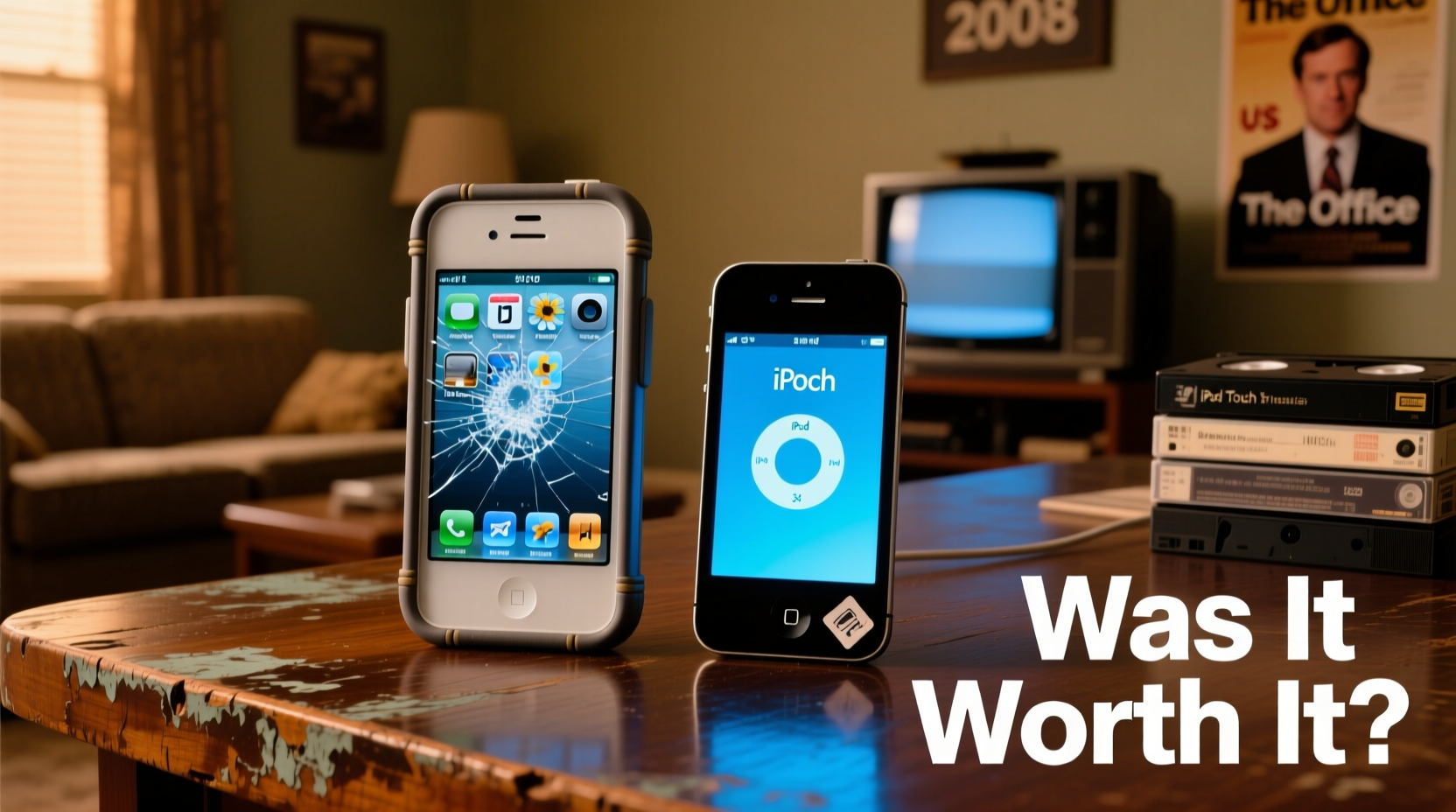
The late 2000s marked a pivotal shift in personal technology. Smartphones were transitioning from business tools to lifestyle essentials. Apple’s iPhone, introduced just two years prior, had redefined mobile interaction with its capacitive touchscreen and app ecosystem. By 2009, the iPhone 3GS brought tangible improvements: faster processing, video recording, voice control, and better battery life.
Meanwhile, the iPod Touch—positioned as an “iPhone without the phone”—offered nearly all the same features at a lower price point. It ran iOS, supported third-party apps, had Wi-Fi, and even included a front-facing microphone for Voice Memo and early FaceTime-like apps. The third-gen model also introduced built-in GPS via assisted location services using Wi-Fi networks, narrowing the gap further.
At launch, the iPhone 3GS started at $199 (with a two-year contract), while the iPod Touch began at $229 for 32GB—yes, sometimes even more than the subsidized iPhone. But without a carrier contract, the total cost of ownership over time made the iPod Touch appear cheaper upfront and free of monthly fees.
Feature-by-Feature Comparison
| Feature | iPhone 3GS | iPod Touch 3rd Gen |
|---|---|---|
| Operating System | iOS 3 (upgradeable to iOS 6) | iOS 3 (upgradeable to iOS 6) |
| Processor | ARM Cortex-A8 (600 MHz) | Same as iPhone 3GS |
| Camera | 3MP rear with video recording | No camera (except 8GB model added one later) |
| Connectivity | GSM/EDGE/3G + Wi-Fi + Bluetooth | Wi-Fi + Bluetooth only |
| GPS | Dedicated GPS chip | Wi-Fi-based location (no true GPS) |
| Price (Launch) | $199 (8GB, with contract) | $229 (32GB, no contract) |
| Monthly Cost | $70–$100+ for data plan | None (Wi-Fi only) |
| Battery Life | Moderate; degraded faster due to radio use | Longer; no cellular drain |
The table reveals a nuanced trade-off. While the iPod Touch lacked calling, messaging, and true GPS, it avoided recurring costs and offered similar app performance. For someone already relying on a basic phone for calls, the Touch could serve as a powerful multimedia companion without redundancy.
A Realistic User Scenario: College Student in 2009
Consider Sarah, a college sophomore in 2009. She needed email, web browsing, music, and social apps like Facebook and Twitter. Her university had robust Wi-Fi across campus and dorms. She already had a prepaid flip phone for calls and texts at $30/month. Upgrading to an iPhone would mean adding a $70+ smartphone plan—doubling her monthly telecom expense.
Instead, she bought a 32GB iPod Touch for $229. She used it for everything except voice calls: checking email between classes, listening to podcasts during commutes, playing games, and using early navigation apps like Google Maps over Wi-Fi. When off-campus, she relied on cached maps and public hotspots.
In hindsight, Sarah saved over $1,000 in service fees over three years. Her device performed well for her needs, and she never missed having cellular data. For users like her, skipping the iPhone wasn’t a compromise—it was a rational optimization.
Expert Insight: What Long-Term Value Meant Then
“The iPod Touch was one of the most underrated devices Apple ever made. It gave millions their first taste of iOS without locking them into expensive contracts. For education and media consumption, it was often the smarter buy.” — David Chen, Mobile Historian and Tech Archivist
Experts like Chen emphasize that the iPod Touch played a crucial role in democratizing access to the iOS ecosystem. Schools adopted them for classrooms where phones were banned but tablets weren't. Developers tested apps on Touches before deploying to iPhones. And families bought them for kids who weren’t ready for a real phone.
Moreover, because the iPod Touch didn’t have radios or SIM slots, it was less prone to carrier-specific bloat and restrictions. This made it ideal for international travelers or dual-device households.
Longevity and Software Support: A Surprising Tie
Both devices received software updates up to iOS 6, released in 2012. That means each enjoyed about three years of official support—longer than many Android devices of the era. However, the lack of RAM and processor limitations meant that newer versions of apps quickly outpaced both devices by 2013.
Interestingly, the iPod Touch often lasted longer in daily use. Without constant cellular signal searching, its battery degraded more slowly. Users reported stable performance well into 2014 for basic tasks like music playback, note-taking, and offline gaming.
Was Skipping the iPhone Worth It? A Balanced Verdict
The answer depends on how you define “worth it.” Financially and functionally, for many users, yes—skipping the iPhone 3GS in favor of the iPod Touch 3 was a sensible choice.
- Budget-conscious buyers avoided hundreds in monthly fees.
- Students and secondary users got full iOS functionality without distractions from calls or messages.
- Media-focused consumers valued storage and screen quality over telephony.
However, those who frequently traveled off Wi-Fi networks, relied on turn-by-turn navigation, or wanted instant photo sharing lost meaningful utility. The absence of a proper camera on most iPod Touch units also limited its appeal as a multimedia tool.
Frequently Asked Questions
Could the iPod Touch make calls?
Not natively. However, apps like Skype and Google Voice allowed VoIP calling over Wi-Fi. You needed headphones or a headset for audio input/output, and emergency calling wasn’t supported.
Did the iPod Touch have GPS?
No dedicated GPS chip. It used Wi-Fi triangulation for approximate location, which worked reasonably well in cities but failed in rural areas or when offline.
Can either device still be used today?
Limited functionality. They can’t run modern apps requiring iOS 10+, and Safari lacks support for current web standards. Best uses now: offline music player, retro gaming device, or digital photo frame.
Final Thoughts: A Decision Shaped by Priorities
In retrospect, choosing the iPod Touch over the iPhone 3GS wasn’t about missing out—it was about prioritizing. At a time when smartphone data plans were expensive and poorly understood, opting for a capable, contract-free alternative demonstrated thoughtful consumer behavior.
The iPod Touch 3 wasn’t just a “cheap iPhone.” It was a focused tool for people who wanted computing power, entertainment, and connectivity—without the financial burden or social pressure of always being reachable. In an age increasingly concerned with digital minimalism and intentional tech use, that philosophy feels ahead of its time.
So yes, for many, skipping the iPhone was absolutely worth it. Not because the iPod Touch was better, but because it was enough.




 浙公网安备
33010002000092号
浙公网安备
33010002000092号 浙B2-20120091-4
Comments
No comments yet. Why don't you start the discussion?