
For many long-time Apple users, the iPhone 4 represents a nostalgic milestone—a device that once defined mobile innovation. But if yours has remained frozen in time on iOS 5, the question arises: should you take the plunge and update to iOS 6? While newer software often brings features and security improvements, older hardware like the iPhone 4 faces unique challenges. Updating can mean gaining access to modern apps and critical fixes—or sacrificing performance and usability. This article examines the real implications of upgrading from iOS 5 to iOS 6 on an iPhone 4, weighing the benefits against the risks with practical advice for making an informed decision.
Understanding the Hardware Limitations of the iPhone 4
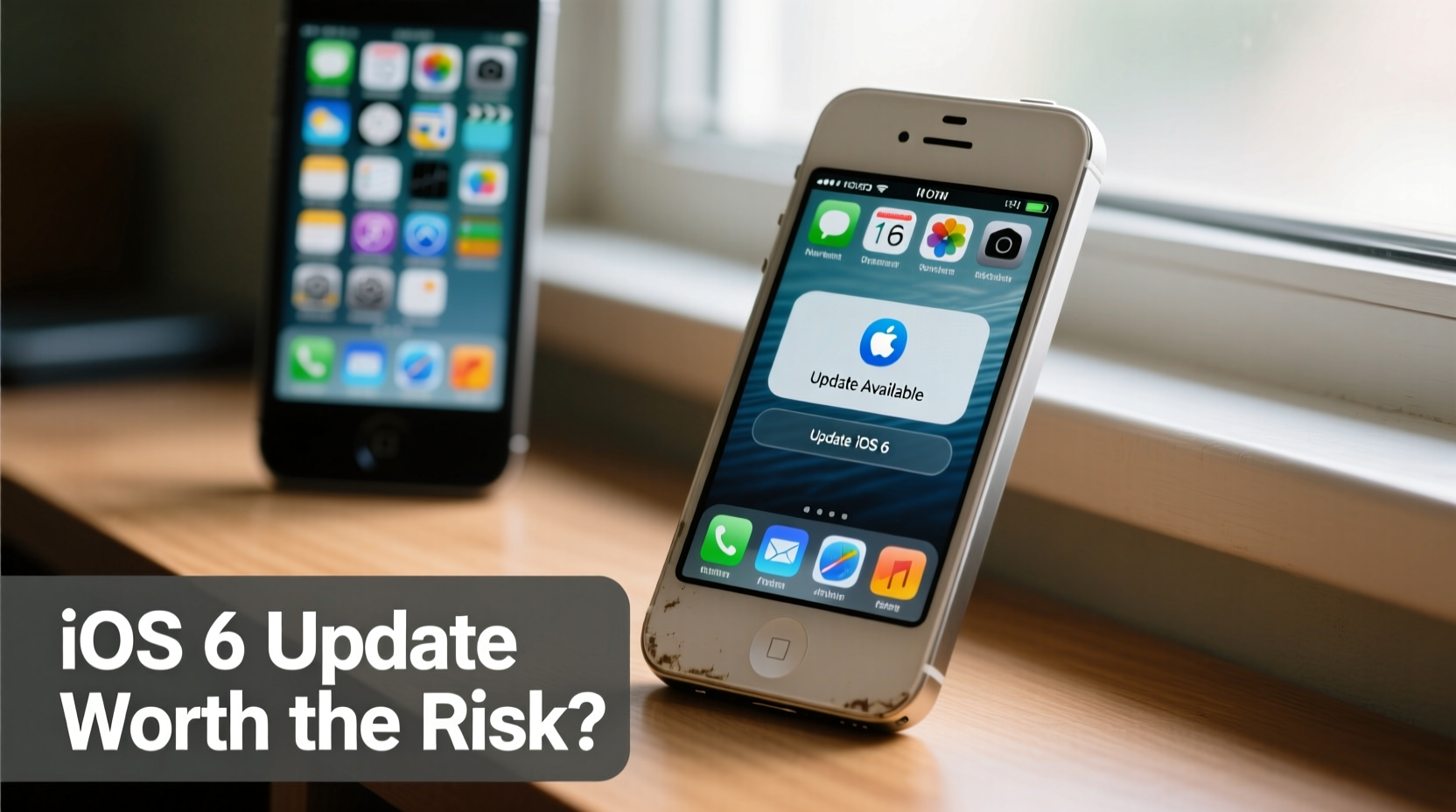
The iPhone 4, released in 2010, was revolutionary for its Retina display and front-facing camera. However, by today’s standards, its hardware is severely limited. It runs on Apple’s A4 chip, has just 512MB of RAM, and maxes out at 32GB of storage. These specs were adequate for iOS 5, which was designed with this generation in mind. But iOS 6, released in 2012, introduced heavier frameworks, more background processes, and resource-intensive features like turn-by-turn navigation in Maps.
While Apple officially supports iOS 6 on the iPhone 4, the upgrade pushes the device beyond its comfort zone. Users frequently report longer app launch times, delayed responsiveness, and increased battery drain after updating. The operating system simply demands more than the aging processor and memory can comfortably deliver.
Key Changes Introduced in iOS 6
iOS 6 wasn’t just a minor patch—it brought significant changes that affected both functionality and user experience. Understanding what’s new helps assess whether the trade-offs are worthwhile.
- New Maps App: Replaced Google Maps with Apple’s own mapping service, introducing turn-by-turn navigation and 3D flyover views—though early versions were criticized for inaccuracies.
- Siri Expansion: Siri gained support for more languages and added integration with Twitter, Wikipedia, and sports scores.
- Facebook Integration: Deep OS-level Facebook syncing allowed sharing photos, events, and status updates directly from native apps.
- Passbook: Introduced a digital wallet for boarding passes, coupons, and tickets—though third-party support was limited at launch.
- Do Not Disturb & FaceTime over Cellular: Two highly requested features finally arrived, improving call control and video chat flexibility.
These features sound appealing, but their usefulness depends on how you use your iPhone 4. If you rely on maps or messaging, iOS 6 offers tangible upgrades. But if your phone serves as a music player, alarm clock, or backup device, the benefits may not justify the performance cost.
Performance Comparison: iOS 5 vs iOS 6 on iPhone 4
| Metric | iOS 5 (iPhone 4) | iOS 6 (iPhone 4) |
|---|---|---|
| App Launch Speed | Fast and responsive | Noticeably slower |
| System Animations | Smoother transitions | Janky or dropped frames |
| Battery Life | Average 6–8 hours usage | Reduced to 4–6 hours |
| Background Multitasking | Stable with few apps | Frequent app reloads |
| Web Browsing (Safari) | Functional with minor delays | Laggy on complex pages |
This comparison reflects aggregated user reports and technical benchmarks from the era. While individual experiences vary, the trend is clear: iOS 6 increases strain on the iPhone 4’s hardware. The device remains usable, but the fluidity that once defined the iOS experience begins to degrade.
Step-by-Step: How to Safely Update (or Avoid It)
If you're considering the update, follow this sequence to minimize risk:
- Back up your data: Connect to iTunes and perform a full backup. Ensure it completes successfully before proceeding.
- Charge your device: Plug into power and ensure the battery is at least 80% charged.
- Check available storage: iOS 6 requires about 1.5GB of free space. Delete unused apps or media if needed.
- Update via iTunes: Use a computer instead of over-the-air (OTA) to reduce failure risk.
- Observe post-update behavior: Test core functions—calls, messages, Safari, and camera—for slowdowns or crashes.
- Decide within 72 hours: If performance is unacceptable, restore from your iOS 5 backup while it’s still accessible.
Apple does not allow downgrading once the update is installed and the signing window closes. Therefore, acting quickly is essential if you wish to return to iOS 5.
Real-World Example: One User’s Experience
Mark, a retired teacher in Portland, kept his iPhone 4 as a secondary device for notes and music. He used it daily but never updated past iOS 5 due to concerns about speed. Curious about Passbook and improved notifications, he decided to update in late 2013. After installing iOS 6, he noticed immediate changes: the home screen animation lagged, Safari took twice as long to load articles, and the battery died by mid-afternoon. Within two days, he restored from backup. “It felt like I’d aged the phone by five years,” he said. “I didn’t gain enough to lose that much smoothness.”
His story is common among iPhone 4 users who valued reliability over novelty. For lightweight tasks, iOS 5 remained the more stable choice.
“Updating legacy devices requires balancing new features against degraded user experience. With the iPhone 4, iOS 6 marks the point where diminishing returns begin.” — David Lin, Mobile Systems Analyst at TechInsight Group
FAQ: Common Questions About Updating iPhone 4 to iOS 6
Can I downgrade from iOS 6 to iOS 5 after updating?
No, not officially. Once Apple stops signing the older firmware—which typically happens shortly after a new version releases—you cannot revert unless you have a saved SHSH blob using third-party tools, which most average users don’t.
Will my apps still work on iOS 6?
Most apps compatible with iOS 5 will run on iOS 6, but newer versions may require higher iOS versions. Some modern apps no longer support iOS 6, limiting your ability to install current versions of social media or banking apps.
Is iOS 6 more secure than iOS 5?
Yes, iOS 6 includes security patches and improved encryption. However, since Apple no longer provides updates for either version, both are vulnerable to modern exploits. Neither should be used for sensitive transactions today.
Final Checklist Before You Update
- ✅ Backed up device via iTunes
- ✅ Device charged to at least 80%
- ✅ At least 2GB of free storage available
- ✅ Understand that downgrade is likely impossible
- ✅ Primary use case doesn’t depend on peak performance
- ✅ Accept that battery life may decrease
Conclusion: Is the Update Worth the Risk?
For most iPhone 4 users still on iOS 5, upgrading to iOS 6 is a trade-off between marginal feature gains and noticeable performance loss. If you value stability, battery life, and smooth operation, staying on iOS 5 is the wiser choice. The update introduces useful tools like Do Not Disturb and enhanced Siri, but these come at the cost of a less responsive device.
However, if you need specific iOS 6-only features—such as improved Mail search, Facebook integration, or Passbook—and can tolerate slower speeds, the update may be justified. Just proceed with caution, back up first, and evaluate the results critically.
Ultimately, the iPhone 4’s legacy lies in its role as a pioneer, not a powerhouse. Respecting its limitations allows it to remain functional and enjoyable, even in retirement. Whether you update or stay put, the goal is usability—not chasing software versions that outpace the hardware’s capabilities.




 浙公网安备
33010002000092号
浙公网安备
33010002000092号 浙B2-20120091-4
Comments
No comments yet. Why don't you start the discussion?