
The iPhone 4S, released in 2011, was a landmark device that introduced Siri and brought Apple’s smartphone capabilities into a new era. Over the years, it received several iOS updates, with iOS 9 being one of the final versions supported. However, many users who upgraded from iOS 7 to iOS 9 reported significant slowdowns, app instability, and reduced battery life. This raises an important question: Was upgrading the iPhone 4S to iOS 9 actually a mistake? And if so, is staying on iOS 7 — or even rolling back — the better option?
While iOS 9 brought modern features like improved multitasking, enhanced Siri functionality, and better security, it also demanded more from aging hardware. The iPhone 4S, equipped with an 800MHz dual-core A5 chip and 512MB of RAM, struggled under the weight of newer operating systems designed for more powerful devices. Understanding the trade-offs between performance, security, and usability is essential when deciding whether to stay on iOS 7 or move forward.
Performance Impact: iOS 7 vs. iOS 9 on iPhone 4S
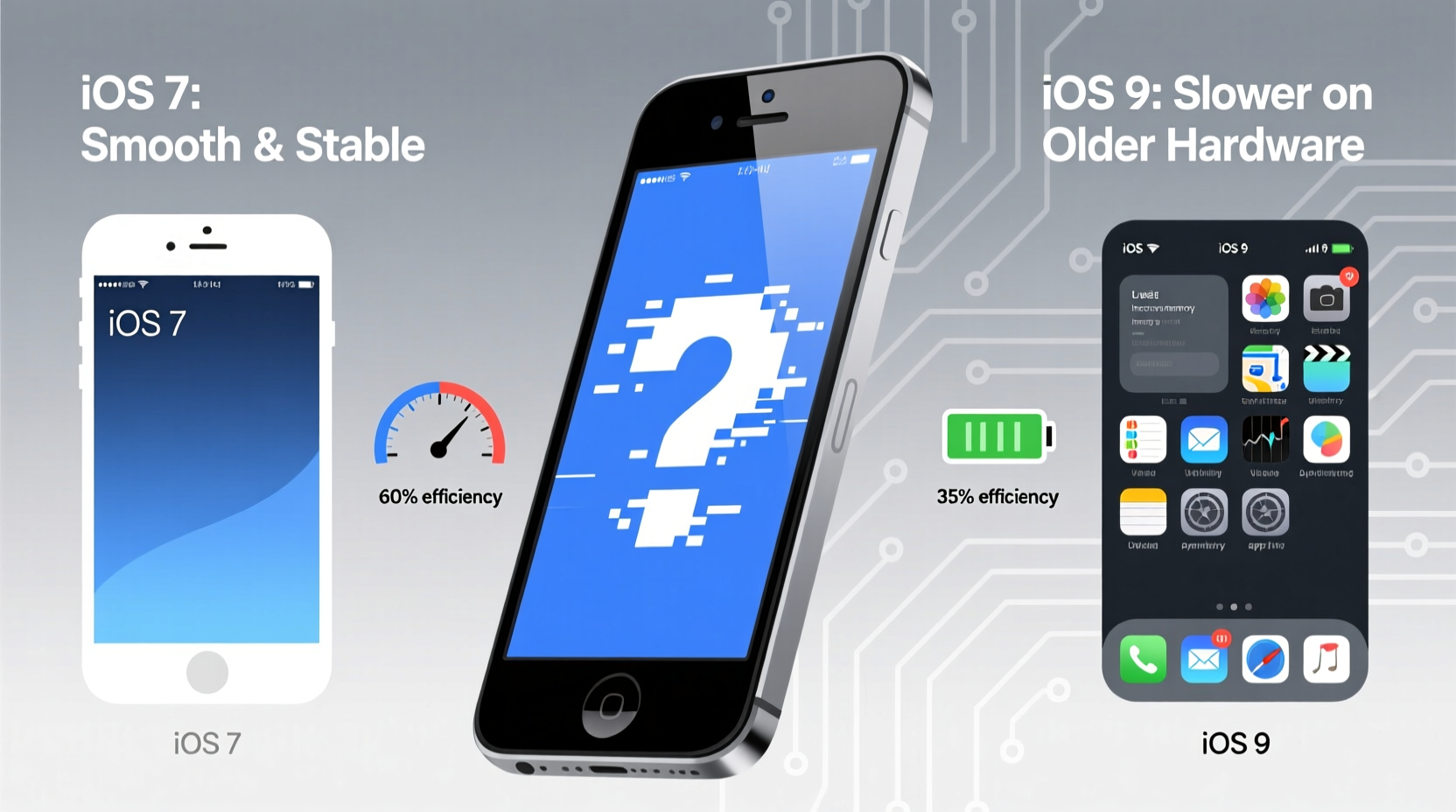
One of the most noticeable differences between iOS 7 and iOS 9 on the iPhone 4S is overall system responsiveness. iOS 7, while already a major visual overhaul from iOS 6, was still relatively lightweight and optimized for the hardware it launched alongside. In contrast, iOS 9 was built with the iPhone 6 and 6 Plus in mind, pushing features like Slide Over, Picture in Picture (on supported models), and deeper cloud integration — none of which were fully usable on the 4S.
Users upgrading to iOS 9 commonly reported:
- Slower app launch times
- Lag during scrolling and switching between apps
- Increased crashes in third-party applications
- Noticeable battery drain, reducing daily usability
A real-world example illustrates this well: Sarah, a long-time iPhone 4S user, upgraded to iOS 9 shortly after its release. She found that her calendar app took nearly five seconds to open, Safari frequently froze when loading pages, and her battery, which used to last a full day, now required midday charging. After three weeks of frustration, she restored her phone from an iOS 7 backup using iTunes, returning to a much snappier experience.
“iOS 9 pushed older devices beyond their limits. While we aimed for feature parity, performance on devices like the 4S was not ideal.” — Craig Federighi, Apple SVP of Software Engineering (2015 interview)
Security and App Compatibility Trade-Offs
Staying on iOS 7 may improve performance, but it comes at a cost: security and app support. Apple stopped signing iOS 7 updates years ago, meaning no new security patches have been issued since 2014. This leaves devices on iOS 7 vulnerable to known exploits, especially when browsing the web or using network-connected apps.
Additionally, many modern apps require iOS 9 or later. As of 2023, services like banking apps, messaging platforms, and even basic utilities such as weather or maps have dropped support for earlier iOS versions. For example:
| App | Minimum iOS Version Required | Availability on iOS 7 |
|---|---|---|
| Google Maps | iOS 12+ | No |
| iOS 12+ | No | |
| Bank of America | iOS 13+ | No |
| Spotify | iOS 11+ | No |
| Safari (modern standards) | N/A – built-in, but outdated on iOS 7 | Limited HTTPS, no modern JavaScript support |
This table highlights a critical limitation: even if your iPhone 4S runs smoothly on iOS 7, you’re effectively locked out of essential digital services. You won’t be able to securely access online banking, use updated navigation tools, or communicate through modern messaging apps.
Can You Downgrade from iOS 9 to iOS 7?
Once you’ve upgraded to iOS 9, downgrading to iOS 7 is no longer possible through official means. Apple uses a process called “SHSH blob” validation to prevent rollbacks, and they stopped signing iOS 7 firmware years ago. This means:
- You cannot restore to iOS 7 via iTunes or Finder unless you saved SHSH blobs beforehand (which most users did not).
- Jailbreaking tools that once allowed downgrades are obsolete and often unsafe.
- Any attempt to downgrade using unofficial methods risks bricking your device.
If you’re currently on iOS 9 and experiencing poor performance, your best bet is to perform a factory reset. This can sometimes restore some speed by clearing out accumulated cache and corrupted settings.
Factory Reset Steps (To Improve iOS 9 Performance)
- Back up your iPhone 4S via iTunes on a computer (iCloud backups may not restore properly on older devices).
- Go to Settings > General > Reset > Erase All Content and Settings.
- Wait for the process to complete and the device to restart.
- Set up as new (do not restore from backup immediately).
- Test performance without apps. If it feels faster, selectively reinstall only essential apps.
This method often results in a noticeably smoother experience than a cluttered iOS 9 install, though it will never match the fluidity of iOS 7.
When Staying on iOS 7 Makes Sense
There are niche scenarios where keeping an iPhone 4S on iOS 7 is practical:
- As a dedicated music player: Sync songs via iTunes and use it offline.
- For emergency calls: Keep it charged and active with a SIM card for backup communication.
- Kids’ first phone: Limited functionality reduces exposure to online risks.
- Historical or collector use: Preserving the original iOS 7 experience for nostalgia or display.
In these cases, the lack of app support and security updates is less of a concern because the device isn’t used for browsing, social media, or financial tasks.
FAQ
Can I still get security updates on iOS 7?
No. Apple ended security updates for iOS 7 in 2014. Any vulnerabilities discovered since then remain unpatched, making the OS unsafe for internet-connected tasks.
Will iOS 9 slow down my iPhone 4S permanently?
Not permanently in terms of hardware damage, but yes — iOS 9 will always run slower than iOS 7 due to higher system demands. A clean install may help, but the underlying performance ceiling remains lower.
Is there any way to make iOS 9 faster on iPhone 4S?
Yes, to some extent. Disable animations (Settings > General > Accessibility > Reduce Motion), turn off background app refresh, and limit notifications. Avoid installing heavy third-party apps. These tweaks can reclaim minor performance gains.
Checklist: Should You Upgrade to iOS 9 on iPhone 4S?
Before upgrading (or deciding to stay), consider this checklist:
- ✅ Do you need access to modern apps (banking, messaging, maps)? → Upgrade to iOS 9
- ✅ Is your primary use voice calls, SMS, and music? → Stay on iOS 7
- ✅ Are you comfortable with security risks? → Staying on iOS 7 increases vulnerability
- ✅ Do you have a backup of iOS 7 SHSH blobs? → No, so downgrade isn’t possible
- ✅ Can you accept slower performance for newer features? → Then iOS 9 may be worth it
Conclusion
Upgrading the iPhone 4S to iOS 9 wasn’t inherently a mistake — it was a calculated trade-off. You gain access to newer apps and slightly better security, but at the cost of speed, battery life, and overall usability. For users who rely on their phone for essential services, iOS 9 is the only viable path forward. But for those using the 4S as a secondary device, media player, or nostalgic keepsake, staying on iOS 7 preserves the best possible performance.
The reality is that the iPhone 4S has far exceeded its expected lifespan. Whether you choose iOS 7 or iOS 9, recognize that you’re working within the limits of decade-old technology. Make your decision based on how you actually use the device, not on what it once could do.




 浙公网安备
33010002000092号
浙公网安备
33010002000092号 浙B2-20120091-4
Comments
No comments yet. Why don't you start the discussion?