
In 2013, the smartphone world stood at a crossroads. Apple had just refined its design language with the iPhone 5, while Samsung doubled down on screen size and functionality with the Galaxy Note 3. The contrast couldn’t have been starker: minimalist elegance versus feature-packed ambition. But was the Note 3 truly a game-changer compared to the iPhone 5, or did it simply represent a different philosophy in mobile computing?
The answer depends on what you valued in a phone. For some, the iPhone 5’s polished ecosystem and compact design were unbeatable. For others, the Note 3’s expansive display, stylus integration, and multitasking capabilities felt like a glimpse into the future. Let’s break down the rivalry beyond marketing hype and assess whether the Note 3 was genuinely a bigger leap forward.
Design and Build Philosophy
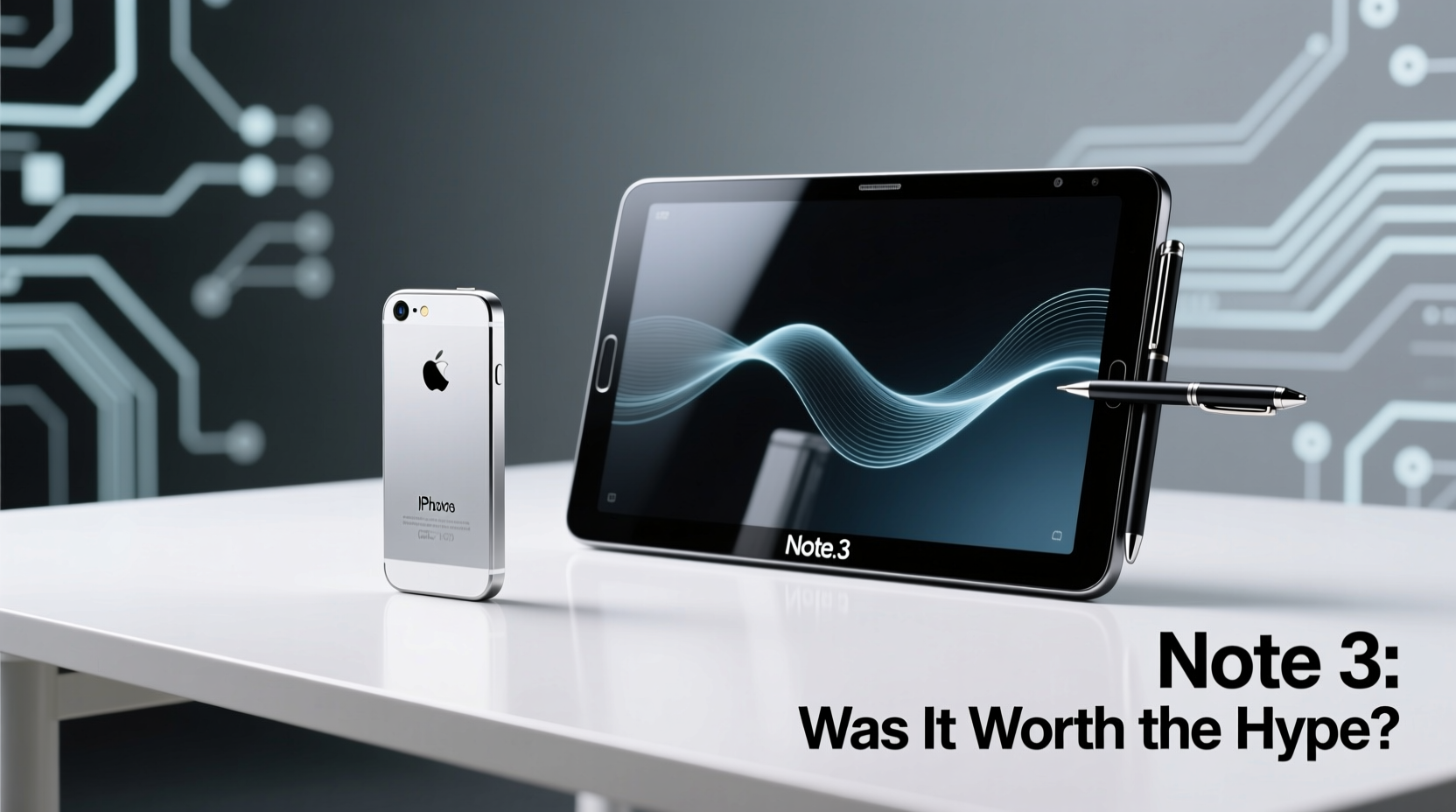
The iPhone 5 introduced a sleek aluminum-and-glass body, measuring 4.87 x 2.31 inches with a 4-inch Retina display. It was light (3.95 oz), thin (0.30 inches), and designed for one-handed use. Apple focused on refinement—tapered edges, improved speaker placement, and the new Lightning connector marked a shift toward modern connectivity.
In contrast, the Galaxy Note 3 arrived as a phablet powerhouse. At 5.98 x 3.06 inches and 5.94 oz, it was significantly larger, housing a 5.7-inch Full HD Super AMOLED display. Its plastic polycarbonate build drew criticism from some purists, but Samsung added faux leather stitching and metallic accents to elevate perceived quality. The size alone made it a polarizing device—either liberating or unwieldy, depending on your perspective.
Display and User Experience
Screen size wasn’t the only difference—display technology played a major role. The iPhone 5’s 4-inch Retina display offered 326 PPI, delivering sharp text and vibrant colors within a smaller footprint. iOS was optimized for this resolution, ensuring smooth animations and consistent app scaling.
The Note 3’s 5.7-inch 1080p panel packed 388 PPI, providing more pixels per inch than the iPhone 5 despite the larger surface area. More importantly, it enabled split-screen multitasking, pop-up windows, and S Pen-driven gestures. Features like Air View (hover detection) and Action Memos (handwritten notes converted to text) gave users novel ways to interact with their device.
For many, this represented a fundamental shift: the Note 3 wasn’t just a bigger phone—it was a mobile workstation. The S Pen wasn’t a gimmick; it became essential for artists, note-takers, and professionals who needed precision input.
“Samsung didn’t invent the stylus, but with the Note 3, they reinvented its purpose in a touchscreen world.” — David Chen, Mobile UX Analyst at TechInsight Weekly
Performance and Software Comparison
Under the hood, both devices reflected their ecosystems’ priorities. The iPhone 5 ran iOS 6 (upgradable to iOS 10), powered by Apple’s dual-core A6 chip. While not the most powerful on paper, the tight hardware-software integration ensured snappy performance, long-term updates, and unmatched app optimization.
The Note 3 launched with Android 4.3 (Jelly Bean) and featured either a 2.3 GHz quad-core Snapdragon 800 or an octa-core Exynos 5420, depending on region. Paired with 3GB of RAM—a rarity at the time—it outperformed the iPhone 5 in raw benchmarks and multitasking capacity. Samsung’s TouchWiz UI added layers of customization, including private modes, gesture controls, and enhanced file management.
However, bloatware and inconsistent update support tempered enthusiasm. While the Note 3 could do more, iOS offered a cleaner, more predictable experience. Gamers and power users leaned toward Android, while general consumers often preferred iOS simplicity.
Detailed Feature Comparison
| Feature | iPhone 5 | Galaxy Note 3 |
|---|---|---|
| Release Date | September 2012 | September 2013 |
| Display Size | 4.0 inches | 5.7 inches |
| Resolution | 640x1136 (326 PPI) | 1080x1920 (388 PPI) |
| Processor | Apple A6 (Dual-core) | Snapdragon 800 / Exynos 5420 |
| Ram | 1 GB | 3 GB |
| Storage Options | 16/32/64 GB (non-expandable) | 32/64 GB + microSD support |
| Battery Capacity | 1440 mAh | 3200 mAh |
| Stylus Support | No | Yes (S Pen with pressure sensitivity) |
| Camera (Rear) | 8 MP, f/2.4 | 13 MP, f/2.2 with LED flash |
| OS Launch Version | iOS 6 | Android 4.3 |
A Real-World Scenario: The Student's Dilemma
Consider Sarah, a university student in 2013 balancing lectures, part-time work, and social life. She needed a phone that could handle note-taking, web research, and multimedia. The iPhone 5 fit her small bag and worked seamlessly with her MacBook, but typing long essays on a 4-inch screen was tedious.
She switched to the Note 3 after seeing a classmate use the S Pen to annotate PDFs directly during a seminar. With split-screen mode, she could view lecture slides on one side and take handwritten notes on the other. The larger battery lasted through back-to-back classes without charging. Though bulkier, the productivity gains justified the trade-off.
This scenario played out across campuses and offices worldwide. The Note 3 didn’t win everyone over, but for those needing more than a communication tool, it delivered tangible advantages.
Was the Note 3 Really That Much Bigger of a Deal?
In technical terms, yes—the Note 3 introduced capabilities that the iPhone 5 couldn’t match. Expandable storage, superior multitasking, active stylus input, and a higher-resolution camera gave it functional superiority. It pushed the industry toward larger screens and inspired competitors to adopt pen input and multi-window interfaces.
But “bigger deal” depends on context. For mainstream consumers, the iPhone 5 represented trust, polish, and ecosystem cohesion. Apple sold over 45 million iPhone 5 units in its first year. The Note 3, while successful (over 12 million units), appealed to a niche: creatives, tech enthusiasts, and productivity-focused users.
Historically, the Note 3 proved influential. It helped normalize large screens, paving the way for today’s “max” models from every brand. The S Pen evolved into a professional-grade tool, now used by designers and engineers. Meanwhile, Apple eventually responded with the iPhone 6 Plus—and later, the iPad Pro with Apple Pencil—validating Samsung’s early bet on big screens and styluses.
Frequently Asked Questions
Could the iPhone 5 compete with the Note 3 in performance?
Not in raw specs, but iOS optimization meant everyday tasks felt equally fast. The iPhone 5 excelled in app responsiveness and long-term software support, even if it lacked RAM and processing muscle.
Did the S Pen make a real difference?
For certain users—artists, students, professionals managing documents—it was transformative. The ability to jot quick notes, edit screenshots, or navigate via hover commands added utility absent on iOS.
Why did the Note 3 matter in smartphone history?
It challenged the assumption that phones should stay small. By proving demand for larger displays and productivity tools, it influenced the entire industry’s trajectory, including Apple’s eventual design shifts.
Final Verdict: Innovation vs. Refinement
The iPhone 5 was a masterclass in refinement—tight, elegant, and deeply integrated. The Note 3 was a bold experiment in expansion—ambitious, multifaceted, and ahead of its time. Neither was objectively better; they served different visions of what a smartphone could be.
If innovation means pushing boundaries, then yes—the Note 3 was the bigger deal. It expanded the definition of a phone, introducing features we now take for granted. But if reliability, consistency, and user experience are paramount, the iPhone 5 held its ground as a benchmark of excellence.




 浙公网安备
33010002000092号
浙公网安备
33010002000092号 浙B2-20120091-4
Comments
No comments yet. Why don't you start the discussion?