
When Apple unveiled the iPhone 5c in 2013, it sparked a wave of curiosity and skepticism. Marketed as a colorful, more affordable alternative to the flagship iPhone 5s, the 5c occupied an unusual space in Apple’s lineup. But for owners of the iPhone 5, the question wasn’t about affordability—it was whether upgrading from the iPhone 5 to the 5c made practical sense. After all, both phones shared many internal components, and the visual differences were immediately obvious. Was this upgrade driven by genuine improvements, or was it largely fueled by marketing hype?
This article dives deep into the hardware, software, user experience, and long-term value of both devices to answer that critical question: For iPhone 5 owners, was moving to the 5c truly worth it?
Design and Build: Plastic vs Premium
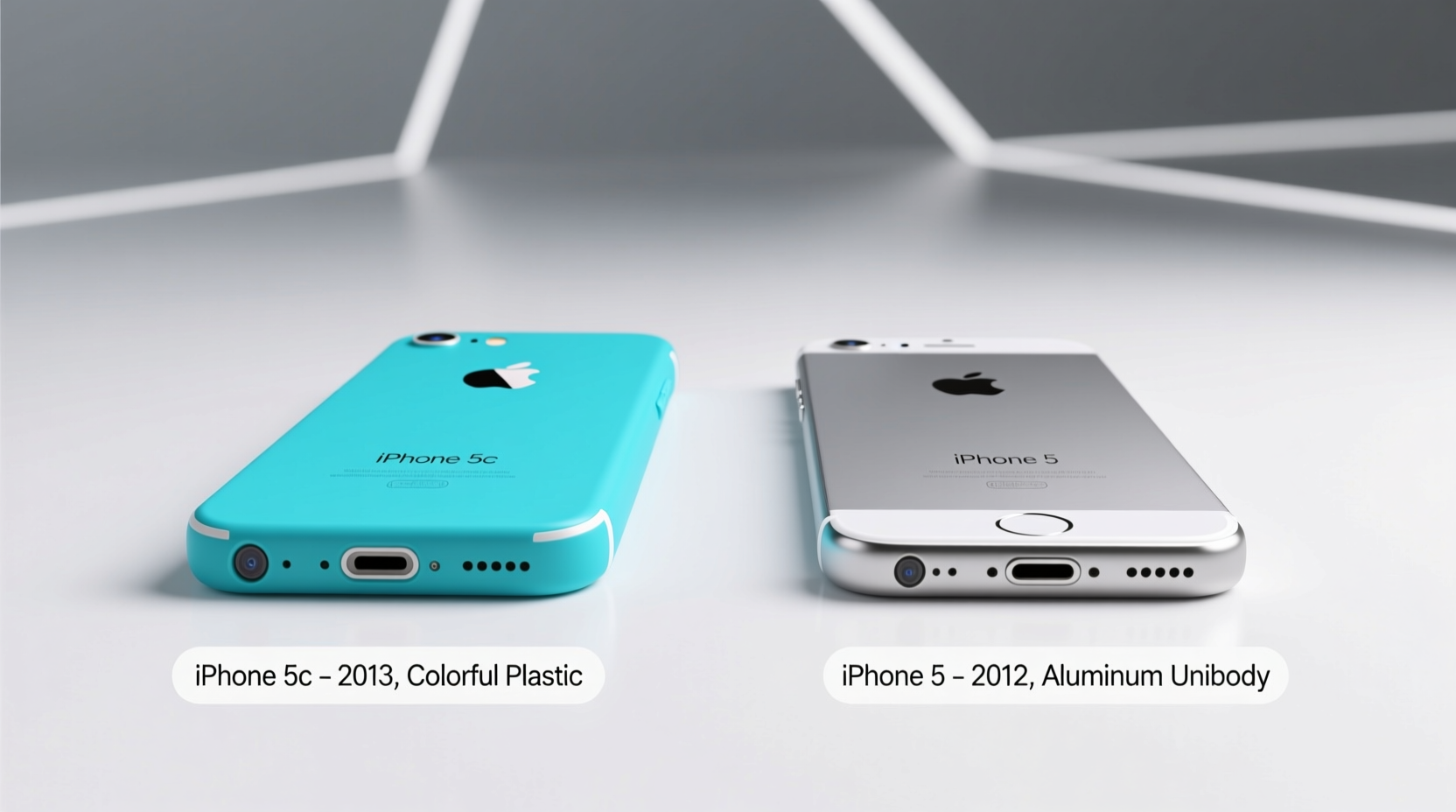
The most striking difference between the iPhone 5 and 5c lies in their construction. The iPhone 5 featured an aluminum and glass body, giving it a sleek, premium feel. In contrast, the iPhone 5c used a polycarbonate (plastic) unibody shell with a glossy finish, available in five vibrant colors: blue, green, pink, yellow, and white.
While the 5c’s design was undeniably eye-catching and more resistant to minor dings, many users perceived the plastic build as a downgrade from the iPhone 5’s metallic elegance. Apple claimed the 5c’s casing was durable and precision-engineered, but in hand, it lacked the heft and sophistication of its predecessor.
Internal Hardware: Nearly Identical Under the Hood
Beneath the surface, the iPhone 5c and iPhone 5 are remarkably similar. Both devices run on Apple’s A6 chip, have 1GB of RAM, and support the same LTE bands and Wi-Fi standards. Battery life is nearly identical, with Apple rating both at up to 8 hours of talk time on 3G.
Despite being a newer model, the 5c did not receive any meaningful performance upgrades. This raised eyebrows among tech enthusiasts who expected even modest improvements in processing speed or efficiency. In real-world usage—browsing, messaging, and app navigation—there was no noticeable difference in responsiveness between the two phones.
The only subtle improvement in the 5c was a slightly larger battery (1508 mAh vs. 1440 mAh), which translated to marginally better standby time. However, this gain was negligible under typical daily use.
“Apple positioned the 5c as innovative, but technically, it was a repackage of last year’s technology. For existing iPhone 5 users, there was little incentive to upgrade.” — David Lin, Mobile Tech Analyst at GadgetInsight
Camera and Display: No Meaningful Upgrades
The cameras on both phones are identical: an 8-megapixel rear sensor with backside illumination, 1080p video recording at 30fps, and a 1.2-megapixel front-facing camera. Image quality, low-light performance, and autofocus speed are indistinguishable.
Likewise, the display specs are exactly the same—a 4-inch Retina display with a resolution of 1136x640 pixels and a 326 ppi density. Color accuracy, brightness, and viewing angles are consistent across both models.
For photographers or users seeking sharper visuals or faster capture speeds, neither phone offered advancements over the other. The software enhancements introduced in iOS 7—such as improved photo filters and editing tools—were available to both devices, further eliminating any functional advantage.
Software and Long-Term Support
Both the iPhone 5 and iPhone 5c launched with iOS 7, marking a significant visual overhaul in Apple’s mobile operating system. The flat design, dynamic animations, and enhanced multitasking features were well-received and ran smoothly on both devices.
In terms of software updates, both phones received support up to iOS 10, with official updates ending in 2016. Neither device was compatible with iOS 11 or later, limiting their longevity in today’s app ecosystem. Modern apps requiring newer iOS versions either don’t install or perform poorly due to outdated architecture.
Because they shared the same chipset and memory configuration, update performance degradation was similar on both models. Users reported increased lag and app crashes after upgrading to iOS 10, especially when running resource-heavy applications.
Detailed Comparison: iPhone 5 vs iPhone 5c
| Feature | iPhone 5 | iPhone 5c |
|---|---|---|
| Release Date | September 2012 | September 2013 |
| Build Material | Aluminum & Glass | Polycarbonate (Plastic) |
| Processor | A6 Chip | A6 Chip |
| RAM | 1GB | 1GB |
| Rear Camera | 8MP, 1080p Video | 8MP, 1080p Video |
| Display | 4\" Retina (1136x640) | 4\" Retina (1136x640) |
| Battery Capacity | 1440 mAh | 1508 mAh |
| Colors | Black/Slate, White/Silver | Blue, Green, Pink, Yellow, White |
| iOS Support | Up to iOS 10 | Up to iOS 10 |
Real-World Example: Sarah’s Upgrade Dilemma
Sarah had been using her iPhone 5 since its launch in 2012. By late 2013, she noticed her battery degrading and considered upgrading. She was drawn to the iPhone 5c’s bright yellow color and Apple’s claim that it was “a whole new iPhone.” After purchasing it, however, she quickly realized the experience was nearly identical.
“I thought I was getting something faster or more advanced,” she said. “But my old phone felt just as fast. The only real change was the color and the slightly thicker case. I ended up selling the 5c within three months because it didn’t add any real value.”
Sarah’s experience reflects a broader sentiment among early adopters: the 5c was more about aesthetics than innovation.
Was the Upgrade Worth It? A Practical Checklist
If you’re still weighing the decision—or reflecting on whether your past choice paid off—consider these points before upgrading from iPhone 5 to 5c:
- ✅ Are you looking for a more durable, scratch-resistant body? → Yes, the 5c’s plastic holds up better.
- ✅ Do you want a fresh look without switching brands? → The 5c offers fun colors and a modern aesthetic.
- ❌ Are you expecting faster performance or better camera quality? → No significant improvements here.
- ❌ Do you rely on future-proof software support? → Both devices max out at iOS 10.
- ❌ Is build quality and premium feel important to you? → The iPhone 5 feels more refined.
Frequently Asked Questions
Can the iPhone 5c run modern apps?
No. Since it only supports up to iOS 10, most current apps—including newer versions of Instagram, WhatsApp, and banking apps—either won’t install or lack essential features. Performance is also sluggish due to outdated hardware.
Is the iPhone 5c water-resistant?
No. Neither the iPhone 5 nor the 5c has any official water resistance. Exposure to moisture can damage internal components. Always avoid using either device in wet conditions.
Why did Apple release the 5c if it wasn’t an upgrade?
The 5c was primarily a strategic move to offer a lower-cost iPhone option for emerging markets and first-time buyers. It reused existing A6 technology to control costs while introducing color variety to attract younger users.
Final Verdict: Hype Over Substance
For iPhone 5 owners in 2013, upgrading to the 5c offered little beyond cosmetic changes. While the colorful design and slightly improved battery were welcome touches, the absence of performance gains, camera upgrades, or extended software support made the transition hard to justify.
The iPhone 5c was never intended as a direct successor to the iPhone 5. Instead, it filled a niche as a budget-friendly, fashion-forward option for new users. For existing owners, the upgrade was more about personal preference than technological advancement.
If you valued individuality and wanted a phone that stood out visually, the 5c might have been worth considering. But if you were seeking tangible improvements in speed, photography, or longevity, staying with the iPhone 5—or waiting for the iPhone 5s—was the smarter move.




 浙公网安备
33010002000092号
浙公网安备
33010002000092号 浙B2-20120091-4
Comments
No comments yet. Why don't you start the discussion?