
In September 2014, Apple made a bold move by introducing the iPhone 6 and iPhone 6 Plus—marking the first time the company embraced significantly larger screens. For years, die-hard fans had debated whether Apple should follow the Android trend toward bigger displays. The iPhone 5s, released just a year earlier in 2013, represented the peak of Apple’s compact philosophy: sleek, precise, and perfectly pocketable. But with the 6 Plus, Apple doubled down on screen real estate, offering a 5.5-inch display that felt revolutionary at the time.
Today, as we look back from the vantage point of modern smartphones with edge-to-edge displays and multitasking capabilities, it's worth asking: was the leap from the iPhone 5s to the 6 Plus truly transformative—or did it come at the cost of usability and elegance?
The Design Philosophy Shift
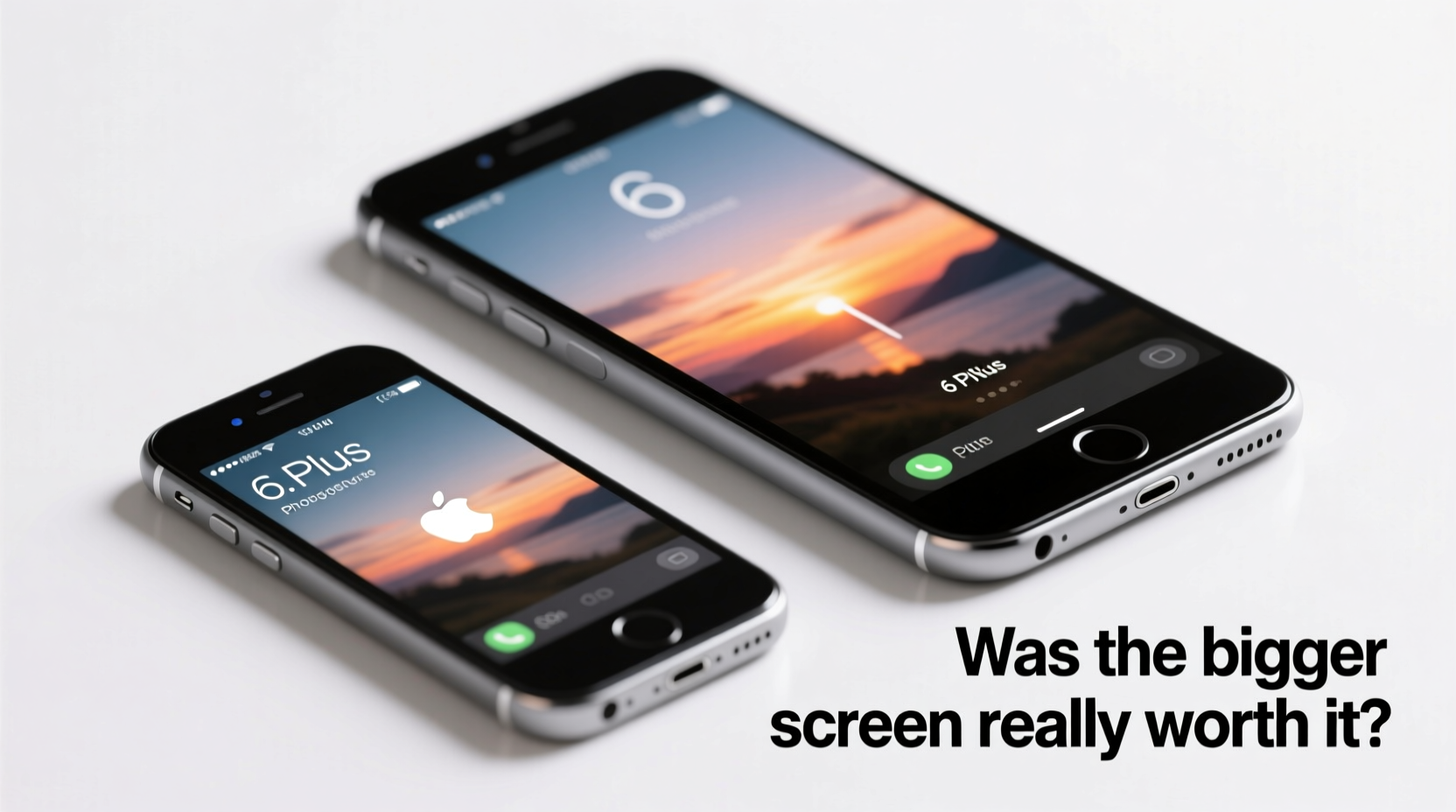
The iPhone 5s stood as the culmination of Apple’s minimalist design language under Steve Jobs’ legacy. With its 4-inch Retina display, aluminum body, and iconic Touch ID sensor, it struck a balance between form and function. It fit comfortably in one hand, slipped easily into pockets, and offered an intuitive interface tailored for single-handed use.
In contrast, the iPhone 6 Plus introduced a new era. Its taller, wider frame stretched across 5.5 inches of display space—an increase of nearly 40% over the 5s. The curved edges, thinner profile, and refined chamfered sides gave it a more modern aesthetic, but also raised concerns about durability and grip. Many users found themselves switching to two-handed operation or relying on workarounds like Reachability mode.
Performance and Hardware Comparison
Under the hood, both devices were powered by Apple’s custom silicon, but they belonged to different generations of technological maturity. The iPhone 5s featured the A7 chip—the first 64-bit processor in any smartphone—which was groundbreaking in 2013. Paired with 1GB of RAM, it delivered snappy performance even years after release.
The iPhone 6 Plus upgraded to the A8 chip with 1GB of RAM (unchanged) and an improved M8 motion coprocessor. While not a quantum leap, the A8 brought better power efficiency and enhanced graphics performance, crucial for handling the larger display and more demanding apps.
Camera improvements were also notable. The 6 Plus added optical image stabilization (OIS)—a feature absent on the 5s—which significantly improved low-light photo quality and video stability. Combined with a slightly larger sensor and True Tone flash, the 6 Plus began Apple’s push toward serious mobile photography.
| Feature | iPhone 5s | iPhone 6 Plus |
|---|---|---|
| Display Size | 4.0 inches | 5.5 inches |
| Resolution | 640x1136 (326 ppi) | 1080x1920 (401 ppi) |
| Processor | A7 + M7 | A8 + M8 |
| Rear Camera | 8MP, no OIS | 8MP, with OIS |
| Battery Life | Up to 10 hrs talk time | Up to 24 hrs standby |
| Weight | 112g | 172g |
| Water Resistance | No | No |
User Experience: Big Screen Benefits vs Practical Trade-offs
The most immediate benefit of upgrading to the 6 Plus was the immersive viewing experience. Watching videos, reading articles, and browsing web pages became noticeably more comfortable. Multitasking improved too, especially when composing emails or using split-view features later introduced in iOS 9.
Apple also introduced “Zoomed” and “Standard” display modes to help users adjust to the larger size. In Zoomed mode, icons and text appeared larger, mimicking the density of the 5s—but at the expense of screen real estate.
However, practical drawbacks emerged. The 6 Plus was simply too large for many users. Pockets strained, thumbs struggled to reach the top of the screen, and accidental drops increased—so much so that the early batch earned the nickname “Bendgate” due to reports of chassis flexing under pressure.
“Apple traded pocketability for productivity. The 6 Plus wasn’t just a bigger phone—it was a statement that mobile computing was evolving beyond calls and texts.” — David Liu, Mobile Technology Analyst, TechInsider Weekly
A Real-World Upgrade Decision: Sarah’s Story
Sarah, a freelance graphic designer based in Portland, upgraded from her beloved iPhone 5s to the 6 Plus the day it launched. She loved how the larger canvas helped her preview designs, annotate PDFs, and edit photos directly on her phone during client meetings. “I could finally sketch ideas without squinting,” she said.
But within weeks, she noticed trade-offs. Her jeans pockets couldn’t hold the phone securely, and she dropped it twice in one month trying to answer calls one-handed. After six months, she switched back to an iPhone 6 (non-Plus), keeping the larger screen benefits without sacrificing ergonomics.
Her experience reflects a broader trend: many users appreciated the screen upgrade but found the 6 Plus too extreme. The sweet spot, it turned out, was somewhere in between.
Was the Bigger Screen Worth It? A Balanced Verdict
For certain users—media consumers, creatives, frequent travelers, and those who relied on their phones for productivity—the iPhone 6 Plus was absolutely worth the upgrade. The screen enabled richer experiences, better multitasking, and laid the foundation for future innovations like landscape keyboard layouts and picture-in-picture video.
But for others—particularly those who valued portability, one-handed use, or long-term durability—the shift felt forced. The 5s remained a favorite among purists well into the late 2010s, praised for its precision and timeless design.
Ultimately, the iPhone 6 Plus wasn’t just a product update—it was a cultural pivot. It signaled Apple’s acknowledgment that smartphones were becoming primary computing devices. The larger screen wasn’t merely about convenience; it was about capability.
Checklist: Should You Have Upgraded from iPhone 5s to 6 Plus?
- ✅ Need more screen space for reading, video, or productivity?
- ✅ Willing to carry a heavier device and adapt to two-handed use?
- ✅ Interested in better camera performance, especially in low light?
- ✅ Ready to accept reduced pocketability for enhanced functionality?
- ✅ Looking for longer battery life (6 Plus offered up to 25% more endurance)?
If you answered yes to most of these, the upgrade made sense. If not, sticking with the 5s—or moving to the standard iPhone 6—was likely the smarter choice.
Frequently Asked Questions
Did the iPhone 6 Plus fix the 5s’s small screen limitations?
Yes, in terms of content consumption and app usability. However, it introduced new ergonomic challenges. While the screen allowed for more information display and better media playback, it compromised ease of handling for many users.
Was the battery life significantly better on the 6 Plus?
Yes. The 6 Plus featured a 2915 mAh battery compared to the 5s’s 1440 mAh. This translated to roughly 2–3 additional hours of active use, making it far more suitable for all-day tasks without charging.
Could the iPhone 5s still perform well after the 6 Plus launch?
Absolutely. Thanks to iOS optimization and the efficiency of the A7 chip, the 5s continued running iOS 12 smoothly—six years after its release. For basic communication, social media, and light apps, it remained highly capable.
Final Thoughts: Progress Isn’t Always About Size
The transition from iPhone 5s to 6 Plus wasn’t just about screen dimensions—it reflected a deeper shift in how we interact with technology. Apple bet that users would accept bulkier devices if they delivered greater utility. In many ways, they were right.
Yet, nostalgia for the 5s persists. Its perfect proportions, tactile home button, and balanced weight represent a design ethos that today’s oversized flagships often overlook. The 6 Plus opened doors, but the 5s reminded us that elegance matters.
So was the bigger screen worth it? For some—yes. For others, the answer depends not on specs, but on lifestyle.




 浙公网安备
33010002000092号
浙公网安备
33010002000092号 浙B2-20120091-4
Comments
No comments yet. Why don't you start the discussion?