
More than a decade after their release, the iPhone 4 and iPhone 5s still spark curiosity—especially among users holding onto older devices or considering secondhand purchases for backup phones, gifts, or retro tech experiments. While both models represent milestones in Apple’s design evolution, the jump from the iPhone 4 to the 5s was one of the most significant in the company's early history. But even today, is upgrading from an iPhone 4 to a 5s actually worthwhile? The answer depends on your needs, expectations, and how you plan to use the device.
This analysis dives deep into hardware, software, camera capabilities, battery life, and real-world performance to help you decide whether the upgrade still holds value—even in 2024.
Design and Build: A Step Forward in Durability
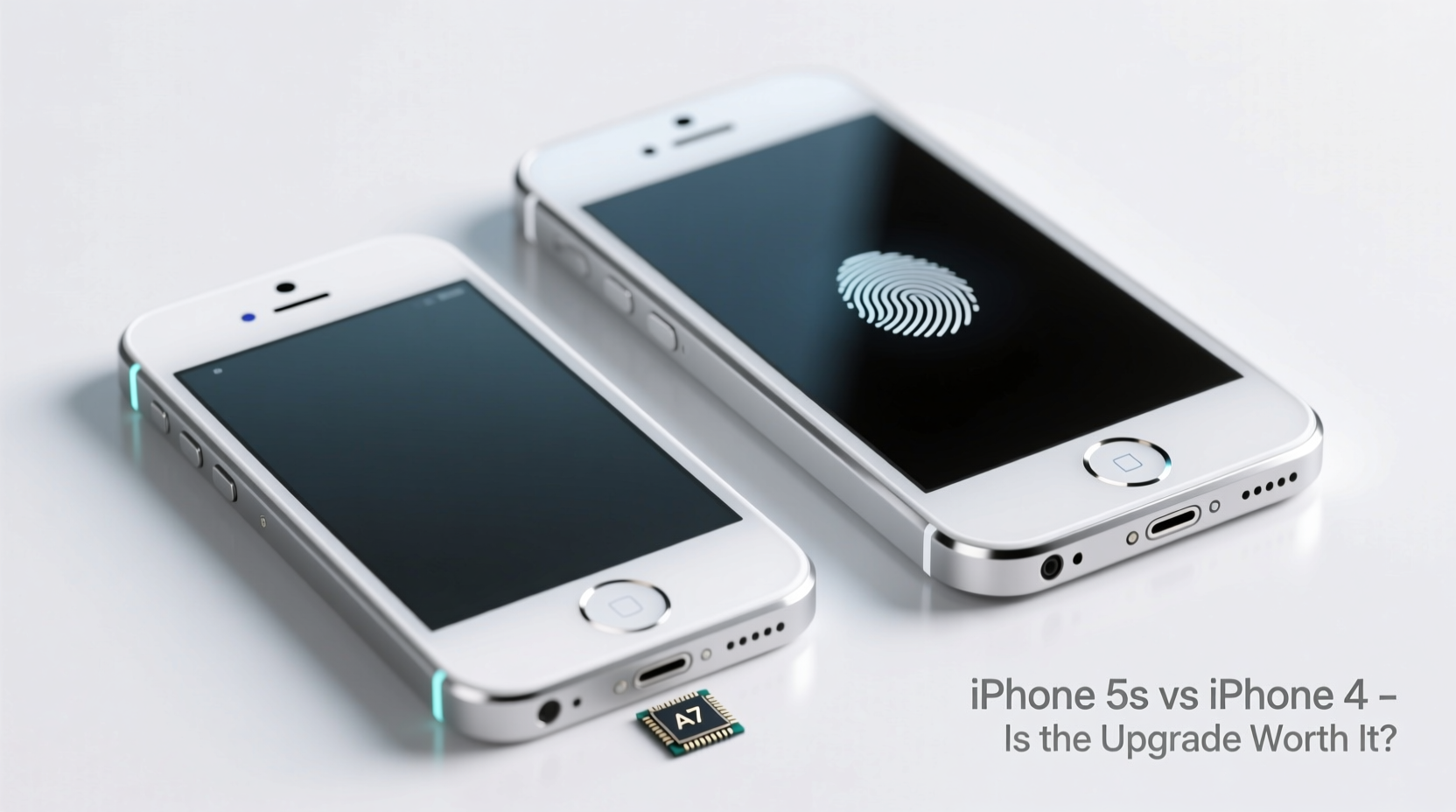
The iPhone 4 introduced a revolutionary glass-and-stainless-steel sandwich design that set a new aesthetic standard. However, its fragile glass back and antenna banding issues (remember “Antennagate”?) made it less durable in daily use. The iPhone 5s retained a similar look but evolved with a slightly larger form factor, improved ergonomics, and a more resilient aluminum unibody frame.
While both phones feel compact by modern standards, the 5s offers better grip and reduced risk of shattering upon impact. It also introduced the Touch ID fingerprint sensor embedded in the home button—a feature absent on the iPhone 4.
Performance Comparison: A Night-and-Day Difference
Under the hood, the difference between these two devices is dramatic. The iPhone 4 runs on Apple’s A4 chip with 512MB of RAM, while the iPhone 5s features the 64-bit A7 chip with 1GB of RAM—the first 64-bit processor in any smartphone at the time. This architectural leap translates into tangible improvements.
The A7 enables smoother multitasking, faster app launches, and support for more advanced iOS features. Even basic tasks like scrolling through web pages or switching between apps feel noticeably snappier on the 5s. The iPhone 4 struggles with anything beyond iOS 7.1.2, while the 5s supports up to iOS 12.5.7 (released in 2023), meaning it received seven years of software updates compared to the 4’s four.
“Moving from the A4 to the A7 was like going from a bicycle to a motorcycle in terms of processing power.” — Marco Arment, Former Apple Software Engineer and Creator of Overcast
Camera Capabilities: Clarity Meets Low-Light Performance
The iPhone 4 has a 5-megapixel rear camera without flash stabilization or front-facing camera autofocus. Video tops out at 720p. In contrast, the iPhone 5s upgraded to an 8MP iSight camera with dual-LED flash (true tone), larger sensor pixels for better low-light capture, and burst mode photography. It also introduced a 1.2MP FaceTime HD front camera capable of 720p video recording.
In practical terms, photos taken on the 5s are sharper, more color-accurate, and far superior in dim lighting. The 5s also includes auto HDR, tap-to-focus, and improved face detection—all missing or underdeveloped on the 4.
| Feature | iPhone 4 | iPhone 5s |
|---|---|---|
| Rear Camera | 5MP, no flash stabilization | 8MP, dual-LED flash, larger pixels |
| Front Camera | VGA (0.3MP) | 1.2MP, 720p video |
| Video Recording | 720p @ 30fps | 1080p @ 30fps |
| Low-Light Performance | Poor | Noticeably better with True Tone flash |
| Burst Mode | No | Yes |
Battery Life and Charging: Incremental Gains
The iPhone 5s packs a 1560 mAh battery compared to the 4’s 1420 mAh unit. While the increase seems modest, combined with the energy-efficient A7 architecture and iOS optimizations, the 5s delivers about 10–15% longer usage time. Real-world testing shows the 5s can last through a full day of light use (calls, messaging, occasional browsing), whereas the iPhone 4 often requires midday charging under similar conditions.
Neither device supports fast charging or wireless charging, and both use the older 30-pin dock connector (iPhone 4) or Lightning port (iPhone 5s). The shift to Lightning on the 5s means newer cables and accessories are more readily available today, giving it a slight edge in long-term usability.
Software Support and App Compatibility
This is where the gap becomes critical. The iPhone 4 maxes out at iOS 7.1.2, released in 2014. That means no support for modern security patches, iCloud Keychain, AirDrop, or contemporary versions of popular apps like WhatsApp, Gmail, or banking tools. Most major apps dropped support for iOS 7 years ago.
The iPhone 5s, however, was supported up to iOS 12.5.7, which Apple updated as recently as January 2023 for security fixes. While it cannot run iOS 13 or later, this extended support means the 5s can still open many legacy-compatible web services, email clients, and offline apps. For example, Safari on iOS 12 supports modern TLS encryption, allowing access to most websites without certificate errors—a problem common on the iPhone 4.
Mini Case Study: Sarah’s Upgrade Dilemma
Sarah held onto her iPhone 4 as a backup phone for emergencies. After her primary smartphone broke, she tried relying on the 4 for a week. She quickly hit roadblocks: her bank app wouldn’t install, Google Maps crashed repeatedly, and she couldn’t send photos via iMessage because they were too large for the compression engine. Frustrated, she bought a used iPhone 5s for $35. The difference was immediate. She could log into her email, use basic navigation, and even browse news sites without constant crashes. Though limited, the 5s provided functional internet access—something the 4 simply couldn’t deliver reliably in 2024.
Step-by-Step Guide: How to Decide If the Upgrade Makes Sense
- Evaluate your intended use: Are you replacing a primary phone or setting up a backup/emergency device?
- Test app needs: List the 3–5 apps you must use (e.g., messaging, maps, email). Check if they support iOS 7 (iPhone 4) or require iOS 10+.
- Check battery health: If upgrading, ensure the 5s has a replaced or healthy battery. Original batteries from 2013 are likely degraded.
- Compare prices: Used iPhone 4 units sell for $10–$20; iPhone 5s units range from $30–$60 depending on condition. Weigh cost versus functionality gain.
- Consider alternatives: Refurbished Android phones under $50 often outperform both iPhones in speed, battery, and app compatibility.
Frequently Asked Questions
Can the iPhone 5s still be used in 2024?
Yes, but with limitations. It works well for calls, texts, basic web browsing, offline music, and legacy apps. However, it cannot run modern social media apps, streaming services, or updated banking software. Security risks increase over time due to lack of OS updates.
Is the Touch ID on the iPhone 5s reliable?
For its time, yes. The first-generation Touch ID is slower and less accurate than newer sensors, but it functions consistently once enrolled. It supports app authentication and iTunes purchases, adding convenience absent on the iPhone 4.
Does either phone support 4G LTE?
No. The iPhone 4 only supports up to 3G (HSPA+). The iPhone 5s supports LTE bands, making it significantly faster on cellular data—another major advantage for web use.
Final Verdict: Is the Upgrade Worth It?
If you’re still using an iPhone 4 and have the chance to upgrade to a 5s at little or no extra cost, the move is absolutely worth it. The improvements in processing power, camera quality, battery efficiency, LTE connectivity, and software longevity make the 5s a vastly more capable device—even today.
However, if you're paying more than $40 for a used 5s, reconsider. Modern budget Android smartphones offer far better performance, cameras, and ongoing security support. But for collectors, parents seeking simple hand-me-downs, or travelers needing a disposable device, the 5s remains a nostalgic yet functional step up from the iPhone 4.
“The iPhone 5s wasn’t just an upgrade—it was a foundation for the future of iOS.” — Walt Mossberg, Veteran Tech Journalist
Take Action Today
If you’ve been clinging to an iPhone 4 out of nostalgia or necessity, now is the time to assess what you truly need from a mobile device. Whether you choose the 5s or explore other affordable options, don’t let outdated technology limit your access to communication, information, and safety. Evaluate your usage, test devices if possible, and make a choice that serves your lifestyle—not just your memories.




 浙公网安备
33010002000092号
浙公网安备
33010002000092号 浙B2-20120091-4
Comments
No comments yet. Why don't you start the discussion?